
Accurate Socket/Wrench to Bolt/Nut Matching is vital for any fastening or loosening task, ensuring efficiency, safety, and longevity of tools and hardware. This detailed field guide provides an extensive walkthrough—from understanding the basics of wrenches and bolts to precise size selection techniques and proper tool care—equipping you to confidently handle any mechanical or DIY project. For professionals and hobbyists alike, mastering this skill eliminates frustration and damage, delivering reliable results every time.
That’s exactly why this Socket/Wrench to Bolt/Nut Matching Field Guide exists. We’ll dive into the key concepts of wrench sizing, metric versus SAE standards, the differences between sockets and wrenches, and how to choose the perfect fit every time. This guide also comes packed with reference tables, tool recommendations, real-world use cases, and expert tips. Whether you’re a DIYer assembling furniture, a car enthusiast tuning up an engine, or a construction worker dealing with heavy-duty fasteners, this is your go-to reference.
Understanding Sockets, Wrenches, Bolts, and Nuts: The Basics
Before diving into the specifics of matching, it’s essential to understand the basics of sockets, wrenches, bolts, and nuts.
What is a Socket?
A socket is a hollow, cylindrical tool that fits over the head of a bolt or nut. It is typically used in conjunction with a ratchet or breaker bar to apply torque. Sockets come in various sizes and types, including metric and imperial, as well as deep and shallow sockets.
What is a Wrench?
A wrench is a tool designed to provide grip and mechanical advantage in applying torque to turn objects, most commonly nuts, and bolts. Wrenches come in various types, including combination wrenches, ratcheting wrenches, and socket wrenches, each suited for specific tasks. For example, a ratcheting wrench allows for continuous turning without removing the tool, making it ideal for tight spaces. Learn more about the differences between ratcheting wrenches and standard wrenches here.
What is a Bolt?
A bolt is a threaded fastener designed to hold materials together. Bolts come in various sizes, thread types, and head styles, such as hex, Allen, or Torx. The head style determines the type of wrench or socket needed to tighten or loosen it.
What is a Nut?
A nut is a type of fastener with a threaded hole. It is used in conjunction with a bolt to secure materials together. Nuts come in various types, including hex nuts, wing nuts, and lock nuts.
Why is a perfect match between the Socket/Wrench and the Bolt/Nut essential
Using the wrong size or type of wrench or socket can cause slipping, rounded or stripped bolt heads, tool damage, and even safety hazards. A snug fit ensures maximum torque is applied evenly without harming fastener surfaces.
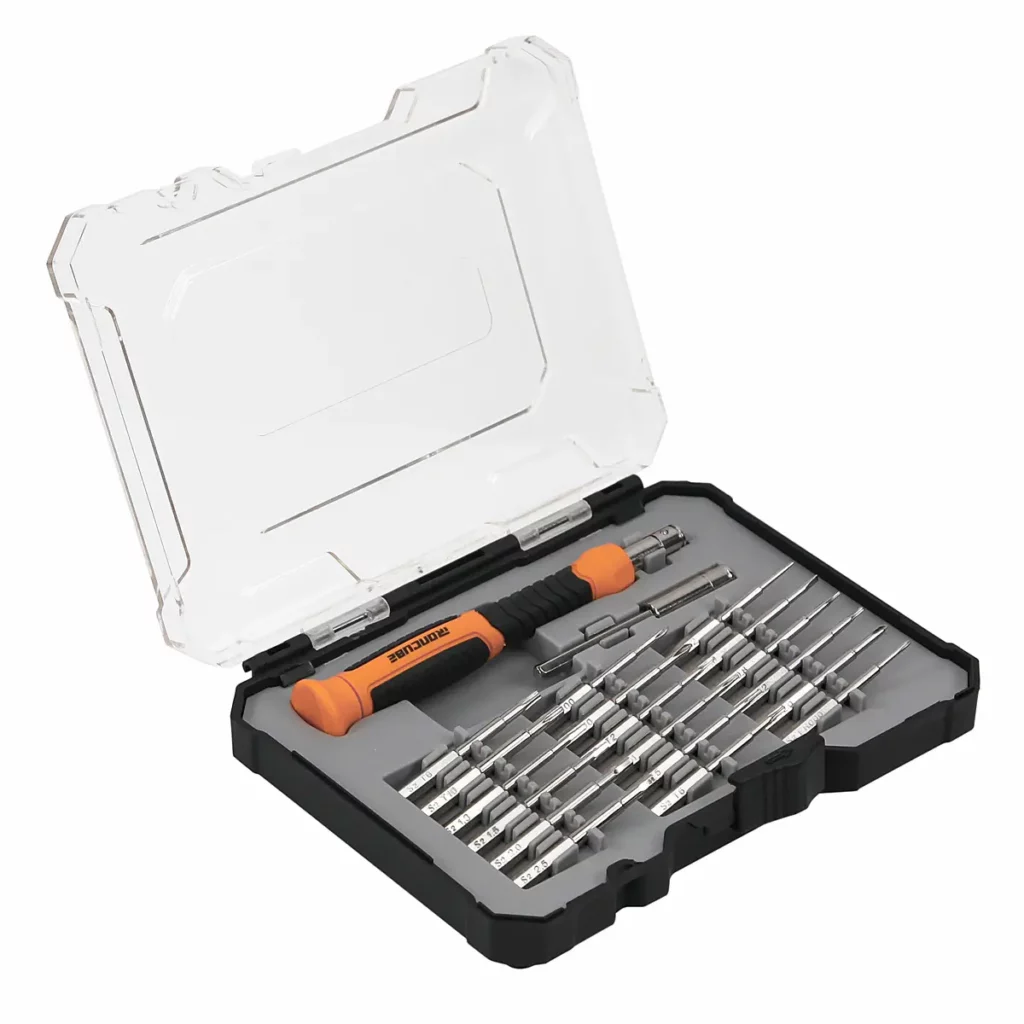
Correct tool-to-fastener matching not only protects your hardware but also extends the longevity of your tools by preventing undue wear.
Overview of Measurement Standards: Metric vs SAE Bolts and Nuts
Fasteners usually conform to two prominent measurement systems:
Metric (millimeters): Common worldwide and technically precise.
SAE/Imperial (inches and fractional inches): Primarily used in the United States.
Wrenches and sockets must match the bolt/nut’s measurement system. Trying to fit a metric wrench on an SAE bolt or vice versa typically results in poor grip and potential damage.
Comprehensive Socket/Wrench to Bolt/Nut Matching Charts
Charts are indispensable for quick socket/wrench to bolt/nut matching. Below, we’ve curated data from trusted sources for SAE, metric, and equivalents.
SAE Bolt/Nut to Wrench/Socket Size Chart
| Bolt Diameter (Inches) | Wrench/Socket Size (Inches) | Heavy Hex Size (Inches) | Common Uses |
|---|---|---|---|
| 1/4 | 7/16 | 1/2 | Light assembly, electronics |
| 5/16 | 1/2 | 9/16 | Brackets, small engines |
| 3/8 | 9/16 | 5/8 | Automotive suspension |
| 7/16 | 5/8 | 3/4 | Heavy frames |
| 1/2 | 3/4 | 7/8 | Wheel lugs, axles |
| 9/16 | 13/16 | 15/16 | Machinery |
| 5/8 | 15/16 | 1-1/16 | Industrial bolts |
Metric Bolt/Nut to Wrench/Socket Size Chart
| Bolt Diameter (mm) | Wrench/Socket Size (mm) | Heavy Hex Size (mm) | Common Uses |
|---|---|---|---|
| M4 | 7 | – | Small screws |
| M5 | 8 | – | Electronics |
| M6 | 10 | – | Bikes, furniture |
| M8 | 13 | 14 | Engines |
| M10 | 17 | 19 | Vehicles |
| M12 | 19 | 22 | Structures |
| M14 | 22 | 24 | Heavy duty |
| M16 | 24 | 27 | Machinery |
Conversion Chart: SAE to Metric Equivalents for Sockets/Wrenches
| SAE Size (Inches) | Closest Metric (mm) | Notes |
|---|---|---|
| 1/4 | 6.35 | Rare match |
| 5/16 | 8 | Common small |
| 3/8 | 9.5 | Approx 10mm |
| 7/16 | 11 | Light use |
| 1/2 | 13 | Versatile |
| 9/16 | 14 | Suspension |
| 5/8 | 16 | Frames |
| 3/4 | 19 | Lugs |
These charts cover hex standards; for square or Torx, adjust accordingly. Measure flats for custom fits.
Types of Sockets and Wrenches and Their Applications
Not all sockets and wrenches are created equal. Here’s a breakdown of the most common types and their best uses:
- Combination Wrench: Features an open-end and a box-end, making it versatile for most tasks. Check out the 15-piece metric combination wrench set.
- Ratcheting Wrench: Allows for quick, continuous turning without repositioning the tool. Ideal for tight spaces. Learn more about ratcheting wrenches.
- Socket Wrench: Uses interchangeable sockets to fit different bolt sizes. Perfect for automotive work. Explore socket sets.
- Adjustable Wrench: Features a movable jaw to fit various bolt sizes. Great for emergencies but less precise than fixed-size wrenches.
- Deep Socket: Designed to reach bolts that are recessed or located in deep holes.
- Shallow Socket: Ideal for bolts that are easily accessible and not recessed.
Types of Sockets and Wrenches
The right tool transforms a socket/wrench into a bolt/nut matching from guesswork to precision. Let’s explore the main types, their strengths, and how they align with different fasteners, informed by expert guides on wrench applications.
Begin with the open-end wrench, a U-shaped staple that grips two flats of a hex bolt or nut. Its angled head (often 15 degrees) allows access in tight spots, making it ideal for initial loosening or quick adjustments on plumbing fittings. Double-ended versions offer two sizes in one tool, but they can slip under high torque if not perfectly matched—aim for snug fits on bolts like a 1/2-inch requiring a 3/4-inch opening.
Contrast this with the box-end wrench, which fully encloses the fastener for superior hold. Available in six-point (for hex) or twelve-point (versatile but riskier on worn nuts) configurations, it’s perfect for high-torque tasks like engine bolts. The enclosed design distributes force evenly, reducing rounding risks on stubborn nuts.
Adjustable wrenches shine in unpredictable scenarios, with movable jaws adapting to various sizes. However, they’re best for light duty—overuse on heavy bolts can lead to jaw slippage. Known as Crescent wrenches, they’re handy for odd sizes but lack the precision of fixed tools.
Now, sockets elevate socket/wrench to bolt/nut matching with their cylindrical design, pairing with ratchets for continuous turning in confined spaces. Six-point sockets grip hex nuts firmly for torque, while twelve-point sockets allow more positions but may slip on rounded edges. Drive sizes (1/4-inch for small, 1/2-inch for standard) determine power; deep sockets handle protruding bolts.
Specialties include ratcheting wrenches for minimal swing—explore our in-depth article on what a ratcheting wrench is and comparisons in ratcheting wrench vs standard wrench: when each wins. Flare-nut wrenches protect soft tubing nuts, while torque wrenches ensure exact tightening specs.
Real-World Applications of Socket/Wrench to Bolt/Nut Matching
Automotive Repairs: Cars use both metric and SAE fasteners. Having both sets ensures you’re never stuck.
Furniture Assembly: IKEA furniture? Metric all the way. American hardwood furniture? Often SAE.
Construction Work: Heavy-duty bolts usually require larger wrenches and sockets, often in both systems.
Electronics & Appliances: Smaller fasteners typically stick to metric, though exceptions exist.
For more professional gear, browse the Ironcube Amazon Store
The Process of Selecting the Right Wrench or Socket for Your Bolt or Nut
The proper selection process involves:
Confirming the standard (metric or SAE) of your bolt or nut.
Measuring the width across flats precisely.
Choosing a wrench or socket sized exactly to those measurements.
Testing the fit—ensuring snug and secure contact with minimal wiggle.
Considering the wrench or socket type for accessibility and torque requirements.
Using quality tools from reliable sources, such as IRONCUBE metric combination wrench sets, to ensure durability and precision.
Best Practices to Maintain Your Wrenches and Sockets
Proper tool maintenance ensures longevity and performance:
Wipe and clean after use to remove dirt and grease.
Store wrenches and sockets in dedicated cases to avoid damage.
Lubricate ratchets and moving parts to keep mechanisms smooth.
Inspect regularly and retire worn or bent tools promptly.
RONCUBE Tools for Perfect Socket/Wrench to Bolt/Nut Matching
IRONCUBE specializes in high-quality tool sets engineered for professional and DIY applications. Their metric combination wrench sets and ratcheting screwdriver bit assemblies provide versatility and precision for your projects.
Explore their extensive line of wrenches and fastener tools to simplify matching and improve work quality by visiting IRONCUBE’s wrench selection page.
For inquiries or expert advice on tool selection and usage, visit the contact page to connect with IRONCUBE’s team.
Final Thoughts
Mastering Socket/Wrench to Bolt/Nut Matching isn’t just about convenience—it’s about working safely, efficiently, and professionally. Knowing when to grab a 13mm socket or a 1/2″ wrench can save hours of frustration and keep your projects on track.
With the right tools—like those from Ironcube Works—you’ll always be ready for whatever project comes your way. Bookmark this guide, print out the chart, and make it your go-to reference whenever you’re in doubt.
FAQs
What is the best way to measure a bolt or nut for a wrench or socket fitting?
Measure the width across the flat sides (not corners) using a caliper or ruler to determine the precise dimension.
Can adjustable wrenches replace fixed-size wrenches?
Adjustable wrenches are versatile but less precise. For delicate or heavy-duty jobs, fixed sizes are recommended to avoid slippage and damage.
How do I avoid stripping or rounding bolt heads?
Always use a wrench or socket that fits snugly and apply torque steadily without over-tightening.
What makes ratcheting wrenches better than standard wrenches for bolt matching tasks?
Ratcheting mechanisms eliminate the need to reposition the wrench after each turn, allowing faster and more efficient work. Learn more about these advantages here.
Are metric and SAE tools interchangeable?
No, they differ slightly in size. Using the wrong system risks damage and slipping during tightening or loosening.
Where can I purchase reliable wrench and socket sets?
IRONCUBE offers a wide range of professional wrenches and socket sets available online and on their trusted Amazon store here.
For excellent video tutorials and product demonstrations, visit the official IRONCUBE YouTube channel.