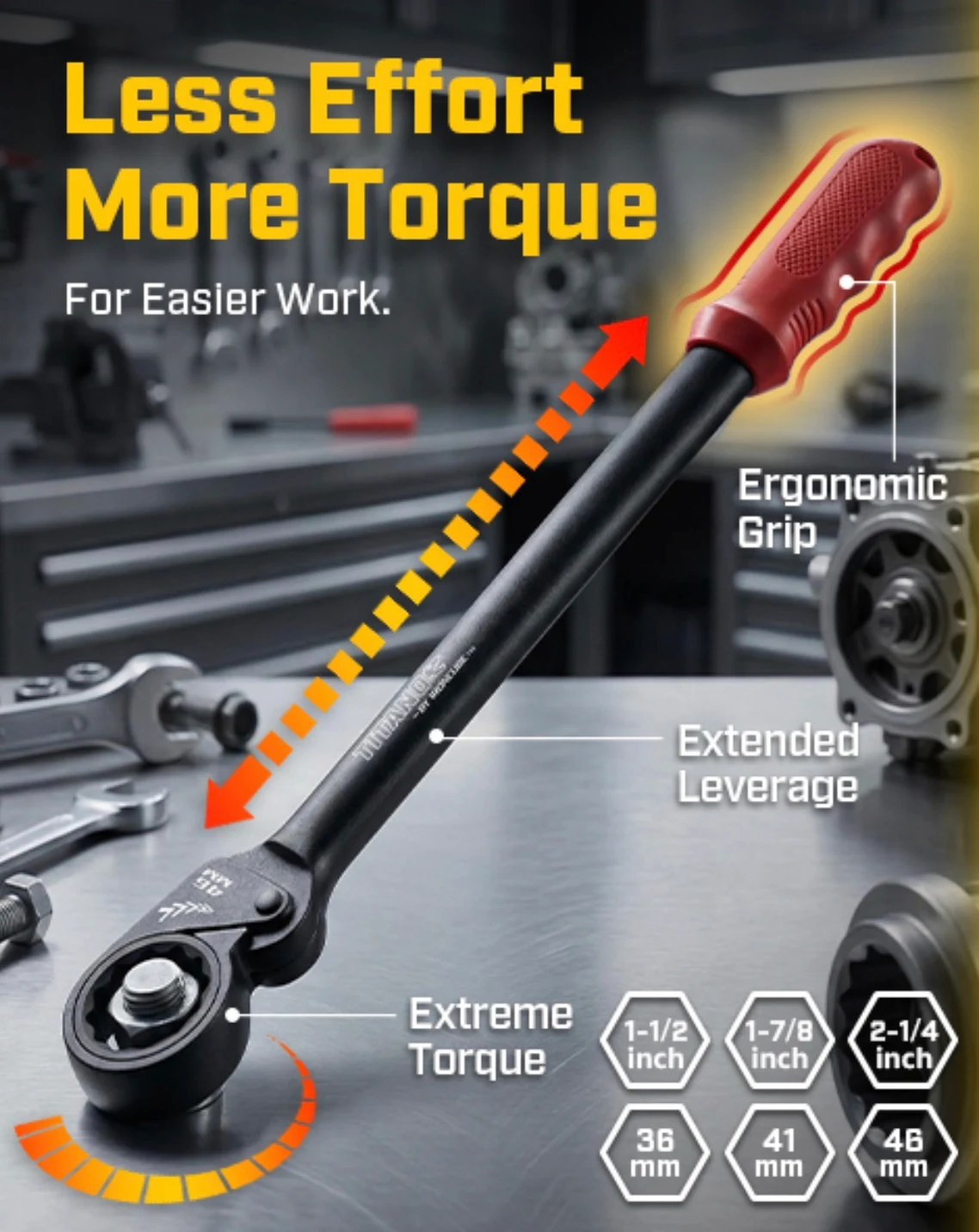
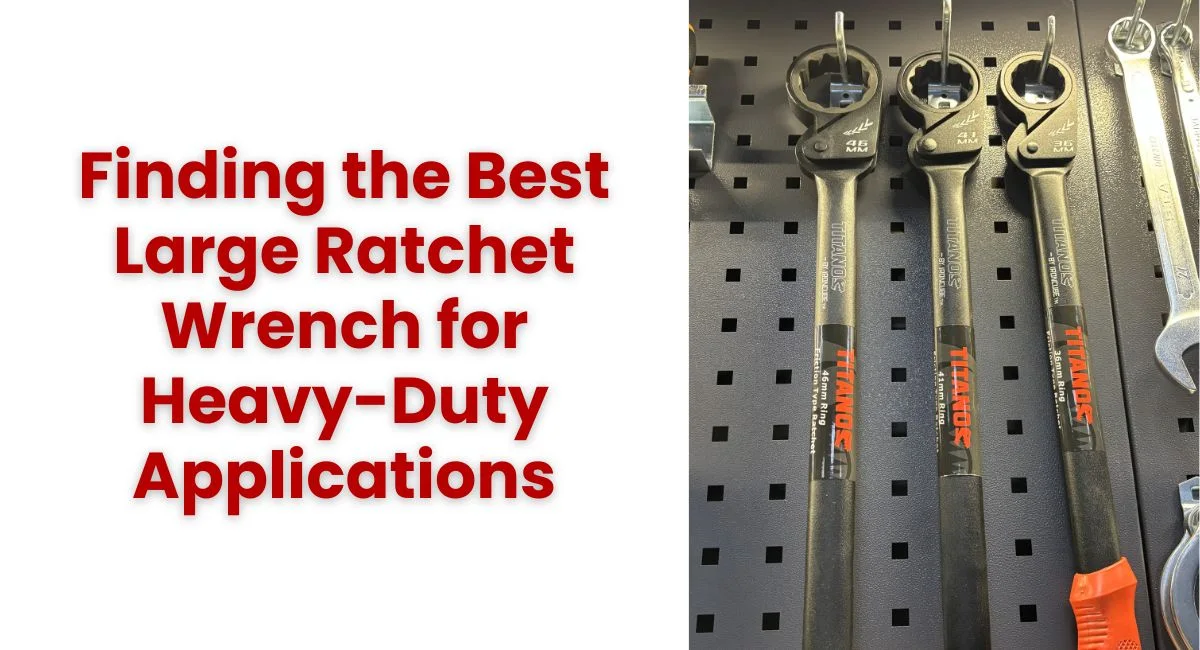
When working on industrial machinery, heavy vehicles, construction equipment, or large mechanical systems, standard tools often fail to deliver the required strength and efficiency. This is where the Best Large Ratchet Wrench becomes essential. Designed for high torque and large fasteners, these specialized tools help professionals tighten or loosen massive bolts quickly and safely.
Large ratchet wrenches are widely used in industries such as construction, oil and gas, automotive repair, rail maintenance, and heavy manufacturing. According to data from the U.S. Bureau of Labor Statistics, mechanical technicians and industrial maintenance professionals rely heavily on durable hand tools capable of handling high-stress applications. Tools like jumbo ratcheting wrenches significantly reduce manual effort and increase productivity.
Manufacturers such as IronCube Works have developed specialized solutions to meet these demands. Their industrial-grade tools, including the models featured in the company’s wrench catalog, are engineered to handle extreme torque without sacrificing precision.
In this guide, we will explore how to choose the Best Large Ratchet Wrench, examine essential features, compare available options, and highlight the best tools for demanding applications.
What Is a Large Ratchet Wrench?
A ratchet wrench uses a ratcheting mechanism that allows a user to tighten or loosen a bolt without removing the tool after each turn. Instead, the internal gear system rotates in one direction while locking in the opposite direction.
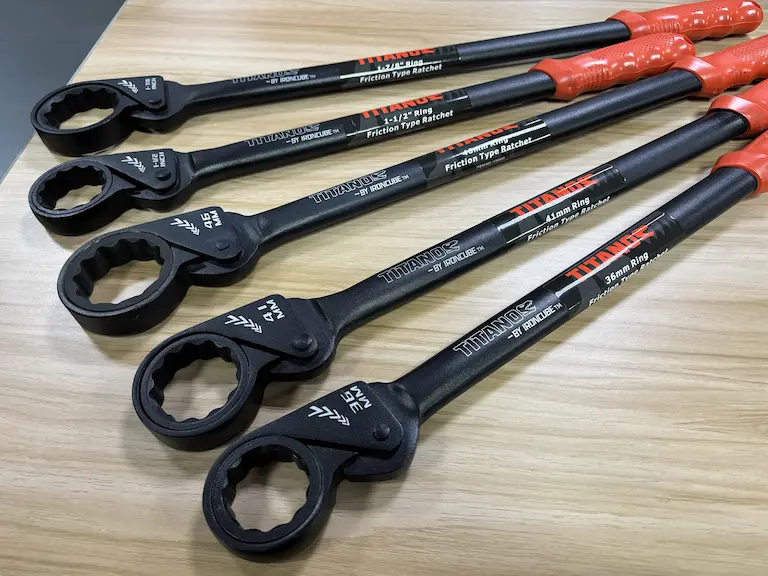
Large ratchet wrenches expand this concept for oversized nuts and bolts, typically ranging from 30 mm to over 70 mm. These tools are commonly used in:
Heavy truck maintenance
Industrial equipment assembly
Construction machinery repairs
Bridge and structural steel installation
Agricultural equipment servicing
Unlike standard wrenches, these tools must withstand extreme torque loads. That is why the best large ratchet wrench models often feature reinforced steel bodies, friction-drive mechanisms, and precision-machined gear systems.
Features to Look for in the Best Large Ratchet Wrench
Not every large ratcheting wrench is created equal. Some look impressive on the shelf but fail within weeks of regular jobsite use. Others feel clunky in the hand or lack the precision engineering that separates a professional tool from a disposable one. Here’s what actually matters when you’re shopping for the extra-large ratchet wrench for heavy-duty work.
Material and Build Quality
Chrome vanadium (Cr-V) steel remains the industry standard for professional-grade wrenches, and for good reason. It offers an excellent balance of hardness, toughness, and corrosion resistance. When shopping for a large ratcheting wrench, look for forged construction rather than cast. Forged wrenches have a denser grain structure, which translates directly to higher tensile strength and longer service life. Some premium manufacturers also apply a satin or mirror chrome finish that resists rust and makes cleanup easier after a messy job.
Tooth Count and Arc Swing
The tooth count in the ratcheting mechanism determines how much room you need to operate the wrench. A 72-tooth ratchet requires just 5 degrees of swing, which is outstanding for confined spaces. Higher-end models push this to 90 or even 120 teeth, reducing the arc swing to as little as 3 degrees. For large wrenches used in tight engine bays or between structural beams, that extra refinement is worth every penny.
Handle Length and Leverage
Larger fasteners demand more torque, and torque is a function of force multiplied by distance. A longer handle gives you more leverage without requiring more muscle. The best large ratcheting wrenches for heavy equipment typically feature handles ranging from 12 to 24 inches—long enough to generate serious torque, yet balanced enough for controlled operation. Some designs incorporate ergonomic curves or textured grips to reduce slippage and hand fatigue during extended use.
Reversibility and Ease of Direction Change
A quality reversible ratchet lets you switch between tightening and loosening without removing the wrench from the fastener. This sounds like a basic feature, but execution varies dramatically across brands. Look for a direction switch that’s easy to operate with gloved hands—a critical detail that many cheaper tools overlook entirely. Friction-style ratcheting wrenches, which use spring-loaded jaws instead of a fixed box end, offer an alternative design that can accommodate slight size variations in large fasteners.
Where Professionals Rely on Large Ratchet Wrenches
Understanding the applications helps you choose the right tool. A wrench designed for automotive fleet maintenance won’t necessarily perform the same way in an offshore drilling environment. Here’s a breakdown of the most common heavy-duty scenarios where a best large ratchet wrench proves indispensable.
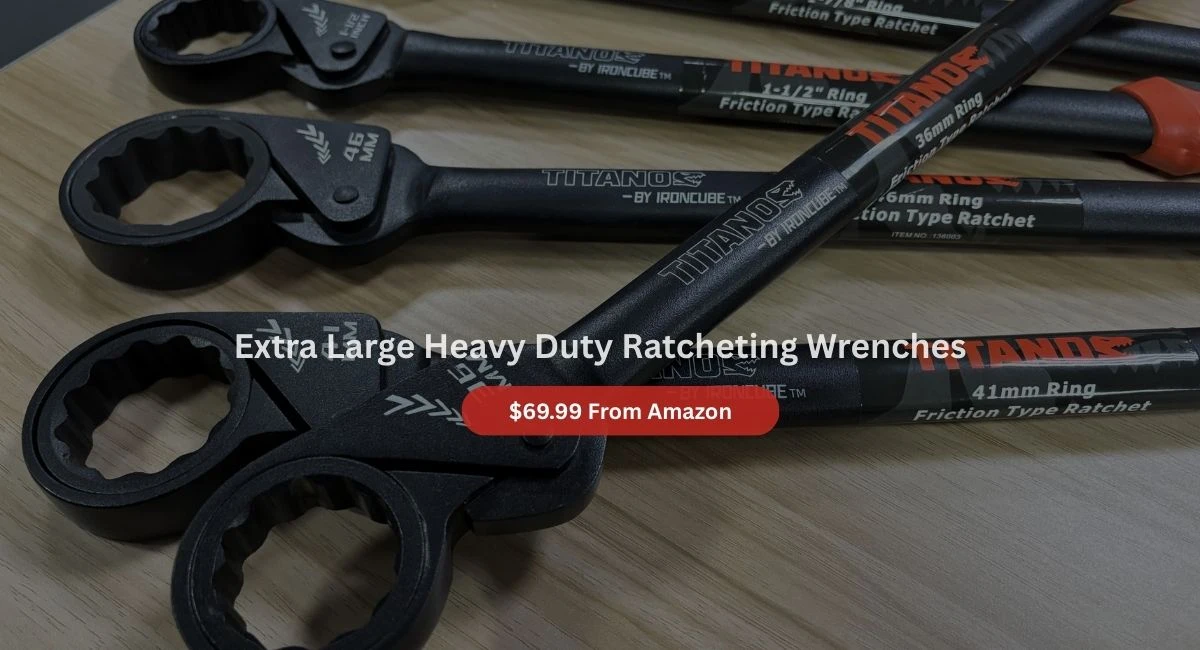
Heavy Equipment and Construction
Construction jobsites are punishing environments for tools. Dust, moisture, vibration, and occasional drops from height all take a toll. Professionals working on excavators, cranes, and structural steel need wrenches that can handle bolt sizes from 24mm up to 50mm or larger. Extra large heavy-duty ratcheting wrenches built for this kind of abuse feature hardened steel construction, sealed ratcheting mechanisms, and oversized handles for maximum leverage. These tools commonly see action tightening counterweights on cranes, assembling scaffolding, and securing structural connections.
Commercial Fleet and Trucking
Fleet mechanics working on Class 7 and Class 8 trucks deal with fasteners that dwarf anything found on passenger vehicles. Wheel nuts, suspension bolts, and drivetrain components routinely require wrenches in the 30mm to 46mm range. Speed matters in fleet maintenance—every hour a truck sits in the shop is revenue lost. That’s why many fleet shops have made the switch to large heavy-duty ratcheting wrenches that combine fast action with reliable torque delivery.
Oil, Gas, and Pipeline Work
The energy sector presents some of the most extreme demands for hand tools. Large flange bolts, valve assemblies, and coupling nuts on pipelines can be massive—and they’re often found in remote locations where access to power tools is limited. A robust ratcheting wrench becomes your primary fastening tool in these conditions. Corrosion resistance is particularly critical in offshore or coastal environments where salt air accelerates rust.
Agricultural and Mining Equipment
Farm machinery and mining rigs share a common trait: they use large, heavy-gauge fasteners that are frequently exposed to dirt, mud, and corrosive substances. Maintaining these machines requires tools that can grip corroded bolts without rounding them off. A well-designed large ratchet wrench with a 12-point box end provides the engagement needed for worn hex heads, while a friction-style design offers even greater versatility on irregularly shaped fasteners.
Comparing the Best Large Ratchet Wrenches for 2026
Choosing the best large ratchet wrench ultimately comes down to matching the tool to your specific workload. Below is a comparison of key specifications across several popular categories of large ratcheting wrenches. This table should help you narrow your options before making a final decision.
| Feature | Budget Models | Mid-Range | Premium | Specialty / Friction |
| Typical Size Range | 24–36mm | 24–46mm | 24–50mm+ | 30–60mm+ |
| Material | Carbon Steel | Cr-V Steel | Forged Cr-V | Forged Alloy Steel |
| Tooth Count | 36–48 | 72 | 72–90+ | Friction / Pawl |
| Handle Length | 10–14″ | 14–18″ | 16–24″ | 14–20″ |
| Best For | Light Duty / DIY | General Pro Use | Heavy Equipment | Pipes / Irregular |
| Price Range | $20–$50 | $50–$120 | $120–$300+ | $40–$150 |
One standout option in the specialty category is the IRONCUBE Jumbo Friction Ratcheting Wrench, available on Amazon. Unlike traditional ratcheting designs that rely on a fixed box end, friction ratcheting wrenches use spring-loaded jaws that grip the fastener through friction. This design accommodates a wider range of nut and bolt sizes with a single tool, making it exceptionally versatile for fieldwork where carrying a full wrench set isn’t practical.
IRONCUBE also offers individual friction ratcheting wrenches in specific sizes. Their 36mm Torque Friction Wrench is a popular choice for mechanics who need a dedicated tool for a commonly encountered fastener size. For slightly smaller applications, the 1-7/8 inch Friction Wrench and 1-1/2 inch Heavy-Duty Ratcheting Spanner cover SAE fasteners that are common on American-made equipment.
IronCube Heavy Duty Ratcheting Spanner
For versatility in heavy-duty applications, the IronCube Friction Wrench 1-1/2 Inch Heavy Duty Ratcheting Spanner offers an excellent balance of size, strength, and functionality. This tool combines the features of a traditional spanner with the convenience of a ratcheting mechanism, making it particularly valuable for mechanics who frequently switch between different types of fasteners.
How to Properly Use Your Large Ratchet Wrench
Even the best large ratchet wrench won’t perform optimally if used incorrectly. Proper technique not only extends the life of your tool but also ensures safety and efficiency in your work:
Selecting the Right Size
Always use a wrench that properly fits the fastener. A wrench that’s too small can slip, potentially damaging both the fastener and the tool. When in doubt, measure the fastener and select the appropriate wrench size.
Applying Torque Correctly
When tightening fasteners, apply smooth, steady pressure rather than sudden jerks. For critical applications, use a torque wrench to ensure proper fastener tension. Remember that the longer the wrench handle, the more torque you can apply with the same amount of force.
Changing Ratchet Direction
Most ratchet wrenches feature a small lever or switch that changes the ratcheting direction. Always ensure this is set correctly before applying force to prevent accidentally loosening a fastener you intend to tighten, or vice versa.
Maintenance and Care
After each use, clean your wrench to remove dirt, grease, and debris. Periodically lubricate the ratcheting mechanism with a light oil to ensure smooth operation. Store your wrench in a dry place to prevent corrosion, and consider using a tool organizer to prevent damage to the precision-machined teeth.
Making Your Purchase Decision
When selecting the best large ratchet wrench for your needs, consider these factors:
Frequency of Use: For daily professional use, invest in a premium tool with robust construction. For occasional use, a mid-range option might suffice.
Specific Applications: Consider the types of fasteners you’ll be working with most frequently. If you work with a variety of sizes, an adjustable wrench might be more practical than a fixed-size option.
Budget Considerations: While quality tools represent an investment, they typically offer better value over time through improved durability and performance.
Warranty and Support: Professional-grade tools typically come with better warranties and customer support, providing peace of mind for your investment.
For those seeking wholesale options or multiple wrench sets, IronCube Works offers competitive pricing on bulk orders without compromising on quality.
Summary
Choosing the Best Large Ratchet Wrench is essential for professionals who work with heavy machinery, industrial equipment, or large structural fasteners. These tools provide the torque capacity, durability, and efficiency needed for demanding applications.
High-quality ratcheting wrenches feature strong alloy steel construction, precision gear mechanisms, and ergonomic designs that improve productivity and safety. By understanding the key features, comparing different wrench types, and purchasing from reliable manufacturers, technicians can ensure they always have the right tool for the job.
Whether you work in construction, fleet maintenance, or industrial manufacturing, investing in the Best Large Ratchet Wrench will significantly improve efficiency and reliability in your daily operations.
FAQs
What is the Best Large Ratchet Wrench for heavy equipment maintenance?
The Extra Large Ratchet Wrench for heavy equipment maintenance is typically a forged steel wrench with a high-torque ratcheting mechanism and an extended handle for leverage. Industrial-grade friction ratchet wrenches are especially effective.
Why do professionals prefer the Best Large Ratchet Wrench instead of standard wrenches?
Professionals choose the Best Large Ratchet Wrench because it can handle oversized bolts, deliver higher torque capacity, and significantly reduce manual effort compared to standard hand tools.
What size should I choose for the Best Large Ratchet Wrench?
The correct size depends on the fasteners you commonly encounter. For many industrial jobs, a 36 mm or 1-7/8 inch wrench is often considered the Best Large Ratchet Wrench size.
Are friction ratcheting tools considered the Best Large Ratchet Wrench?
Yes, friction ratcheting tools are often regarded as the Best Large Ratchet Wrench option because they can grip multiple bolt sizes while maintaining strong torque transfer.
Where can professionals buy the Best Large Ratchet Wrench?
Professionals can purchase the Best Large Ratchet Wrench from specialized industrial tool manufacturers, tool supply companies, and professional equipment retailers.