
When it comes to maintaining your car’s brake system, precision and safety go hand in hand. A SAE Brake Line Wrench Set is specifically designed for gripping brake and fuel line fittings without rounding them off—a common issue when using regular open-end wrenches.
Unlike a standard wrench, the SAE brake line wrench set (also known as a flare nut wrench set) wraps around most of the nut’s surface, giving you a stronger, more secure grip. These are crucial for handling hydraulic fittings, fuel lines, and brake lines in American-made vehicles that use SAE measurements instead of metric ones.
Understanding SAE Brake Line Wrench Sets
SAE brake line wrench sets, also known as flare nut wrenches or line wrenches, feature a unique design that sets them apart from conventional wrenches. The defining characteristic is a specially shaped opening that allows the wrench to slip over brake lines while still maintaining maximum contact with the fitting nut. This design typically covers five of the six sides of a hexagonal fitting, providing superior grip compared to standard open-end wrenches.
The SAE designation refers to the Society of Automotive Engineers standard measurement system, meaning these wrenches use fractional inch sizing rather than metric measurements. Common sizes include 1/4″, 5/16″, 3/8″, 7/16″, 1/2″, 9/16″, 5/8″, 11/16″, 3/4″, 13/16″, 7/8″, and 15/16 inches. Each size corresponds to specific brake line fitting dimensions found throughout automotive brake systems.
Material composition plays a crucial role in wrench performance and longevity. Professional-grade SAE brake line wrench sets typically feature chrome vanadium steel construction, which offers excellent strength, durability, and corrosion resistance. The chrome plating provides a smooth finish that resists rust while making the tools easier to clean after use in automotive environments where brake fluid, road grime, and moisture are prevalent.
The engineering behind the design focuses on distributing gripping force across more surface area than traditional open-end wrenches. Standard open-end wrenches contact only two sides of a hexagonal fitting, concentrating force on corners that are prone to rounding. Brake line wrenches engage five sides, spreading force more evenly and reducing the risk of fitting damage. This becomes particularly important when working with brass fittings, which are softer than steel and deform easily under excessive pressure.
Quality indicators separate professional-grade sets from budget alternatives. Look for wrenches with precise machining, consistent wall thickness, and smooth internal surfaces without burrs or rough edges that could scratch fittings. The opening slot should be cleanly cut with sharp, defined edges. Handle comfort also matters during extended use, with some premium sets featuring ergonomic grips or special coatings that improve handling in oily conditions.
At IRONCUBE Works, we recognize the importance of high-quality hand tools for both professional and home mechanics. Our selection of hand tools includes specialized wrenches designed for demanding automotive applications.
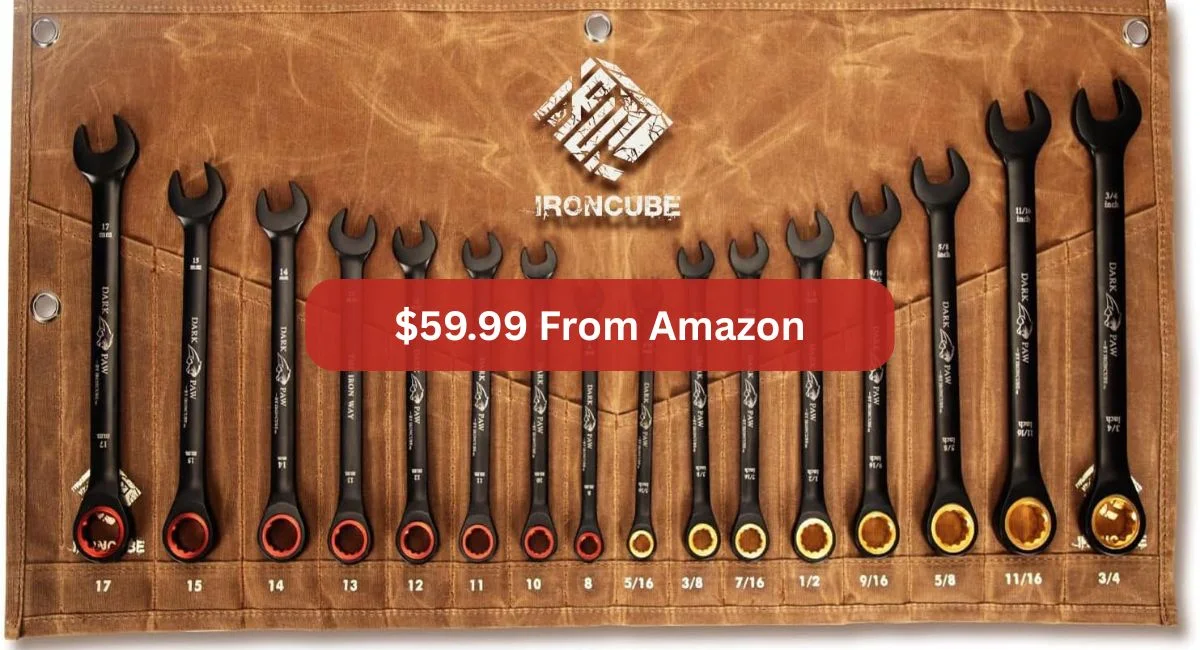
If you work on a mix of vehicles, consider having both SAE and metric wrench sets on hand. You can also check out the 16-Piece Metric & SAE Combination Set from Ironcube for maximum versatility.
Components of a Brake Line Wrench Set
A high-quality SAE brake line wrench set generally includes multiple sizes, each crafted for different fittings. Many sets also include ratcheting wrenches and flare nut wrenches, giving users flexibility and convenience in tight spaces.
Common SAE Sizes and Uses
| SAE Size (Inches) | Typical Application | Equivalent Metric Size |
|---|---|---|
| 1/4″ | Small brake lines or fuel lines | 6 mm |
| 5/16″ | Compact fuel fittings | 8 mm |
| 3/8″ | Standard brake fittings | 10 mm |
| 7/16″ | Transmission cooler lines | 11 mm |
| 1/2″ | Heavy-duty brake fittings | 13 mm |
| 9/16″ | Larger hydraulic fittings | 14 mm |
These are commonly found in professional sets such as the 8 pcs SAE Ratchet Wrench Set or the SAE Ratcheting Combination Wrench Set.
How to Use SAE Brake Line Wrench Set Safely
Here’s where the rubber meets the road—literally. Proper use of your SAE brake line wrench set not only ensures a perfect fit but also keeps your brake system leak-free and safe.

1. Identify the Right Size
Before starting, match the wrench size to the fitting you’re working on. Never “make it fit” by forcing a close-sized wrench—it’ll only round off the nut. Refer to the conversion chart above to verify your match.
2. Clean the Area
Brake and fuel lines often attract grime, oil, and rust. Use a small wire brush or cloth to clean the fitting before applying the wrench. This ensures a firm grip and prevents slippage.
3. Secure the Wrench Properly
Slip the wrench over the fitting. For flare nut wrenches, make sure it grips all sides of the nut. Apply steady pressure, turning in small increments. Avoid jerky movements that might twist or snap the line.
4. Use a Ratcheting Option for Tight Spaces
When working under the hood or near the wheel well, space can be tight. A brake line ratchet wrench set gives you a mechanical advantage—tightening or loosening without removing the wrench after each turn. You can explore Ironcube’s Wrenches Ratcheting Amazon SHOP for premium-quality ratcheting options.
5. Apply Controlled Torque
Never over-tighten brake line fittings. Doing so can crush the flare and cause leaks. If you’re unsure about torque specs, check your vehicle’s service manual.
6. Inspect After Use
Once done, inspect the fitting for leaks or damage. A quick test press of the brake pedal will tell you if everything’s sealed up tight.
SAE Brake Line Wrench Set Conversion Chart
Having a comprehensive conversion reference readily available prevents sizing mistakes and helps mechanics understand the relationship between different measurement systems. This detailed conversion chart provides quick access to critical dimensions when working with brake lines.
SAE to Metric Brake Line Wrench Conversion Table
| SAE Size (Inches) | Decimal Inches | Metric Equivalent (mm) | Common Application |
|---|---|---|---|
| 1/4″ | 0.250 | 6.35mm | Small fuel lines, European fittings |
| 5/16″ | 0.3125 | 7.94mm | Transmission cooler lines |
| 3/8″ | 0.375 | 9.53mm | Standard brake lines (domestic) |
| 7/16″ | 0.4375 | 11.11mm | Master cylinder, wheel cylinders |
| 1/2″ | 0.500 | 12.70mm | Large brake lines, heavy-duty applications |
| 9/16″ | 0.5625 | 14.29mm | Caliper fittings, proportioning valves |
| 5/8″ | 0.625 | 15.88mm | Master cylinder, brake boosters |
| 11/16″ | 0.6875 | 17.46mm | Heavy-duty truck brake lines |
| 3/4″ | 0.750 | 19.05mm | Large master cylinders, truck applications |
| 13/16″ | 0.8125 | 20.64mm | Commercial vehicle brake systems |
| 7/8″ | 0.875 | 22.23mm | Heavy truck, bus brake systems |
| 15/16″ | 0.9375 | 23.81mm | Specialized heavy-duty applications |
Common Metric Brake Line Sizes
| Metric Size (mm) | Decimal Inches | Nearest SAE (Inches) | Typical Vehicle Origin |
|---|---|---|---|
| 8mm | 0.3150 | 5/16″ (loose fit) | European compact cars |
| 9mm | 0.3543 | Between 5/16″ & 3/8″ | European vehicles |
| 10mm | 0.3937 | Between 3/8″ & 7/16″ | Japanese, Korean vehicles |
| 11mm | 0.4331 | Between 7/16″ & 1/2″ | European brake systems |
| 12mm | 0.4724 | Between 7/16″ & 1/2″ | Import trucks, SUVs |
| 13mm | 0.5118 | Just over 1/2″ | Heavy-duty imports |
| 14mm | 0.5512 | Between 1/2″ & 9/16″ | European commercial vehicles |
Important sizing notes emphasize that these conversions show mathematical equivalents, not functional substitutes. A 10mm wrench will not work properly on a 3/8″ fitting despite the close numerical equivalence. The precision required for brake line work demands exact size matches—always use the measurement system that matches your vehicle’s fittings.
Reading the conversion chart effectively requires understanding tolerance principles. When a metric size falls “between” two SAE sizes, this indicates that neither SAE size provides an acceptable fit. For example, 10mm falls between 3/8″ (9.53mm) and 7/16″ (11.11mm), meaning both SAE sizes fit poorly—the 3/8″ is too small, while the 7/16″ is too large.
Application column guidance helps predict which sizes you’ll encounter most frequently. Domestic vehicles predominantly use the SAE sizes listed, while imports use metric. Understanding these patterns allows you to prioritize wrench purchases based on the vehicles you service most often.
Professional mechanics often maintain complete sets of both measurement systems to handle any brake service situation. However, home mechanics and enthusiasts may choose to invest in only the measurement system that matches their specific vehicle, supplementing with individual wrenches as needed for different cars in their household.
For those building comprehensive tool collections, consider starting with versatile options like the IRONCUBE 8pcs New Type SAE Ratcheting Wrench Set which covers essential SAE sizes for domestic vehicle brake work.
Types of Brake Line Wrenches Available
The market offers several brake line wrench variations, each designed to address specific challenges encountered in brake system work. Understanding these different types helps you select tools that match your working conditions, space constraints, and frequency of use.
Standard flare nut wrenches represent the traditional design featuring a six-point opening with one side cut away. These tools provide excellent grip and control, making them ideal for initial loosening of tight fittings and final tightening operations. The solid construction withstands high torque without flexing, though they require sufficient space to slip the wrench over the brake line. Most professional mechanics consider standard flare nut wrenches the foundation of any brake work toolkit.
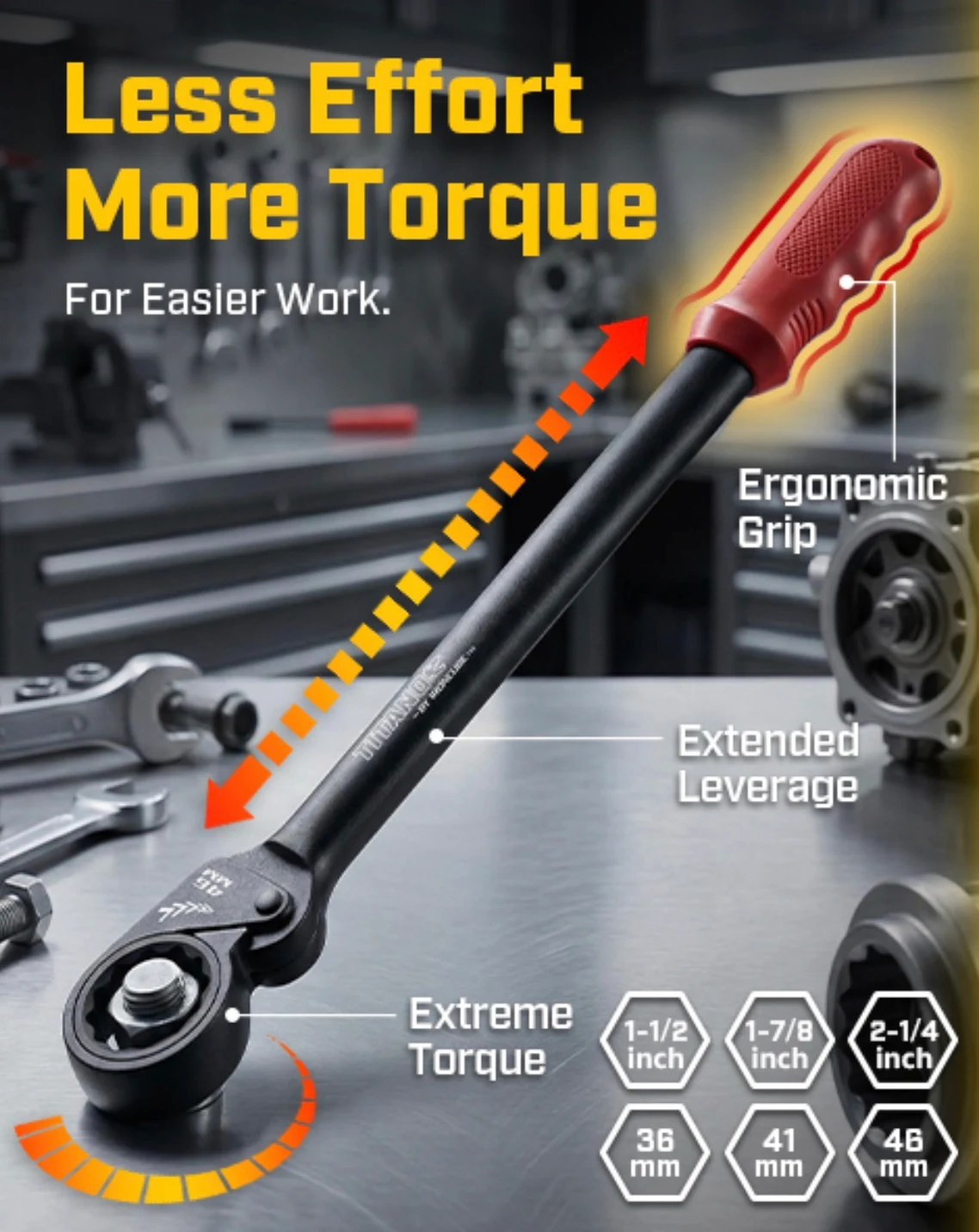
Brake line ratchet wrench sets incorporate ratcheting mechanisms that eliminate the need to remove and reposition the wrench with each stroke. This design innovation proves invaluable in confined spaces where swing arc limitations make traditional wrenches frustratingly slow. The ratcheting action allows continuous tightening or loosening with minimal hand movement, dramatically reducing work time. However, ratcheting wrenches typically feature more complex construction and may not withstand quite as much torque as solid designs.
For mechanics seeking the efficiency of ratcheting action, the SAE Ratcheting Combination Wrench Set offers versatile functionality for brake work and general automotive applications.
Offset and bent brake line wrenches feature angled heads that provide clearance for knuckles and improve access in recessed areas. Common offset angles include 15, 45, and 90 degrees, each serving specific access challenges. A 15-degree offset often suffices for general brake work, while 45 and 90-degree versions excel in tight engine compartments or undercarriage applications where straight wrenches cannot reach fittings effectively.
Crowfoot brake line wrenches consist of an open wrench head with a square drive hole for use with socket extensions or ratchets. These specialized tools excel in situations where absolutely no clearance exists to slip a wrench over a brake line. The crowfoot attaches to an extension, allowing the mechanic to work from angles impossible with traditional wrenches. However, crowfoot wrenches can apply off-axis torque, so they require careful use to avoid fitting damage.
Universal or adjustable brake line wrenches claim to fit multiple sizes through movable jaws or flexible openings. While appealing for their versatility, these tools rarely match the precision fit and torque capacity of dedicated fixed-size wrenches. The adjustable mechanisms may introduce play that allows fittings to round under load. Most professional mechanics avoid adjustable brake line wrenches for critical brake system work, reserving them only for non-critical applications or emergency situations.
Material and coating variations affect tool performance and longevity. Chrome vanadium steel with polished chrome plating represents the professional standard, offering excellent strength and corrosion resistance. Some premium wrenches feature black oxide or phosphate coatings that reduce glare and provide additional rust protection. Titanium-coated wrenches offer weight savings in large sets, though they typically cost significantly more than standard steel versions.
Explore specialized wrench options at IRONCUBE Works wrenches to find the perfect tools for your specific brake maintenance needs.
SAE vs Metric Brake Line Wrench Sets
Understanding the critical differences between SAE and metric sizing systems prevents tool selection mistakes that lead to stripped fittings and failed brake repairs. While both systems serve the same fundamental purpose, they use incompatible measurement standards that require distinct wrench sets for proper brake line service.
SAE (Society of Automotive Engineers) measurements use fractional inches, with common brake line sizes expressed as 3/8″, 7/16″, 1/2″, and so forth. This system predominates in American-made vehicles, classic cars, and many domestic light trucks. The fractional increment between consecutive sizes creates specific gaps—for example, the difference between 7/16″ and 1/2″ equals 1/16″ or approximately 1.6mm.
Metric measurements use millimeters, with typical brake line fittings sized at 8mm, 9mm, 10mm, 11mm, and 12mm. European, Japanese, and Korean vehicles primarily use metric brake line fittings. The progression between metric sizes creates different increments than SAE—the gap between 10mm and 11mm equals exactly 1mm, which does not correspond to any SAE fractional size.
Direct size comparison reveals incompatibility. While some sizes appear close—3/8″ equals 9.525mm, seemingly near 10mm—attempting to use a 10mm wrench on a 3/8″ fitting or vice versa results in poor fit, rounded corners, and potential fitting damage. The approximate 0.5mm difference means the wrench either feels loose, contacting only corner points, or requires forcing that stresses fitting edges.
Visual identification methods help determine whether a vehicle uses SAE or metric fittings. Vehicle country of origin provides the first clue: American vehicles typically use SAE, while European and Asian vehicles generally use metric. Manufacturing date also matters, as some American manufacturers transitioned to metric fittings during specific model years. When uncertain, try fitting wrenches from both systems, noting which seats properly without force or excessive play.
Dual SAE and metric sets offer comprehensive coverage for mechanics working on diverse vehicle types. These combination sets include both measurement systems, typically in a single organized case. The 16-Piece Metric & SAE wrench set exemplifies this approach, providing complete size range coverage for virtually any automotive brake system.
Conversion attempts should be avoided despite mathematical equivalence charts. While 10mm nominally equals 0.3937″, and various SAE sizes approach this dimension, no SAE wrench fits a 10mm fitting properly. The same principle applies in reverse—metric wrenches do not substitute adequately for SAE sizes. Always use the correct measurement system for your vehicle’s brake fittings to ensure safe, damage-free service.
Parts department verification provides definitive sizing information when visual identification proves difficult. Most auto parts stores can look up brake line fitting specifications by vehicle year, make, and model. This research investment prevents purchasing incompatible tools and ensures your wrench set matches your vehicle’s actual requirements.
Maintaining Your SAE Brake Line Wrench Set
Proper wrench maintenance extends tool life, ensures reliable performance, and prevents unexpected failures during critical brake repairs. Quality brake line wrenches represent significant investments that reward careful care with decades of dependable service.
Cleaning after each use prevents corrosive brake fluid damage. Brake fluid attacks metal surfaces over time, causing pitting and corrosion that weakens wrenches and roughens internal surfaces. After completing brake work, wipe each wrench thoroughly with clean, lint-free cloths to remove all brake fluid residue. Pay special attention to the internal jaw surfaces that contact fittings—any brake fluid remaining there can corrode the precision surfaces that ensure proper grip.
Solvent cleaning removes stubborn contamination that dry wiping misses. Use mineral spirits, brake parts cleaner, or dedicated tool cleaning solvents to dissolve oil, grease, and brake fluid residue. Apply solvent liberally, working it into the wrench opening with a small brush to reach all surfaces. Rinse with additional clean solvent, then dry completely with compressed air or clean cloths. Never put wrenches away wet, as moisture promotes rust formation even on chrome-plated surfaces.
Rust prevention preserves wrench condition in humid environments. After cleaning and drying, apply a light coating of tool oil, machine oil, or purpose-made rust preventive to all metal surfaces. Wipe excess oil away—you want a thin protective film, not a heavy coating that attracts dirt. For long-term storage, consider specialized rust preventive products like Boeshield T-9 or Fluid Film that provide extended protection without becoming sticky or rancid over time.
Proper storage organization protects wrenches from damage and keeps sizes readily accessible. Avoid throwing wrenches loosely into toolboxes where they bang against each other and other tools, potentially damaging precision jaw surfaces. Use wrench organizer trays, rolls, or racks that separate each size and hold wrenches securely. Many mechanics prefer storing brake line wrenches separately from general purpose tools to prevent contamination and ensure critical brake tools remain readily available.
Regular inspection routines identify developing problems before they cause failures. Periodically examine each wrench for cracks, especially around the opening slot where stress concentrates during use. Check that jaw openings remain parallel and undistorted—wrenches that spread open under previous heavy loads may grip poorly. Verify that chrome plating remains intact without flaking or excessive wear that exposes base metal to corrosion. Replace any wrench showing significant wear or damage rather than risking failure during brake work.
Jaw surface refinishing can restore wrenches with minor surface damage. If internal jaw surfaces develop minor burrs or roughness from use, careful work with fine-grit emery cloth or a small fine file can smooth surfaces without removing significant metal.
Calibration verification ensures torque accuracy for wrenches with built-in torque limiting features. Some advanced brake line wrenches incorporate torque-limiting mechanisms to prevent overtightening. These tools require periodic calibration verification against known standards to maintain accuracy.
Documentation and inventory helps track tool condition and replacement needs. Maintain a tool inventory list noting purchase dates, manufacturers, and general condition. Mark wrenches requiring replacement or repair, and schedule periodic tool budget allocations to address maintenance needs proactively rather than dealing with unexpected tool failures during urgent repairs.
For mechanics seeking complete, organized tool solutions, browse options at IRONCUBE customized tools for professional-grade equipment designed to last.
Summary
An SAE Brake Line Wrench Set is an indispensable tool for anyone working on automotive brake systems. Its precision design ensures that you can tighten or loosen brake line fittings safely and efficiently. Whether you’re a professional mechanic or a DIY enthusiast, investing in a high-quality set like the 8 pcs SAE Ratchet Wrench Set from IRONCUBE will make your work easier and safer.
For more tools and accessories, explore IRONCUBE’s Hand Tool Collection or contact them for customized solutions at Customized Tools.
By following this guide, you’ll be well-equipped to handle brake line maintenance with confidence and precision.
FAQs
1. What does SAE stand for in wrench sets?
SAE stands for “Society of Automotive Engineers.” It refers to inch-based measurements used primarily in American vehicles and tools.
2. Can I use a metric wrench instead of an SAE?
It’s not recommended. Using a metric wrench on SAE fittings (or vice versa) can cause slippage and round off the corners of nuts.
3. What is the difference between a flare nut wrench and a regular wrench?
A flare nut wrench grips more sides of the nut, providing better control for fittings on brake and fuel lines.
4. Which is better: ratcheting or standard brake line wrenches?
Ratcheting wrenches are great for tight spaces and speed, while standard wrenches offer more torque for stuck fittings. Having both is ideal.
5. What size SAE wrench do I need for brake lines?
The most common sizes are 3/8″ and 7/16″, but always check your specific vehicle’s fittings.