In the world of mechanics, DIY enthusiasts, and professional tradespeople, the ability to effortlessly switch between standard (SAE) and metric measurements is not just a convenience—it’s a necessity. From working on vintage American muscle cars to modern European machinery, having the right wrench for the job is paramount. This comprehensive guide, brought to you by IRONCUBE, aims to demystify the often-confusing realm of wrench sizes, providing you with the definitive Metric Wrench Conversion Chart and invaluable insights. We understand the frustration of fumbling for the right tool, which is why we’ve compiled this in-depth resource to ensure you’re always prepared.
The Dual Worlds of Wrenches: Standard (SAE) vs. Metric
Before diving into conversions, it’s essential to grasp the fundamental differences between standard (SAE) and metric wrench systems.
What are Standard (SAE) Wrenches?
Standard, or SAE (Society of Automotive Engineers), wrenches are measured in fractions of an inch. This system is predominantly used in the United States and with older American-made vehicles and machinery. You’ll commonly encounter sizes like 1/4″, 5/16″, 3/8″, 1/2″, and so on. The fractional measurements reflect the historical development of engineering in the U.S., where imperial units have long been the standard.
Many classic cars, motorcycles, and heavy equipment manufactured in North America before the widespread adoption of metric standards will primarily require SAE wrenches. Enthusiasts working on these machines often build extensive collections of SAE tools to ensure they have the right fit for every bolt and nut. The precision in these fractional measurements is critical, as even a slight mismatch can lead to rounding off fastener heads, making removal or tightening a nightmare.
What are Metric Wrenches?
Metric wrenches are measured in millimeters (mm) and are the global standard. This system is used almost everywhere outside the United States and is increasingly common even within the U.S. for newer vehicles and imported machinery. Sizes typically range from 6mm, 7mm, 8mm, up to much larger sizes like 32mm and beyond. The simplicity of whole numbers in the metric system makes it intuitive for many users, contributing to its widespread adoption.
Modern vehicles, especially those from European and Asian manufacturers, are designed with metric fasteners. As the automotive industry has become more globalized, metric measurements have become the de facto standard. Even many American manufacturers now incorporate metric fasteners into their designs, making a comprehensive set of metric wrenches an indispensable part of any toolkit. For those seeking reliable metric solutions, explore our IRONCUBE Tough Series Metric Ratcheting Wrench Set and discover the precision of IRONCUBE Wrenches.
Why the Need for Conversion?
The need for conversion arises from the diverse origins of fasteners found in various applications. You might be working on a project that combines components from different manufacturing regions, or perhaps you’re repairing an older piece of equipment alongside a newer one.
- Mixed Projects: A common scenario involves repairing a vehicle where certain aftermarket parts might use metric fasteners, while the original components are SAE.
- Global Manufacturing: Many tools and components are sourced globally, meaning you’ll invariably encounter both systems.
- Emergency Situations: In a pinch, knowing a close conversion can save you a trip to the hardware store, although using the exact size is always recommended for long-term fastener integrity.
Having a reliable Metric Wrench Conversion Chart on hand, like the one we provide, minimizes guesswork and ensures you select the correct tool every time. It saves time, reduces frustration, and most importantly, protects your fasteners from damage.
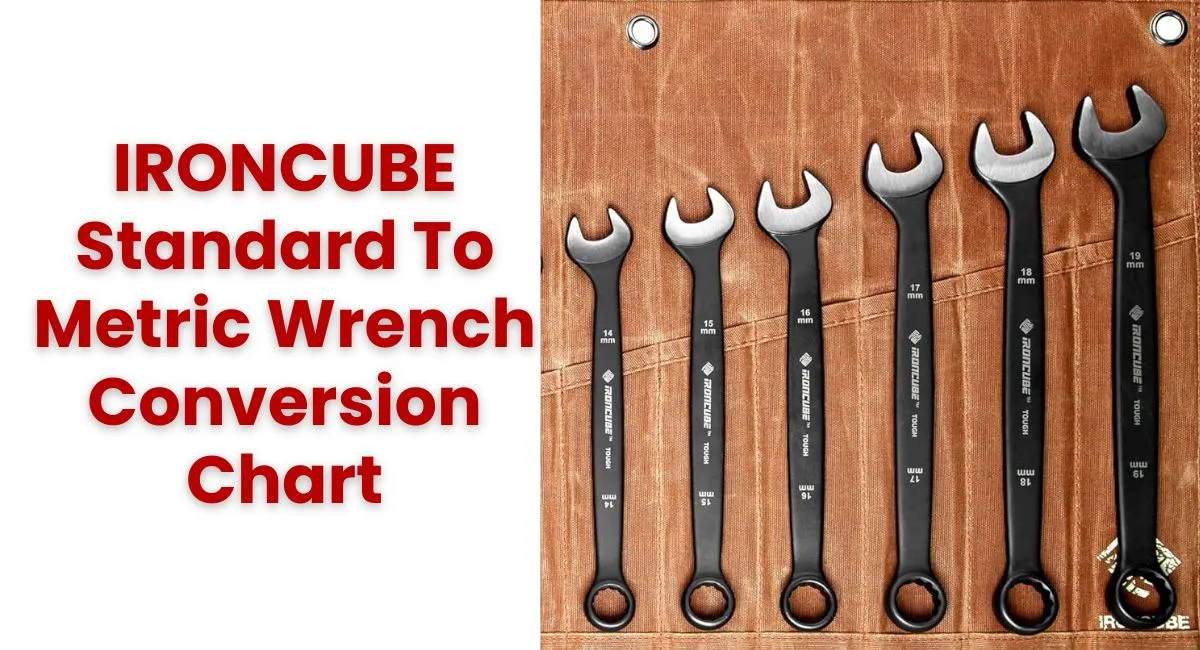
The IRONCUBE Standard To Metric Wrench Conversion Chart
This chart is designed to be your go-to reference for quickly converting between standard (SAE) and metric wrench sizes. While it’s always best to use the exact size, this chart provides the closest equivalents, which can be invaluable in situations where an exact match is unavailable.
Always remember: This chart offers approximate equivalents. For critical applications, always use a wrench that provides a snug fit to prevent rounding off fasteners.
| Standard (SAE) Wrench Size | Closest Metric (mm) Equivalent |
| 1/4″ | 6.35 mm |
| 5/16″ | 7.94 mm |
| 3/8″ | 9.53 mm |
| 7/16″ | 11.11 mm |
| 1/2″ | 12.70 mm |
| 9/16″ | 14.29 mm |
| 5/8″ | 15.88 mm |
| 11/16″ | 17.46 mm |
| 3/4″ | 19.05 mm |
| 13/16″ | 20.64 mm |
| 7/8″ | 22.23 mm |
| 15/16″ | 23.81 mm |
| 1″ | 25.40 mm |
| 1-1/16″ | 26.99 mm |
| 1-1/8″ | 28.58 mm |
| 1-3/16″ | 30.16 mm |
| 1-1/4″ | 31.75 mm |
How to Use Your Wrench Conversion Chart Effectively
Using the conversion chart is straightforward, but a few best practices will ensure you get the most out of it and protect your fasteners.
- Identify the Fastener: First, determine whether the fastener you’re working with is likely SAE or metric. This can often be inferred from the origin of the equipment.
- Attempt a Direct Fit: Always try a wrench that you believe is the correct size first, whether it’s an SAE or metric measurement. A snug fit is key.
- Consult the Chart: If your initial attempts fail, or you’re unsure, refer to the IRONCUBE Standard To Metric Wrench Conversion Chart. Find the size you have and look for its closest equivalent in the other system.
- Test the Equivalent: Gently try the suggested equivalent wrench. If there’s any play or wiggle, it’s not the correct size. For crucial tasks, it’s always better to obtain the exact wrench size rather than forcing a near fit.
- Invest in Dual Sets: The most effective way to be prepared is to own comprehensive sets of both SAE and metric wrenches. This eliminates the need for constant conversions and ensures you always have the precise tool. IRONCUBE offers a wide range of hand tools, including both standard and metric sets, to meet every need.
The Science Behind a Good Wrench Fit
A wrench’s primary function is to apply torque to a fastener without damaging it. This requires a precise fit between the wrench opening and the fastener head.
- Tolerance and Play: Even a minuscule gap between the wrench jaws and the fastener can lead to concentrated stress points on the fastener’s corners. When torque is applied, these corners can round off, making the fastener impossible to turn and potentially requiring destructive removal methods.
- Material Strength: High-quality wrenches, like those from IRONCUBE, are manufactured from durable materials such as chrome vanadium steel. This material resists deformation under high torque, transferring force efficiently and reducing the risk of tool failure or fastener damage. Our commitment to quality ensures that our tools, such as the IRONCUBE Ratcheting Wrench Set for Men, stand up to the toughest jobs.
- Design and Geometry: The internal geometry of a wrench, particularly the points of contact, is critical. A well-designed wrench distributes the force evenly across the flats of the fastener, minimizing stress on the corners. Ratcheting wrenches, for example, often feature a 12-point or specially designed open-end to maximize grip and minimize slippage. Explore the innovative designs in our Ratcheting Wrench Set on Amazon.
Beyond Basic Wrenches: Specialized Tools and Their Sizing
While combination wrenches are the most common, understanding the sizing of specialized wrenches is also important.
Ratcheting Wrenches
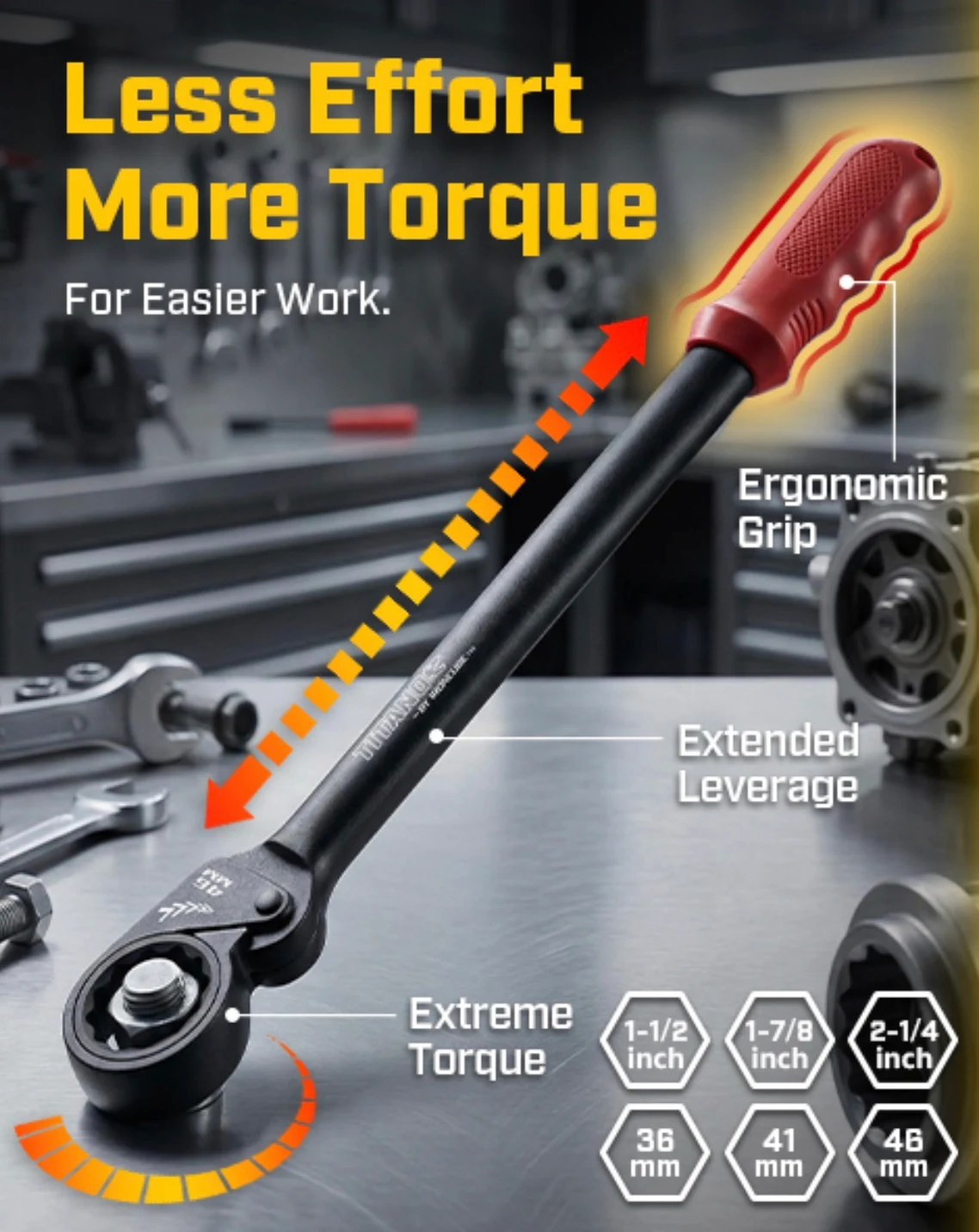
Ratcheting wrenches offer the speed and convenience of a ratchet with the compact profile of a standard wrench. They are invaluable in tight spaces where continually repositioning a wrench is impractical. The sizing for ratcheting wrenches follows the same SAE and metric standards as traditional wrenches. IRONCUBE’s Ratcheting Wrenches on Amazon provide exceptional performance and durability.
Flare Nut Wrenches
Flare nut wrenches are designed for fasteners on soft metal tubing, such as brake lines and fuel lines. They have a nearly enclosed hexagonal opening that grips multiple sides of the fastener, reducing the chance of rounding off the soft metal. These wrenches also come in both SAE and metric sizes, corresponding to the diameter of the tubing and the size of the flare nut. Our IRONCUBE Brake Line Wrench Set is specifically designed for these delicate applications.
Torque Wrenches
Torque wrenches are precision tools used to apply a specific amount of rotational force (torque) to a fastener. While the torque setting is measured in foot-pounds (ft-lbs) or Newton-meters (Nm), the square drive size (e.g., 1/4″, 3/8″, 1/2″) and the socket or wrench head itself will be either SAE or metric. Accurate sizing is paramount when using a torque wrench to ensure proper fastener tension and prevent over-tightening or under-tightening, which can lead to component failure.
Adjustable Wrenches
While adjustable wrenches (often called crescent wrenches) can cover a range of sizes, they are generally not recommended for precise work or high-torque applications. Their adjustable nature means they often have more play than a fixed wrench, increasing the risk of rounding off fasteners. They serve best as a backup or for light-duty tasks where precise sizing is not critical. Even with an adjustable wrench, understanding whether you’re working with an SAE or metric fastener will help you set the jaws to the approximate correct opening.
How to Use the Conversion Chart Effectively
Using the metric wrench conversion chart requires more than simply reading numbers. Understanding the practical application of these conversions ensures you select the right tool and avoid damaging fasteners. When you encounter a fastener and need to determine which wrench to use, start by identifying whether you’re working with a metric or standard bolt.
The first step is visual inspection and measurement. If you have calipers or a wrench sizing gauge, measure across the flats of the bolt head or nut. This measurement tells you the exact size needed. Compare this measurement to the chart to find either the exact size or the closest equivalent. Remember that the “closest” size should only be used when an exact match isn’t available in your hand tool collection.
Practical fitting is crucial before applying torque. Even if the chart suggests a particular size should work, always test the fit first. Place the wrench on the fastener and check for play or looseness. A properly fitted wrench should slide onto the fastener with minimal resistance and have virtually no side-to-side movement. If you can wiggle the wrench significantly, choose a different size to avoid rounding the fastener corners.
When working with critical fasteners or high-torque applications, using the exact size is non-negotiable. Brake line connections, suspension components, and engine internals require precise torque specifications and proper tool fit. For these applications, invest in the specific size needed rather than relying on close equivalents. IRONCUBE’s brake line wrench set provides specialized sizing for these critical applications.
Document your most commonly needed conversions. As you work on vehicles or equipment regularly, you’ll notice patterns in the sizes you use most frequently. Keep a small reference card with your most common conversions in your toolbox or work area for quick access without consulting the full chart every time.
Summary
Understanding Standard to Metric Wrench Conversion is essential for anyone working with tools. With IRONCUBE’s Metric Wrench Conversion Chart, you can easily switch between measurement systems, ensuring precision and efficiency in your projects.
Explore our IRONCUBE Tools Set and discover the perfect tools for your needs. Whether you’re working on a car, motorcycle, or household project, IRONCUBE has you covered.
For more information, visit our Product Category or Contact Us today.
FAQs
Q1: What is the main difference between standard (SAE) and metric wrenches?
A1: The main difference lies in their units of measurement. Standard (SAE) wrenches are measured in fractions of an inch (e.g., 1/4″, 1/2″), predominantly used in the U.S. and for older American-made equipment. Metric wrenches are measured in millimeters (mm) (e.g., 10mm, 13mm) and are the international standard, widely used for modern vehicles and machinery worldwide.
Q2: Is there an exact conversion from SAE to Metric wrench sizes?
A2: No, there is generally no exact, whole-number conversion between the two systems. SAE is based on fractions of an inch, and metric is based on millimeters. While some sizes are very close (e.g., 1/2″ is close to 13mm, and 5/16″ is close to 8mm), they are not identical. Using the wrong size, even if it’s a “close fit,” risks stripping the fastener. Our chart provides the best-fitting equivalents based on common bolt diameters.
Q3: How do I know if a bolt requires an SAE or metric wrench?
A3: You can often infer it from the origin of the equipment or by trial and error.
- Origin of Equipment: Older American-made machinery is typically SAE. Newer vehicles (especially imports) and modern equipment are usually metric.
- Trial and Error: The most reliable method is to try both an SAE and a metric wrench of similar size. The correct wrench will fit snugly with no play.
- Measurement: Use a caliper to measure the bolt’s thread diameter and consult the IRONCUBE Standard To Metric Wrench Conversion Chart to find the corresponding wrench size.
Q4: Why is it crucial to use the exact wrench size?
A4: It is crucial to use the exact wrench size to prevent damage. Using a slightly too-large wrench, even one that is a “near match” from the conversion chart, concentrates force on the fastener’s sharp corners. Under torque, this will cause the corners to round off (strip the bolt head), making it difficult or impossible to remove the fastener later. Precision tools protect your fasteners.
Q5: How should I care for my IRONCUBE wrenches to ensure they last?
A5: To ensure your IRONCUBE wrenches provide years of reliable service:
- Clean after use: Wipe off any grease, oil, or dirt.
- Store properly: Keep them organized in a tool roll, chest, or rack to prevent damage and loss. Our IRONCUBE Combination Wrench Set often comes with convenient storage.
- Prevent rust: Apply a light coat of machine oil if stored in humid conditions. Avoid storing directly on concrete.
- Inspect regularly: Check for any signs of wear, cracks, or deformation.
Q6: Where can I find high-quality SAE and metric wrenches?
A6: You can find high-quality SAE and metric wrenches, including specialized sets, directly on our website, ironcubeworks.com, and under our Amazon storefront. Explore our full selection of Wrenches and Hand Tools. For our full product line, check out the IRONCUBE Amazon Store. For custom solutions or more information, feel free to contact us or visit our customized tools page. Don’t forget to check out our YouTube channel for tips and product demonstrations.