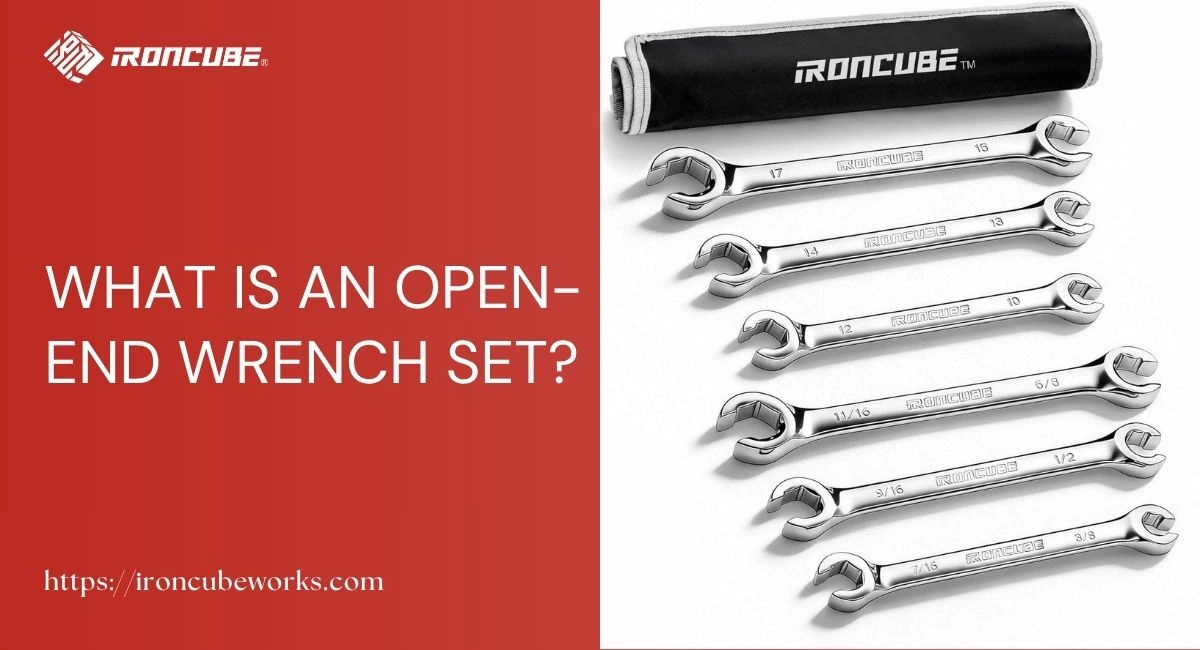
If you’ve ever tightened a bolt on a bicycle, adjusted a brake line, or repaired machinery, you’ve likely used an Open-end Wrench Set without thinking much about its design. Yet this simple-looking tool plays a vital role in nearly every mechanical task, from home repairs to heavy industrial maintenance.
An Open-end Wrench Set includes several wrenches with open jaws designed to grip nuts and bolts from the side. This design allows quick placement and removal, making it ideal for tight spaces where full rotation isn’t possible.
According to the historical and technical explanation available in the widely referenced guide on the
Wrench tool evolution Modern wrench designs began developing in the 19th century as industries required more precise torque control and standardized fastener sizes.
What Is an Open-end Wrench Set?
An Open-end Wrench Set is a collection of hand tools designed to tighten or loosen nuts and bolts using an open-jaw configuration. Each wrench usually includes two different-sized openings, one on each end.
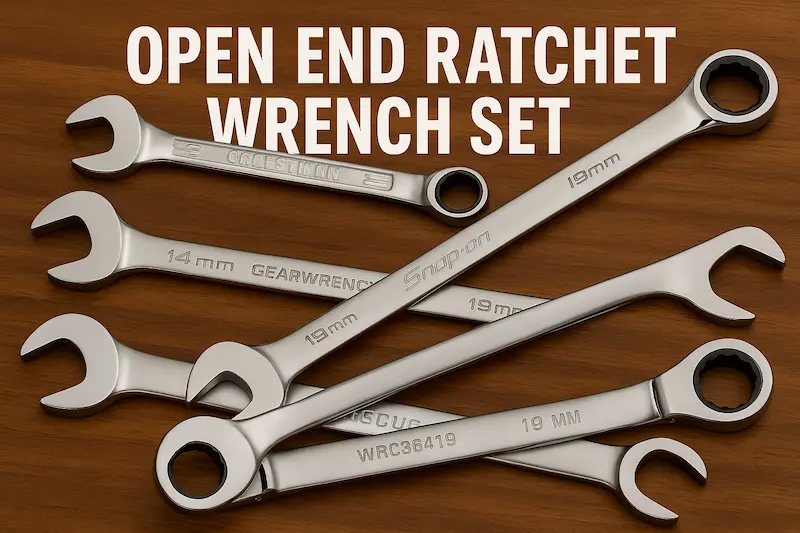
Unlike socket tools, open-end wrenches allow side access to fasteners. This makes them highly useful in areas where vertical clearance is limited.
Basic Structure of an Open-end Wrench
Every Open-end Wrench Set contains tools built with specific mechanical features.
Jaw Opening
The jaw grips the flat sides of nuts and bolts. Proper sizing ensures secure contact.
Handle
The handle provides leverage. Longer handles create greater torque.
Head Angle
Most open-end wrenches include a 15-degree angled head. This design improves positioning during repeated turns.
Finish
Protective finishes such as chrome plating prevent corrosion and extend lifespan.
Engineering sources indicate that angled heads reduce repositioning time and improve working efficiency during repetitive tightening operations.
How It Works
The design is simple, but every detail has a purpose. The jaws are machined flat and parallel to match the width-across-flats of a standard hex nut. When you slide the wrench onto the fastener and apply force to the handle, the leverage multiplies your grip strength into rotational torque.
Look closely at a quality wrench, and you’ll notice the jaws sit at a 15-degree angle relative to the handle. This offset isn’t cosmetic. It lets you flip the wrench between swings, effectively doubling the arc you can work within a tight space. Without that angle, you’d need a full 60-degree swing to reposition on the next pair of flats. With it, 30 degrees is enough.
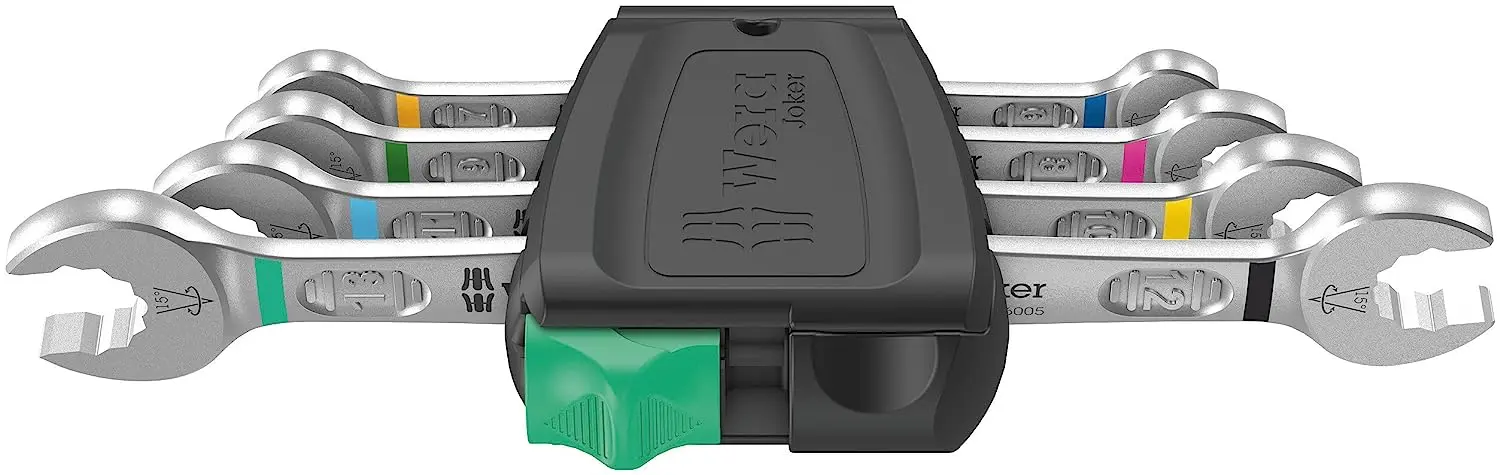
The ASME B107.100 standard governs these tools in North America. It requires hardness between 38 and 55 HRC and specifies proof torque values every wrench must withstand without permanent deformation. When you see that standard referenced on packaging, you’re looking at a tool that has been engineered and tested to real specifications.
Why Every Workshop Needs an Open-End Wrench Set
No matter your experience level, an open-end wrench set belongs in every toolbox.
From homeowners to industrial engineers, nearly everyone benefits from having quick access to properly sized wrenches.
Applications of Open-end Wrench Sets
The versatility of this tool makes it suitable for countless tasks.
Automotive Repairs
Modern vehicles use metric fasteners almost exclusively. Mechanics use open-end wrenches for:
- Brake line servicing
- Engine assembly
- Battery replacement
- Suspension maintenance
For example, specialized tools such as:
https://ironcubeworks.com/product/ironcube-3pcs-metric-brake-line-wrench-set-with-rolling-pouch/
They are designed specifically for brake line fittings where precision matters.
Industrial Maintenance
Factories rely heavily on Open-end Wrench Set tools to maintain production equipment.
Routine maintenance includes:
- Machine calibration
- Hydraulic fitting adjustment
- Conveyor repair
Reliable tools reduce downtime and prevent costly production delays.
Household and DIY Repairs
Even simple home projects require dependable hand tools.
Typical household uses include the following:
- Furniture assembly
- Plumbing repairs
- Bicycle maintenance
Having the right wrench size improves accuracy and reduces damage risk.
Common Types You’ll Find
Standard Double-Ended Wrenches
These are the workhorses: two sizes, one handle, 15-degree offset. They dominate most general-purpose kits because they pack maximum size coverage into minimum volume.
Angle-Head (Obstruction) Wrenches
Angle-head wrenches position the jaws at 60 or 75 degrees for reaching fasteners blocked by nearby obstructions. They’re common in plumbing and HVAC work.
Flare Nut Wrenches
Flare nut wrenches, also called line wrenches, wrap five of the six faces of a nut instead of just two. They’re essential for brake and fuel line fittings made of soft brass or copper. IRONCUBE offers a dedicated 3-piece metric brake line wrench set and an SAE version for older American vehicles.
Ultra-Thin (Super-Slim) Wrenches
Some fasteners sit in pockets so shallow that a standard wrench won’t fit. Ultra-thin wrenches solve that problem with reduced jaw thickness, trading some torque capacity for improved access.
SAE Open-end Wrench Sets
SAE (Society of Automotive Engineers) wrenches measure in inches. These tools are common in older American-made equipment.
Professionals working with mixed systems often carry both types.
For SAE-specific applications, explore the 3-piece SAE brake line wrench set with rolling pouch.
Materials Used in Open-End Wrench Sets
Material quality determines durability, strength, and long-term performance.
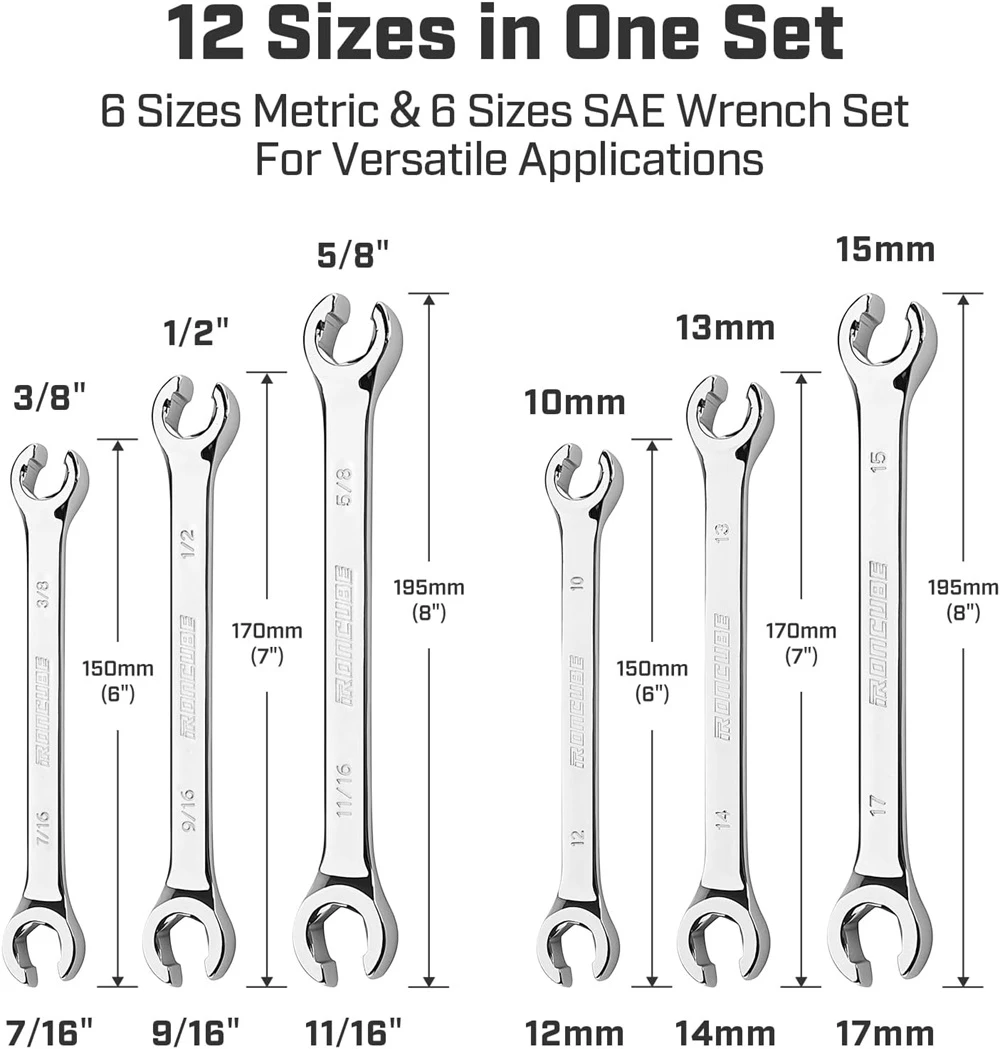
Most professional-grade Open-end Wrench Set tools use alloy steel.
Chrome Vanadium Steel Performance
Chrome Vanadium (Cr-V) steel remains one of the most popular materials used in wrench production.
Benefits include:
- High strength-to-weight ratio
- Resistance to corrosion
- Long fatigue life
Metallurgical research shows that Cr-V steel tools can withstand torque forces exceeding 600 MPa, making them suitable for demanding mechanical environments.
Heat Treatment and Strength
Heat treatment improves hardness and structural stability.
Properly heat-treated tools resist bending and maintain dimensional accuracy after repeated use.
Without heat treatment, tools may deform under pressure.
Summary
In the world of mechanical repair, having the right tool for the job is half the battle. An open-end wrench set provides the accessibility and speed required for a vast array of tasks. From tightening a simple nut on a lawnmower to bleeding the brakes on a performance car, these tools are indispensable.
By choosing a high-quality open-end wrench set, you protect your fasteners from damage and ensure your own safety. If you have any questions about which set is right for your specific project, don’t hesitate to contact us at Ironcube Works. We are happy to help you build a toolkit that will serve you for decades to come. Visit our homepage to explore our full range of professional-grade tools.
FAQs)
Q: What is an Open-end Wrench Set used for?
A. An Open-end Wrench Set is used to tighten or loosen nuts and bolts, especially in areas with limited clearance where socket tools cannot fit.
Q: How do I choose the right Open-end Wrench Set?
A. Select an Open-end Wrench Set based on material quality, size range, and application requirements such as automotive or industrial repair.
Q: Are metric Open-end Wrench Sets better than SAE?
A. Metric tools dominate global industries, making a metric Open-end Wrench Set more practical for modern vehicles and equipment.
Q. How long does an Open-end Wrench Set last?
A. A high-quality Open-end Wrench Set made from Chrome Vanadium steel can last many years with proper maintenance.
Q: Can beginners use an Open-end Wrench Set?
A. Yes, beginners can safely use an Open-end Wrench Set after learning proper sizing and handling techniques.