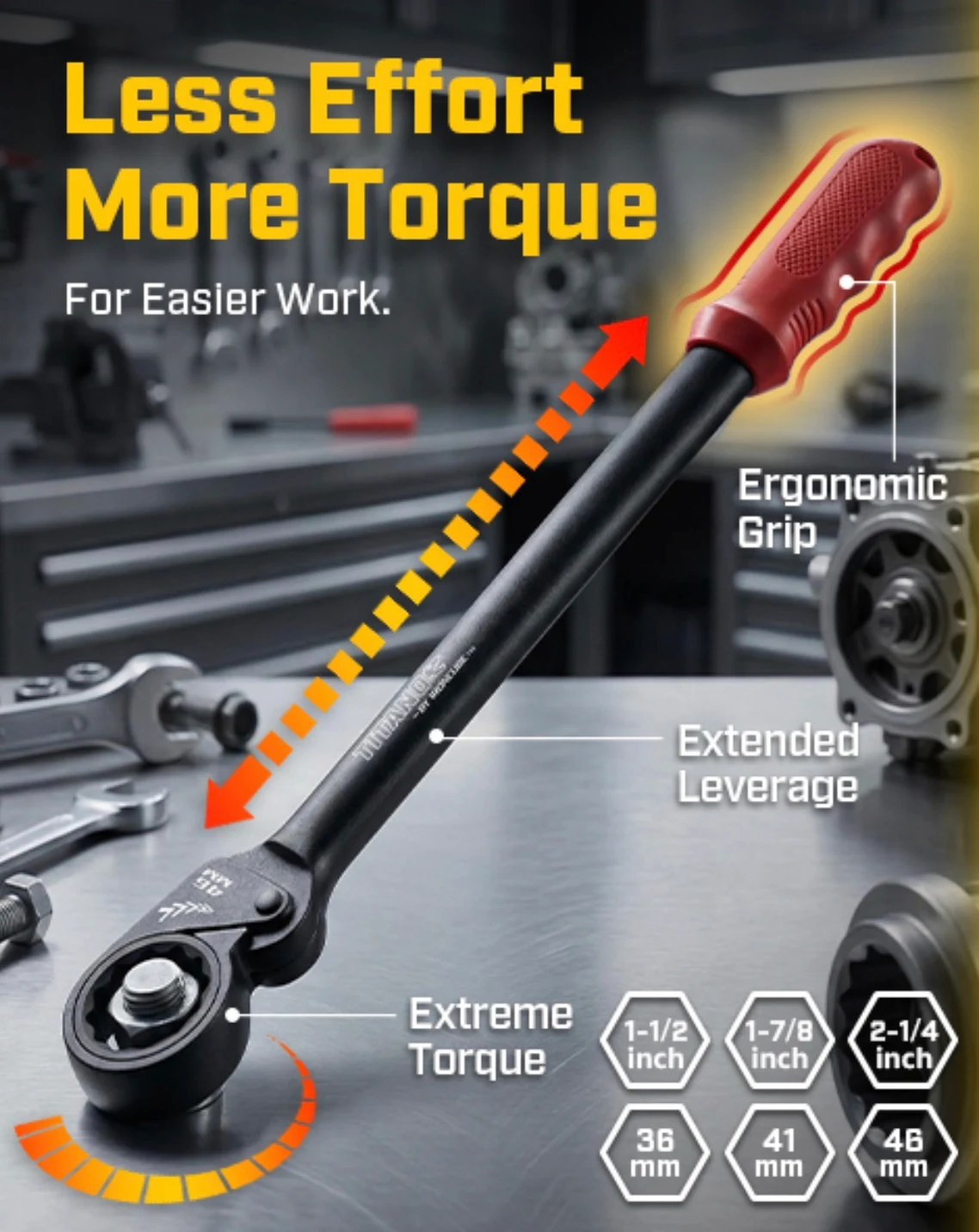

Every professional knows the frustration of working with a subpar tool. You’re in the middle of a tight space, trying to loosen a stubborn bolt, and your wrench slips or jams. Time is wasted, and your patience wears thin. The solution? A metric ratcheting wrench set reversible designed for precision and durability. Whether you’re a mechanic, construction worker, or DIY enthusiast, choosing the right tool can make all the difference. In this guide, we’ll walk you through the key factors to consider when selecting the perfect metric ratcheting wrench set for your workshop.
Why a Metric Ratcheting Wrench Set is Essential
A ratcheting wrench set is a game-changer for professionals. It allows you to tighten or loosen bolts without removing the wrench from the fastener, saving time and effort. The reversible feature adds versatility, enabling you to switch directions with ease. For those working with metric measurements, a large metric ratchet wrench set ensures compatibility with a wide range of fasteners.
Key Benefits:
- Efficiency: Ratcheting mechanisms reduce the need for repositioning.
- Precision: Tight spaces are no longer a challenge.
- Durability: High-quality materials ensure long-lasting performance.
Understanding Ratcheting Wrench Mechanics and Why Quality Matters
The ratchet mechanism inside these wrenches is where quality separates professionals from pretenders. Inside each wrench head, you’ll find a pawl-and-gear system. The gear has teeth, and the pawl (a spring-loaded lever) engages those teeth to transfer torque in one direction while allowing free rotation in the other.
Cheap sets use fewer teeth—sometimes as few as 36. This means you need 10 degrees of swing arc to advance the fastener. In tight quarters, you might not have 10 degrees to work with. Quality sets feature 72 or even 90 teeth, reducing the required swing arc to 5 or 4 degrees. That difference determines whether you can actually reach a bolt or not.
The reversing mechanism also varies. Some use a switch lever on the wrench head. Others use a flip-over design where you remove and reverse the entire head. The lever system is faster and more convenient, especially when your hands are greasy or you’re wearing gloves. This is standard on any best metric ratcheting wrench set worth considering.
Material quality directly impacts longevity. Chrome vanadium steel offers excellent strength and wear resistance. Heat treatment processes matter too—proper hardening prevents the gear teeth from wearing down or the pawl from bending under load. Surface finishing with chrome plating protects against corrosion while making cleanup easier.
Key Features That Define a Professional-Grade Wrench Set

The number of teeth in the ratchet mechanism determines minimum swing arc. For reference:
- 36-tooth mechanism: 10° swing arc
- 45-tooth mechanism: 8° swing arc
- 72-tooth mechanism: 5° swing arc
- 90-tooth mechanism: 4° swing arc
Professional applications demand 72-tooth minimum. Automotive work, HVAC installation, and industrial maintenance frequently involve restricted access where even a 10-degree swing is impossible. The Wrenches Ratcheting Amazon SHOP showcases examples of high-tooth-count designs that handle these challenging situations.
Offset Angle and Access Considerations
The head offset angle—typically 15 or 30 degrees—matters more than most buyers realize. A 15-degree offset provides better access around obstructions while maintaining more contact with the fastener. This reduces the risk of rounding bolt heads. A 30-degree offset gives slightly better clearance in extremely tight spaces but sacrifices some stability.
Some manufacturers offer a metric ratcheting wrench set flex head option. These feature a pivoting head that can angle up to 180 degrees. This flexibility is invaluable when you’re working at awkward angles or need to reach fasteners that aren’t perpendicular to your line of approach. The trade-off is slightly increased complexity and potential wear points.
Size Range and Workshop Coverage
A comprehensive large metric ratchet wrench set typically runs from 8mm to 19mm. This covers the vast majority of automotive and general mechanical work. Some extended sets go from 6mm to 24mm or even larger.
Consider your actual workload. Auto mechanics rarely need anything below 8mm or above 22mm for routine work. Industrial maintenance might require larger sizes. Buying unnecessarily large sets means paying for tools you’ll rarely use and storing wrenches that just take up drawer space.
Here’s a practical size breakdown:
| Size Range | Common Applications |
|---|---|
| 6mm-10mm | Small fasteners, electronics enclosures, light machinery |
| 10mm-17mm | Standard automotive work, most engine and chassis fasteners |
| 17mm-22mm | Suspension components, heavy equipment, larger structural bolts |
| 22mm+ | Specialized industrial, heavy truck, agricultural equipment |
Storage and Organization Systems
Professional wrench set options include organized storage that matters for efficiency. Tool roll pouches keep wrenches protected and portable. They’re ideal for mobile technicians or situations where you need to carry your tools to the job site. The downside is slower access—you need to unroll and search.
Molded foam inserts for toolboxes provide instant visual inventory. You can immediately see what’s missing and grab the right size without hunting. This speeds up workflow and reduces the chance of leaving tools at job sites. Organizations like IRONCUBE offer sets with custom foam solutions designed specifically for drawer organization.
Wall-mounted rails or magnetic strips offer another approach. These work well in dedicated workshop spaces where tools stay in one location. The visibility and access are excellent, but they’re not practical for mobile operations.
Material Quality and Manufacturing Standards That Actually Matter
Chrome vanadium steel (Cr-V) is the gold standard for ratcheting wrench set construction. This alloy combines chromium for hardness and corrosion resistance with vanadium for strength and wear resistance. The specific formulation and heat treatment process determine actual performance.
Drop forging creates stronger wrenches than casting. The forging process aligns the metal’s grain structure along the tool’s load path, significantly increasing strength. You can often identify forged tools by looking for subtle forging marks or parting lines—castings have smoother, more uniform surfaces.
Heat treatment involves heating the steel to specific temperatures and then cooling it in controlled ways. This process hardens the working surfaces while maintaining toughness in the body. Improperly heat-treated wrenches either bend under load or crack and break. Reputable manufacturers like IRONCUBE WORKS maintain strict control over heat treatment parameters.
Chrome plating serves multiple purposes. It provides corrosion protection, makes cleanup easier, and gives a professional appearance. But cheap chrome plating can flake or peel, eventually causing the underlying steel to rust. Quality plating is even, smooth, and tightly bonded to the base metal.
Comparing Standard vs. Flex-Head vs. Stubby Configurations
Standard Fixed-Head Wrenches
These represent the most common and versatile configuration. The ratcheting head is permanently fixed at a set angle to the handle. They offer maximum strength because there are no additional pivot points or flex mechanisms to create weak spots. The offset angle (typically 15 or 30 degrees) is optimized for general use.
Standard configurations work well for the majority of applications. They’re more affordable than specialized alternatives and require less maintenance since there are fewer moving parts. For shops building a first set or supplementing existing tools, standard reversible ratcheting wrenches provide the best value.
Flex-Head Articulating Designs
A metric ratcheting wrench set flex head configuration adds a pivoting joint between the handle and head. This allows the head to angle in various directions—some models pivot 180 degrees or more. This articulation helps you approach fasteners from difficult angles without repositioning your body or the entire tool.
The flexibility comes with trade-offs. The pivot mechanism adds complexity and potential failure points. Some torque capacity is lost compared to fixed-head designs. The increased cost is significant—flex-head sets typically run 40-60% more than comparable fixed-head options.
When is the premium worth it? If you regularly work in extremely confined spaces with odd angles—think deep engine bays, aerospace assemblies, or complex industrial machinery—flex-head wrenches earn their keep quickly. For general shop work, they’re a luxury rather than a necessity.
Stubby and Compact Versions
Stubby ratcheting wrenches sacrifice handle length for access. With handles 30-50% shorter than standard wrenches, they fit into spaces where regular wrenches simply won’t. The trade-off is obvious—less leverage means more difficulty with tight fasteners.
These work best as specialty tools for specific applications rather than primary workshop wrenches. Keep a standard set as your main toolkit and add stubby versions for the handful of situations where access is more important than leverage.
Metric Ratcheting Wrench Set Sizes and Building a Complete Collection
The question isn’t just which set to buy—it’s how to build coverage efficiently without wasting money on redundant tools. Start with a core set covering 8mm through 19mm. This handles approximately 85% of common mechanical work.
Core Set (8mm-19mm)
This range includes: 8mm, 10mm, 11mm, 12mm, 13mm, 14mm, 15mm, 16mm, 17mm, 18mm, 19mm. You’ll use 10mm, 13mm, and 17mm constantly in automotive work. The others fill in gaps for less common but still regular fastener sizes.
Extended Range (6mm-7mm, 20mm-24mm)
Add these once your core set is established and you’ve identified recurring needs. Smaller sizes (6-7mm) matter for electronics, instrumentation, and precision equipment. Larger sizes (20-24mm) cover suspension work, heavy equipment, and structural applications.
Specialty Sizes (Above 24mm)
These address specific industry needs—agricultural equipment, heavy trucks, industrial machinery. Don’t buy them speculatively. Wait until you have actual work requiring these sizes, then add them individually or in small sets.
The Combination Wrenches available through IRONCUBE demonstrate smart sizing strategies for different applications. Their sets focus on frequently used sizes rather than trying to cover every possible millimeter.
Shopping Smart: Best Metric Ratcheting Wrench Set Features for Your Budget
Quality doesn’t require emptying your equipment budget, but you need to recognize which features matter and which are just marketing. Here’s what actually impacts performance:
Must-Have Features:
- Minimum 72-tooth ratchet mechanism
- Forged chrome vanadium steel construction
- Reversing lever (not flip-over design)
- Chrome plating or equivalent corrosion protection
- Organized storage system
- Clear size markings that won’t wear off
Nice-to-Have Features:
- Laser-etched size markings
- Polished finish beyond chrome plating
- Premium storage case with foam inserts
- Sizes beyond standard 8-19mm range
Probably Unnecessary:
- Matching color-coding beyond size identification
- Exotic alloys or coatings unless working in corrosive environments
- Sets larger than your actual work requires
- Multiple finish options (satin vs. mirror chrome makes no functional difference)
The metric ratcheting wrench set home depot selection varies significantly in quality. Big-box retailers stock everything from professional-grade tools to barely functional budget options. The product descriptions often don’t clearly differentiate between forged and cast, or between 36-tooth and 72-tooth mechanisms. Do your research before visiting the store so you can make informed decisions rather than relying on packaging claims.
Real-World Testing: What Breaks and What Lasts
After thousands of hours using ratcheting wrenches in professional and industrial settings, certain failure patterns emerge consistently. Understanding these helps you choose tools that last and avoid designs with inherent weaknesses.
Common Failure Modes
The ratchet mechanism wears first in low-quality tools. The pawl or gear teeth round off, creating slippage under load. This happens when metallurgy is poor or tooth count is too low. Each engagement creates stress—more teeth means stress is distributed across more contact points.
The reversing lever is another common failure point. Cheap plastic levers break, especially in cold conditions. Metal levers can bend or the detent mechanism wears out, making it hard to lock the direction. Quality manufacturers use metal levers with positive detents that stay engaged under vibration.
Open-end splitting is less common in ratcheting wrenches than traditional combination wrenches, but it still happens with abuse. Applying excessive side loads or using the wrench as a pry bar can spread the jaws. Proper forging and heat treatment prevent this under normal working conditions.
Maintenance and Longevity
Ratcheting wrenches require minimal maintenance but benefit from occasional attention. The ratchet mechanism needs periodic cleaning and light lubrication. After exposure to dirt, water, or corrosive materials, spray out the mechanism with cleaner and apply a drop of light machine oil.
Avoid pressure washing ratcheting tools. The high-pressure water forces contaminants into the mechanism and strips out existing lubrication. Hand cleaning or careful solvent spraying works better.
Store wrenches in a way that prevents them from banging against each other. Repeated impacts can damage the ratchet teeth or bend the relatively thin wrench bodies. Foam inserts, tool rolls, or pegboard storage all work well.
Professional Purchasing: Volume Buying and Fleet Outfitting
Shops outfitting multiple technicians or contractors equipping crews face different considerations than individual buyers.
Volume Pricing and Direct Manufacturer Contact
Buying direct from manufacturers eliminates distributor margins. For orders of 10+ sets, contact manufacturers to discuss volume pricing. Savings of 20-40% are common on bulk orders.
Direct relationships with manufacturers also enable customization. Need specific size combinations not offered in standard sets? Most manufacturers can configure custom assortments. Want branded storage cases or laser-etched logos? These become economical at volume.
Standardizing on Specific Brands and Models
Equipment standardization simplifies training, replacement, and warranty management. When all technicians use identical tools, they can share, swap, and help each other without confusion about how things work or where sizes are stored.
Standardization also strengthens your negotiating position. Committing to a manufacturer for ongoing purchases lets you secure better pricing and priority service on warranty issues or custom orders.
OEM Opportunities for Tool Retailers and Distributors
Tool retailers and distributors can explore white-label opportunities with manufacturers like IRONCUBE. OEM production lets you offer house-brand tools with your own packaging, branding, and specifications while leveraging manufacturer expertise and production capacity.
This approach works particularly well for regional distributors, specialty tool retailers, or companies serving specific industries with unique requirements. The manufacturer handles production and quality control while you control branding and customer relationships.
The Manufacturer Advantage: IRONCUBE® WORKS
As an established manufacturer with our own factory and R&D capabilities since 2008, RONCUBE® WORKS offers a unique value proposition for professional buyers.

- Direct Quality Control: Our stringent control over the manufacturing process, from raw materials to final polish, ensures consistent quality across every Metric Ratcheting Wrench Set. We don’t just source—we forge and machine.
- Customization and Scalability: We welcome OEM orders and customized designs. Need a specialized set with unique size combinations or branding? Our R&D team is ready to meet your exact specifications. Find out more about customized solutions here.
- Certifications and Compliance: Our commitment to environmental and safety standards means our products easily pass REACH and other relative tests. This peace of mind is vital for international procurement.
Conclusion: Selecting Tools That Actually Work
Choosing a metric ratcheting wrench set reversible for your workshop comes down to matching features to your actual needs. Don’t get distracted by marketing hype or unnecessary features. Focus on the fundamentals: 72+ tooth mechanisms, forged chrome vanadium construction, smooth reversing action, and appropriate size coverage for your work.
Quality tools from manufacturers like IRONCUBE deliver professional performance without premium-brand pricing because they control their own production. As an original manufacturer with dedicated facilities for forging, machining, and heat treatment, we understand what makes tools perform in real-world conditions.
Whether you’re outfitting a new shop, replacing worn-out tools, or expanding your existing collection, we’re here to help. Browse our complete wrench selection or explore specialized sets like our 12-piece metric combination wrench set and 10-piece metric mini combination wrench set. Need custom configurations or private label production? Our customization services support OEM requirements for distributors and retailers.
Ready to upgrade your workshop with tools that actually last? Contact our team directly to discuss your specific requirements. As the original manufacturer, we’ll help you select the right tools for your applications and budget—no middleman markup, just straight answers from the people who build the tools.
FAQs
Q1: What are the key quality indicators we should look for when sourcing a large volume of metric ratcheting wrench sets for our technicians?
A: Focus on three main indicators: Material Composition (must be high-grade Chrome Vanadium steel or better), Gear Tooth Count (aim for $72$ teeth or higher for superior performance in tight spaces), and Torque Standards (ensure the tools are certified to meet or exceed ANSI or DIN specifications for ultimate durability and minimal failure rates). Also, verify the reversible mechanism is robust and not prone to breaking.
Q2: As a procurement manager, what cost-saving opportunities exist when ordering a specialized large metric ratchet wrench set, such as a metric ratcheting wrench set flex head, in bulk?
A: Partnering directly with a manufacturer like RONCUBE® WORKS allows for significant cost savings through economies of scale. We offer specialized bulk pricing, the ability to create customized sets tailored to your specific size requirements (eliminating unnecessary sizes), and reduced logistics costs. Furthermore, the higher durability of our tools lowers your long-term replacement costs, providing a lower total cost of ownership.
Q3: How does IRONCUBE® WORKS ensure consistency and quality control across large OEM orders for a wrench set?
A: Our quality is guaranteed by operating our own factory with advanced facilities, including CNC machining centers and forging workshops, since 2008. We maintain strict control over the entire production chain. Every set is manufactured using documented quality processes and subjected to rigorous testing to ensure uniform strength, finish, and performance, ensuring that every Metric Ratcheting Wrench Set meets our stringent, professional-grade specifications.
Q4: Are your products environmentally compliant for distribution in the European and American markets?
A: Yes. We are committed to environmental responsibility. Our raw material selection is environment-friendly, and all our products can successfully pass the REACH test and other necessary relative tests, ensuring compliance for distribution and use in both European and American markets.
Q5: Beyond the standard wrench set, what customized options are available to meet unique project needs?
A: We specialize in custom solutions. We can accommodate requests for unique size combinations, specialized finishes, custom packaging (such as a rolling pouch or durable plastic tray), and even branded labeling for OEM partners. Our R&D team can work with you to design a reversible ratchet wrench set that perfectly aligns with your project’s technical requirements. We welcome you to discuss your customized needs with us directly.