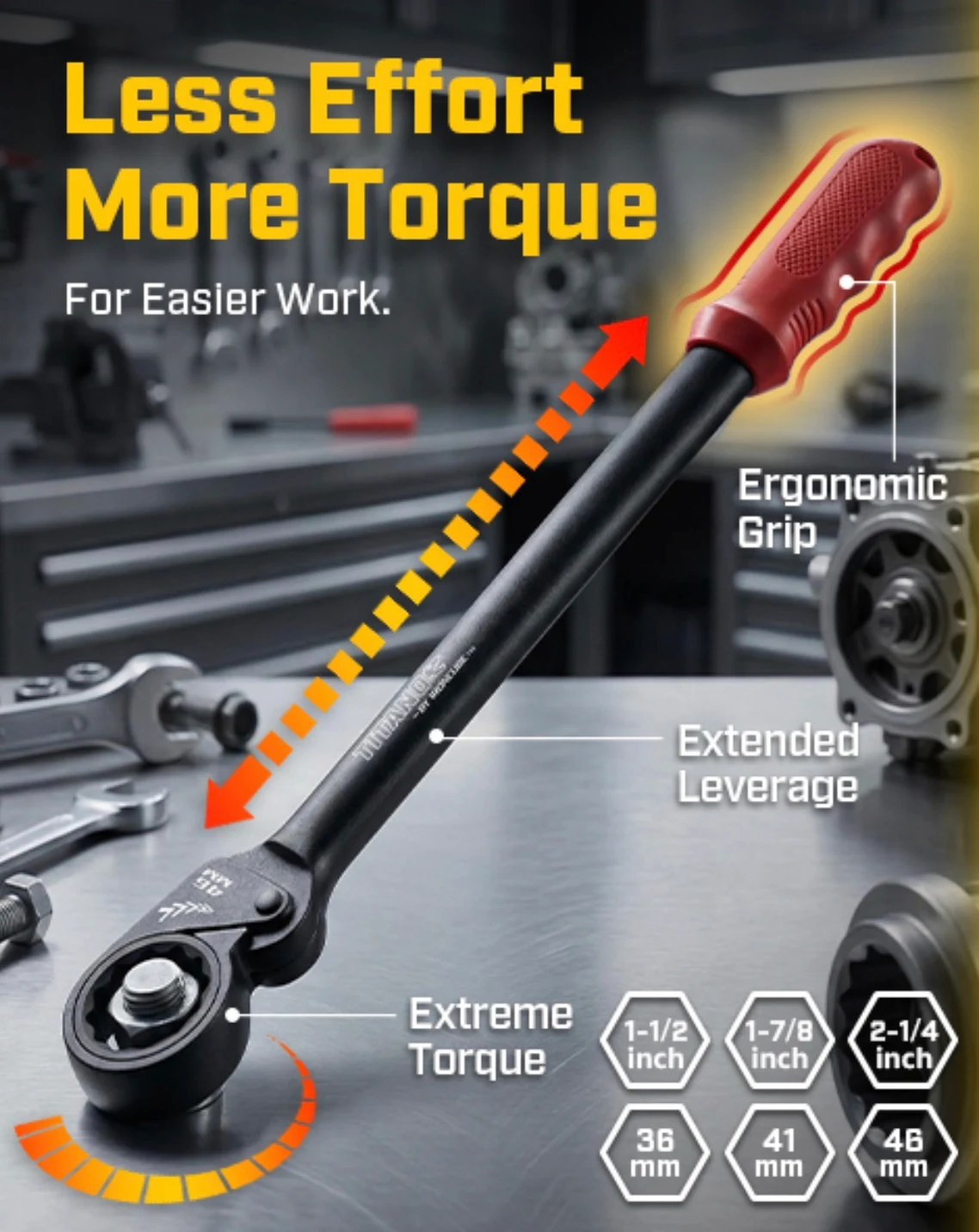

The combination of a socket set and ratcheting tool is indispensable in modern mechanical and DIY tasks. This pairing offers remarkable versatility and speed, enabling users to tackle everything from automotive repairs to home installations with ease and precision. At IRONCUBE, we provide premium-quality hand tools that streamline your workflow, increase efficiency, and ensure reliability.
This comprehensive guide explores the nuts and bolts of socket sets and ratcheting tools, their integration, usage tips, a detailed conversion chart, and much more. Whether you’re a professional mechanic or a passionate DIY enthusiast, mastering this tool duo will elevate your toolset performance and accuracy.
What is a Socket Set and Ratcheting Tool?
A Socket Set is a collection of sockets — cylindrical tools that fit over the head of a fastener (like a nut or bolt) to turn it. These sockets come in various sizes and types to match different fasteners.
A Ratcheting Tool, or ratchet wrench, is the handle that drives the socket. The ratcheting mechanism allows you to tighten or loosen a fastener without having to reposition the wrench every turn — a time-saving feature that mechanics swear by.
When combined, these two form an unbeatable team:
The socket grips the fastener head.
The ratchet provides the rotational force.
You can check out the high-quality Socket Set and Ratcheting Tool available on Amazon here for professional and household use.
The Evolution of Socket Set and Ratcheting Tool Technology
Socket set and ratcheting tool technology has transformed dramatically over the past several decades. In the early days of mechanical work, fasteners were simple and tool options were limited. However, as vehicles became more complex, manufacturing processes evolved, and industrial applications became more specialized, the demand for better integrated socket and ratcheting solutions grew exponentially.
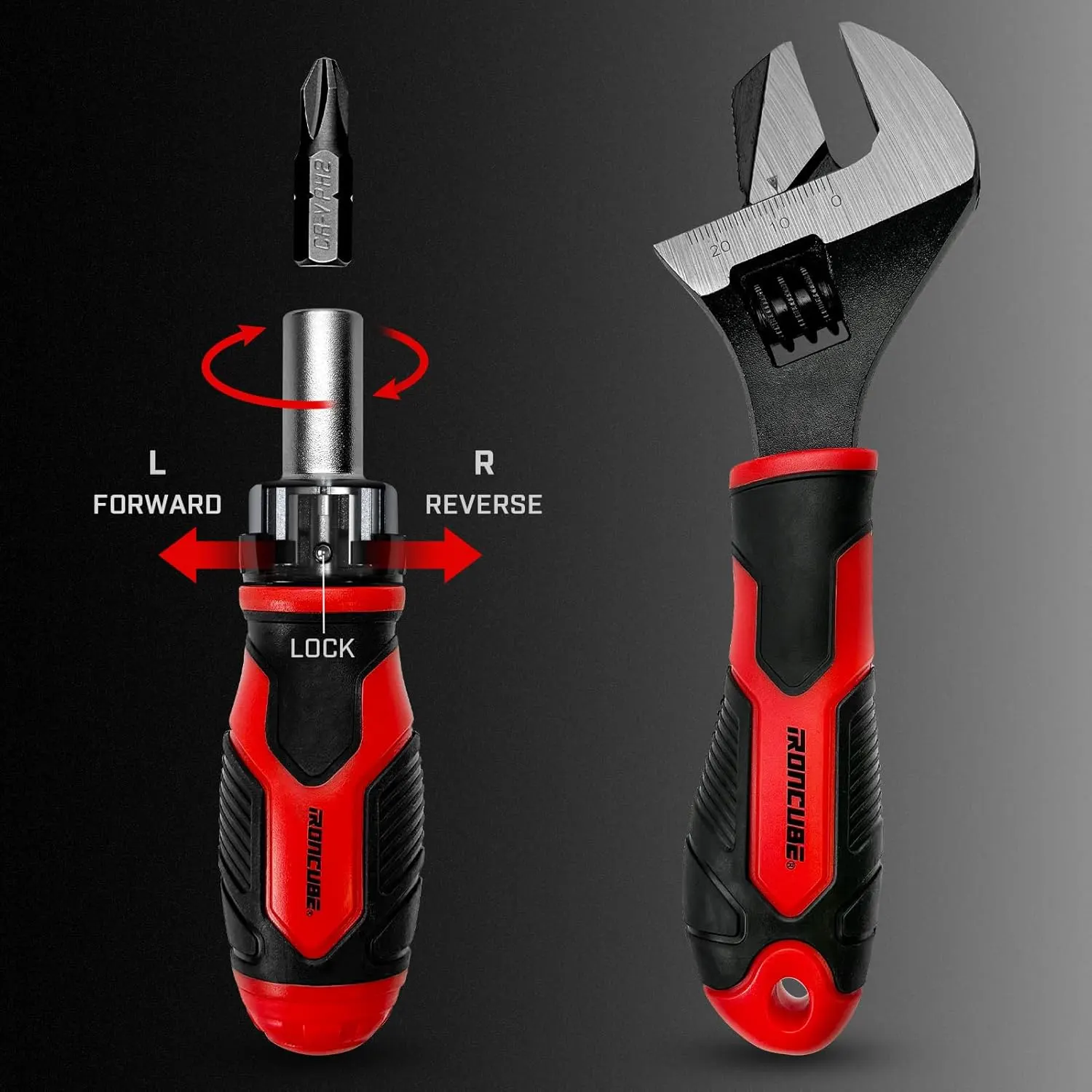
Modern socket sets and ratcheting tools now incorporate advanced materials and engineering principles that their predecessors couldn’t match. Today’s socket sets feature precision-forged alloy steel construction, ensuring they withstand tremendous force without cracking or deforming. The ratcheting mechanisms operate with smoother heads that pivot with minimal resistance, reducing the effort required to operate them repeatedly.
Contemporary hand tool innovations have introduced features like quick-release mechanisms, reversible drives for both tightening and loosening, and ergonomic handles designed to reduce hand fatigue during extended use. Manufacturers now engineer their socket sets to accommodate both standard metric and imperial measurements, recognizing the global nature of modern repair work.
Components and Features of Quality Socket Sets and Ratcheting Tools
A premium socket set and ratcheting tool integration includes several critical components that work in harmony. Understanding these elements helps you appreciate the engineering that goes into quality tools and why investing in superior options pays dividends over time.
The Ratchet Head
The ratchet head represents the mechanical heart of the ratcheting tool, containing the pawl and gear system that creates the one-directional rotation. A reversible ratchet includes a switch allowing you to change direction without removing the tool. The head should feel smooth during operation, with minimal clicking or grinding sounds that would indicate internal damage or wear.
Quality ratchet heads maintain consistent tension throughout their operational life, meaning they continue to grip sockets firmly even after thousands of cycles. The attachment point for sockets, whether square drive or another standard, should be perfectly machined to ensure sockets stay securely fastened and don’t slip during use.
Socket Construction
Sockets must be precisely manufactured to exact specifications, with walls of uniform thickness and perfectly square interior corners. The drive end—the portion that connects to the ratchet—must be cut to exacting tolerances. Even minor imperfections can cause the socket to slip on the fastener, potentially damaging both the tool and the bolt head.
Professional-grade socket sets typically use chrome vanadium steel or similar high-strength alloys that resist deformation. The finish—usually bright chrome plating—serves both aesthetic and functional purposes, protecting against rust while allowing easy visibility of measurement markings.
Handle Design and Ergonomics
The handle of a ratcheting tool significantly impacts user comfort and control, particularly during extended work sessions. Premium handles feature non-slip grips made from rubber or similar materials that provide excellent traction even when hands are wet or oily.
Ergonomic handle design means the tool naturally aligns with your hand’s biomechanics, reducing repetitive strain injuries and fatigue. Quality ratcheting tools often incorporate slightly knurled or textured handle sections that improve grip without causing discomfort during prolonged use.
Drive Size Compatibility
Socket sets and ratcheting tools come in different drive sizes, with the most common being 3/8-inch, 1/4-inch, and 1/2-inch square drives. The 3/8-inch drive represents the most versatile option for general use, offering an excellent balance between force capacity and access to tight spaces. Understanding which drive size best serves your needs prevents purchasing incompatible tools.
Socket Set Drive Sizes Explained: Conversion Chart and Specifications
To help you select the appropriate socket set and ratcheting tool combinations for your specific applications, this detailed conversion chart provides comprehensive specifications:
| Drive Size | Maximum Torque | Best For | Socket Range | Weight Class |
|---|---|---|---|---|
| 1/4-inch | 25 ft-lbs | Electronics, light automotive, precision work | 4mm – 14mm | Lightweight |
| 3/8-inch | 150 ft-lbs | General automotive, home repair, maintenance | 8mm – 24mm | Medium |
| 1/2-inch | 600 ft-lbs | Heavy-duty automotive, truck work, industrial | 10mm – 32mm | Heavy-duty |
| 3/4-inch | 1,200 ft-lbs | Large truck repairs, industrial machinery | 16mm – 50mm | Professional grade |
This conversion chart demonstrates how drive size directly correlates with torque capacity and application type. A 1/4-inch drive ratchet might seem smaller, but it excels in confined spaces like computer components or precision instrument work where access and delicacy matter more than raw power.
The 3/8-inch drive has earned its position as the industry standard for good reason. It provides enough force for most automotive and general mechanical work while maintaining enough portability to access tight engine compartments and other challenging areas. Most professional mechanics keep both 3/8-inch and 1/2-inch drive sets, using each for its intended purpose.
Socket ranges refer to the measurements available within a particular set. A comprehensive socket set and ratcheting tool collection typically includes metric sizes from 6mm to 24mm and imperial sizes from 1/4-inch to 1-inch, though specialty sets may extend beyond these ranges.
Choosing the Right Socket Set and Ratcheting Tool

When selecting these tools, consider the following factors:
1. Size and Type of Sockets
Ensure the set includes a wide range of sizes and types (metric, SAE, hex, Torx, etc.) to handle different fasteners.
2. Ratchet Handle Quality
Look for a ratchet handle with a comfortable grip, smooth operation, and a high tooth count for better precision.
3. Material and Durability
Opt for tools made from high-quality materials like chrome vanadium steel for long-lasting performance.
4. Additional Accessories
Extensions, adapters, and universal joints can enhance the versatility of your toolkit, allowing you to tackle a wider range of tasks.
How Socket Set and Ratcheting Tool Integration Improves Work Efficiency
The integration of socket sets with ratcheting tools creates efficiency benefits that extend far beyond simple mechanical advantage. When these components work together seamlessly, the result is faster work completion, reduced physical strain, and improved accuracy.
Reducing Repetitive Strain
In traditional work scenarios where fasteners require multiple adjustments, using incompatible or poorly integrated tools leads to repetitive strain injuries. A well-designed socket set and ratcheting tool combination minimizes the movements required per fastener, allowing you to tighten or loosen bolts with fewer rotations and less wrist stress.
The smooth-operating ratchet mechanism means each pull requires minimal effort. Over the course of a working day, this efficiency accumulates significantly. Professional technicians working with premium-integrated tools report substantially less hand fatigue by day’s end compared to working with lower-quality equipment.
Precision and Consistency
Quality socket sets and ratcheting tools maintain consistent engagement with fasteners throughout their operational life. This consistency prevents the slipping and stripping that occurs with poorly integrated components, protecting your bolts and nuts from damage while ensuring your work meets the exacting standards demanded by modern engineering.
Consistency also means faster learning curves. Once you become familiar with how your particular socket set and ratcheting tool combination feels and performs, you can work more intuitively, focusing on the task rather than on managing tool limitations.
Accessibility in Confined Spaces
Modern automotive and equipment design creates numerous situations where traditional wrenches simply won’t fit. The ratcheting mechanism, combined with a well-integrated socket, allows access to fasteners in positions that would otherwise require specialized or creative tool arrangements.
This accessibility advantage particularly benefits professionals working on late-model vehicles with complex engine compartments. Where a traditional wrench might require hand manipulation into an awkward position, a quality ratcheting tool and socket combination from IRONCUBE can often be maneuvered into position with significantly less effort.
The Importance of Quality Tools from Trusted Manufacturers
Purchasing socket sets and ratcheting tools from established manufacturers with strong reputations ensures you receive products engineered to rigorous standards. Companies like IRONCUBE have built their reputation through consistent quality, reliability, and customer satisfaction.
Quality manufacturers provide detailed specifications, clear instructions, and responsive customer support. If issues arise, they stand behind their products through warranties and replacement guarantees. This commitment to customer satisfaction reflects the confidence these manufacturers have in their engineering and manufacturing processes.
IRONCUBE’s Comprehensive range of socket sets and ratcheting tools demonstrates the variety available to meet different needs and budgets. From ratcheting scwdriver sets to socket ratchet wrench sets, their product line addresses virtually every application.
Professional Applications of Socket Set and Ratcheting Tool Integration
Professional mechanics, automotive technicians, and industrial maintenance workers depend entirely on high-quality socket sets and ratcheting tools. Their livelihoods depend on having the right tools for every job, working efficiently, and maintaining consistent quality standards.
In automotive repair shops, technicians rotate between multiple vehicle types and engine configurations throughout their workday. A comprehensive socket set and ratcheting tool inventory allows rapid tool selection without wasting time searching for the correct size. This efficiency translates directly to customer satisfaction and shop profitability.
Industrial settings often involve heavy machinery and high-torque applications requiring the most robust socket sets and ratcheting tools available. The durability and reliability of premium equipment in these environments prevent costly downtime and safety issues. Workers can confidently apply full force knowing their tools will perform flawlessly.
Summary
Integrating a socket set and ratcheting tool is crucial for fast, efficient, and accurate fastening tasks across disciplines. By understanding tool components, size conversions, and proper usage, you can optimize your toolkit and work output. IRONCUBE offers high-grade, ergonomic tools designed to meet professional standards, available online with easy access to purchase and customization.
Enhance your mechanical capabilities and invest in quality tools today by visiting IRONCUBE.
For demonstrations and tutorials, visit the official IRONCUBE YouTube channel.
FAQs
Q1: What’s the difference between a socket wrench and a ratcheting wrench?
A socket wrench uses interchangeable sockets, while a ratcheting wrench has a built-in head with a ratcheting mechanism.
Q2: Can I use my socket set with power tools?
Yes, but only with impact-rated sockets to prevent cracking.
Q3: What size socket is most commonly used?
The 10mm socket is the most universal size — especially for automotive work.
Q4: How do I know if my ratchet is worn out?
If it skips teeth or slips under pressure, it’s time to replace or repair it.
Q5: Where can I find professional-grade socket sets?
You can find them at IronCube Works and their Amazon Store