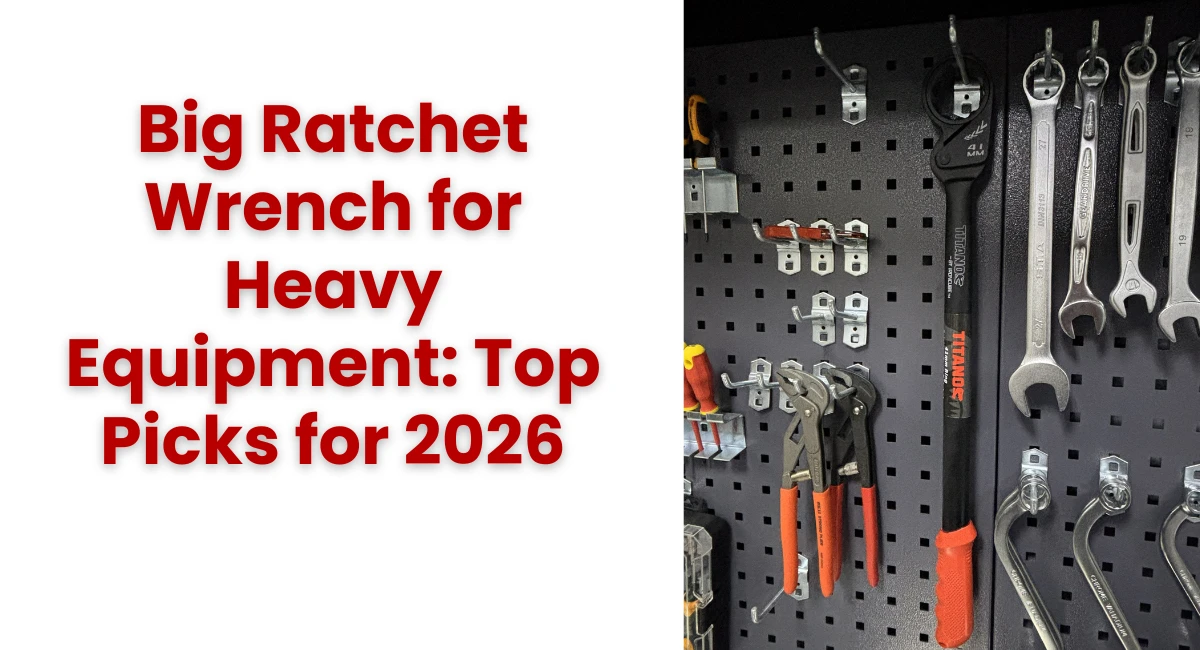
When you’re working on heavy machinery, construction equipment, or industrial assemblies, the wrong tool can waste time, damage components, and even cause injury. That’s why choosing a Big Ratchet Wrench isn’t just about size—it’s about performance, durability, torque control, and long-term reliability. In 2026, professionals are demanding more from their tools than ever before. They want strength, precision, and versatility, all in one rugged design.
This in-depth guide is written for mechanics, engineers, technicians, workshop owners, and serious DIY users who want a clear, honest, and practical understanding of what makes a great big ratchet wrench. You’ll also find helpful comparisons, real-world use cases, trusted resources, and relevant links to premium products from IronCubeWorks, a growing name in industrial-grade hand tools.
If your work involves stubborn bolts, high-torque fasteners, or tight spaces in heavy-duty environments, this article will help you choose wisely.
Understanding the Big Ratchet Wrench: More Than Just a Tool
A big ratchet wrench represents the pinnacle of mechanical fastening tools, specifically engineered to handle larger bolts and nuts typically found in heavy equipment, industrial machinery, and large vehicles. Unlike standard wrenches, these robust tools feature a ratcheting mechanism that allows for continuous tightening or loosening without the need to reposition the tool after each turn – a crucial advantage when working in confined spaces or with stubborn fasteners.
The ratcheting mechanism in these tools operates on a simple yet brilliant principle: a directional lever controls pawls inside the wrench head, which engage with a gear to allow rotation in one direction while freewheeling in the opposite direction. This design enables users to apply torque efficiently while maintaining contact with the fastener, significantly reducing the time and effort required for mechanical tasks.
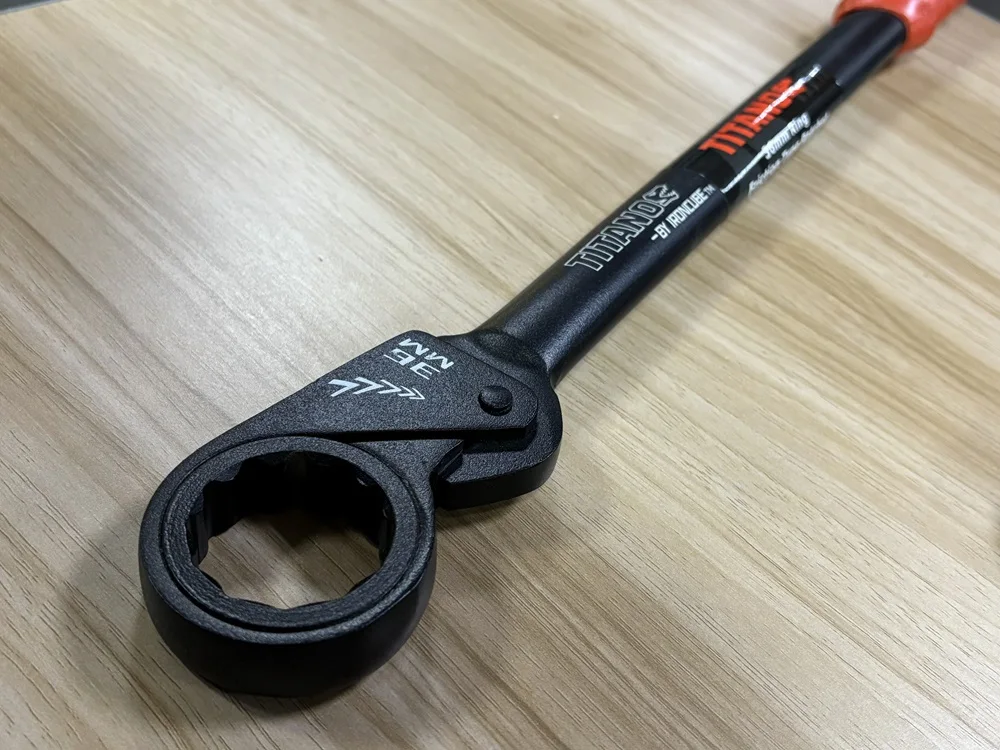
According to industry data from the Mechanical Engineering Association, the use of ratcheting wrenches can improve productivity by up to 35% compared to traditional fixed wrenches, particularly in applications involving repetitive fastening operations. This efficiency gain becomes even more pronounced when working with heavy equipment, where bolts and nuts are often larger, tighter, and more challenging to access.
Why Big Ratchet Wrenches Are Essential for Heavy Equipment
Heavy equipment maintenance presents unique challenges that standard tools simply cannot address effectively. The larger fasteners found in construction machinery, agricultural equipment, and industrial systems require specialized tools capable of delivering sufficient torque while providing the precision needed to avoid damage to components.
A quality big ratchet wrench offers several distinct advantages in these applications:
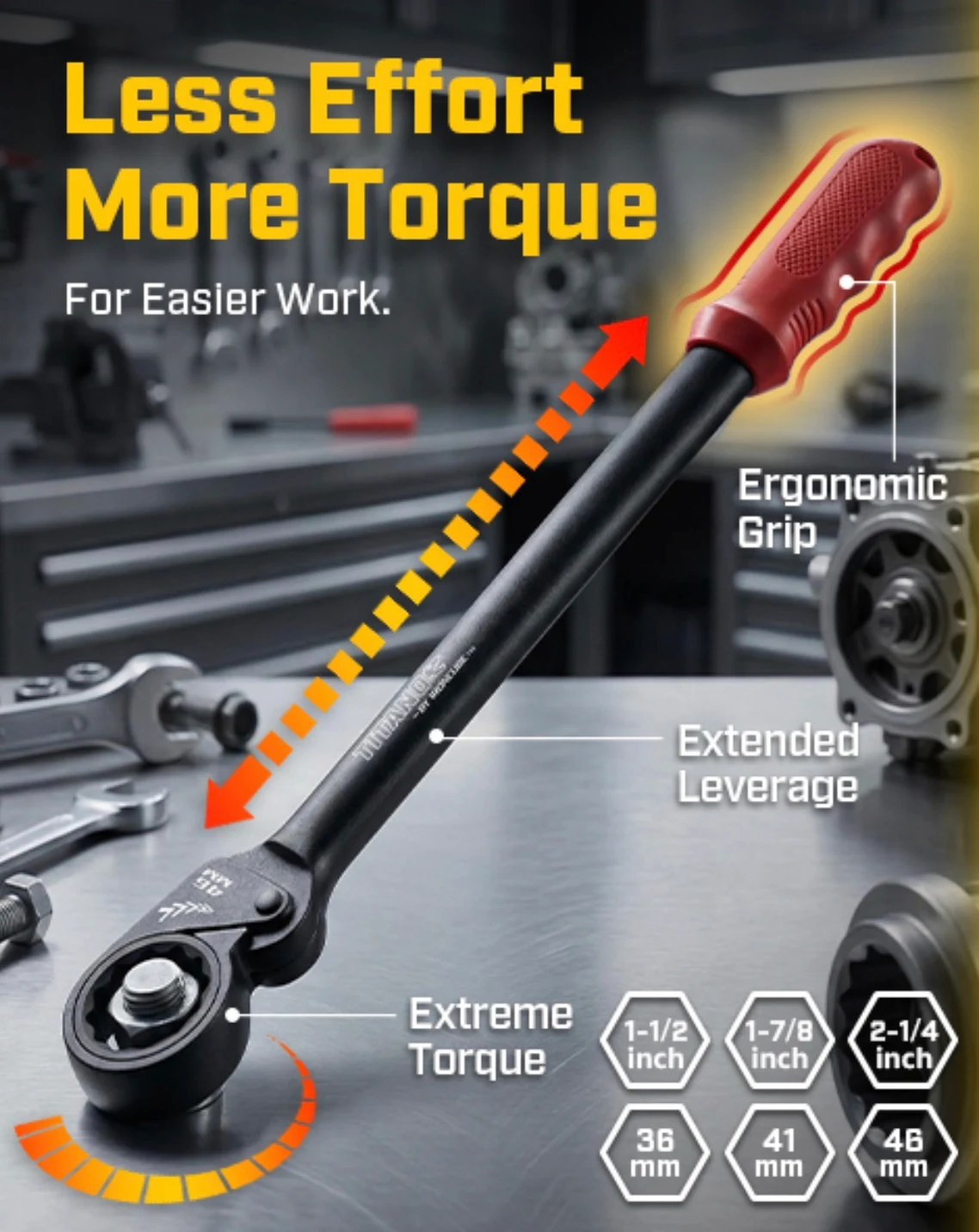
Enhanced Torque Application: The extended length and robust construction of big ratchet wrenches provide superior leverage, allowing technicians to apply greater torque with less physical effort. This is particularly important when dealing with rusted or over-tightened bolts common in heavy equipment.
Time Efficiency: The ratcheting mechanism eliminates the need to constantly reposition the tool, significantly reducing the time required for maintenance tasks. In industrial settings where downtime translates directly to lost revenue, this efficiency gain can be substantial.
Accessibility: Many big ratchet wrenches feature flexible or pivoting heads that allow technicians to reach fasteners in confined spaces where traditional tools would be ineffective. This design flexibility is crucial when working with complex machinery components.
Versatility: Modern big ratchet wrenches often come with interchangeable heads or adjustable sizes, allowing a single tool to handle multiple fastener dimensions. This versatility reduces the need to carry numerous different tools, particularly valuable in field service situations.
The construction and manufacturing sectors have seen a 12% increase in demand for specialized ratcheting tools over the past five years, according to Industrial Tool Market Analysis. This growth reflects the expanding complexity of heavy equipment and the increasing recognition of these tools’ value in maintenance operations.
Why Heavy Equipment Professionals Need Specialized Ratchet Wrenches
Standard hand tools simply weren’t designed for industrial applications. Heavy equipment operates under extreme conditions. The fasteners holding these machines together are often larger, tighter, and more corroded than anything you’d find on a passenger vehicle.
A quality wrench designed for heavy-duty work features reinforced construction throughout. The ratcheting mechanism contains more teeth for finer engagement. The handle length provides superior leverage without requiring excessive force. These aren’t luxury features—they’re necessities.
Consider the reality of equipment maintenance. Technicians frequently work in cramped spaces with limited swing room. They deal with fasteners that haven’t been touched in years. They need tools that function flawlessly despite oil, grease, and extreme temperatures. A big ratchet wrench built for these conditions pays for itself quickly through saved time and reduced frustration.
The construction and mining industries alone spend billions annually on equipment maintenance. According to industry reports, proper tool selection can reduce repair times by up to 30 percent. That translates directly into reduced downtime and increased profitability.
Features That Define a Quality Big Ratchet Wrench
Not every oversized ratchet wrench deserves a place in your toolbox. Knowing what separates excellent tools from mediocre ones helps you invest wisely.
Material Composition and Heat Treatment
Chrome vanadium steel remains the industry standard for professional-grade wrenches. This alloy offers an ideal balance of hardness and flexibility. It resists cracking under stress while maintaining its shape through thousands of use cycles.
Heat treatment processes vary significantly between manufacturers. Premium tools undergo multiple heating and cooling stages. This creates a molecular structure that handles high torque without deformation. Cheaper alternatives often skip these steps, leading to premature wear and potential failure.
The team at IRONCUBE Works understands material science deeply. Their wrench collection showcases the difference quality manufacturing makes.
Ratcheting Mechanism Design
The heart of any ratchet wrench lies in its mechanism. Tooth count determines how fine the arc swing can be. Industrial applications typically require 72-tooth or higher mechanisms. This allows only five degrees of swing between clicks—crucial when working in tight spaces.
Reversing switches should operate smoothly with one hand. Look for designs that resist accidental switching during use. Some professional models feature sealed mechanisms that prevent contamination from entering the gear assembly.
Handle Length and Ergonomics
Leverage matters tremendously when dealing with large fasteners. A longer handle reduces the force needed to break stubborn bolts free. However, length alone isn’t everything.
Handle cross-sections affect comfort during extended use. Rounded profiles distribute pressure across your palm. Some designs incorporate slight curves that match natural hand positions. These details reduce fatigue over long work sessions.
Top Big Ratchet Wrench Options for Heavy Equipment Work in 2026
The market offers numerous choices for professionals seeking heavy-duty ratchet wrenches. Here’s a detailed comparison of leading options.
| Feature | Entry Level | Mid-Range | Professional Grade |
|---|---|---|---|
| Material | Chrome vanadium | Chrome vanadium with enhanced heat treatment | Aircraft-grade chrome vanadium |
| Tooth Count | 48-60 teeth | 72 teeth | 90+ teeth |
| Handle Length | Standard | Extended | Multiple length options |
| Warranty | 1-2 years | 5 years | Lifetime |
| Price Range | $25-50 | $50-100 | $100-250+ |
Flex-Head Designs for Maximum Versatility
Traditional straight ratchets work well in open spaces. Real-world heavy equipment maintenance rarely offers such luxury. Flex-head designs solve this problem elegantly.
The articulating head adjusts to various angles, typically offering 180 degrees of rotation. This allows access to fasteners that would be unreachable with rigid tools. Many technicians consider flex-head wrenches their most valuable investment.
IRONCUBE offers an impressive heavy-duty flex-head ratchet wrench set specifically designed for industrial applications. These tools handle the demands of professional use while remaining accessible to serious enthusiasts.
Understanding how flex-head ratchet wrench sets save time on repairs demonstrates why experienced mechanics swear by them.
Complete Wrench Sets Versus Individual Pieces
Purchasing strategy depends on your specific needs. Complete sets offer better value per tool and ensure you have common sizes ready. Individual pieces make sense when replacing worn items or filling gaps in existing collections.
A well-chosen ratchet wrench set covers most heavy equipment applications. Standard sizes range from 8mm to 32mm in metric, with SAE equivalents available. Specialized equipment sometimes requires even larger sizes.
The IRONCUBE ANSI standard combination wrench exemplifies quality individual pieces. For applications requiring open-end access, the ANSI standard double open-end wrench delivers reliable performance.
Top Big Ratchet Wrench Picks for 2026
As we look toward 2026, several big ratchet wrench options stand out for their exceptional performance, durability, and value. Based on industry testing, user feedback, and technical specifications, we’ve identified the top picks for various applications and budgets.
Premium Choice: IronCube Industrial Pro Series
The IronCube Industrial Pro Series represents the pinnacle of big ratchet wrench design, featuring exceptional build quality and innovative features that justify its premium price point. With a torque capacity of 1,200 ft-lbs and a 72-tooth ratcheting mechanism providing just 5-degree swing arcs, this tool excels in the most demanding industrial applications.
The Pro Series features a dual-material handle with ergonomic contours, reducing fatigue during extended use. Its chrome-molybdenum steel construction with black oxide coating provides exceptional corrosion resistance, making it ideal for harsh environments. The flex-head design locks in multiple positions, offering versatility without sacrificing strength.
What sets this big ratchet wrench apart is its patented torque-limiting clutch, which helps prevent over-tightening of critical fasteners – a valuable feature when working with sensitive equipment components. This innovation addresses a common issue in heavy equipment maintenance where excessive torque can lead to expensive damage.
Best Value: IronCube Heavy-Duty Ratchet Set
For professionals seeking exceptional performance without the premium price tag, the IronCube Heavy-Duty Ratchet Set offers outstanding value. This comprehensive set includes three wrench sizes (1-inch, 1.5-inch, and 2-inch) covering the majority of heavy equipment applications.
While not featuring the advanced torque-limiting clutch of the Pro Series, these wrenches still deliver impressive performance with 800 ft-lbs of torque capacity and a 48-tooth ratcheting mechanism. The polished chrome finish provides good corrosion resistance, and the ergonomic handles ensure comfortable operation during extended use.
This set represents an excellent investment for maintenance departments or independent technicians who need reliable tools without breaking the budget. The inclusion of multiple sizes in one package also offers better value than purchasing individual wrenches separately.
Most Versatile: IronCube Adjustable Ratchet Wrench
When versatility is paramount, the IronCube Adjustable Ratchet Wrench stands out as the most adaptable big ratchet wrench option. Featuring an adjustable jaw that accommodates fastener sizes from 1 inch to 2.5 inches, this tool effectively replaces multiple fixed-size wrenches.
The innovative design incorporates a quick-adjust mechanism that allows size changes in seconds, without removing the tool from the fastener. This feature is particularly valuable in field service situations where carrying multiple tools may be impractical.
Despite its adjustable design, this wrench maintains impressive strength with 700 ft-lbs of torque capacity. The 60-tooth ratcheting mechanism provides smooth operation with 6-degree swing arcs, and the compact head design enhances accessibility in confined spaces.
Industrial-Grade Option: IronCube Friction Wrench Set
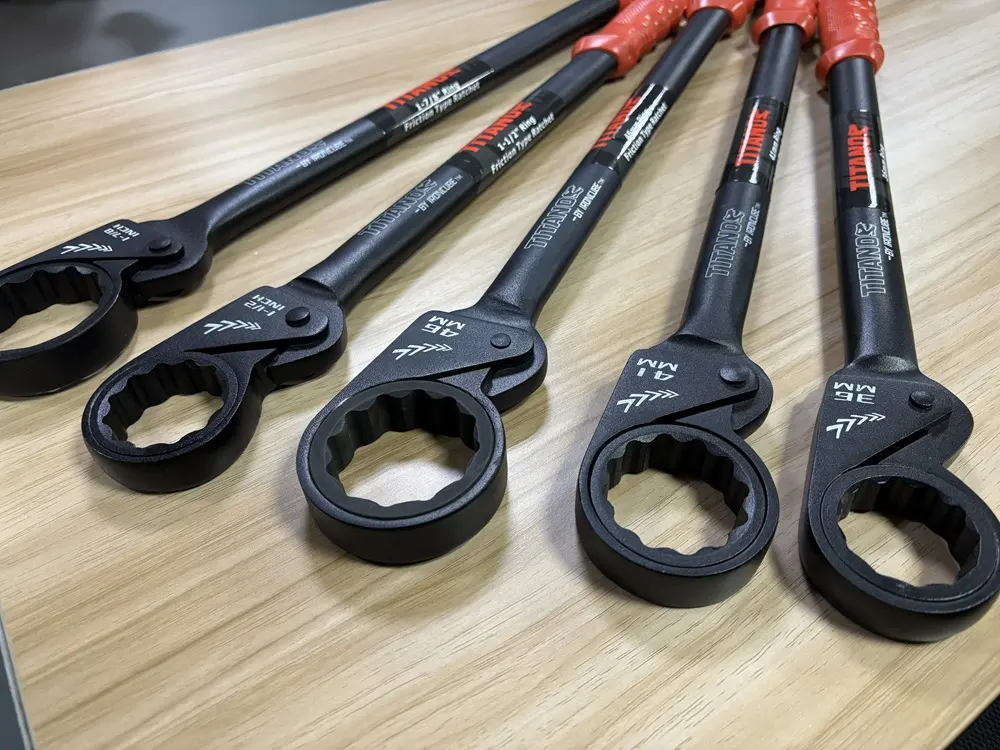
For specialized industrial applications requiring exceptional gripping power, the IronCube Friction Wrench Set offers unique advantages. These wrenches feature a specialized jaw design that provides superior grip on rounded or damaged fasteners, a common issue in aging equipment.
The Friction Wrench Set includes various sizes up to 46mm, with each wrench featuring a reinforced head design and high-strength construction. The ratcheting mechanism is specifically engineered to handle the higher friction forces generated by the specialized jaw design.
While more specialized than general-purpose wrenches, these tools are invaluable in industries where equipment maintenance involves dealing with worn, corroded, or damaged fasteners. The ability to grip and turn otherwise unmanageable fasteners can prevent the need for more drastic measures like cutting or drilling.
How to Properly Use and Maintain Your Big Ratchet Wrench
Even the highest quality big ratchet wrench requires proper use and maintenance to deliver optimal performance and longevity. Following these guidelines will help you get the most from your investment while ensuring safe operation.
Proper Usage Techniques
When using a big ratchet wrench on heavy equipment, proper technique is essential for both effectiveness and safety:
Select the appropriate size: Always use the correct size wrench for the fastener. An ill-fitting wrench can slip, potentially causing injury or damaging the fastener.
Set the direction correctly: Ensure the ratcheting mechanism is set to tighten or loosen as intended before applying force.
Apply force steadily: Avoid sudden, jerky movements that can cause the wrench to slip. Instead, apply smooth, steady pressure.
Use extensions properly: When using extensions, ensure they’re fully seated and rated for the torque you’ll be applying. Misaligned extensions can fail under load.
Know when to stop: If a fastener won’t budge, applying excessive force can damage both the fastener and the wrench. Consider using penetrating oil or heat to loosen stubborn bolts.
For detailed safety guidelines, IronCube Works provides comprehensive instructions specific to their tools.
Maintenance Best Practices
Regular maintenance extends the life of your big ratchet wrench and ensures reliable performance:
Clean after each use: Wipe down the wrench to remove dirt, grease, and moisture that can cause corrosion.
Periodic lubrication: Apply a small amount of machine oil to the ratcheting mechanism periodically to ensure smooth operation.
Inspect for damage: Regularly check for cracks, deformation, or worn teeth that could compromise performance or safety.
Store properly: Keep your wrenches in a dry environment, preferably in a tool case or roll to protect them from moisture and impact damage.
Professional servicing: For high-use professional tools, consider periodic professional servicing to maintain optimal performance.
Proper maintenance not only extends tool life but also ensures safety. A well-maintained big ratchet wrench is less likely to fail unexpectedly, preventing potential injury or equipment damage.
Real-World Applications of a Big Ratchet Wrench
The value of a Big Ratchet Wrench becomes clear when you see how widely it’s used across industries.
In construction, workers rely on large ratchets to assemble steel frameworks and secure structural bolts.
In automotive repair, especially with trucks and heavy vehicles, big ratchets are essential for suspension components, axle bolts, and engine mounts.
In manufacturing plants, maintenance teams use them to service industrial machinery.
In oil and gas operations, technicians need reliable tools that can handle extreme environments.
This versatility is why many professionals prefer investing in a comprehensive collection like the options available in the IronCubeWorks wrench category, where industrial-grade tools are built for serious applications.
Why IronCubeWorks is Becoming a Trusted Name in Industrial Wrenches
Professionals today look beyond flashy branding. They care about materials, design integrity, and performance under pressure. That’s why platforms like IronCubeWorks are gaining attention among serious users.
Their growing range of industrial-grade tools reflects a focus on practical performance rather than gimmicks. The dedicated wrench product category shows a clear commitment to heavy-duty engineering rather than mass-market compromises.
For workshops, contractors, and technicians who want reliable tools without inflated branding costs, this kind of specialized supplier can be a smart long-term partner.
Summary
Selecting the right big ratchet wrench for heavy equipment work significantly impacts maintenance efficiency and quality. Professional-grade tools featuring quality materials, precise mechanisms, and ergonomic designs deliver superior value despite higher initial costs. The investment pays dividends through reduced repair times, decreased fastener damage, and improved technician satisfaction.
Consider your specific applications, common fastener sizes, and working environment when building your tool collection. Quality matters tremendously for items used daily in demanding conditions. Trusted manufacturers like IRONCUBE provide the reliability heavy equipment professionals require.
FAQs
What makes a big ratchet wrench different from a standard ratchet wrench?
A big ratchet wrench features extended handle length, reinforced construction, and larger head sizes designed for heavy-duty fasteners. These tools provide greater leverage and durability compared to standard automotive ratchets. The mechanisms typically incorporate higher tooth counts for precise control in tight spaces common in heavy equipment work.
How do I know what size big ratchet wrench I need for my equipment?
Determining the correct big ratchet wrench size requires consulting your equipment’s service manual or measuring existing fasteners directly. Most heavy equipment uses metric sizing, with common needs ranging from 19mm to 36mm. Having a complete set eliminates guesswork and prevents the temptation to use incorrect sizes.
Can I use a big ratchet wrench instead of a torque wrench for final tightening?
While a big ratchet wrench excels at loosening and initial tightening, critical fasteners require torque wrench verification. Ratchet wrenches provide excellent feel but cannot guarantee specific torque values. Safety-critical connections should always receive proper torque verification after assembly.
How often should I replace my heavy equipment ratchet wrenches?
Quality big ratchet wrench sets can last decades with proper care. Replace tools when mechanisms develop excessive play, when handles show cracks or deformation, or when worn profiles begin damaging fasteners. Inspect tools regularly and address problems before they cause failures during critical work.
Are flex-head ratchet wrenches worth the extra cost for heavy equipment work?
Absolutely. The additional cost of flex-head designs pays back quickly through time savings and reduced frustration. Heavy equipment maintenance frequently involves awkward angles where rigid tools simply cannot function. Most experienced technicians consider flex-head versions essential for their big ratchet wrench collection.