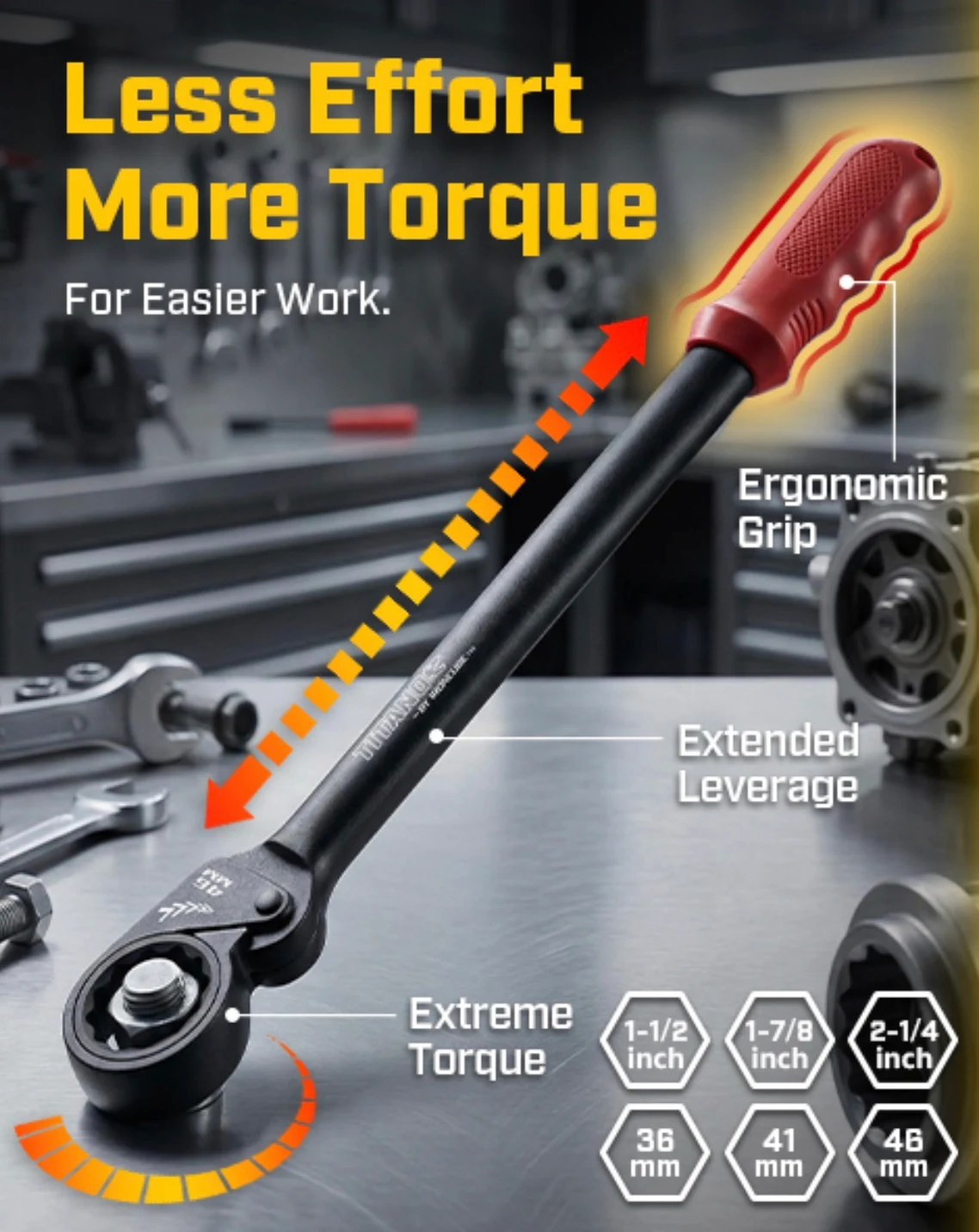

Working on oil rigs and pipeline systems demands tools that can handle extreme conditions without failing. A jumbo friction ratcheting wrench sits at the center of every oil field technician’s toolkit, serving as the primary workhorse for securing large-diameter fittings, flanges, and pipe connections. These specialized wrenches have transformed how crews approach heavy-duty fastening tasks, replacing the muscle-intensive work of traditional methods with mechanical efficiency that saves both time and physical strain.
Oil field environments present unique challenges that standard tools simply cannot address. Between the oversized hardware, exposure to harsh elements, and the need for reliable torque delivery, technicians require equipment built specifically for these demands. The friction wrench category has evolved significantly over recent decades, with modern designs incorporating advanced ratcheting mechanisms that dramatically improve productivity on drilling platforms and pipeline installations.
This guide explores everything professionals need to know about selecting, using, and maintaining jumbo friction ratcheting wrenches for oil field applications. Whether you manage equipment procurement for a drilling company or work hands-on with wellhead assemblies, understanding these tools thoroughly will improve your operational efficiency and workplace safety.
Understanding the Jumbo Friction Ratcheting Wrench
The Jumbo Friction Ratcheting Wrench represents a specialized category of hand tools engineered for heavy-duty applications. Unlike standard wrenches that require complete removal and repositioning after each turn, these advanced tools incorporate a ratcheting mechanism that allows continuous tightening or loosening in confined spaces. The “jumbo” designation refers to their larger size, typically ranging from 1-1/2 inches to over 2-1/4 inches in jaw capacity, making them ideal for the oversized fasteners commonly found in oil field equipment.
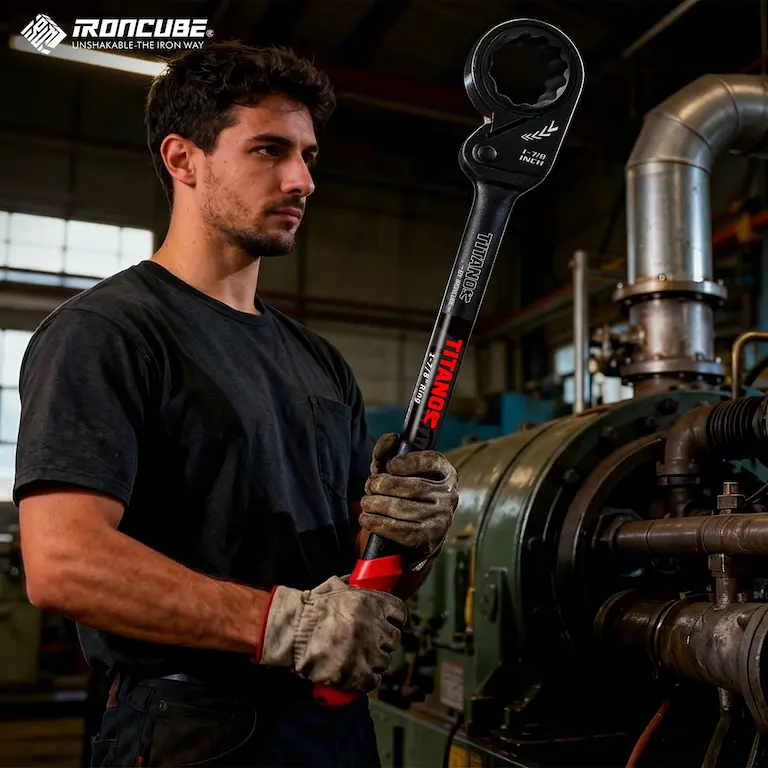
What sets the friction element apart is the specialized mechanism that maintains constant pressure on the fastener, reducing the likelihood of slippage that can damage both the tool and the workpiece. This friction-based design is particularly valuable when working with lubricated or oily surfaces common in petroleum environments. According to industry research, specialized wrenches like the Jumbo Friction Ratcheting Wrench can increase productivity by up to 35% compared to traditional wrenches in oil field applications.
The Critical Role of Specialized Wrenches in Oil Field Operations
Oil fields present some of the most challenging working conditions for any tool. Extreme temperatures, exposure to corrosive substances, and the sheer size of equipment all demand tools that can withstand harsh environments while delivering precise performance. The U.S. Bureau of Labor Statistics reports that oil and gas extraction workers face a higher rate of nonfatal injuries and illnesses compared to other industries, with many incidents related to equipment maintenance. This statistic underscores the importance of using appropriate tools designed specifically for these demanding applications.
A Jumbo Friction Ratcheting Wrench addresses several unique challenges in oil field work:
Size Compatibility: Oil field equipment often features oversized fasteners that standard wrenches cannot accommodate. The jumbo design ensures technicians can work with these larger components without improvising inadequate solutions.
Space Constraints: Despite the large size of oil field equipment, maintenance areas are often cramped. The ratcheting mechanism allows technicians to work in tight spaces without needing full rotation room.
Corrosion Resistance: Quality jumbo wrenches are constructed from materials that resist the corrosive effects of petroleum products and other chemicals commonly found in oil fields.
Torque Application: The friction mechanism helps maintain consistent torque application, crucial for the proper assembly and disassembly of high-pressure equipment.
Features to Evaluate When Selecting Your Jumbo Friction Ratcheting Wrench
Jaw Capacity and Adjustment Range
The jaw opening determines which fastener sizes your wrench can accommodate. Oil field applications typically require minimum capacities starting around 1.5 inches, with many situations demanding tools that reach 2.25 inches or beyond. The 2-1/4 inch friction wrench represents a popular mid-range option that handles most common pipeline fittings while remaining manageable for extended use.
Look beyond maximum capacity alone when evaluating options. The adjustment mechanism’s smoothness affects how quickly you can transition between different fastener sizes. Some designs offer graduated markings that speed up size selection, while others rely on feel and experience. For mixed-size work environments, the 1-1/2 inch heavy-duty ratcheting spanner provides excellent versatility without excessive weight.
Material Construction and Durability
Chrome vanadium steel dominates professional-grade wrench construction for good reason. This alloy delivers the hardness necessary to resist jaw deformation under heavy torque while maintaining enough toughness to absorb impact without cracking. Heat treatment processes further enhance these properties, with premium manufacturers applying specific tempering protocols that optimize performance for demanding applications.
Surface treatments deserve attention as well. Oil field environments expose tools to petroleum products, drilling fluids, saltwater, and various corrosive substances. Chrome plating provides baseline protection, though some manufacturers apply additional coatings or finishes that extend service life in harsh conditions. The IRONCUBE Works wrench collection features industrial-grade finishes designed specifically for these challenging environments.
Ratcheting Mechanism Design
Not all ratchet mechanisms perform equally. The tooth count determines how fine the engagement increments become, affecting minimum swing arc in confined spaces. Higher tooth counts generally indicate finer increments, though this must balance against mechanism durability. Extremely fine-tooth designs may wear faster under heavy loads common in oil field work.
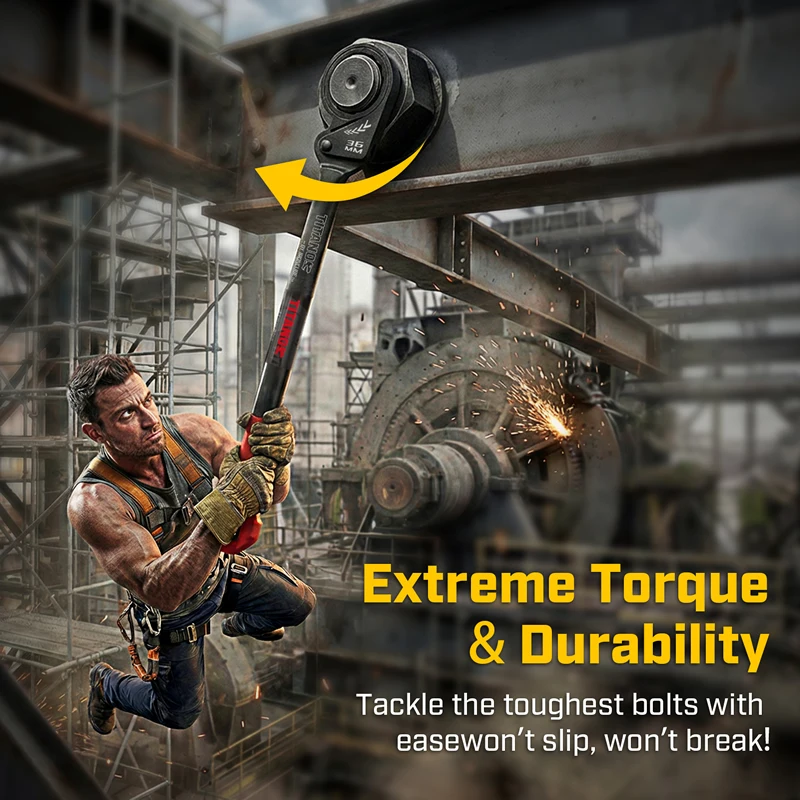
The direction selector mechanism also varies between designs. Toggle switches, rotating collars, and flip levers each offer different advantages. Toggle switches provide positive engagement confirmation but may be harder to operate with gloved hands. Rotating collars allow single-handed direction changes but can shift accidentally during vigorous use. Consider which mechanism suits your typical working conditions when comparing options for your jumbo friction ratcheting wrench purchase.
Top Applications for Jumbo Friction Ratcheting Wrenches in Oil Fields
The versatility of the Jumbo Friction Ratcheting Wrench makes it invaluable across numerous oil field applications:
Drilling Equipment Maintenance
Drilling rigs contain numerous large bolts and nuts that require regular maintenance and adjustment. The 1-1/2 inch Heavy Duty Ratcheting Spanner is particularly useful for work on drill collars, mud pumps, and rotary tables. The ratcheting feature allows technicians to work efficiently in the confined spaces around drilling equipment.
Pipeline Installation and Repair
Pipeline work often involves large flange connections that require significant torque. The 2-1/4 inch Friction Wrench is ideal for these applications, providing the necessary size and torque for proper flange bolt tightening. The friction mechanism is especially valuable when working with lubricated threads common in pipeline applications.
Pump and Compressor Service
Oil pumps and compressors feature large housing bolts and access covers that require periodic servicing. A Jumbo Friction Ratcheting Wrench allows technicians to efficiently remove and replace these fasteners during maintenance cycles, reducing equipment downtime.
Valve Maintenance
Large gate valves and other control valves in oil field operations often feature oversized bonnet bolts that are difficult to access. The compact ratcheting mechanism of a jumbo wrench allows technicians to work in these confined spaces while applying the necessary torque to ensure proper sealing.
Friction Wrench Size Comparison for Oil Field Applications
Selecting the right size depends on your specific application requirements. The following comparison outlines common options and their typical uses in oil field operations.
| Wrench Size | Jaw Capacity | Best Applications | Weight Class |
| 36mm | Up to 36mm | Smaller fittings, instrument lines | Light |
| 41mm | Up to 41mm | Mid-range pipe fittings | Medium |
| 46mm | Up to 46mm | Large flange bolts, unions | Medium-Heavy |
| 1-7/8 inch | Up to 1-7/8″ | Wellhead work, valve assemblies | Heavy |
| 2-1/4 inch | Up to 2-1/4″ | Large bore work, heavy equipment | Extra Heavy |
For comprehensive coverage across typical oil field tasks, many professionals maintain multiple sizes. The 41mm jumbo ratchet spanner handles mid-range work effectively, while the 46mm ratcheting spanner tackles larger industrial fittings. Having both ensures readiness for diverse job requirements.
How Quality Manufacturing Influences Tool Longevity
The lifespan of a Jumbo Friction Ratcheting Wrench depends heavily on material quality and manufacturing standards. Low-grade steel can deform under high torque. Poor machining can cause ratcheting mechanisms to fail prematurely. Inferior surface treatments can lead to rapid corrosion.
High-quality industrial wrenches are typically forged from premium alloy steel and heat-treated to enhance strength and toughness. Precision machining ensures smooth ratcheting action, while protective finishes help the tool withstand moisture, chemicals, and abrasive conditions.
If you are sourcing tools in bulk or considering wholesale purchases, this detailed guide on finding quality wholesale jumbo wrench sets provides valuable insights into what separates reliable manufacturers from low-quality suppliers.
Building Your Professional Oil Field Toolkit
A complete toolkit balances coverage against portability and cost. Starting with the most commonly needed sizes allows immediate productivity while building toward comprehensive capability over time. Most oil field technicians find that three to four carefully chosen wrenches cover 90% of their daily requirements.
Consider starting with a mid-range option like the 1-7/8 inch friction wrench that handles common wellhead and valve work. Add larger sizes as specific job requirements dictate. Many professionals also appreciate the versatility of jumbo ratcheting wrench sets for agriculture which cross over effectively to oil field applications involving farm-style equipment.
Supplement your friction wrenches with complementary tools that handle related tasks. The heavy-duty flex head ratchet wrench set for industrial use addresses situations where angled access improves reach. Exploring how to select the best 10-piece ratchet wrench set provides additional perspective on building a versatile collection.
Beyond wrenches, maintain general-purpose items that support diverse tasks. The 53-piece ratcheting screwdriver set handles fasteners that don’t require heavy wrenching, while the complete IRONCUBE Amazon collection offers additional options for rounding out your equipment inventory.
Real-World Use Cases in Oil and Gas Operations
The practical value of a Jumbo Friction Ratcheting Wrench becomes most apparent when you look at how it is used on site. During pipeline installation, technicians must secure large flange bolts in confined spaces. The ratcheting action allows continuous tightening without constant repositioning, which is crucial when access is limited.
On drilling rigs, maintenance teams often work against the clock. Equipment must be serviced quickly to avoid costly downtime. The friction grip ensures that even when bolts are coated with oil or drilling fluids, the wrench maintains secure contact.
In refinery environments, where safety protocols are strict and precision matters, the control offered by these wrenches supports compliance with engineering specifications. The tool is not just about strength; it is about consistency and reliability under pressure.
Final Summary
The jumbo friction ratcheting wrench stands as an indispensable tool for oil field professionals facing large-diameter fasteners in demanding environments. From offshore drilling platforms to cross-country pipelines, these specialized tools deliver the combination of gripping power, mechanical advantage, and space-efficient operation that modern petroleum operations require.
Selecting the right wrench involves balancing jaw capacity, material construction, and ratcheting mechanism design against your specific application requirements. Quality manufacturing ensures reliable performance under heavy loads, while proper maintenance extends service life through years of demanding use. Building a comprehensive toolkit with multiple sizes ensures readiness for diverse job requirements.
Explore the full range of professional-grade options in the IRONCUBE Works wrench collection. For specific product questions or bulk ordering inquiries, contact the IRONCUBE team directly to discuss your requirements.
FAQs
What size jumbo friction ratcheting wrench do I need for oil field work?
Most oil field applications require wrenches handling 1.5 to 2.25 inches or 36mm to 57mm. Start with a mid-range option around 41-46mm for general pipeline and wellhead work, then add specialized sizes as your specific tasks require. A quality jumbo friction ratcheting wrench in the 1-7/8 to 2-1/4 inch range covers the majority of common scenarios encountered on drilling platforms and processing facilities.
How does a friction wrench differ from a standard adjustable wrench?
Friction wrenches use a specialized jaw design that grips fasteners through surface contact rather than exact dimensional matching. This design allows the jumbo friction ratcheting wrench to accommodate worn, damaged, or non-standard hardware that would slip in conventional adjustable wrenches. The friction grip also maintains engagement under load better than smooth jaw surfaces, reducing the risk of slippage during heavy torque application.
What maintenance does a friction ratcheting wrench require?
Regular cleaning and light lubrication keep these tools performing reliably. Wipe down your jumbo friction ratcheting wrench after each use to remove petroleum products and drilling fluids. Apply light machine oil to the adjustment mechanism and ratchet components monthly or more frequently in harsh environments. Store tools properly to prevent corrosion and impact damage between uses.
Are there quality differences between friction wrench brands?
Significant quality variations exist across the market. Premium manufacturers use superior steel alloys, tighter manufacturing tolerances, and better heat treatment processes. A professional-grade jumbo friction ratcheting wrench from a reputable supplier like IRONCUBE Works delivers consistent performance over years of demanding use, while budget alternatives may fail prematurely or deliver inconsistent torque.