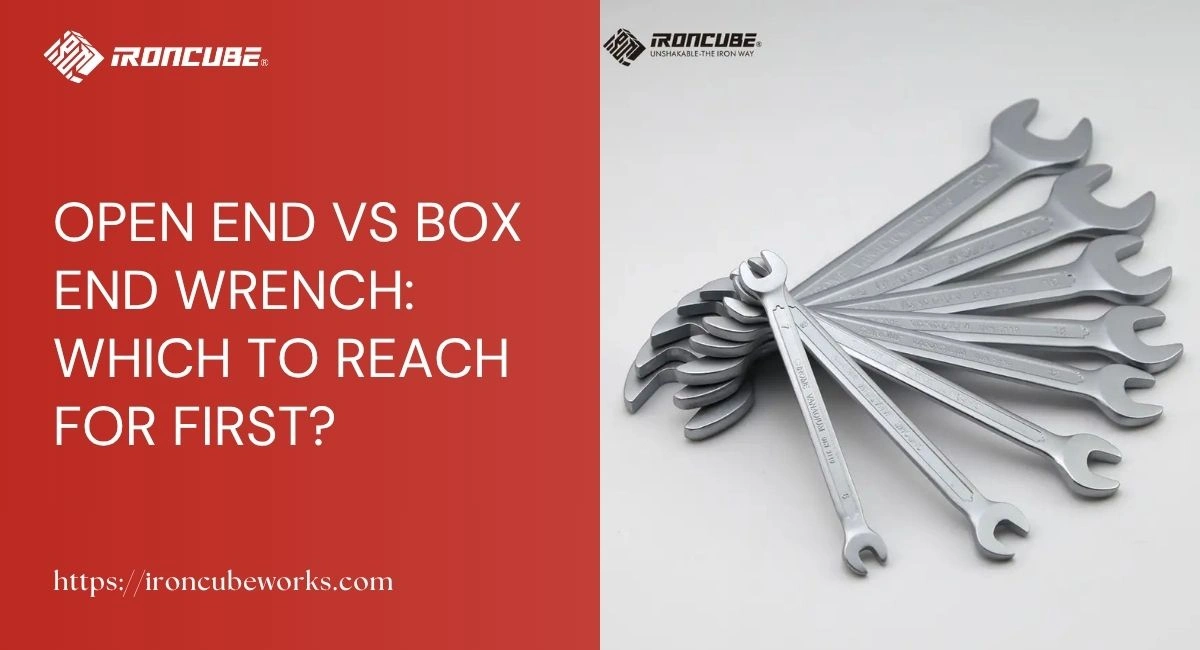
Every mechanic, DIY enthusiast, and homeowner has stood before a cluttered toolbox, staring down a stubborn fastener, and faced the same dilemma. Your fingers hover over the steel tray, deciding between two distinct shapes. Do you grab the open jaw that slides right on from the side, or do you opt for the fully enclosed ring that drops over the top?
Choosing the wrong option is not just a minor inconvenience. It frequently leads to stripped knuckle skin, ruined fasteners, and wasted hours trying to remove a completely rounded bolt head. This guide will clarify the core differences between an open end vs box end wrench, helping you make the right choice for your next project.
Understanding the Two Sides of a Combination Wrench
When you hold a classic combination wrench, you hold a brilliant piece of engineering history. The tool in your hand actually traces its lineage back to the early days of the Industrial Revolution, where basic iron levers were forged to maintain steam engines. You can read more about the fascinating global history of mechanical hand tools on this detailed Wikipedia wrench history page.
A standard combination tool features an open jaw on one end and a closed loop on the opposite side. Both ends share the exact same size dimension, but they manage mechanical forces in completely different ways.
How the Open-End Design Works
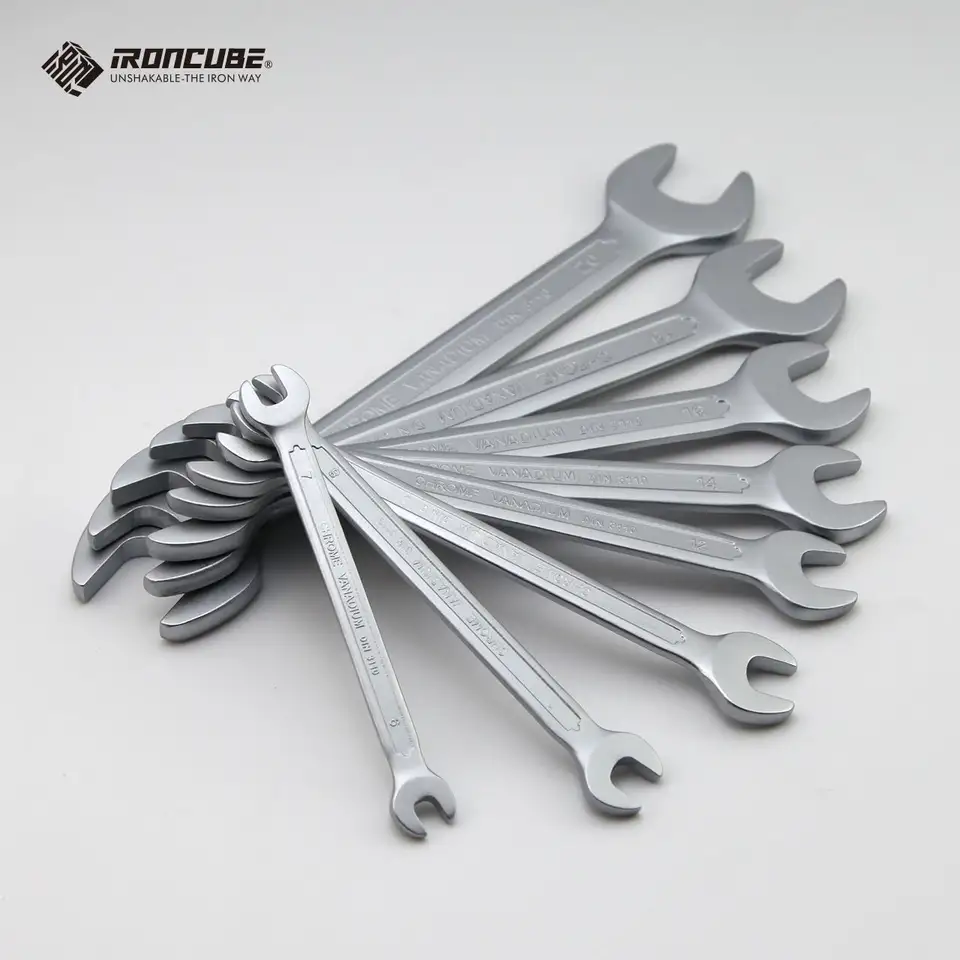
The open-end design features a U-shaped profile with two flat, parallel jaws. This jaw geometry is specifically engineered to slide onto a square or hexagonal nut from the side, rather than dropping over the top.
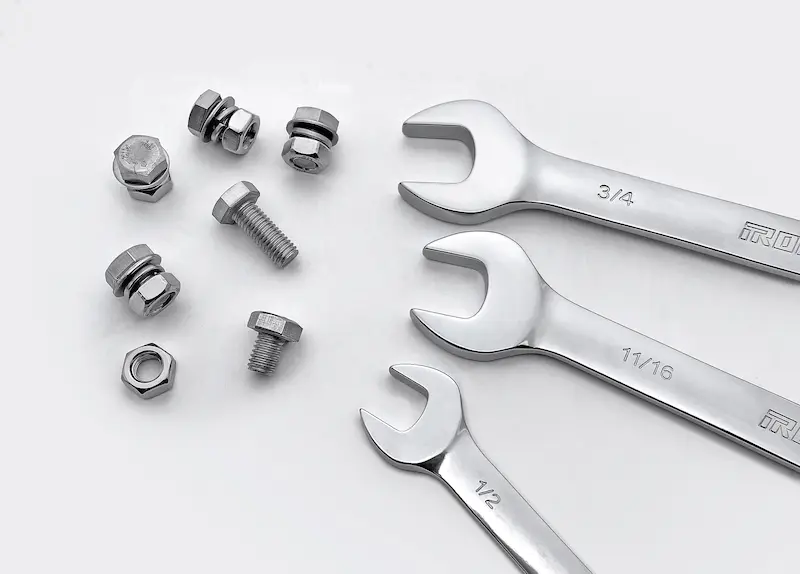
Because the throat of the jaw remains completely open, you do not need clear vertical access to the bolt. This layout proves incredibly useful when a long threaded rod or an overhead obstruction completely blocks top-down entry. However, because the tool only contacts two flat sides of a six-sided hex fastener, the mechanical pressure concentrates heavily on just two corners.
How the Box End Design Works
The box end design features a continuous, unbroken metal ring that completely encloses the nut or bolt head. The internal profile of this ring is precisely broached with a series of ridges, typically forming either a 6-point or a 12-point interior configuration.
When you place this enclosed loop over a fastener, it grips all six corners of a standard hex head simultaneously. This multi-point contact distributes your physical turning force evenly across the entire surface area of the metal target. This structural enclosure prevents the tool jaws from spreading apart under extreme load, making it a highly reliable option for heavy-duty applications.
When to Use an Open-Ended Wrench
The open-end design offers distinct mechanical strengths that make it indispensable for specific tasks. While it should not be your primary choice for breaking loose frozen fasteners, its open jaw provides unmatched benefits in specific spatial scenarios.
Sliding Onto Fasteners in Tight Spaces
Modern machinery features incredibly crowded layouts, from cramped automobile engine bays to tightly packed plumbing lines behind kitchen walls. In these tight environments, you rarely enjoy the luxury of clear overhead clearance.
An open-end tool shines because it approaches the fastener horizontally. If an engine component sits just half an inch above a critical bolt, a closed loop cannot drop into position. The open jaw slides smoothly around the flats from the side, allowing you to establish a firm connection where vertical entry is completely impossible.
Quick-Turning Loose Nuts and Bolts
Once you successfully break the initial chemical or mechanical bond of a tight fastener, the remaining threads are usually quite loose. This is where the open design allows for rapid progress.
You can slide the tool onto the flats, execute a partial turn, slide it off, and reposition it within seconds. This quick side-engagement eliminates the tedious need to lift the entire tool up and off a long threaded rod after every single swing. This rapid action saves significant time when assembling long, threaded components like scaffolding, shelving units, or structural framing.
Flat-Surface Fittings Where a Box End Will Not Fit
Certain mechanical components are fundamentally incompatible with an enclosed loop. The most common examples include hydraulic lines, brake pipes, and compressed air fittings.
[Hydraulic Line / Brake Pipe] ─── (Continuous Metal Tube)
                                         │
                 [Open End Wrench] ──────┴─── Slides on from the side!
                                              (A Box End cannot pass over the line)
These systems use a continuous metal line flared at the end, secured by a hex nut running along the pipe body. Because the tube is solid and permanent, you cannot slide a closed box loop over the end of the line. The open jaw is the only tool capable of slipping past the pipe profile to grab the mounting nut securely. For these specialized applications, using a rugged tool like the Ironcube ANSI Standard Double Open End Wrench ensures you can complete the work without damaging delicate fluid tubes.
When to Use a Box End Wrench
When your primary goal is raw power and safety, the enclosed ring design is almost always the superior choice. It trades side-access convenience for pure mechanical stability and maximum grip.
Maximum Grip on Stubborn or Corroded Bolts
Outdoor machinery, automotive undercarriages, and industrial plumbing systems are constantly exposed to moisture, road salt, and heat cycles. These harsh environmental elements cause severe oxidation, effectively welding threads together over time.
Trying to break a heavily rusted bolt loose with an open jaw often ends in disaster. The immense pressure forces the two open metal jaws to flex outward and spread apart. When the jaws spread, the tool slips off the bolt, rounds off the metal corners, and sends your hand slamming into the nearest hard surface. The enclosed loop prevents any jaw flexing, allowing you to apply your full weight to the lever safely.
Preventing Bolt Rounding on High-Torque Applications
Every fastener has a specific torque threshold before the structural integrity of its hexagonal head fails. When you use an open design, your physical force pushes directly against two vulnerable corners of the hex nut.
A closed loop shifts the force away from the fragile points, pressing evenly against the flat surfaces or all six corners simultaneously. This distribution reduces the localized stress on the fastener head. If you are working on critical high-torque components like automotive suspension arms or heavy industrial machinery, utilizing a closed ring is the best way to preserve the hardware.
6-Point vs 12-Point Box Ends — Which Grips Better
Not all enclosed loops are created equal. You will primarily find options featuring either a 6-point or a 12-point internal star configuration.
6-Point Configuration: A 6-point internal opening matches the hexagonal shape of a standard bolt perfectly. It contacts the flat sides of the hex head directly, making it nearly impossible to slip or round off a bolt. This is the absolute best option for rusted, stubborn, or high-torque fasteners.
12-Point Configuration: A 12-point opening features double the number of internal grooves. This design allows you to slip the tool over a hex bolt at twelve different angles, rather than just six. This flexibility is incredibly helpful in cramped spaces where your swing clearance is highly restricted. However, because the internal teeth are smaller, they contact the corners of the nut rather than the wide flats, increasing the risk of slipping on soft or damaged metal.
Why the Combination Wrench Gives You Both in One Tool
The combination wrench is the ultimate compromise, created to give technicians the best of both worlds within a single hand tool. By placing an open jaw on one end and an enclosed loop on the other, manufacturers eliminated the need to carry two separate tool sets for a single project.
The typical workflow with a combination tool perfectly demonstrates why this dual design is so enduring. When facing a tight, unyielding bolt, you start by placing the closed loop over the head. You use the security of the enclosed end to break the initial rust bond and safely loosen the fastener without any slipping.
Once the nut spins freely, you flip the tool around instantly. You then use the open jaw to quickly spin the nut off the remaining threads without the hassle of lifting the tool off the bolt head after every turn. This fluid transition makes it the most widely utilized hand tool layout across the globe. You can view our comprehensive breakdown of these non-ratcheting design secrets by reading our detailed article on non-ratcheting wrenches explained, SAE vs metric myths, and conversion secrets.
Comparison Table — Open End vs Box End Performance Factors
To help you choose the right tool for your specific mechanical problem, this performance table directly compares how each jaw design handles real-world workspace challenges.
| Performance Factor | Open End Wrench Design | Box End Wrench Design |
| Fastener Access Angle | Horizontal side-entry only | Vertical top-down placement only |
| Contact Points on Nut | Contacts 2 flat sides | Contacts 6 or 12 points simultaneously |
| Risk of Bolt Rounding | High under heavy rotational loads | Minimal due to even force distribution |
| Jaw Flexing Under Load | Yes, jaws spread under high pressure | No, continuous solid ring prevents flex |
| Ideal Application | Low-torque, fluid lines, tight clearance | High-torque, rusted bolts, initial breaking |
| Working Speed | Fast; easy to reposition sideways | Slower; must lift completely off to reset |
IRONCUBE Combination Wrench Sets — Forged for Both Applications
At Ironcube Works, we build industrial-grade hand tools designed to handle real-world challenges. Our professional tool sets are manufactured using high-tensile Chrome Vanadium steel, ensuring they withstand extreme torque without bending or breaking.
Whether you need the precise engineering of our Ironcube DIN Standard Open End Wrench for tight clearances or our smooth-acting best ratcheting wrench set in 2026 to maximize your speed, we have a solution tailored for your shop. Our tools undergo rigorous testing to ensure they meet and exceed international manufacturing standards.
To get the most out of your gear, it is critical to use the exact size match for your fasteners. Slipping happens most often when a tool is slightly too large for the nut. To help you find the perfect fit every single time, we provide a free, easy-to-use printable metric to SAE wrench size conversion chart. You can also bookmark our main wrench size chart metric SAE conversion tool to quickly check clearances on your phone while working under a vehicle.
If you are expanding your workshop setup or looking to upgrade your diagnostic tools, feel free to browse our full inventory. We carry premium options across multiple categories, including our dedicated screwdriver product selection. You can also visit our official brand retail space directly by checking out the Ironcube Amazon Storefront to view our latest tool bundles and seasonal promotions.
Summary
When deciding between an open end vs box end wrench, your choice should always depend on the condition of the bolt and the space available in your work area. Reach for the enclosed loop first whenever you are dealing with stubborn, rusted, or highly torqued fasteners to protect the hardware and your knuckles. Switch over to the open jaw design when space is tight or when you need to slide onto a fitting from the side. By using each design for its intended purpose, you will work faster, protect your equipment, and keep your projects moving forward smoothly.
If you have any questions about selecting the right tools for your commercial shop or home garage, our expert team is here to help. Reach out to us directly through our Ironcube Contact Page, or subscribe to our mechanical tutorials and product breakdowns by checking out our official Ironcube Tools YouTube Channel.
FAQs
Why does an open end vs box end wrench comparison matter for everyday mechanical repairs?
Understanding an open end vs box end wrench comparison is critical because using the wrong side can permanently ruin your hardware. The open end jaw is built for quick access in tight spaces but can spread open and strip a bolt under high torque. The box end offers a secure grip that distributes force evenly, making it the safer choice for loosening tight or frozen fasteners.
When should I specifically avoid using an open end wrench?
You should completely avoid using an open end jaw when trying to remove heavily rusted, corroded, or frozen fasteners. Because an open end vs box end wrench handles pressure differently, the open jaws can flex outward under high force, causing the tool to slip off and round the corners of the nut. Always use the enclosed box end to break stubborn bolts loose safely.
Is a 12-point box end more likely to round a bolt compared to an open end design?
No, a 12-point box end is still much less likely to round a bolt than an open jaw, but it does carry a slightly higher risk than a 6-point design. In the debate of open end vs box end wrench safety, any enclosed loop is superior because it cannot flex open under load. However, for maximum protection on damaged or soft fasteners, a 6-point loop is always ideal because it contacts the flat sides rather than the corners.
Can I use a box end wrench on hydraulic lines or brake pipes?
No, you generally cannot use a standard closed loop on continuous hydraulic or brake lines. When looking at open end vs box end wrench accessibility, the box end requires you to drop the tool over the top of the fastener, which is blocked by the continuous run of the pipe. You must use an open end style jaw to slide onto the fitting from the side.