If you’ve ever grabbed the wrong wrench during a repair job, you already know how frustrating mismatched sizes can be. Whether you work on cars, bicycles, heavy machinery, plumbing systems, or DIY home projects, having a reliable wrench size chart nearby can save time, prevent stripped fasteners, and improve overall efficiency.
Modern workshops often use both metric and SAE tools. European and Asian vehicles typically use metric fasteners, while many American machines still rely on SAE measurements. That’s why understanding metric to SAE wrench conversion is essential for mechanics, technicians, contractors, and home users alike.
In this complete 2026 guide, you’ll learn how wrench sizing works, how to convert metric to SAE measurements correctly, and which wrench sizes every toolbox should include. You’ll also get a printable conversion reference and expert recommendations for building a professional-grade wrench collection.
For professional hand tools and workshop equipment, visit IronCube Works and explore their premium collection of wrenches and mechanic tools.
Why You Need a Wrench Size Chart in Your Workshop
A properly organized workshop always includes a dependable wrench size chart. Mechanics often switch between metric and SAE hardware multiple times during a single repair. Without a reference chart, finding the correct fit becomes slower and increases the risk of damaging nuts and bolts.
According to the article on Wrenches on Wikipedia, the modern wrench evolved to match standardized fastener systems used in industrial manufacturing. As global manufacturing expanded, both metric and SAE standards became common across industries.
The Problem with Mismatched Wrench Sizes
Using the wrong wrench size may seem harmless at first. However, even a slightly loose fit can round off bolt heads or damage expensive components. This issue is especially common when people attempt to substitute SAE tools for metric bolts.
For example:
| Metric Size | Closest SAE Equivalent |
|---|---|
| 10mm | 3/8 inch |
| 13mm | 1/2 inch |
| 16mm | 5/8 inch |
| 19mm | 3/4 inch |
While some sizes appear close, they are rarely exact matches. A loose fit increases slippage and reduces torque transfer.
Professional mechanics recommend using exact sizes whenever possible instead of approximate conversions.
How a Wrench Size Conversion Chart Saves Time and Prevents Damage
A detailed metric wrench sizes chart helps technicians:
- Identify the correct tool instantly
- Avoid stripped nuts and bolts
- Reduce repair time
- Improve workplace safety
- Increase torque accuracy
- Prevent unnecessary tool wear
Many automotive professionals keep a laminated printable chart inside their tool chest for quick access.
You can also explore the detailed Printable Metric to SAE Wrench Size Conversion Chart available from IronCube Works.
Understanding Metric vs SAE Wrench Systems
Before using a wrench size chart, it helps to understand how metric and SAE systems differ.

What Is a Metric Wrench?
Metric wrenches measure bolt heads in millimeters. Countries using the metric system manufacture most modern vehicles, appliances, and machinery with metric hardware.
Common metric wrench sizes include:
- 8mm
- 10mm
- 12mm
- 13mm
- 14mm
- 17mm
- 19mm
Japanese, Korean, and European cars primarily use metric fasteners.
What Is an SAE Wrench?
SAE stands for the Society of Automotive Engineers. SAE wrenches measure fasteners in inches and fractions of inches.
Common SAE sizes include:
- 1/4 inch
- 3/8 inch
- 7/16 inch
- 1/2 inch
- 9/16 inch
- 3/4 inch
Older American vehicles, agricultural equipment, and industrial machinery frequently use SAE hardware.
Why Both Systems Still Exist
Global manufacturing standards vary by country and industry. As a result, many workshops require both metric and SAE tool sets.
For example:
- Toyota and Honda use metric
- Ford and Chevrolet may use mixed systems
- Heavy agricultural equipment often uses SAE
- Aircraft maintenance may involve both standards
This is why experienced mechanics never rely on a single wrench system.\
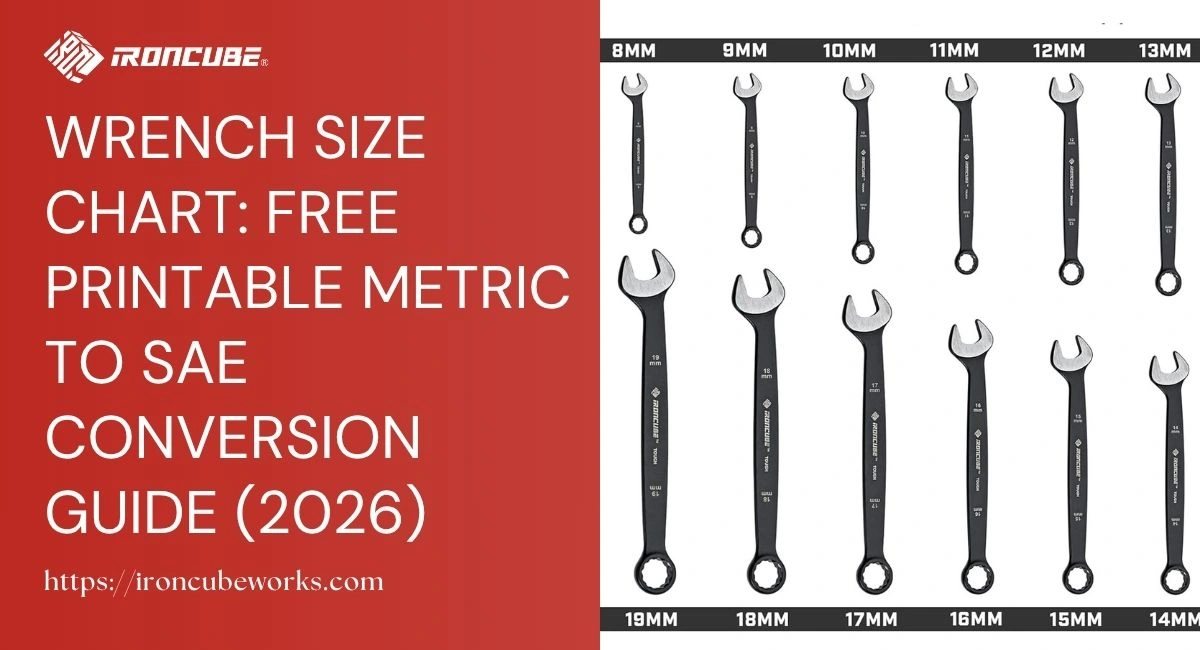
Wrench Size Chart: Free Printable Metric to SAE Conversion Guide (2026)
Getting the right fit matters more than most DIYers realize. You are halfway through a brake job or assembling a new workbench when you realize your 10mm wrench is just a hair too small. You reach for a 3/8-inch, but it feels loose. Using the wrong tool doesn’t just slow you down; it risks rounding off a bolt head, turning a ten-minute task into a weekend-long nightmare of extraction kits and frustration.
Having a reliable wrench size chart on your workshop wall isn’t just a convenience. It is a fundamental necessity for precision. Mechanics and engineers around the world deal with two primary measurement systems: Metric (millimeters) and SAE (Society of Automotive Engineers, measured in inches). Understanding how these two worlds overlap is the secret to a professional-grade finish.
In this guide, we provide a comprehensive wrench size chart to help you identify the perfect tool every time. Whether you are working on a classic American muscle car or a modern European import, this guide ensures you never have to guess again.
Why You Need a Wrench Size Chart in Your Workshop
A workshop without a wrench size chart is a place where mistakes happen. Many people assume that if a wrench “feels” like it fits, it is safe to use. However, the tolerance between a bolt and a wrench is incredibly tight. A gap of even half a millimeter can be enough to cause a slip under high torque.
The Problem with Mismatched Wrench Sizes
When you use a wrench that is slightly too large, the pressure isn’t distributed evenly across the flats of the fastener. Instead, the force concentrates on the corners. According to mechanical engineering standards documented on Wikipedia, most fasteners are designed to withstand specific torque loads when gripped properly.
Mismatched sizes lead to “rounding.” Once the crisp corners of a hexagonal bolt are smoothed out, a standard wrench can no longer grip it. This often happens when trying to use a Metric ratcheting wrench set on an SAE bolt that is “close enough.” In the long run, “close enough” ends up costing you more in replacement parts and lost time.
How a Wrench Size Conversion Chart Saves Time and Prevents Damage
Efficiency in the garage comes from preparation. A printable metric to SAE wrench size conversion chart allows you to look up at the wall and instantly know which tool to grab. Instead of digging through your toolbox and trying three different sizes, you see that a 13mm and a 1/2-inch are nearly identical, but not quite.
Using a chart prevents the physical damage to your tools as well. Chrome-vanadium steel is tough, but repeatedly slipping off bolts can chip the plating or spread the jaws of an open-end wrench. By sticking to the standard wrench sizes dictated by the fastener, you extend the life of your equipment.
Complete Metric Wrench Sizes Chart (6mm to 32mm)
Below is a practical metric wrench sizes chart used by mechanics, automotive technicians, and industrial workers.
| Metric Size | Typical Applications |
|---|---|
| 6mm | Electronics, small appliances |
| 7mm | Hose clamps, carburetors |
| 8mm | Motorcycle parts, battery terminals |
| 10mm | Automotive body panels |
| 11mm | Brake fittings |
| 12mm | Engine covers |
| 13mm | Suspension bolts |
| 14mm | Engine mounts |
| 15mm | Industrial machinery |
| 16mm | Heavy-duty assemblies |
| 17mm | Lug nuts, automotive repairs |
| 18mm | Suspension systems |
| 19mm | Wheel lug nuts |
| 21mm | Spark plug sockets |
| 22mm | Hydraulic systems |
| 24mm | Heavy machinery |
| 27mm | Industrial equipment |
| 30mm | Commercial vehicles |
| 32mm | Large machinery |
Common Metric Wrench Sizes and Their Applications
The most frequently used metric sizes in automotive repair are 8mm, 10mm, 12mm, 13mm, 14mm, and 17mm.
The 10mm wrench is famously known among mechanics for being the easiest tool to lose because it is used constantly in engine bays and electrical work.
A professional mechanic may use a 10mm wrench dozens of times in a single day.
Which Metric Sizes Are Used Most in Automotive Work
Modern vehicles manufactured in Japan, Germany, and Korea heavily rely on metric hardware.
Most-used automotive metric sizes include:
| Size | Common Automotive Uses |
|---|---|
| 8mm | Hose clamps |
| 10mm | Battery terminals |
| 12mm | Engine brackets |
| 14mm | Brake calipers |
| 17mm | Lug nuts |
| 19mm | Wheel hardware |
For advanced automotive wrench recommendations, see Best Ratcheting Wrench Set in 2026.
SAE Wrench Sizes for American Vehicles and Machinery
You will predominantly find SAE fasteners on American cars built before the mid-1970s, as well as in residential plumbing, lawnmowers, and older farm equipment. If you are working on a classic Chevy or a John Deere tractor, your ironcube standard to metric wrench conversion chart will be your best friend.
Even today, many hardware stores in the US sell bolts in SAE sizes for home construction. This means even if your car is metric, your deck or your mailbox might require standard tools. You can find a high-quality set of wrenches in both scales to cover all your bases.
How to Measure Bolt and Wrench Sizes Like a Pro
If you don’t have a wrench size chart handy, you can measure the fastener yourself. The “size” of a wrench refers to the distance across the flats of the head, not the diameter of the threaded bolt shaft.
Using Digital Calipers for Precision
The most accurate way to find your size is with digital calipers. Simply close the jaws on the flat sides of the bolt head. If the reading is 12.65mm, you know you need a 1/2-inch wrench (which is 12.7mm). If it reads 12.98mm, you need a 13mm wrench.
Precision is especially important when using screwdrivers and wrenches together on assembly projects where different manufacturers might mix their hardware.
Identifying Marks on Wrench Handles
Most quality tools from Ironcube Works have deeply stamped or laser-etched markings. On SAE wrenches, look for the fraction. On Metric, look for the number followed by “mm.” If the markings have worn off, you can compare the mystery wrench against a known size or use a bolt gauge.
Most Popular Types of Wrenches
Different repair jobs require specialized wrench styles.
Combination Wrenches
These feature:
- Open end
- Box end
Combination wrenches are the most common workshop tools.
Ratcheting Wrenches
Ratcheting wrenches improve efficiency in tight spaces.
They allow continuous turning without removing the tool from the fastener.
Compare styles here:
Metric Ratcheting Wrench Set: Reversible vs Fixed Head Comparison
Adjustable Wrenches
Adjustable wrenches can fit multiple sizes but should not replace dedicated wrenches for high-torque applications.
Torque Wrenches
Torque wrenches measure tightening force accurately.
According to engineering studies from organizations like SAE International, improper torque contributes significantly to mechanical failures in automotive and industrial applications.
Printable Wrench Size Charts for Workshops
Printable charts remain extremely popular among mechanics and DIY users.
Why Professionals Still Use Printed Charts
Even in digital workshops, printed references provide:
- Faster access
- No battery dependence
- Easy wall mounting
- Quick training references
Best Place to Keep a Wrench Chart
Professional mechanics often place charts:
- Near tool cabinets
- Inside toolbox lids
- On workshop walls
- Near vehicle lifts
Download detailed printable charts here:
IronCube Standard to Metric Wrench Conversion Chart
Choosing the Right Wrench Set in 2026
Not all wrench sets offer the same quality.
What to Look for in a Professional Wrench Set
Important features include:
- Chrome vanadium steel
- Corrosion resistance
- Laser-etched markings
- 72-tooth ratcheting mechanisms
- Lifetime warranty
Metric vs SAE Sets: Which Should You Buy?
Most professionals recommend owning both systems.
If your work focuses on:
- Japanese vehicles → prioritize metric
- American classics → prioritize SAE
- Mixed repairs → buy complete dual-system sets
Explore premium mechanic tools here:
IronCube Wrench Collection
You can also contact the team directly through IronCube Contact Page for tool recommendations.
The Future of Wrench Tools and Smart Workshops
Modern workshops continue evolving with advanced tool technologies.
Digital Torque Monitoring
Some professional tools now include:
- Bluetooth torque tracking
- Digital calibration
- Smart maintenance logs
Advanced Materials
Manufacturers increasingly use:
- Chrome molybdenum alloys
- Hardened steel coatings
- Lightweight aerospace materials
These innovations improve durability and reduce fatigue.
For tool videos, tutorials, and demonstrations, visit the IronCube Tools YouTube Channel.
Summary
A dependable wrench size chart is one of the most valuable references in any workshop. Whether you repair vehicles, maintain industrial equipment, or handle DIY home projects, understanding metric and SAE sizing improves speed, accuracy, and safety.
Using the correct wrench size prevents stripped bolts, reduces repair errors, and helps professionals work more efficiently. From standard wrench sizes to complete metric-to-SAE conversions, this guide gives you everything needed to organize your toolbox properly in 2026.
For premium tools, expert buying guides, and printable conversion resources, visit IronCube Works.
FAQs
What is the difference between metric and SAE wrench sizes?
A wrench size chart shows metric sizes in millimeters and SAE sizes in inches. Metric tools are common in European and Asian vehicles, while SAE tools are frequently used in American equipment.
Can I use SAE wrenches on metric bolts?
Sometimes a close match works temporarily, but a proper wrench size chart helps avoid damage caused by loose-fitting tools.
What is the most commonly used wrench size?
In automotive work, the 10mm wrench is among the most frequently used sizes. Most professional wrench size chart references highlight it prominently.
What wrench sizes should every toolbox include?
A complete wrench size chart usually recommends metric sizes from 8mm to 19mm and SAE sizes from 1/4 inch to 3/4 inch for general repairs.
Are ratcheting wrenches better than standard wrenches?
Ratcheting models improve efficiency in tight spaces. However, every wrench size chart still includes standard wrench references because both types remain essential.
Where can I download a printable wrench conversion chart?
You can find printable references through the IronCube Works website, including detailed metric and SAE conversion guides.