
Screwdrivers are among the most essential tools in any toolbox, whether you’re a professional tradesperson, a DIY enthusiast, or just someone who occasionally needs to tighten a loose screw. With numerous options available, selecting the right one can be overwhelming. This ultimate guide will walk you through everything you need to know about screwdrivers, from their various types and uses to expert tips for maximizing their performance.
At IronCubeWorks, we specialize in high-quality tools, including a wide range of screwdrivers and bit sets designed for precision and durability. Whether you’re looking for a 20-piece precision screwdriver set or a 65-piece ratcheting screwdriver and socket bit set,
What is a Screwdriver?
A screwdriver is a hand tool designed to insert and remove screws by turning them. It consists of a handle and a shaft ending in a tip that fits into the screw head. The earliest screwdrivers date back to the 15th century, but modern designs have evolved significantly, offering specialized versions for different tasks.
Screwdrivers are indispensable in electronics, woodworking, automotive repair, and general household maintenance. Whether you’re assembling furniture, repairing a laptop, or working on a car engine, having the right screwdriver ensures efficiency and prevents damage to screws and materials.
For a deeper dive into the history and mechanics of screwdrivers, check out Wikipedia’s screwdriver page.
Types of Screwdrivers
Not all screwdrivers are created equal. Here’s a breakdown of the most common types:
Flathead (Slotted) Screwdriver
- Best for: Traditional slotted screws.
- Features: A flat, single-blade tip.
- Common uses: Basic household repairs, older furniture, and electrical work.
Phillips Screwdriver
- Best for: Cross-shaped screws (Phillips head).
- Features: A pointed, four-star tip that prevents slipping.
- Common uses: Electronics, automotive, and machinery.
Torx (Star) Screwdriver
- Best for: Tamper-resistant and high-torque applications.
- Features: A six-point star-shaped tip.
- Common uses: Electronics (laptops, smartphones), automotive, and industrial equipment.
Hex (Allen) Screwdriver
- Best for: Hexagonal socket screws.
- Features: A hexagonal-shaped tip.
- Common uses: Bicycle repairs, furniture assembly, and machinery.
Robertson (Square) Screwdriver
- Best for: Square-drive screws.
- Features: A square-shaped tip for better grip.
- Common uses: Woodworking and construction.
Pozidriv Screwdriver
- Best for: Improved Phillips-style screws.
- Features: Additional smaller ribs for better torque.
- Common uses: European-made furniture and appliances.
Ratcheting Screwdriver
- Best for: Quick, repetitive screwing without repositioning.
- Features: A mechanism that allows continuous turning in one direction.
- Common uses: DIY projects, automotive repairs, and electronics.
For a versatile solution, consider our 56-piece ratcheting screwdriver set or explore our best multi-ratcheting screwdriver guide.
Features To Look For in a Screwdriver
Handle Design
Ergonomic and non-slip handles reduce hand fatigue and improve torque transfer.
Material Quality
Shafts made from chrome-vanadium steel or high-carbon steel offer durability and resistance.
Magnetic Tips
Allow easier screw retention but consider whether magnetic screwdrivers are safe for computers before use in delicate electronics.
Interchangeable Bits
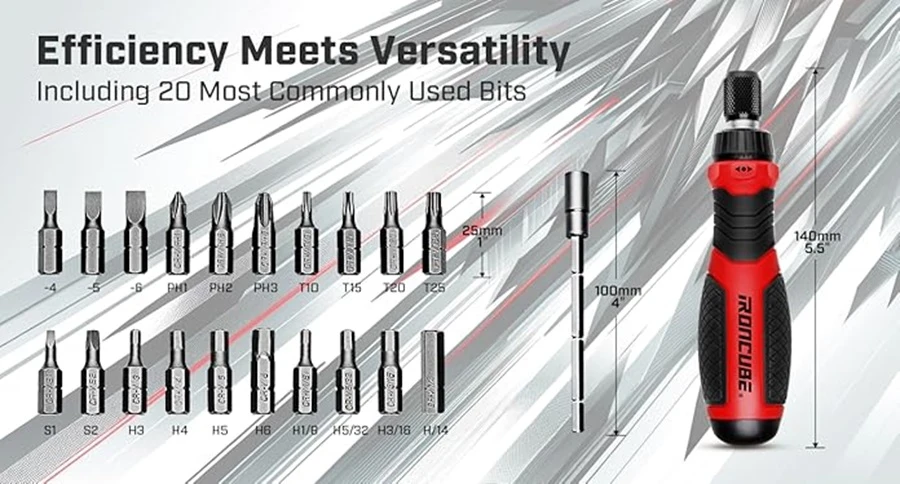
Versatile bit sets, such as the 20 pcs precision screwdriver bit set, enable handling multiple screw types with one tool.
Uses of Screwdrivers Across Different Fields
Screwdrivers serve multiple functions depending on the industry:
Construction & Carpentry
For framing, cabinetry, and assembling hardware.
Electronics & Appliances
Precision screwdrivers help open devices without damage.
Automotive Repair
Torx and hex screwdrivers assist in repairing engines and components.
Furniture Assembly
Phillips and Robertson types streamline flat-pack furniture installation.
DIY & Home Maintenance
Essential for routine fixing and fastening tasks.
Using the right screwdriver reduces the risk of damaging screw heads or tools, improving durability and efficiency.
How to Use a Screwdriver Safely and Effectively
Choose the Correct Type and Size
Matching the screwdriver tip with the screw head prevents stripping.
Apply Steady Pressure
Press the screwdriver firmly to keep the tip seated in the screw slot.
Use Ratcheting Screwdrivers for Speed
Sets like the 65 pc ratchet screwdriver and socket bit set improve efficiency for repetitive tasks. Learn more from our multi-ratcheting screwdriver guide.
Work in Well-Lit Conditions
Visibility enhances precision, especially with smaller screws.
Maintain Your Tools
Keep tips clean and sharp, and replace worn bits promptly.
Comparison Table: Common Screwdriver Types & Their Uses
| Screwdriver Type | Tip Shape | Common Uses | Advantages | Limitations |
|---|---|---|---|---|
| Flathead | Flat blade | Basic woodworking, electrical | Simple design, easy to use | Slips easily, low torque |
| Phillips | Cross | Electronics, appliances | Good grip, reduces slipping | Cam-out possible under heavy torque |
| Pozidriv | Enhanced Cross | Mechanical assemblies | Higher torque, less cam-out | Less common, requires matching screw |
| Torx | Star-shaped | Electronics, automotive | High torque, long-lasting | Requires specialized bits |
| Hex (Allen) | Hexagonal | Furniture, machines | Strong grip, prevents slipping | Limited to hex screws |
| Robertson (Square) | Square | Carpentry, construction | Excellent torque, rare slipping | Regional popularity |
Common Uses and Applications of Screwdrivers in Various Industries
Screwdrivers are indispensable across countless fields, adapting to everything from delicate repairs to heavy industrial work. In construction and woodworking, flat-head and Phillips screwdrivers secure frames, cabinets, and fixtures, where precision prevents wood splitting. Automotive professionals rely on Torx and Robertson types for engine components and body panels, as seen in historical Cadillac trials where Phillips screws sped up assembly lines.
In electronics, precision screwdrivers like those in our 20 pcs precision screwdriver bits set handle tiny screws in smartphones and computers without damaging circuits. For plumbing and HVAC, insulated screwdrivers protect against electrical hazards while adjusting valves or wiring. Even in aerospace and mining, specialized variants ensure safety in high-stakes environments.
Home DIYers use multi-bit screwdrivers for furniture assembly or appliance fixes, while professionals in shipbuilding or machinery maintenance opt for ratcheting models to save time. In 2025, with smart homes on the rise, screwdrivers are key for installing IoT devices, blending traditional uses with modern tech.
How to Choose the Right Screwdriver for Your Needs
Selecting the perfect screwdriver involves considering size, material, and features. Start with the screw type—match the tip exactly to avoid stripping, like using a #2 Phillips for medium screws. Material matters: Opt for chrome-vanadium steel shafts for durability and hardened tips to resist wear. Ergonomics are crucial—look for handles with thermoplastic elastomer for grip, especially if you have hand fatigue issues.
For tight spaces, flex-head ratcheting screwdrivers pivot for access, as detailed in our guide on flex-head ratcheting sets for working in tight spaces. Budget vs. premium: Affordable sets like our 56 pcs ratcheting screwdriver bits and sockets set offer value without sacrificing quality. Read reviews—top brands like Ironcube score high for longevity. Shop our Amazon store for precision tools or ratcheting sets for more options
Summary
Screwdrivers might look simple, but their variety, design, and application make them one of the most versatile tools ever invented. Whether you’re fixing a laptop with a precision set, assembling furniture with a hex screwdriver, or tackling big projects with a ratcheting set, having the right tool makes all the difference.
Ironcube Works provides a wide range of premium screwdriver sets to meet every need. If you’re serious about building a reliable toolkit, investing in high-quality screwdrivers is the smartest move you’ll ever make.
Need help picking the right set? Reach out via the Ironcube Contact Page
FAQs
What type of screwdriver should I use for electronics?
Use precision screwdrivers with small tips such as Phillips or flathead designed for delicate components to avoid damage.
Are magnetic screwdrivers safe for computers?
Generally, weak magnets in screwdrivers do not harm computers, but avoid strong magnets near sensitive data storage devices. More detail is available at are magnetic screwdrivers bad for computers?.
What is the advantage of a ratcheting screwdriver?
They allow continuous rotation in one direction without repositioning, speeding up repetitive screwing tasks.
How do I prevent screwdriver tips from slipping?
Match the screwdriver tip to the screw head precisely, apply firm pressure, and ensure your tool’s tip is not worn out.
Where can I buy quality screwdriver sets?
Ironcube Works offers a wide variety of high-quality sets, including precision and ratcheting types; browse at Ironcube’s screwdriver category.