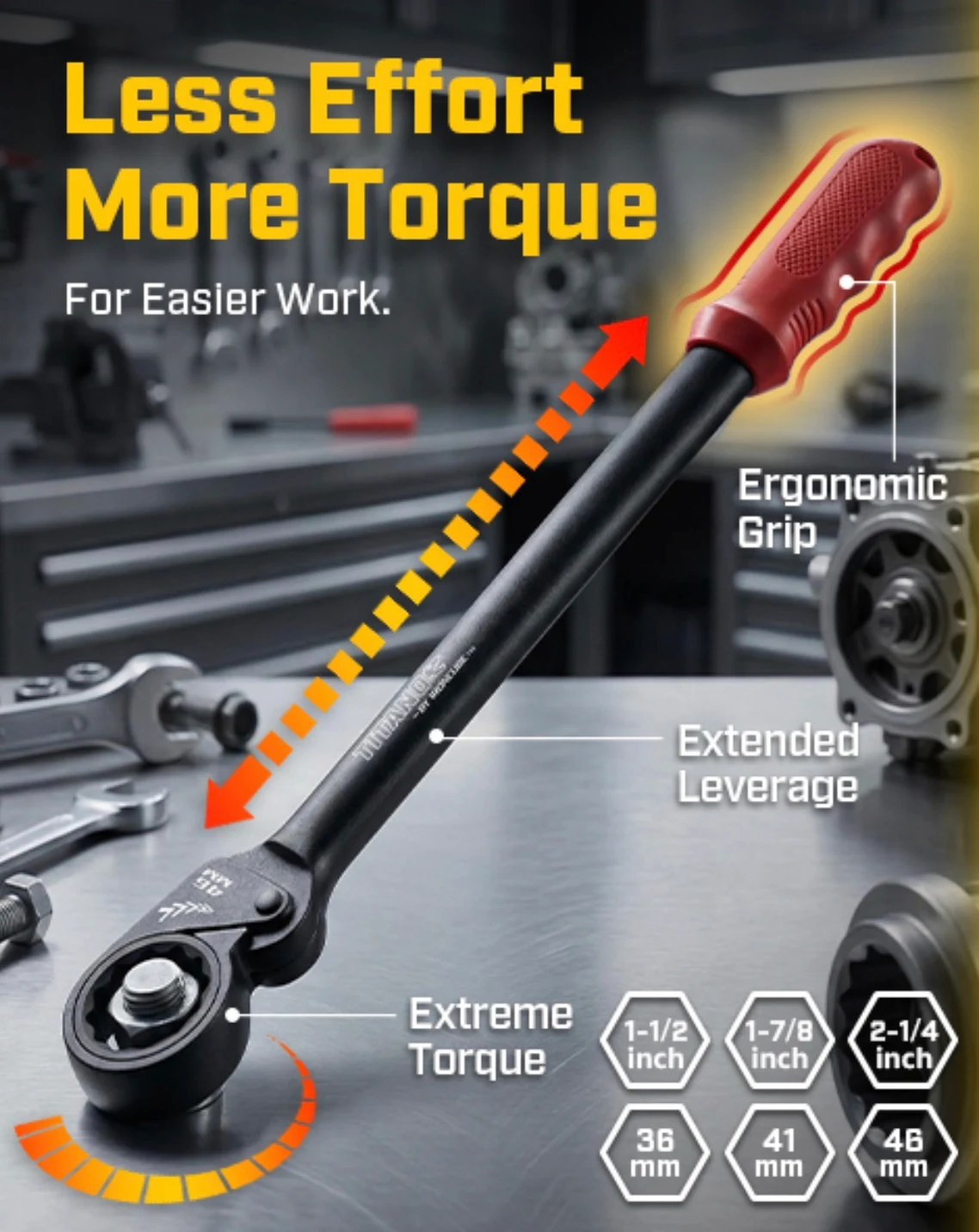
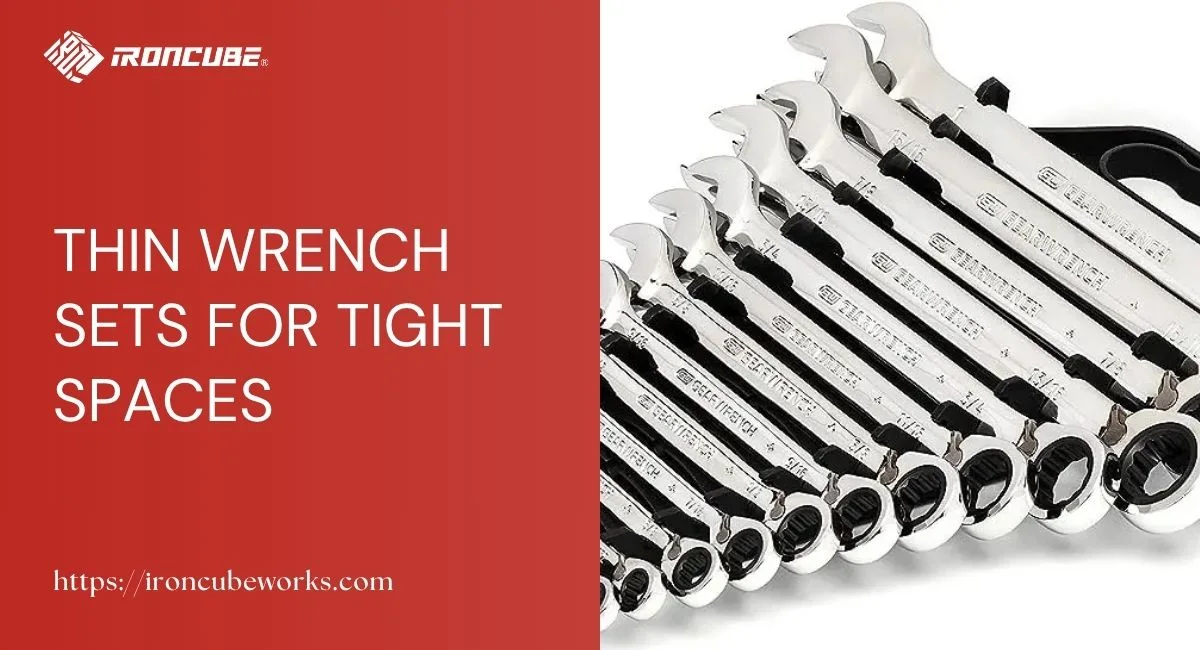
There is a moment every mechanic knows. You are reaching into an engine bay, the bolt you need is tucked between a coolant line and the firewall, and your standard combination wrench will not fit. The jaw is too thick. The handle has no room to swing. And the bolt stays exactly where it is. Thin wrench sets exist precisely to solve this problem.
A thin-profile combination wrench has a noticeably slimmer head and jaw than a standard wrench of the same size. That difference — sometimes just a few millimetres — is the difference between reaching the bolt and stripping your knuckles trying. For automotive work, plumbing in tight corners, bicycle maintenance, and motorcycle engine work, thin wrenches are not a luxury. They are often the only tool that actually fits.
This guide covers everything you need to know about thin wrench sets: what makes them different, why a 16-piece set gives you the best all-around coverage, how the black chrome finish compares to polished alternatives, and when to choose a thin set over a ratcheting one. By the end, you will know exactly what to look for and why the IRONCUBE Works 16-piece black thin combination set belongs in any serious toolbox.
What Makes a Wrench “Thin”?
To understand the value of thin wrench sets, we must look closely at their mechanical design. A standard open-end tool balances physical bulk with torque capacity. Manufacturers usually make standard tools thick to prevent the jaws from flexing open under high load. However, this traditional engineering approach makes them completely useless when a manufacturer buries a locknut behind a pulley or deep inside a hydraulic system.
+-----------------------------------------------------------+
|                    PROFILE COMPARISON                     |
+-----------------------------------------------------------+
| Standard Wrench Head:  [===================]  (8mm-12mm)  |
+-----------------------------------------------------------+
| Thin-Profile Wrench:  [=======]              (3mm-5mm)   |
+-----------------------------------------------------------+
Profile Thickness vs Standard Combination Wrenches
A typical combination wrench head measures anywhere from 8mm to over 12mm in thickness, depending on the size of the fastener. In sharp contrast, a premium slim tool features a head thickness of just 3mm to 5mm. This massive reduction in bulk allows you to slip the tool into spaces that are literally half the width of a standard tool opening.
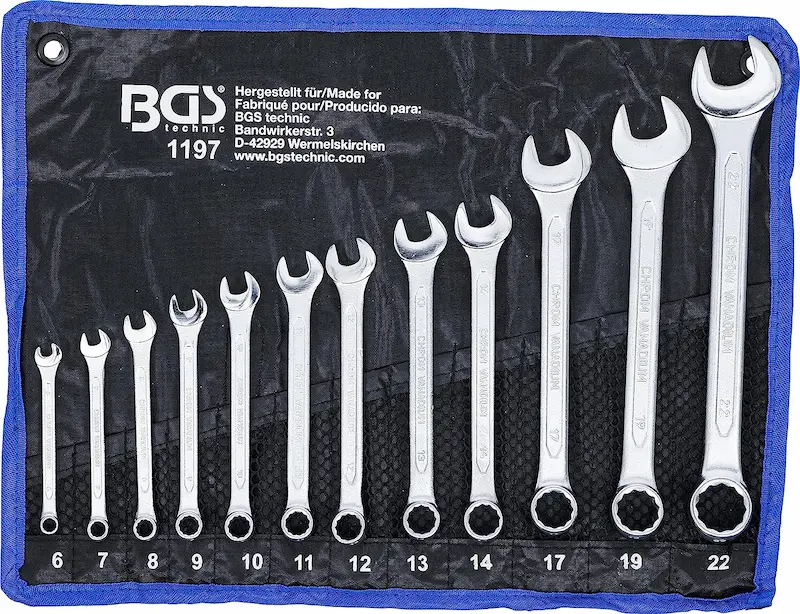
By utilizing advanced, high-tensile steel alloys, manufacturers can thin out the metal without sacrificing the structural integrity needed to turn stubborn fasteners. If you want to understand the baseline geometry of standard fasteners, you can read the comprehensive structural breakdown found on the Wikipedia Wrench Article.
Head Offset Angle
Traditional wrenches often feature a 15-degree offset angle at the box end to give your fingers clearance above a flat surface. High-quality slim tools modify this geometry to optimize for confined spaces. Many thin profiles feature a completely flat, 0-degree offset, or a highly precise, minimal angle on the open end. This flat orientation ensures that the entire surface area of the jaw makes contact with low-profile locknuts, preventing slippage and maximizing the distribution of mechanical force.
Where the Extra Clearance Actually Matters
Clearance is not just a luxury; it is often a strict technical requirement. Think about adjusting the cone bearings on a bicycle axle, securing a thin jam nut on a steering linkage, or tightening a pneumatic hose fitting inside an industrial compressor. In these specific applications, a standard tool will physically hit the surrounding metal before it ever seats onto the flats of the nut.
Using the correct slim-profile tool allows you to access these specific components cleanly. For an excellent breakdown of how various tool shapes function across mechanical tasks, check out the educational video content over at the Ironcube Tools YouTube Channel.
Why Choose a 16-Piece Black Combination Wrench Set?
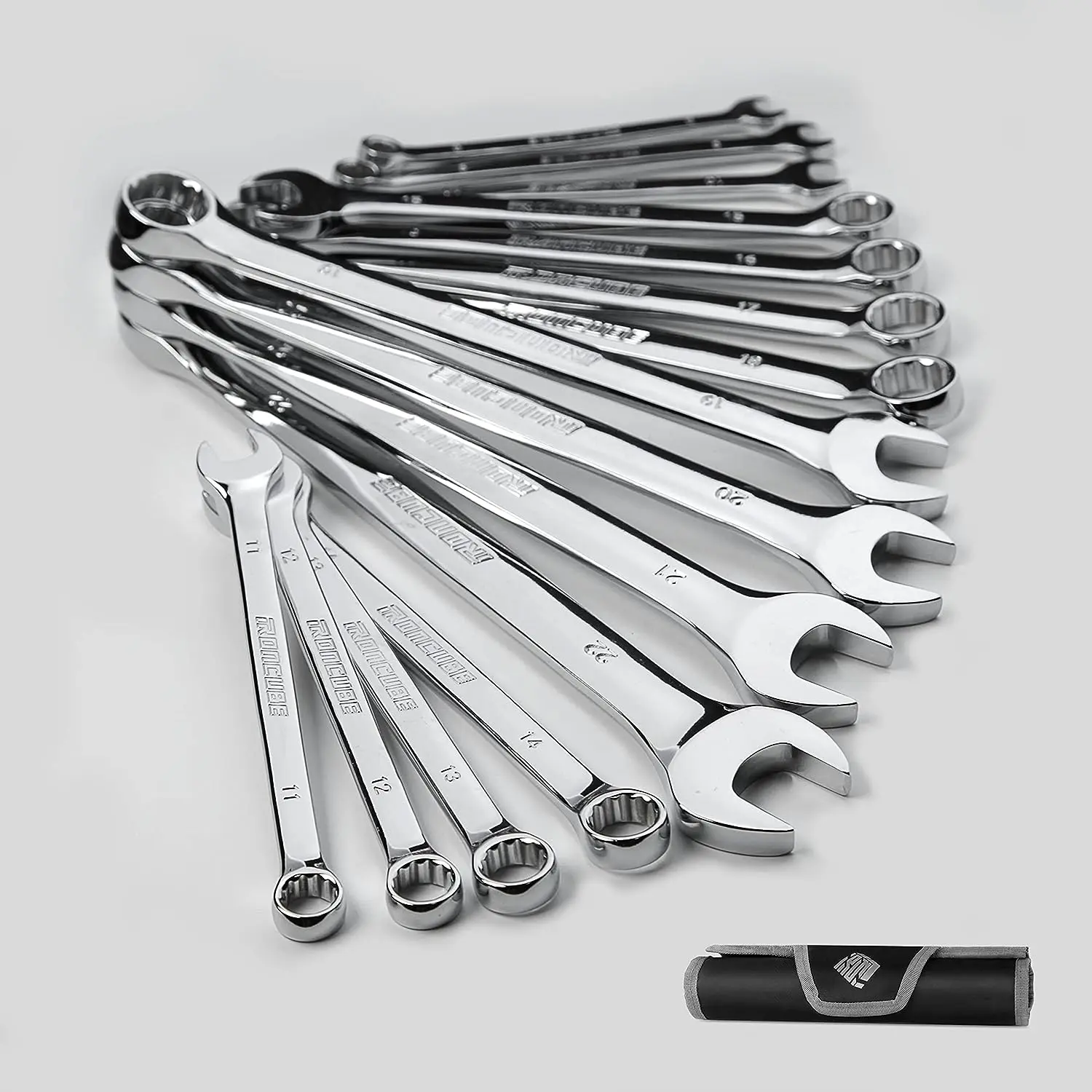
When you decide to add low-profile tools to your collection, configuration and finish matter just as much as dimensions. A comprehensive, professional-grade setup often centers around a versatile 16-piece wrench set featuring a durable black chrome wrench set finish. Let us look at why this specific combination represents the sweet spot for professional mechanics and industrial technicians alike.
| Attribute | Premium Black Chrome Thin Wrench Set | Standard Polished Finish Wrench |
| Head Thickness | 3.0mm – 4.5mm (Ultra-low profile) | 8.0mm – 12.0mm (Bulky) |
| Surface Coating | Industrial Black Chrome / Black Oxide | Standard Decorative Mirror Polish |
| Glare Reduction | High absorption (Excellent under work lights) | High reflection (Causes severe eye strain) |
| Size Variety | Comprehensive 16-piece range (No skipped sizes) | Often skips critical intermediate sizes |
| Corrosion Resistance | Superior oil-absorbent barrier | Variable (Can flake or peel over time) |
Size Range Coverage in a 16-Piece Set
A major frustration with budget tool kits is the tendency for manufacturers to skip critical sizes. A professional 16-piece wrench set ensures that you have complete, continuous coverage across both metric and SAE dimensions. This complete range means you will never find yourself halfway through a brake calibration or a transmission repair only to realize you are missing the exact 13mm or 15mm slim tool required to hold a backing nut in place.
If you frequently jump between American and European machinery, keeping a reliable wrench size chart metric SAE conversion handy on your workbench will help you select the exact tool you need instantly.
Black Chrome vs Polished Chrome Finish
While a mirror-polished chrome finish looks great in a pristine showroom, a black chrome wrench set offers serious practical advantages in a real-world working environment. High-intensity LED work lights and under-hood flashlights reflect harshly off polished chrome, creating blinding glares that cause severe eye strain during long repair sessions.
The dark, matte characteristics of high-end black chrome absorb this intense light, providing a high-contrast view of your work area. Furthermore, the specialized chemical bonding process used for black chrome results in a coating that resists chipping, peeling, and flaking far better than traditional decorative plating.
Corrosion Resistance and Durability
Industrial environments expose your hand tools to a harsh cocktail of caustic fluids, including brake fluid, motor oil, salty road grime, and moisture. Premium black surface treatments act as an incredibly tough barrier against rust and chemical etching. The microscopic texture of a black chrome or black oxide finish actually retains a fine layer of protective oil, significantly boosting its long-term rust resistance compared to smooth, raw steel surfaces.
Included Pouch or Roll Case
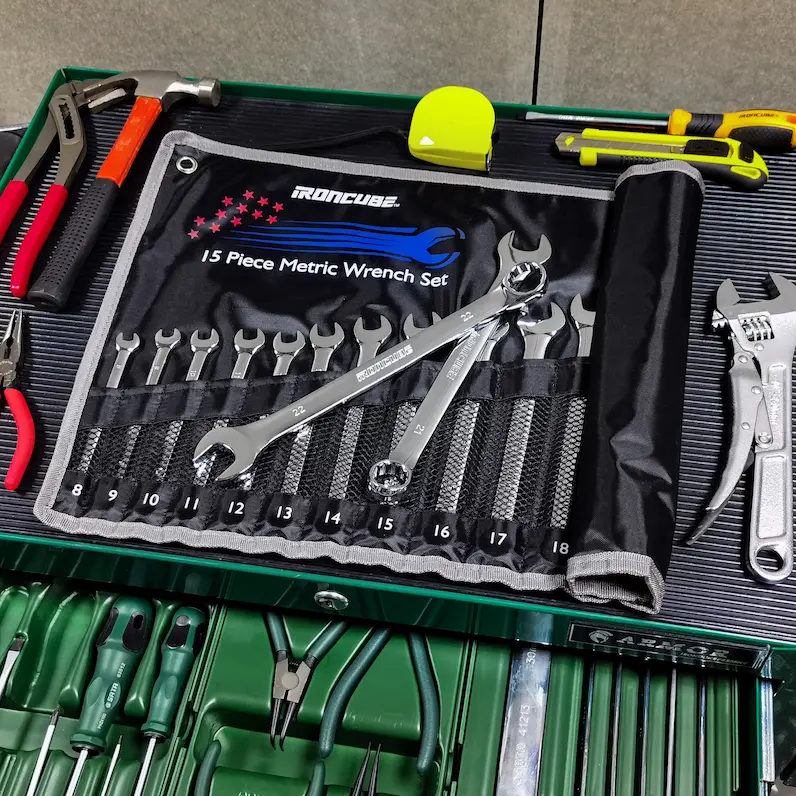
Ultra-thin tools can easily get lost or buried beneath heavier gear if you throw them loosely into a deep toolbox drawer. A professional kit should always come paired with a heavy-duty, reinforced rolling pouch. A dedicated canvas or ballistic nylon roll case keeps your tools perfectly organized, protects the slim profiles from impact damage, and allows you to confirm at a single glance that every single piece is accounted for before you pack up and leave the job site.
Best Uses for Thin Wrenches
Slim-profile tools are not meant to replace your heavy-duty, high-torque impact sockets. Instead, they are precision problem solvers designed to excel where raw bulk is a major disadvantage. Understanding exactly where these tools shine will help you work faster and avoid damaging fragile components.
Engine Bay Work — Alternators, Starters, Sensors
Modern automotive engineering emphasizes vehicle aerodynamics and cabin space, which forces engineers to cram massive engines into incredibly compact compartments. When replacing an alternator or installing a starter motor, you will frequently find mounting bolts positioned directly against the engine block or hidden behind accessory brackets.
Furthermore, modern exhaust sensors are tightly surrounded by protective heat shields. Trying to jam a standard tool into these areas can crack fragile plastic connectors or damage sensitive wiring harnesses. A slim tool slides cleanly between these obstructions, letting you break the initial tension safely.
Plumbing in Confined Spaces
Plumbing fixtures are notorious for using thin, stacked locknuts to secure faucets, supply valves, and drainage pipes underneath sinks and inside tight wall cavities. Standard pipe wrenches or thick adjustable wrenches are simply too wide to grab a single nut without accidentally binding against the adjacent hardware.
Using a dedicated slim tool lets you isolate and turn the exact compression fitting you want. If you frequently handle brake lines or hydraulic plumbing fittings, pairing your kit with the specialized geometry of the IRONCUBE 3pcs SAE Brake Line Wrench Set with Rolling Pouch will prevent you from stripping soft brass or aluminum hex lines.
Bike and Motorcycle Maintenance
Two-wheeled vehicles demand incredibly tight packaging to minimize weight and maintain balance. Bicycles rely heavily on low-profile cone nuts to adjust axle bearing play, while motorcycles use thin jam nuts to lock rear wheel alignment adjusters and control cables in place.
Because these components are often made of lightweight aluminum or soft alloys, using an ill-fitting or overly thick tool will quickly deform the fastener heads. A precise, slim open-end tool sits perfectly flush across the entire width of the nut, ensuring clean, mar-free adjustments every time.
Thin Wrench Set vs Ratcheting Wrench Set — Which Should You Buy?
Choosing the right mechanical layout for your workshop can be confusing, especially when deciding between low-profile open-end models and mechanical ratcheting designs. Both styles deserve a dedicated spot in a professional layout, but they solve entirely different mechanical challenges.
       THIN WRENCH                          RATCHETING WRENCH
   +-------------------+                  +-------------------+
   |  [===] 3-4mm      |                  |  [=======] 12mm+  |
   | Ultra-Thin Profile|                  | Internal Gear     |
   | Max Space Access  |                  | High-Speed Return |
   +-------------------+                  +-------------------+
            vs                                     vs
   Fits microscopic gaps                  Requires wider space
   Manual swing arc                       Fast ratcheting action
Speed Comparison
When it comes to pure speed, a ratcheting mechanism is tough to beat. It allows you to rapidly spin a loose fastener without ever lifting the tool off the nut. With a non-ratcheting slim tool, you must manually engage the fastener, complete your swing arc, lift the tool, reset it, and repeat the process.
However, this speed advantage vanishes completely if the ratcheting head cannot fit into the workspace to begin with. If you want to dive deep into the mechanics of geared options, read our detailed analysis of the best ratcheting wrench set in 2026.
Torque and Strength Comparison
Because ratcheting mechanisms rely on delicate internal gear teeth and fine pawls, they have clear mechanical limits. Applying heavy, brute force to a ratcheting tool can easily strip the internal components.
A high-quality solid slim profile tool has absolutely zero moving parts to break. Even though it is remarkably thin, its single-piece forged construction distributes mechanical stress uniformly across the entire body of the tool, allowing it to withstand surprising amounts of leverage without structural failure.
Access and Clearance Comparison
This is where the two designs diverge completely. Geared mechanism heads are necessarily bulky because they must house an internal gear, a retaining ring, and a directional pawl mechanism. This internal hardware usually forces the tool head to be quite thick and wide.
A slim open-end tool strips away all mechanical complexity to minimize physical dimensions. To see a comprehensive breakdown of these geometry trade-offs, explore our guide on non-ratcheting wrenches explained SAE vs metric myths and conversion secrets.
Who Should Buy Each Type
Buy a Ratcheting Set If: You primarily work in moderately open areas where fast removal of long-threaded fasteners is your main priority, and you have enough head clearance to accommodate a thicker tool profile. For an in-depth look at choosing between flexible and static geared heads, see our comparison on the metric ratcheting wrench set reversible vs fixed head comparison.
Buy a Thin Wrench Set If: You regularly encounter specialized locknuts, tight clearances, or applications like hydraulic lines, alignment linkages, and tight engine spaces where a standard tool cannot physically fit.
What to Look for When Buying a Thin Wrench Set
Not all slim hand tools are engineered equally. Because these tools are intentionally designed with a reduced profile, high-quality materials and precise manufacturing are absolutely critical. Investing in a poorly made, budget-grade slim tool will quickly lead to stretched jaws, rounded fasteners, and painful slipped knuckles.
Steel Grade and Hardness Rating
The quality of a slim tool starts directly with the metal alloy used in the foundry. Look for tools forged from premium Chrome Vanadium (Cr-V) or Chrome Moly (Cr-Mo) steel. These specific alloys are heat-treated to precise hardness levels, usually measured on the Rockwell C scale (HRC).
A high-quality slim tool needs a precise balance of hardness to resist jaw flexing, along with enough flexibility to prevent shattering under sudden shock loads. Cheap unbranded steel will stretch open under pressure, ruining the tool and damaging your fasteners.
Open vs Box End Quality
Examine the machining quality inside the tool openings very carefully. The interior jaw faces must be perfectly flat, straight, and parallel with clean, sharp corners. High-end manufacturers use high-precision Computer Numerical Control (CNC) broaching to ensure exact dimensional tolerances.
This tight tolerance ensures that the tool tightly grips the flats of the nut rather than putting pressure on the fragile corners, which is the main cause of stripped fasteners.
Laser-Etched Size Markings
When you are working deep inside a dark machinery space, you do not want to waste time squinting at your tools to read the size. Stamped markings can sometimes be shallow and tough to see if the tool gets covered in grease.
Look for high-contrast, permanent laser-etched markings alongside traditional deep roll-stamping. This dual marking style ensures you can identify the exact size you need under any lighting conditions, even after years of heavy workshop use.
Comprehensive Troubleshooting & Selection Guide
To help you choose the ideal tool configuration for your specific workshop needs, review this troubleshooting matrix. It highlights common mechanical issues caused by incorrect tool geometry and outlines how a specialized slim profile provides the fix.
Common Mechanical Workspace Challenges
The Problem: A backing nut turns freely, preventing the main bolt from tightening, but a standard tool cannot slide behind the mounting bracket to hold it still.
The Fix: Slide an ultra-low profile tool into the narrow gap to lock the backing nut in place, then tighten the main fastener with a standard socket.
The Problem: A hydraulic fluid line fitting is surrounded by adjacent lines, making a standard thick line tool impossible to swing.
The Fix: Use a slim profile line tool to approach the fitting vertically, clearing the surrounding lines completely.
The Problem: A precision locknut on an adjustment shaft is thin and made of soft brass; a regular thick tool slips off and rounds the edges.
The Fix: Use a precision-machined, flat 0-degree offset slim profile tool to cover the entire face of the low-profile nut perfectly.
If you are working on a mix of domestic and import machinery, always keep a reliable resource like our printable metric to sae wrench size conversion chart on your phone or garage wall to quickly swap between tool sizes without slowing down your work.
Summary
When you are dealing with tight mechanical spaces, standard hand tools simply cannot get the job done right. Trying to force a thick tool into a narrow gap wastes time and often damages fragile hardware. Investing in a dedicated, high-quality low-profile setup gives you the specialized clearance needed to handle complex repairs smoothly and confidently.
For complete capability across these tough jobs, we highly recommend the IRONCUBE 8pcs Metric Super Thin Wrench Set with Rolling Pouch. Forged from ultra-durable Chrome Vanadium steel and finished with an industrial coating, this professional kit provides the perfect balance of an ultra-low profile design and rugged shop durability.
Stop wrestling with bulky tools that do not fit. Explore the complete collection of professional slim tools today at the IRONCUBE Wrenches Category. If you have questions about custom tool sizes or wholesale business ordering, feel free to reach out to our team directly through our IRONCUBE Contact Page.
FAQs
Are thin wrench sets weaker than standard wrenches?
Yes, thin wrench sets do have lower maximum torque limits than standard combination wrenches due to their reduced thickness. Because they are designed to fit into microscopic spaces, they cannot hold up to heavy abuse like hitting them with a hammer or using a cheater pipe for extra leverage. However, when forged from premium heat-treated Chrome Vanadium steel, a high-quality thin wrench set provides plenty of strength to safely tighten and loosen the specialized low-profile jam nuts, hydraulic lines, and secondary backing fasteners they are designed for.
What is the thinnest wrench available for mechanical work?
The thinnest precision-engineered wrenches available for industrial and automotive use typically measure between 2.0mm and 3.0mm in profile thickness. A premium thin wrench set carefully balances this ultra-low profile design with reliable mechanical strength. Going any thinner than 2.0mm would cause the steel jaws to flex open or break under normal tightening forces. This makes a 3mm to 4mm thickness the ideal sweet spot for getting maximum clearance while maintaining excellent tool durability.
Do professionals use thin wrench sets in industrial shops?
Absolutely. Professional aircraft mechanics, automotive technicians, industrial maintenance engineers, and bicycle builders rely heavily on a high-quality thin wrench set daily. Professionals frequently encounter hidden locknuts on steering systems, thin suspension adjustments, and compact hydraulic lines that standard tools simply cannot fit. Having a dedicated slim kit on hand allows technicians to complete complex jobs quickly without damaging fragile components or rounding off specialized fasteners.
Can I use a thin wrench set to break loose rusted fasteners?
You should avoid using a thin wrench set to break loose heavily rusted or seized fasteners whenever possible. Because these tools have a reduced profile, applying extreme brute force can stretch the jaws open or damage the tool. For seized fasteners, it is always best to use a thick socket or a heavy-duty wrench to break the initial rust bond. Once the frozen fastener is loose, you can safely use your thin wrench set to handle the tight clearances.