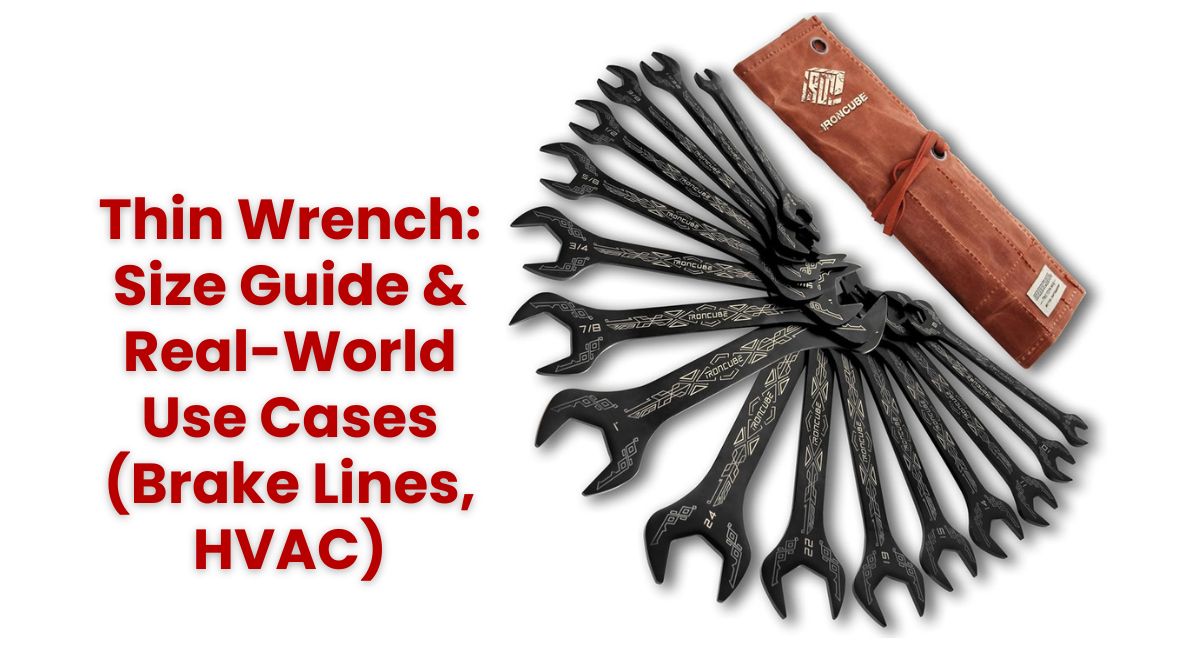
In the world of mechanical and industrial tools, a thin wrench plays a vital role, especially in specialized tasks like working on brake lines and HVAC systems. Its design, size, variety, and usability make it an essential tool for professionals and DIY enthusiasts alike. This comprehensive guide will explore the thin wrench in detail—covering size options, practical uses, and how it differs from other wrench types, supported by research-driven insights and real-world application examples.
For more options and variety in wrench tools, you can explore the full range at Ironcube Works Wrenches.
What is a Thin Wrench?
A Thin Wrench, as the name suggests, is a slim-profile hand tool designed to access narrow or recessed spaces where a regular wrench simply won’t fit. Its main strength lies in its reduced thickness, which allows you to grip nuts and bolts without stripping them, even in confined setups like brake lines or HVAC panels.
Unlike a standard wrench, which often has a thicker body, the Thin Wrench prioritizes accessibility over brute strength. While you might not use it for heavy-duty torque applications, it shines in precision work where space is a premium.
👉Fun fact: According to Wikipedia’s overview on wrenches, different wrench variations have been around since the 1800s, and specialized forms like the thin wrench evolved out of necessity in industries where space is limited.
Thin Wrench Size Guide: Metric and Standard Options
Selecting the correct size is crucial for any wrench, but with thin wrenches, precision in sizing ensures you avoid slippage or damage in tight spots. Sizes are typically measured by the width across flats (WAF), which corresponds to the diameter of the nut or bolt head. Standard sizes follow SAE (imperial) measurements in inches, while metric uses millimeters, allowing compatibility with a wide range of fasteners.
To make this easier, here’s a detailed thin wrench size guide compiled from industry standards. This table includes common sizes, their typical bolt pairings, and recommended uses, based on conversion charts and tool specifications.
| Wrench Size (SAE/Inches) | Equivalent Metric (mm) | Typical Bolt Diameter | Common Applications |
|---|---|---|---|
| 1/4″ | 6 mm | 1/8″ | Small electronics, bike adjustments |
| 5/16″ | 8 mm | 3/16″ | Hydraulic fittings, light automotive |
| 3/8″ | 10 mm | 1/4″ | Brake lines, HVAC valves |
| 7/16″ | 11 mm | 5/16″ | Fuel lines, plumbing |
| 1/2″ | 13 mm | 3/8″ | Engine components, furniture assembly |
| 9/16″ | 14 mm | 7/16″ | Bicycle pedals, machinery |
| 5/8″ | 16 mm | 1/2″ | Heavy-duty HVAC, automotive brakes |
| 11/16″ | 17 mm | 9/16″ | Industrial fittings, construction |
| 3/4″ | 19 mm | 5/8″ | Large pipes, structural bolts |
| 7/8″ | 22 mm | 3/4″ | Heavy machinery, HVAC ducts |
This chart highlights how thin wrenches bridge metric and standard systems, with conversions like 7/16″ equating to 11 mm for versatile use. For larger projects, sizes up to 1-1/2″ (38 mm) are available, though less common in thin profiles due to torque demands. When choosing, consider the fastener’s material—soft metals like brass in HVAC require gentler, thinner jaws to prevent deformation.
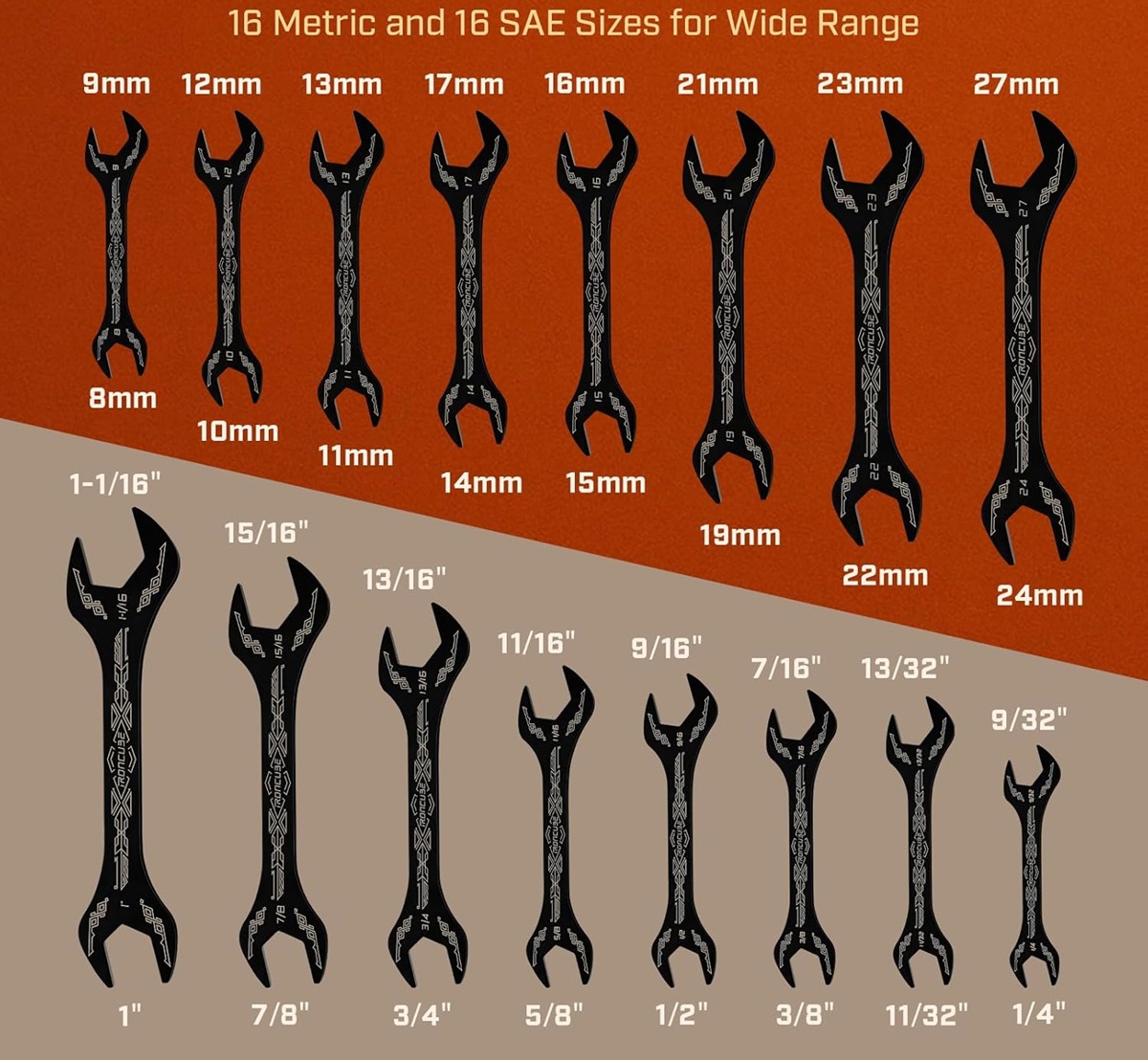
In practice, mechanics often carry sets covering 8-24 mm for metric-dominant regions or 1/4″-1″ for SAE-focused work. Research shows that mismatched sizes lead to stripped bolts, so always measure twice. At Ironcube Works’ wrench category, you’ll find sets tailored to these sizes, ensuring you have the exact fit for your needs.
Real-World Use Cases of Thin Wrenches
Brake Line Repairs
Brake lines are often located in tight spaces, making them challenging to access with standard tools. Thin wrenches are perfect for loosening and tightening brake line fittings without damaging surrounding components. Their slim profile ensures a secure grip, even in confined areas.
HVAC System Maintenance
HVAC systems often feature tightly packed components that require precise adjustments. Thin wrenches are ideal for accessing valves, connectors, and other fasteners in HVAC units, ensuring efficient maintenance and repair.
Plumbing Applications
Plumbing tasks frequently involve working in cramped spaces, such as under sinks or behind walls. Thin wrenches make it easier to tighten or loosen pipe fittings without requiring extensive disassembly.
Automotive Repairs
From engine components to suspension systems, thin wrenches are invaluable for automotive repairs. Their ability to access hard-to-reach fasteners saves time and reduces frustration during complex projects.
For more insights on how thin wrenches compare to other tools, explore our article on Ratcheting Wrench vs. Standard Wrench: When Each Wins.
Why Thin Wrenches are Essential for Brake Lines
Brake systems are notoriously tight spaces, especially around the master cylinder and ABS modules. A regular wrench is often too bulky, which is where the Thin Wrench earns its keep.
Benefits of using a Thin Wrench for brake lines:
Prevents damage to soft brass fittings.
Allows you to reach flare nuts without removing other components.
Reduces slippage compared to using pliers or oversized wrenches.
Perfect for quick adjustments when bleeding brakes.
If you’ve been comparing tools, you might wonder: why not just use a ratcheting wrench? Well, ratcheting wrenches have their place (learn more here), but they’re often too bulky for brake line work. The slim profile of the Thin Wrench gives you far better control in these delicate spots.
Thin Wrenches in HVAC Applications
In HVAC systems, space is often the enemy. Whether you’re connecting copper lines or tightening flare nuts, a Thin Wrench lets you maneuver around coils, panels, and insulation.
Typical HVAC scenarios where Thin Wrenches shine:
Refrigerant line connections: Perfect for tightening without stripping soft metal.
Thermostatic expansion valves (TXV): Accessing nuts in cramped panels.
Gas line fittings: When you need a precise grip without overtightening.
Many HVAC pros pair Thin Wrenches with ratcheting sets (check out IronCube’s guide on ratcheting wrench sets with flex heads) for maximum versatility.
Benefits of Using Thin Wrenches
Access to Tight Spaces
The primary advantage of thin wrenches is their ability to fit into confined areas where standard tools cannot reach.
Precision
Thin wrenches provide a secure grip on fasteners, reducing the risk of stripping or damaging nuts and bolts.
Versatility
These tools are suitable for a wide range of applications, from automotive repairs to plumbing and HVAC maintenance.
Durability
High-quality thin wrenches are built to last, ensuring long-term performance even in demanding environments.
For more information on the benefits of specialized tools, explore our article on Ratcheting Wrench Sets with Flex Head: Benefits and Uses.
Tips for Using a Thin Wrench Effectively
Proper use enhances performance and tool life. Key recommendations include:
Select the exact size to avoid slipping or rounding fasteners.
Position the wrench to apply force on the fixed jaw side for a better grip.
Use lubricant on stubborn fittings before attempting to loosen.
Avoid using excessive force to prevent damage, especially on brake lines.
Use complementary tools like flex-head ratcheting wrenches for increased maneuverability.
For guidance on wrench use and maintenance, visit the Ironcube Contact Page.
Maintenance and Storage of Thin Wrenches
Keeping thin wrenches in optimal condition prolongs their functionality:
Wipe clean after each use to remove grease and debris.
Store in organized toolkits or racks to prevent warping.
Periodically inspect for damage or wear, especially the jaws.
Apply a light coating of oil to prevent rust, particularly for steel wrenches.
You can shop for tool organizers and storage options from Ironcube Works.
Summary
Thin wrenches are an essential tool for anyone working in tight spaces or requiring precision in their tasks. From brake line repairs to HVAC maintenance, these versatile tools offer unmatched efficiency and reliability. By choosing the right size and material, you can ensure optimal performance and longevity for your thin wrench.
For more information on our products and services, visit Ironcube Tools or contact us through our Contact Page. Don’t forget to check out our YouTube Channel for tutorials and product demonstrations.
FAQs
1. Can I use a Thin Wrench for heavy-duty bolts?
Not really. Thin Wrenches are designed for precision work in tight spaces. For heavy-duty torque, stick with a standard or ratcheting wrench.
2. Are Thin Wrenches the same as flare nut wrenches?
They’re related but not identical. Flare nut wrenches are designed for gripping tubing nuts, while Thin Wrenches are slim-bodied wrenches that can include both open-end and box-end variations.
3. Do I need a full set or just one size?
Always go for a set. Nuts and bolts come in all shapes and sizes, and having a single Thin Wrench is often limiting.
4. Where can I get professional-grade Thin Wrenches?
You can order directly from IronCubeWorks or through their Amazon store.
5. What’s the lifespan of a Thin Wrench?
With proper care (cleaning, storage, and avoiding overtightening), a thin wrench can easily last 5–10 years depending on usage.