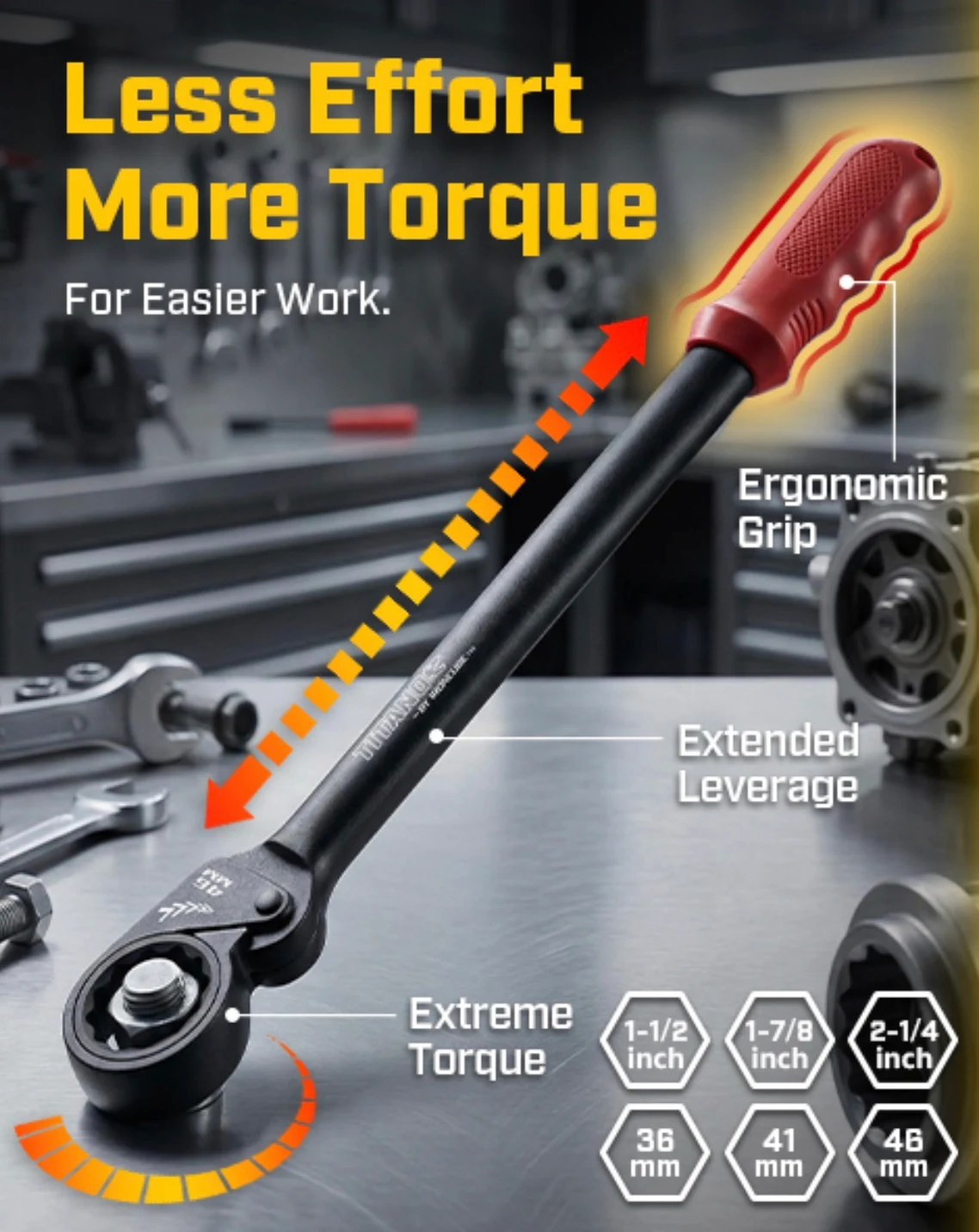
A 1-1/8 wrench sits beyond the sizes found in many basic household tool kits. Once fasteners reach this range, you are often dealing with heavier mechanical assemblies, equipment, structural components, agricultural machinery, trailers, or industrial maintenance.
However, one question causes considerable confusion:
What size bolt actually uses a 1-1/8 wrench?
For a conventional Unified National standard hex fastener, the most useful answer is a 3/4-inch nominal bolt or nut.
A 2025 U.S. Department of Agriculture Natural Resources Conservation Service reference provides a particularly useful confirmation. Its “Hex Bolt and Nut Wrench Sizes” table specifies a 1-1/8-inch hex socket size for both the bolt head and nut of a 3/4-inch Unified National fastener.
That relationship is simple, but there is an important qualification. A 3/4-inch thread diameter does not guarantee that every possible 3/4-inch fastener takes the same wrench. Heavy-hex hardware, special flange nuts, locknuts, proprietary equipment fittings, and nonstandard fasteners can use different across-flats dimensions.
This guide explains exactly what a 1-1/8 wrench fits, how wrench size differs from bolt diameter, how 29mm compares, and how to avoid damaging large fasteners by choosing the wrong tool.
For additional size references, keep the IRONCUBE SAE and metric wrench size chart available alongside this guide. IRONCUBE’s chart lists 1-1/8 inch as approximately 28.58mm.
What Size Bolt Uses a 1-1/8 Wrench?
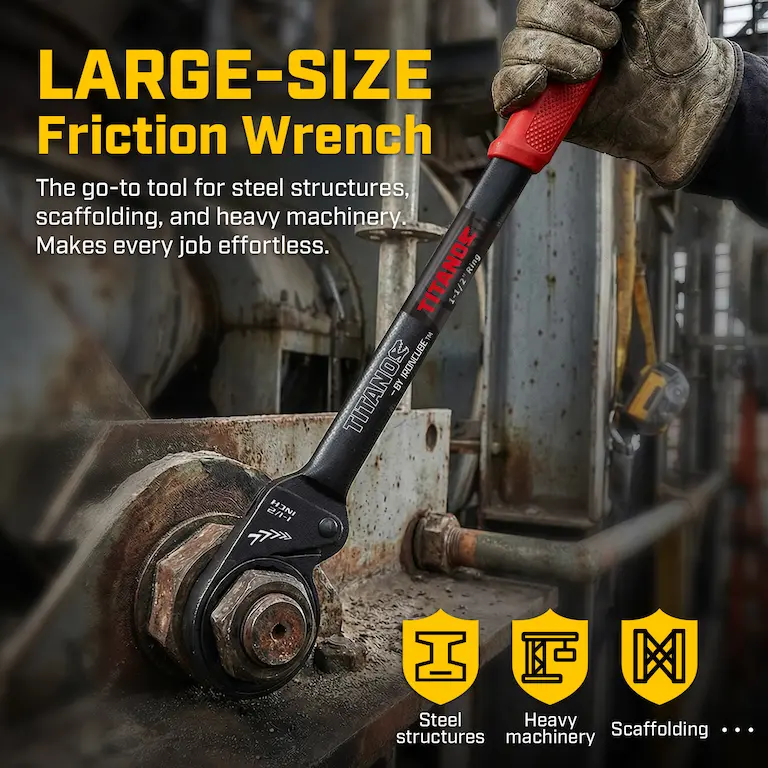
In standard inch-series hex hardware, a 1-1/8 wrench commonly fits a 3/4-inch nominal bolt head and 3/4-inch standard hex nut.
The relationship looks like this:
| Fastener Measurement | Typical Value |
|---|---|
| Nominal bolt/thread diameter | 3/4 inch |
| Standard bolt-head wrench size | 1-1/8 inch |
| Standard nut wrench size | 1-1/8 inch |
| Wrench opening in millimeters | 28.575mm exactly |
| Nearest whole metric wrench | 29mm |
| Common coarse thread | 3/4-10 UNC |
| Common fine thread | 3/4-16 UNF |
The USDA NRCS wrench-size table identifies the 3/4-inch nominal fastener with a 1-1/8-inch bolt-head and nut wrench opening. It also shows how neighboring sizes increase: 5/8-inch fasteners use smaller wrench openings, while 7/8-inch fasteners move up to 1-5/16 inch.
Therefore, when someone asks “what size bolt uses a 1-1/8 wrench?”, 3/4-inch standard hex hardware is the first size to check.
Do not confuse the 3/4-inch thread diameter with the 1-1/8-inch head measurement. They describe completely different parts of the fastener.
What Does 1-1/8 Wrench Size Actually Mean?
A wrench marked 1-1/8 is designed around an opening approximately 1.125 inches across.
That dimension refers to the distance between opposing parallel flats on a compatible hex head or nut. Mechanics normally call this the across-flats, or AF, dimension.
It does not mean the bolt shaft is 1-1/8 inches in diameter.
That distinction matters because bolt sizes describe the threaded body rather than the wrench opening.
For example, a standard 3/4-inch bolt may have:
3/4-inch nominal thread diameter → 1-1/8-inch hex head → 1-1/8 wrench
By comparison, a 1-1/8-inch-diameter bolt is substantially larger. The USDA NRCS table specifies a 1-11/16-inch wrench opening for a conventional 1-1/8-inch Unified National bolt and nut.
This is one of the most important distinctions to understand.
A 1-1/8 wrench does not normally indicate a 1-1/8-inch bolt diameter.
ASME’s B18.2.1 standard covers general and dimensional requirements for several inch-series square and hex bolt and screw types, while ASME B18.2.2 addresses inch-series nuts and includes wrench-opening considerations.
For more background on tool terminology, the general Wikipedia wrench reference provides a useful overview, while engineering decisions should rely on the applicable fastener standard.
What Fasteners Commonly Fit a 1-1/8 Wrench?
Standard 3/4-Inch Hex Bolts
The most important application for a 1-1/8 wrench is the standard 3/4-inch hex bolt.
The USDA’s 2025 construction-inspection handbook directly pairs a 3/4-inch nominal Unified National fastener with a 1-1/8-inch bolt-head socket size.
This relationship appears logical once you understand that bolt diameter and head width serve different purposes.
The threaded body determines how the fastener engages its mating thread. The larger hex head provides a surface on which a wrench or socket can transmit turning force.
Consequently, measuring only the bolt head cannot tell you the nominal thread diameter with certainty unless you also know the fastener standard.
Standard 3/4-Inch Hex Nuts
The same USDA table specifies 1-1/8 inch for the standard nut used with a 3/4-inch nominal fastener.
That is convenient in practice because the mechanic may be able to work both sides of a conventional assembly with the same nominal wrench size.
Still, verify the hardware before applying significant force.
Special-purpose nuts can differ in geometry even when their internal thread fits a 3/4-inch bolt.
3/4-10 UNC and 3/4-16 UNF Fasteners
A 3/4-inch nominal thread may exist with different pitches.
Two widely encountered Unified inch-series configurations are 3/4-10 UNC and 3/4-16 UNF. Government equipment documentation includes examples of both thread designations, including 3/4-10 hex bolts and nuts and 3/4-16 hex hardware.
Here is the important point:
Thread pitch does not by itself determine wrench opening.
A standard-pattern 3/4-10 bolt and a standard-pattern 3/4-16 bolt can use the same 1-1/8 wrench even though one has 10 threads per inch and the other has 16.
Always identify three separate characteristics:
nominal diameter, thread pitch, and head or nut geometry.
Treating them as one measurement causes purchasing and repair mistakes.
Bolt Diameter vs Wrench Size: The Difference You Must Know
The phrase “3/4-inch bolt” refers primarily to the nominal diameter of the threaded portion.
A 1-1/8 wrench, meanwhile, describes the tool opening required around the hex.
Think of the measurements this way:
Thread diameter answers: What nut or threaded hole fits this bolt?
Thread pitch answers: How closely spaced are the threads?
Wrench size answers: What tool fits around the bolt head or nut?
They are related through dimensional standards, but they are not interchangeable.
This explains a common experience at hardware stores. Someone measures the hex head at 1-1/8 inches and asks for a “1-1/8-inch bolt.” The replacement they receive may be dramatically larger because they measured the head rather than the threaded shaft.
If your wrench fits the fastener perfectly but you do not know the bolt size, measure the major diameter of the threads separately.
A caliper is far more useful than guessing.
1-1/8 Wrench vs Heavy Hex Fasteners
Here is where a simple wrench-size chart can become misleading.
A standard hex fastener and a heavy-hex fastener of the same nominal thread diameter are not necessarily dimensionally identical at the head or nut.
ASME recognizes standard hex and heavy-hex products as distinct dimensional categories. ASME B18.2.1 covers standard and heavy-hex bolt/screw forms, while structural heavy-hex bolts are addressed separately through ASME B18.2.6.
The Research Council on Structural Connections also specifies that heavy-hex structural bolt geometry follows ASME B18.2.6. It notes that structural bolt heads and corresponding heavy-hex nuts are intentionally sized so ironworkers can use the same wrench or socket on either side of the assembly.
Therefore:
Do not assume that every 3/4-inch fastener takes a 1-1/8 wrench.
The 1-1/8 relationship applies strongly to conventional standard hex hardware. If a drawing specifies heavy hex, structural bolting, a proprietary nut style, or another special form, check its applicable standard before selecting the wrench.
This distinction becomes increasingly important in structural steel and other high-load applications.
IRONCUBE covers the larger end of this spectrum in its guide to extra-large heavy-duty ratcheting wrenches and its jumbo ratchet wrench guide.
Is a 1-1/8 Wrench the Same as 29mm?
Not exactly.
According to the U.S. National Institute of Standards and Technology, one inch equals exactly 25.4 millimeters.
Therefore:
1.125 × 25.4 = 28.575mm
So a 1-1/8 wrench equals 28.575mm, not exactly 29mm.
A 29mm opening is approximately 0.425mm larger.
That difference sounds tiny. Under light loads, a 29mm tool may appear to fit some 1-1/8-inch fasteners.
However, a near match is not the same as the correct fit.
Extra clearance lets the tool move farther before its contact surfaces engage. Under high force, that can concentrate loading in less favorable areas of the fastener.
A 28mm wrench presents the opposite problem. At 28mm, it is about 0.575mm smaller than the nominal 28.575mm dimension, so it normally should not seat correctly on an undamaged 1-1/8-inch hex.
The safest rule is simple:
Use the actual 1-1/8 wrench on a 1-1/8-inch hex whenever possible.
IRONCUBE’s standard-to-metric wrench conversion chart likewise lists 1-1/8 inch at approximately 28.58mm and advises using the exact size for critical work.
SAE Wrench and Bolt Size Comparison Chart
The following reference is based on the USDA NRCS 2025 Unified National wrench-size table.
| Nominal Fastener Diameter | Bolt-Head Wrench Size | Nut Wrench Size |
|---|---|---|
| 1/2 in. | 3/4 in. | 13/16 in. |
| 9/16 in. | 7/8 in. | 7/8 in. |
| 5/8 in. | 15/16 in. | 1 in. |
| 3/4 in. | 1-1/8 in. | 1-1/8 in. |
| 7/8 in. | 1-5/16 in. | 1-5/16 in. |
| 1 in. | 1-1/2 in. | 1-1/2 in. |
| 1-1/8 in. | 1-11/16 in. | 1-11/16 in. |
| 1-1/4 in. | 1-7/8 in. | 1-7/8 in. |
| 1-3/8 in. | 2-1/16 in. | 2-1/16 in. |
| 1-1/2 in. | 2-1/4 in. | 2-1/4 in. |
This table immediately reveals two useful facts.
First, the 1-1/8 wrench belongs naturally around the 3/4-inch standard fastener range.
Second, wrench sizes start becoming large quickly once nominal thread diameter passes 3/4 inch.
For a broader reference, see the IRONCUBE wrench size chart for SAE and metric conversion.
Where Are 1-1/8-Inch Fasteners Commonly Used?
A 1-1/8 wrench is large enough that many users first encounter it outside ordinary light-duty household assembly.
Three-quarter-inch hardware can appear in equipment mounting, large brackets, timber connections, agricultural machinery, trailers, industrial assemblies, and other applications where smaller general-purpose fasteners are unsuitable.
There are real-world examples in government and engineering documents.
The USDA’s timber-construction inspection guidance includes 3/4-inch Unified National bolts within its fastener and wrench reference material.
Government equipment procurement records also contain 3/4-10 and 3/4-16 bolts and nuts in heavy-equipment parts inventories.
This does not mean every component in these industries uses a 1-1/8 wrench. Instead, it explains why the size is more likely to appear once you move beyond light automotive and household work.
If your work routinely involves progressively larger hardware, explore IRONCUBE’s full wrench collection and the friction wrench buying guide. The current IRONCUBE wrench catalog includes standard wrench sets alongside larger industrial friction-wrench sizes.
How to Identify a Fastener That Needs a 1-1/8 Wrench
Never identify a large bolt from one measurement alone.
Start by cleaning dirt, paint, or heavy corrosion from the accessible flats.
Next, measure the fastener across two opposite parallel flats with a caliper. If the measurement is close to 1.125 inches or 28.575mm, test your 1-1/8 wrench.
The wrench should seat fully.
Then measure the threaded shaft if you need to identify the actual bolt specification. A fastener whose hex measures 1-1/8 inches may have a 3/4-inch nominal thread when it follows the standard pattern discussed above.
Finally, determine thread pitch with a thread-pitch gauge or a known matching nut.
That process keeps four separate questions from becoming mixed together:
What is the head size? What is the thread diameter? What is the pitch? What fastener pattern is being used?
For additional conversion work, the IRONCUBE SAE/metric chart can help you distinguish fractional and metric dimensions.
Choosing the Right Type of 1-1/8 Wrench
Once you know the fastener genuinely needs a 1-1/8 wrench, the next decision is tool style.
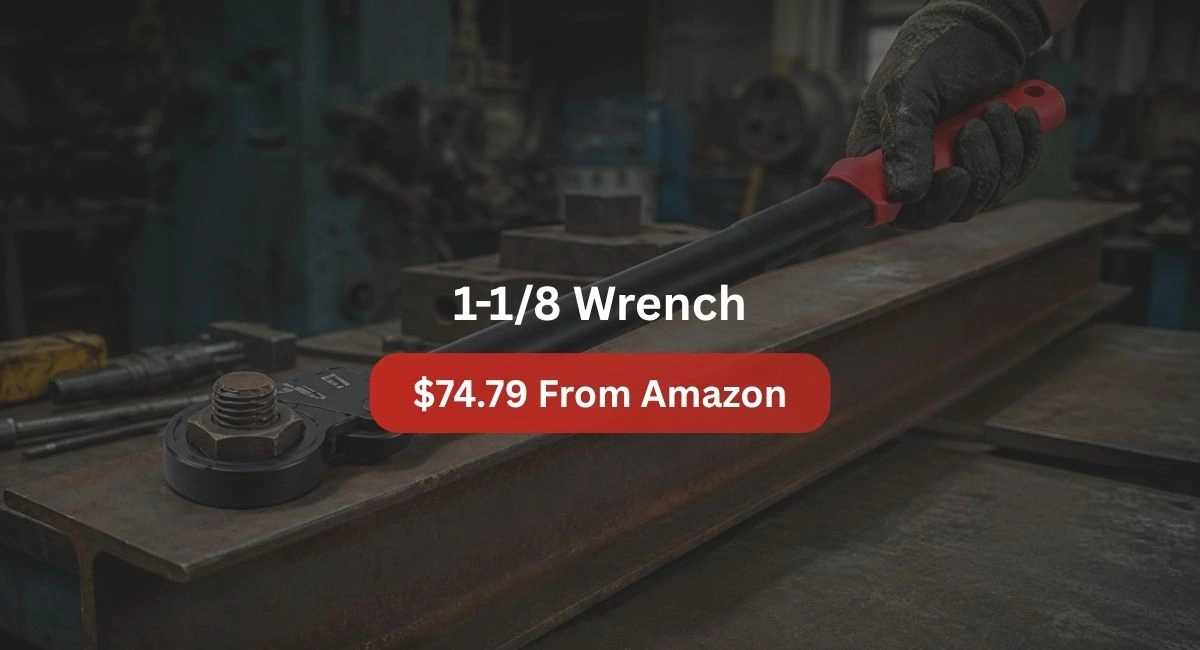
An open-end wrench works where access from the side is necessary. However, the tool contacts fewer areas of the fastener than a surrounding box-end design.
A box-end wrench surrounds more of the hex and is generally preferable when access allows it.
A ratcheting wrench can reduce repeated repositioning when swing space is limited.
Meanwhile, a socket may be the better option when you have enough clearance above the bolt or nut and need to use a ratchet, breaker bar, or specified torque tool.
The important principle is not simply choosing the strongest-looking tool.
Choose the tool that fits completely, remains square to the fastener, and suits the required tightening method.
For specialized oversized work, IRONCUBE also manufactures friction-style ratcheting tools. For example, its 1-7/8-inch friction wrench is positioned for substantially larger industrial fasteners and uses a friction-based ratcheting mechanism.
That 1-7/8-inch model should not be confused with a 1-1/8 wrench. The difference is three-quarters of an inch at the wrench opening and represents a completely different fastener scale.
Why Correct Wrench Fit Matters
Large fasteners tempt people to use whatever tool appears close enough.
That is precisely where care becomes more important.
As required turning force increases, clearance between the wrench and fastener becomes increasingly undesirable. A poorly fitting wrench can shift before loading the flats effectively.
Corroded fasteners make the situation worse. Their corners may already have lost material.
Instead of immediately adding more leverage, confirm the wrench size first.
A quality 1-1/8 wrench should seat deeply and remain aligned with the fastener.
If a 29mm wrench visibly rocks on a 1-1/8-inch hex, replace it with the correct SAE tool rather than increasing force.
Similarly, never hammer an undersized metric wrench onto the fastener merely because the numerical dimensions appear close.
Correct fit protects the fastener and also makes the technician’s applied force more predictable.
Does a 1-1/8 Wrench Tell You the Correct Torque?
No.
Knowing that a bolt takes a 1-1/8 wrench does not tell you its required tightening torque.
This is one of the most dangerous assumptions in fastener work.
Torque requirements can depend on thread diameter, thread pitch, fastener grade, lubrication, coating, joint material, washer configuration, manufacturer specifications, and the required clamp load.
Structural bolting illustrates why the distinction matters.
The Federal Highway Administration’s rotational-capacity procedure specifies bolt diameter, required tension, calibrated equipment, and a defined testing method rather than deriving installation requirements from wrench opening alone.
Therefore:
Wrench size determines fit. It does not establish torque.
If equipment documentation specifies a final torque value, use the specified procedure and a suitable calibrated torque tool.
A conventional or friction-ratcheting wrench is primarily a turning tool. A torque wrench is a measuring and torque-application tool.
IRONCUBE explains this distinction in its detailed comparison of a friction wrench vs torque wrench. The company’s current guide specifically notes that friction wrenches transmit turning force but do not measure torque.
Common Mistakes With a 1-1/8 Wrench
One frequent error is assuming that a 1-1/8 wrench means a 1-1/8-inch bolt.
It usually does not.
For the standard Unified National dimensions in the USDA reference, a 1-1/8-inch nominal bolt requires a much larger 1-11/16-inch wrench.
Another mistake is treating 29mm and 1-1/8 inch as mathematically identical. NIST’s exact inch definition proves otherwise: 1-1/8 inch equals 28.575mm.
A third mistake is assuming every 3/4-inch fastener uses the same head.
Standard hex, heavy hex, flange, locking, and proprietary designs can differ. Always identify the fastener type before relying on a generic chart.
The fourth mistake is guessing torque from wrench size.
A 1-1/8 wrench tells you the approximate across-flats requirement. Nothing more.
Finally, mechanics sometimes keep increasing leverage when a wrench begins slipping. That is the point to stop and inspect the fit, fastener condition, tool condition, and thread direction.
More leverage applied through the wrong tool rarely solves the underlying problem.
Building a Better Large-Fastener Tool Kit
If you encounter a 1-1/8 wrench only once, buying one individual wrench may be enough.
Professionals who service mixed equipment benefit more from continuous size coverage.
Look at the fasteners you actually work on. If your jobs regularly move from 15/16 inch through 1 inch, 1-1/16 inch, 1-1/8 inch, and beyond, missing one size can halt a repair.
For conventional shop work, browse the IRONCUBE wrench category. It currently includes SAE and metric wrench sets as well as specialized larger tools.
If your work extends considerably beyond a 1-1/8 wrench, the extra-large ratcheting wrench guide provides useful context.
For very large fasteners, IRONCUBE’s 1-7/8-inch friction wrench shows how different tool designs become useful as wrench opening and required leverage increase.
You can also compare specialized large-tool selection through the 2026 friction wrench set buying guide and the guide on quality wholesale jumbo wrench sets.
For general workshop coverage beyond wrenches, IRONCUBE also maintains dedicated screwdriver tools and a guide to magnetic screwdriver sets.
Hands-on product demonstrations and tool content are available through the IRONCUBE YouTube channel.
FAQs
What size bolt takes a 1-1/8 wrench?
A 1-1/8 wrench commonly fits a standard 3/4-inch nominal Unified National hex bolt. The USDA NRCS 2025 wrench-size table lists a 1-1/8-inch bolt-head socket size for a 3/4-inch nominal fastener. However, special and heavy-hex hardware can use different dimensions, so verify the fastener pattern before applying substantial force.
Does a 3/4-inch nut use a 1-1/8 wrench?
For the standard Unified National nut shown in the USDA reference, yes. A conventional 3/4-inch nominal nut is paired with a 1-1/8 wrench opening. Heavy-hex, flange, locking, or proprietary nuts may differ, so the nominal thread size alone should not replace a dimensional check.
Is a 1-1/8 wrench equivalent to 29mm?
A 1-1/8 wrench is close to 29mm but is not identical. NIST defines one inch as exactly 25.4mm, making 1-1/8 inch exactly 28.575mm. Therefore, a 29mm wrench is approximately 0.425mm larger. Use the actual SAE size whenever accurate fit matters.
How do I know whether my bolt requires a 1-1/8 wrench?
Measure directly between two opposing flat faces of the hex head. A fastener requiring a 1-1/8 wrench should measure approximately 1.125 inches, or 28.575mm, across those flats. Then measure the threaded shaft separately to identify nominal bolt diameter. Do not determine bolt diameter from wrench size alone.
Will every 3/4-inch bolt fit a 1-1/8 wrench?
No. A 1-1/8 wrench is strongly associated with standard-pattern 3/4-inch hex bolts, but the relationship is not universal. ASME recognizes several different bolt and nut geometries, including heavy-hex forms with their own dimensional requirements. Always check the applicable fastener standard when dealing with structural or specialized hardware.
What wrench size comes after 1-1/8 inch for standard large bolts?
It depends on the fastener diameter rather than simply moving to the next wrench in your toolbox. In the USDA Unified National table, a standard 3/4-inch bolt uses a 1-1/8 wrench, while a 7/8-inch nominal bolt moves to a 1-5/16-inch wrench. A 1-inch bolt uses 1-1/2 inch.
Final Summary
The most important fact to remember is straightforward: a 1-1/8 wrench commonly fits the head and nut of a standard 3/4-inch Unified National hex fastener. A current USDA NRCS reference confirms that 3/4-inch standard bolts and nuts use a 1-1/8-inch wrench opening.
However, wrench size and bolt diameter are not the same measurement.
A 1-1/8 wrench measures 1.125 inches across its nominal opening, equivalent to exactly 28.575mm using NIST’s exact inch definition. It is therefore close to, but not identical with, 29mm.
Most importantly, do not extend the 3/4-inch relationship blindly to heavy-hex or special fasteners. Identify the head style, measure across the flats, verify thread diameter and pitch, and follow the applicable equipment or fastener specification.
For additional reference, use the IRONCUBE SAE and metric wrench size chart, explore the IRONCUBE wrench collection, or contact IRONCUBE when selecting tools for specialized large-fastener applications.