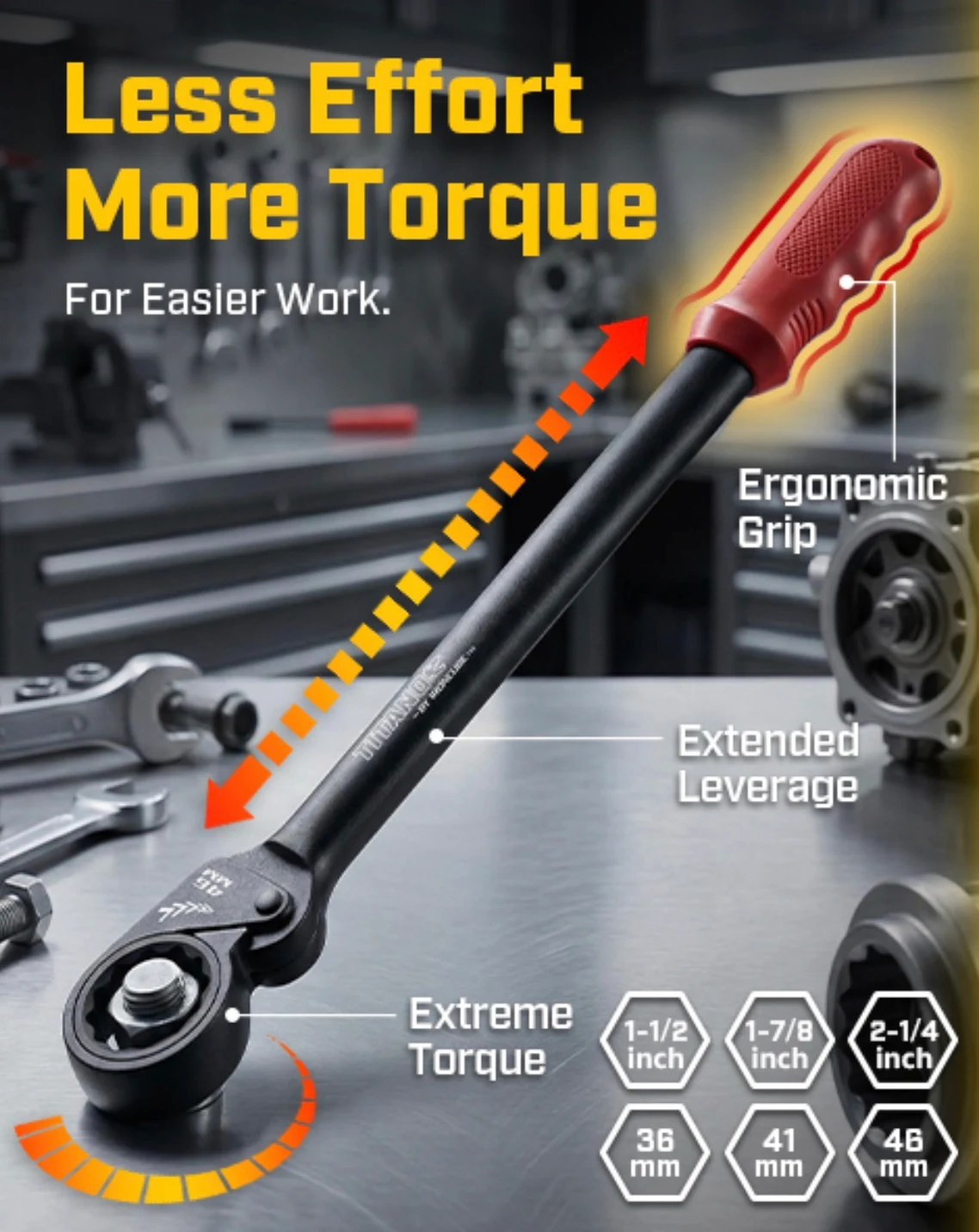
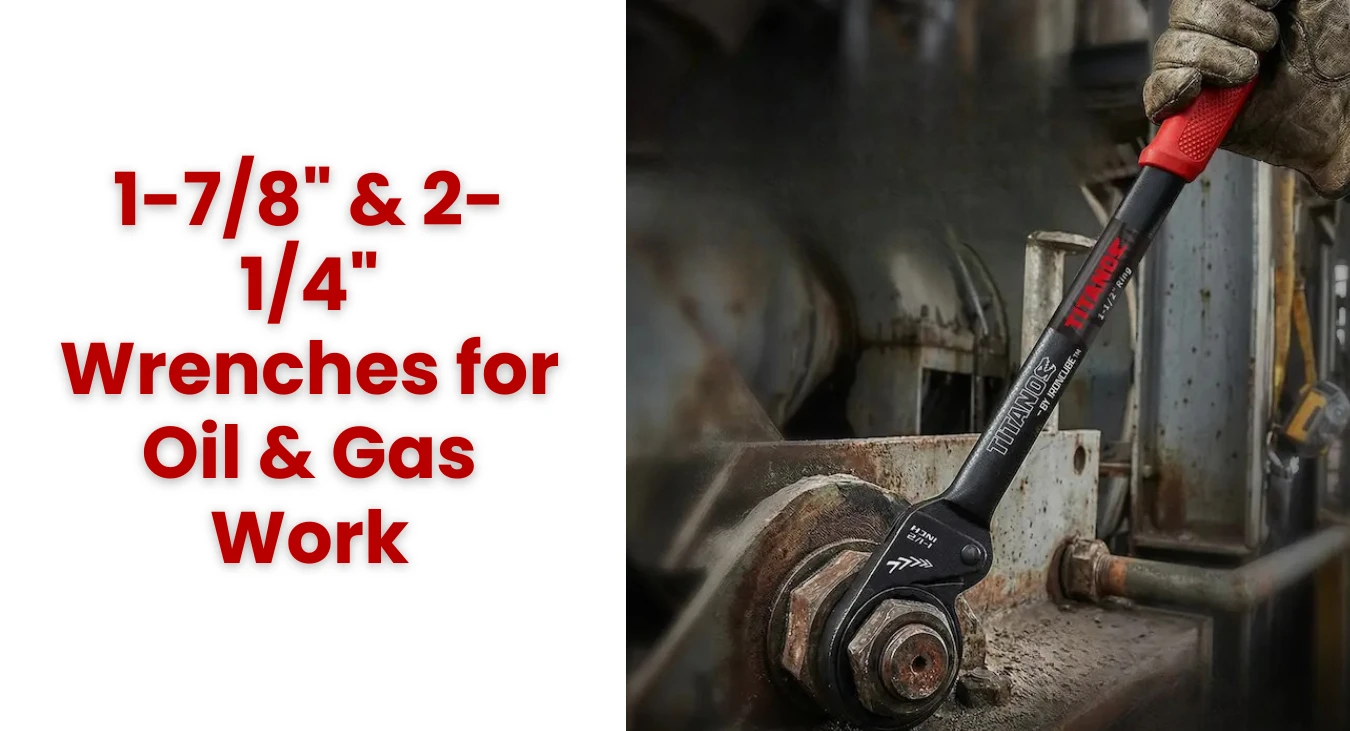
Oil and gas operations run on oversized fasteners. From high-pressure pipeline flanges and wellhead assemblies to the suspension hardware on the semi-trucks that keep every rig site supplied, the 1-7/8″ and 2-1/4″ wrench sizes show up constantly across this industry. If you’ve spent any time working on frac equipment, pipeline connections, or the heavy transport vehicles that move product and personnel between sites, you already know that a 1-7/8″ wrench for semi-truck and oilfield applications isn’t a luxury — it’s a daily-use tool that needs to perform under serious torque loads, in harsh environments, and on fasteners that may not have been touched in years.
These two sizes — 1-7/8 inch and 2-1/4 inch — cover a critical swath of the fastener spectrum in oil and gas. The 1-7/8″ dimension appears on ASME-rated flange bolting, transport vehicle suspension hardware, pump mounting assemblies, and compressor station connections. The 2-1/4″ size handles the largest high-pressure flange studs, wellhead bolting, and heavy structural connections found on offshore platforms and refinery equipment. Together, they address the majority of oversized imperial fasteners that oilfield mechanics, pipeline technicians, and fleet maintenance crews encounter on a regular basis.
This guide covers where each size is used in oil and gas operations, what wrench features matter most for these demanding applications, and how to select tools that hold up to the reality of fieldwork — not just the spec sheet.
Where the 1-7/8″ Size Appears in Oil and Gas Operations
The 1-7/8 inch hex dimension crosses multiple disciplines within the oil and gas sector. It connects pipeline systems, holds down equipment, and keeps the transport fleet running. Here’s where oilfield technicians encounter it most frequently.
Pipeline Flange Bolting
ASME B16.5 flanges — the standard for piping connections in oil, gas, and petrochemical facilities — use stud bolts that require specific wrench sizes based on the flange class and pipe diameter. For Class 600 and Class 900 flanges on 8-inch through 12-inch pipe, the stud bolt sizes often call for a 1-7/8″ wrench. These connections carry pressurized hydrocarbons at thousands of PSI, and every bolt in the flange pattern must be torqued to precise specifications using the correct star pattern sequence. A wrench that rounds off a flange stud doesn’t just damage one bolt — it can delay an entire pipeline tie-in, costing the project tens of thousands of dollars per hour in rig standby time.
Oilfield Transport and Semi-Truck Suspension
Every drilling operation, hydraulic fracturing job, and well completion depends on semi-trucks to deliver equipment, fluids, and materials. Frac trucks, sand haulers, hot oil units, and vacuum trucks run Class 8 suspension systems with 1-7/8″ fasteners on equalizer beams, trunnion shafts, and torque rod hardware. The oilfield beats trucks harder than almost any other application — unpaved lease roads, overweight loads, extreme temperatures, and constant vibration take a heavy toll on suspension components. A reliable 1-7/8″ wrench for semi-truck suspension repair is essential equipment in any oilfield maintenance shop. IRONCUBE makes a purpose-built 1-7/8 inch friction wrench designed specifically for these high-torque applications.
Pump and Compressor Mounting Hardware
Surface pumps, compressors, and generators on well sites and processing facilities use 1-7/8″ bolts for base mounting and alignment. These machines generate significant vibration during operation, which makes proper bolt torque and retention critical. A loose mounting bolt on a natural gas compressor can cause misalignment that destroys bearings, seals, and coupling elements within hours — turning a $50 bolt into a $50,000 repair.
Valve Body and Actuator Bolting
Large gate valves, ball valves, and plug valves on pipeline systems use body bolts and bonnet studs that require 1-7/8″ wrenches for assembly and maintenance. Valve servicing often happens during planned shutdowns with tight schedules, so having the right wrench ready — not an adjustable or a “close enough” metric alternative — directly affects how quickly the work gets completed and the line returned to service.
Where the 2-1/4″ Size Appears in Oil and Gas Operations
The 2-1/4 inch wrench size represents the upper end of what most hand tools can handle. In oil and gas, it shows up on the highest-pressure, most critical connections in the entire operation.
High-Pressure Flange Connections (Class 1500 and Class 2500)
The largest ASME flange studs on high-pressure systems — think Class 1500 and Class 2500 flanges on production manifolds, high-pressure separators, and wellhead Christmas trees — require 2-1/4″ wrenches. These connections see working pressures of 3,750 PSI and above. Every stud bolt must be torqued to specification with zero tolerance for error. A leak on a high-pressure hydrocarbon line isn’t just a maintenance problem — it’s a safety and environmental incident.
IRONCUBE’s 2-1/4 inch friction wrench is built for exactly this class of work, with chrome vanadium steel construction and a friction ratcheting mechanism that handles the extreme torque these fasteners demand without the gear-tooth stripping risk common in conventional ratchets.
Wellhead and BOP (Blowout Preventer) Hardware
Wellhead flanges and BOP stack connections use some of the largest bolting in the entire oil and gas industry. Stud bolt sizes on 13-5/8″ and 16-3/4″ wellhead flanges often require 2-1/4″ wrenches. During well control situations, these bolts must be installed and torqued under time pressure — and there’s no room for tool failure when you’re making up a BOP connection.
Structural Steel on Offshore Platforms and Refinery Modules
Structural connections on offshore platforms, modular refinery skids, and large-diameter pipe supports use 2-1/4″ high-strength bolts to secure primary load-bearing joints. These connections hold up equipment and structures that weigh hundreds of tons, often in marine environments where corrosion attacks every fastener surface.
Heavy Rotating Equipment
Large pumps, turbines, and compressors in gas processing plants and refineries use 2-1/4″ bolts on casing flanges, bearing housing caps, and coupling guards. Servicing this equipment during turnarounds requires wrenches that deliver consistent, high-torque performance across dozens or hundreds of fasteners per day.
Why Friction Ratcheting Wrenches Outperform Gear Ratchets in Oil and Gas
The ratcheting mechanism inside a wrench becomes critically important at the torque levels found in oil and gas work. Both the 1-7/8″ and 2-1/4″ sizes face loads that push conventional gear-tooth ratchets past their design limits.
The Problem with Gear Teeth at High Torque
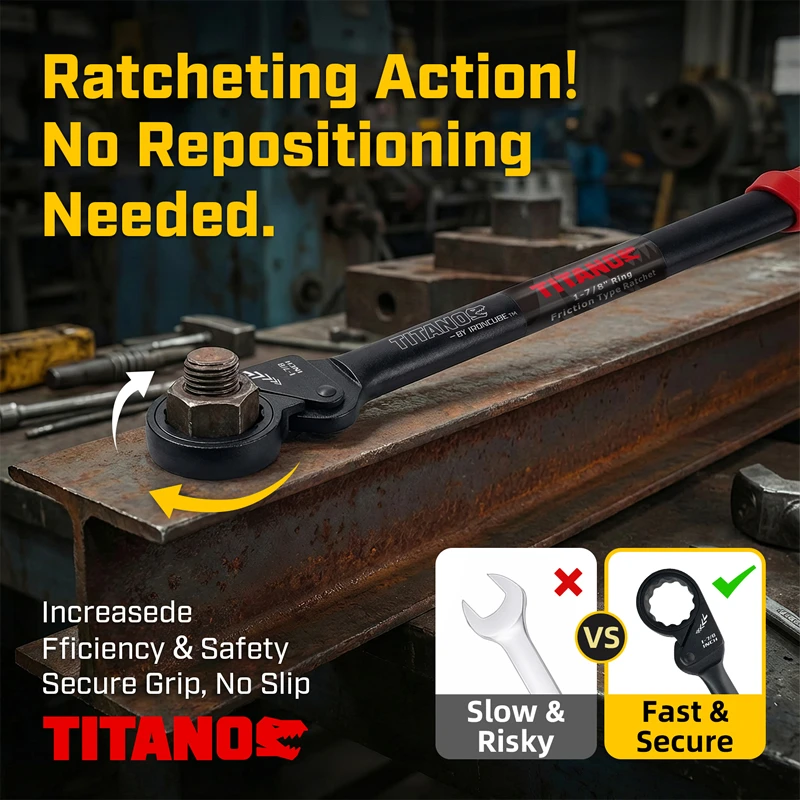
Traditional ratcheting wrenches use interlocking gear teeth to create the ratcheting action. Under moderate torque — say, 100 to 200 ft-lbs — this system works reliably. But oilfield flange studs and suspension bolts routinely require 400 to 800+ ft-lbs. At those loads, individual gear teeth can exceed their shear strength. When a tooth strips, the wrench slips without warning — and the technician applying maximum force at the end of a two-foot handle suddenly has a dangerous situation on their hands.
How Friction Mechanisms Solve the Problem
Friction ratcheting wrenches replace gear teeth with friction surfaces that grip in one direction and release in the other. The load distributes across a broad contact area rather than concentrating on individual teeth. This design handles extreme torque without stripping, works reliably even when worn, and tolerates the dirty, gritty conditions that define oilfield work. The full IRONCUBE friction wrench line uses this mechanism across all their jumbo sizes.
| Feature | Friction Ratchet | Gear Ratchet |
|---|---|---|
| Torque capacity | 500+ ft-lbs reliable | Stripping risk above 300 ft-lbs |
| Debris tolerance | High — smooth surfaces | Low — grit jams teeth |
| Wear behavior | Gradual, predictable | Sudden tooth failure |
| Noise | Quiet, smooth | Clicking |
| Oilfield suitability | Excellent | Limited to lighter tasks |
For a broader comparison of heavy-duty wrench options, see this guide on big ratchet wrenches for heavy equipment.
Tool Selection: What Oil and Gas Professionals Need from a 1-7/8″ Wrench for Semi-Truck and Oilfield Use
Choosing the right wrench for oil and gas work involves more than matching the size to the fastener. The tool must survive the conditions that oilfield work imposes.
Chrome Vanadium Steel Is Mandatory
The wrench body must be forged from chrome vanadium steel (CrV) — the industry-standard alloy for professional hand tools. CrV steel provides the balance of hardness and toughness that high-torque oilfield work demands. Budget wrenches made from unmarked alloys or plain carbon steel will deform, crack, or round off fastener heads under the loads that pipeline flanges and suspension bolts require.
Extended Handle for Adequate Leverage
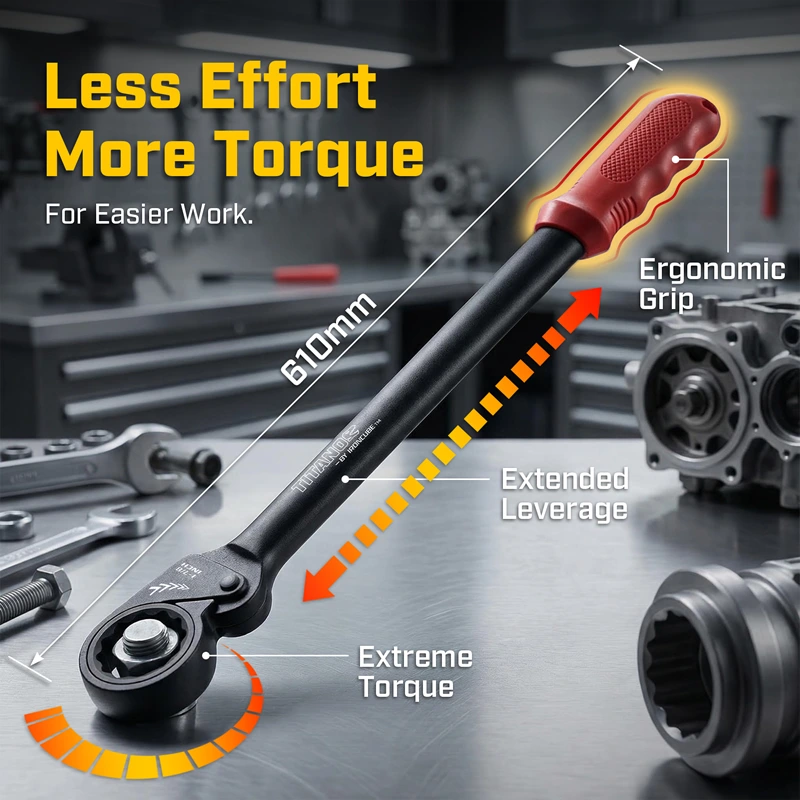
Oilfield fasteners require significant torque. The wrench handle must be long enough to generate 400 to 800 ft-lbs without a cheater bar. Using a pipe extension overloads the wrench beyond its design limits and creates a safety hazard. Both the IRONCUBE 1-7/8″ friction wrench and 2-1/4″ model feature handle lengths proportioned to the torque demands of their respective fastener sizes.
12-Point Box End with Off-Corner Loading
A 12-point box end engages the fastener every 30 degrees, which is critical in the confined spaces around flange bolting patterns, between pipe runs, and inside equipment housings. Off-corner loading contacts the flat faces of the hex nut rather than the corners, protecting against rounding — especially important on flange studs that may have surface corrosion or slight damage from previous service.
Corrosion-Resistant Finish
Oilfield environments are brutal on tools. Drilling mud, salt spray, crude oil, and produced water attack unprotected steel surfaces aggressively. A durable black oxide finish resists corrosion while maintaining a non-slip grip surface. Chrome plating looks clean but chips more easily under rough field conditions.
Complementary Wrench Sizes for Oil and Gas Work
The 1-7/8″ and 2-1/4″ sizes handle the largest imperial fasteners in oilfield operations, but they’re part of a broader toolkit. Here are the additional sizes that round out a complete oil and gas wrench collection.
1-1/2 inch covers Class 300 and Class 600 flange bolting on smaller pipe sizes, plus many pump and compressor mounting bolts. IRONCUBE offers a 1-1/2 inch heavy-duty friction wrench for this range.
36mm and 41mm metric sizes appear frequently on European-origin equipment used in global oil and gas operations — Sulzer pumps, MAN compressors, and Rolls-Royce turbines all use metric fasteners. The 36mm torque friction wrench and 41mm jumbo ratchet spanner cover these needs.
46mm handles the largest metric fasteners found on major equipment and structural connections. The IRONCUBE 46mm friction ratcheting spanner addresses this top-of-range requirement.
You can browse the complete friction wrench lineup on the IRONCUBE Works website or through their Amazon storefront.
For shops that also maintain agricultural equipment — many oil and gas companies operate in areas where farm and oilfield work overlap — this guide covers jumbo ratcheting wrench sets for agriculture.
Safety Considerations for Oil and Gas Wrench Work
Working with oversized wrenches on pressurized systems, heavy transport vehicles, and elevated structures introduces safety concerns that lighter tool work doesn’t face.
Always verify the line or system is depressurized before loosening flange bolts. Even residual pressure in a “drained” pipeline can launch a flange bolt with lethal force. Follow lockout-tagout procedures and verify zero energy state before breaking any bolted connection.
Pull toward your body, never push. When applying torque to a large wrench, pull the handle toward you. If the fastener breaks free suddenly, a pulling motion lets your body absorb the movement naturally. Pushing away can cause you to fall forward into equipment or strike sharp edges.
Use the correct wrench — never improvise at these sizes. A 1-7/8″ wrench for semi-truck and pipeline fasteners must match the bolt exactly. Using a metric wrench that’s “close enough” or an adjustable wrench with inherent jaw flex risks rounding the fastener and creating a far more difficult repair. For detailed safety guidance on large wrench use, read this guide on how to use flex-head ratchet wrench sets safely.
Inspect tools before every use. Oilfield conditions cause accelerated tool wear. Check box ends for deformation, test ratcheting mechanisms for smooth engagement, and examine handles for cracks. A wrench that fails under 600 ft-lbs of torque creates an immediate injury hazard.
Follow manufacturer torque specifications precisely. Under-torqued flange bolts leak. Over-torqued bolts stretch beyond their elastic limit and fail prematurely. Both outcomes are expensive in oil and gas — and potentially dangerous.
Procurement and Oilfield Fleet Shop Considerations
Outfitting an oilfield maintenance operation with large wrenches requires a different procurement approach than individual tool purchases.
Standardize across crews and locations. Oil and gas companies often operate multiple rigs, well sites, and processing facilities simultaneously. Standardizing on a single wrench brand — like IRONCUBE Works — simplifies training, replacement ordering, and quality assurance across the organization. IRONCUBE manufactures for over 600 tool brands globally and offers direct wholesale pricing with custom branding options.
Stock both imperial and metric across the jumbo range. Global oilfield operations mix American and European equipment regularly. Having complete coverage in both measurement systems prevents dangerous improvisation with incorrect tool sizes.
Build modular kits rather than buying complete sets. Different crews need different sizes based on their specific equipment. A pipeline crew might need 1-7/8″ and 2-1/4″ primarily, while a transport maintenance shop needs 1-7/8″ along with 1-1/2″ and smaller sizes. For guidance on sourcing quality large wrenches at scale, check out this article on how to find quality wholesale jumbo wrench sets.
A general-purpose toolkit rounds out the package. IRONCUBE’s 53-piece ratcheting screwdriver set handles the smaller drive types that accompany the larger bolting work. For industrial flex-head options, review these heavy-duty flex-head ratchet wrench sets, and learn how flex-head ratchet wrench sets save time on auto repairs — the same efficiency principles apply to oilfield fleet vehicles.
Summary
The specialized demands of oil and gas operations require equally specialized tools, and the 1-7/8″ Wrench for Semi-Truck applications stands as a prime example of this necessity. From routine tire maintenance on transportation vehicles to critical repairs on industrial equipment, having the right wrench size and type is essential for efficient, safe operations.
Quality construction, ergonomic design, and appropriate features like ratcheting mechanisms or flex heads can significantly enhance productivity and reduce worker fatigue. When selecting these tools, consider the specific applications you’ll encounter, the environmental challenges of your worksite, and the long-term value of investing in professional-grade equipment.
Proper maintenance and care will extend the life of your wrenches, while adherence to safety protocols ensures that these powerful tools are used effectively without risk to operators. As technology continues to advance, we can expect to see innovations that further enhance the functionality and usability of these essential tools.
FAQs
What makes a 1-7/8″ Wrench for Semi-Truck different from a standard wrench?
The 1-7/8″ Wrench for Semi-Truck is specifically designed to handle the larger wheel nuts and fasteners found on heavy-duty trucks. These wrenches typically feature longer handles for increased leverage, stronger materials to withstand higher torque values, and often include ratcheting mechanisms to speed up tire changes. Unlike standard wrenches, they’re built to consistently handle torque values of 450-600 foot-pounds without deformation or failure.
How often should I replace my 1-7/8″ wrench for semi-truck maintenance?
With proper care and maintenance, a quality 1-7/8″ Wrench for Semi-Truck should last for many years. However, you should inspect it regularly for signs of wear, particularly checking the jaw surfaces for rounding or damage. If you notice any cracks, deformation, or if the wrench begins to slip on fasteners, it’s time for replacement. For professional mechanics who use these tools daily, replacement every 2-3 years is common, while occasional users may go much longer between replacements.
Can I use a 1-7/8″ wrench for semi-truck work on other equipment?
While primarily designed for semi-truck wheel nuts, the 1-7/8″ Wrench for Semi-Truck can be used on other equipment with similarly sized fasteners. Many agricultural machines, construction equipment, and industrial machinery use this same size for various components. However, always ensure the wrench is rated for the specific torque requirements of your application to avoid damaging the fastener or the tool itself.
What’s the difference between a standard 1-7/8″ wrench and a friction wrench?
A standard 1-7/8″ Wrench for Semi-Truck typically provides fixed torque application based on the force applied by the user. In contrast, a friction wrench incorporates a mechanism that limits the maximum torque applied, preventing overtightening of fasteners. This feature is particularly valuable in applications where precise torque values are critical, such as when working with sensitive components or when following manufacturer specifications is essential.
How do I know if I need a 1-7/8″ or 2-1/4″ wrench for my oil and gas application?
The choice between a 1-7/8″ and 2-1/4″ wrench depends entirely on the fasteners you’re working with. The 1-7/8″ Wrench for Semi-Truck is primarily used for truck wheel nuts and similar-sized fasteners. The larger 2-1/4″ wrench is designed for industrial equipment, pipeline components, and machinery with substantially larger bolts and nuts. Always measure your fasteners before purchasing a wrench to ensure you’re getting the right size for your specific needs.
Are more expensive wrenches worth the investment for oil and gas work?
In the demanding environment of oil and gas operations, investing in higher-quality wrenches typically pays dividends in the long run. Premium tools like those offered by Iron Cube Works feature better materials, more precise manufacturing, and often include warranties that protect your investment. While the initial cost may be higher, quality wrenches last longer, perform more reliably, and reduce the risk of fastener damage—all factors that save money and prevent downtime in critical operations.