Finding yourself stuck in a cramped engine bay or a tight industrial cabinet is a rite of passage for any mechanic. You see the bolt, you can almost touch the bolt, but your standard box-end wrench just won’t bite. This is exactly where the flex-head wrench set earns its keep. It isn’t just another shiny tool in the drawer; it is the bridge between frustration and a finished job. When you combine the pivot-ability of a flexible neck with the sheer strength of Chrome Vanadium steel, you get a tool designed to survive high-torque environments while dancing around obstacles.
Professional technicians often argue about the “perfect” setup, but most agree that versatility is king. Whether you are dealing with a vintage motorcycle or a modern HVAC system, having both SAE and Metric sizes at your fingertips is non-negotiable. Modern manufacturing has shifted largely to metric, yet domestic infrastructure and older machinery still rely heavily on fractional sizes. In this comprehensive guide, we will dive deep into why the Ironcube flex-head wrench set is becoming the industry standard for durability and precision.
What is a Flex-Head Wrench Set?
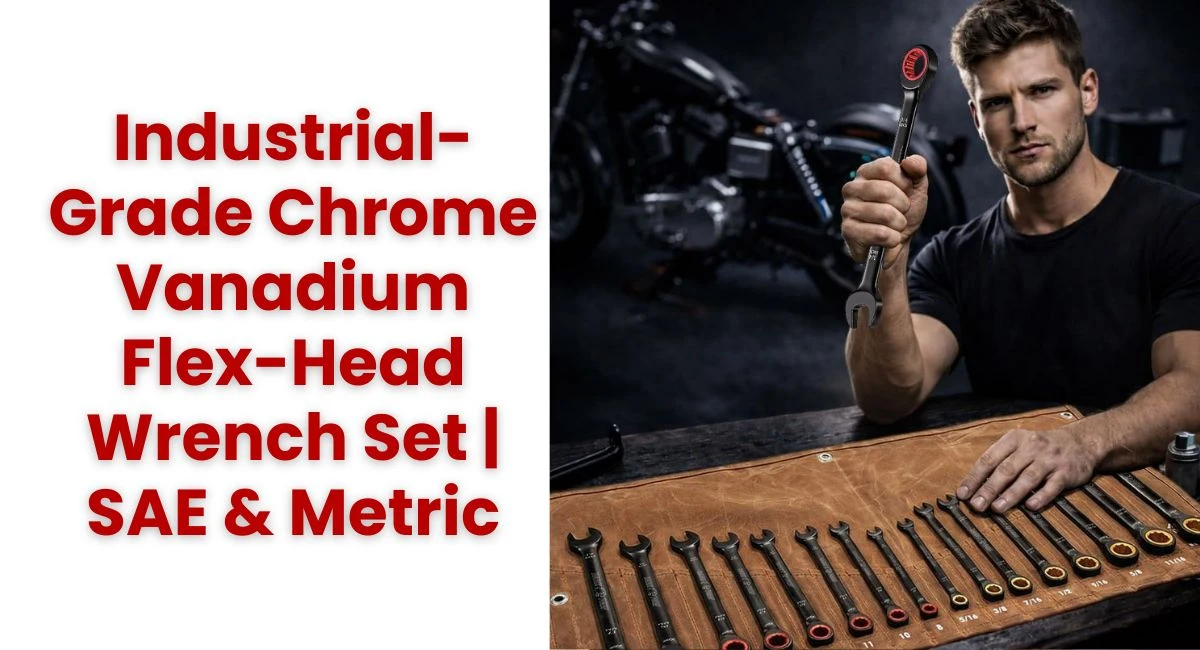
A flex-head wrench set is a collection of combination wrenches featuring a pivoting (flexible) head and a ratcheting mechanism. This design allows users to access tight spaces and apply torque efficiently without constantly repositioning the tool.
According to the Wikipedia overview of wrenches, modern wrench designs have evolved to improve torque efficiency and ergonomic usability. Flex-head ratcheting wrenches represent one of the most advanced forms of this evolution.
Unlike traditional wrenches, a flex-head wrench set typically includes:
- SAE (inch-based) sizes
- Metric sizes
- Ratcheting box-end
- Open-end head
- Adjustable flex angle
Explore available models here:
👉 https://ironcubeworks.com/product-category/wrenches/
Why Chrome Vanadium is the Gold Standard for Professionals
When you shop for a flex-head wrench set, the material composition is the most critical factor. Most high-end hand tools are forged from Chrome Vanadium (Cr-V) steel. But why does this specific alloy matter so much? Chrome Vanadium is a group of steel alloys incorporating carbon, manganese, phosphorus, sulfur, silicon, chromium, and vanadium. The chromium provides the necessary corrosion resistance, while the vanadium significantly increases the strength and toughness of the steel.
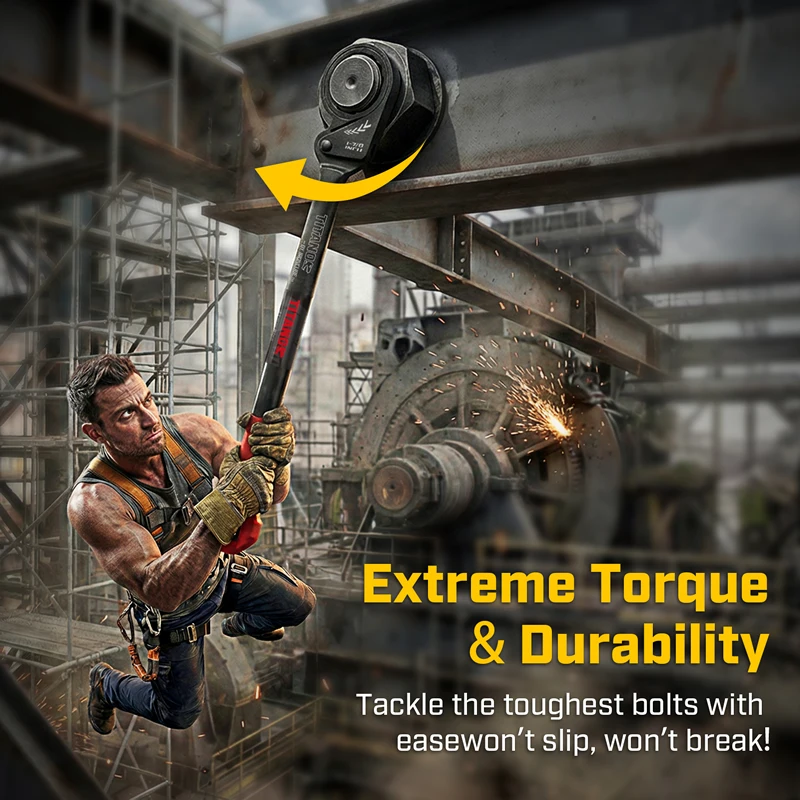
According to metallurgical standards defined by ASTM International, the addition of vanadium inhibits grain growth during heat treatment. This results in a finer grain structure, making the tool less likely to shatter under extreme pressure. For a large heavy-duty ratcheting wrench, this internal integrity is what prevents the ratcheting teeth from shearing off when you are leaning into a stubborn lug nut.
The Strength-to-Weight Ratio
Professionals prefer Cr-V because it allows for a slimmer tool profile without sacrificing torque capacity. In tight spaces, a bulky wrench is a useless wrench. By using high-grade alloys, manufacturers can create thinner walls around the box end. This engineering choice is vital when you are using a flex-head wrench set to reach bolts tucked behind pulleys or firewalls.
Mastering Tight Spaces with a Flex-Head Design
The defining feature of this tool is its 180-degree pivoting head. A standard wrench requires a clear path for the handle to rotate. However, obstacles often block that path. By adjusting the angle of the head, you can keep the handle in a clear “swing zone” while the socket end remains firmly seated on the fastener.
If you have ever wondered how does a ratchet wrench work, it relies on a gear and pawl mechanism. In a flexible model, this mechanism must be miniaturized and reinforced. The pivot point itself is often the weakest link in cheap tools, but industrial-grade sets use a heavy-duty bolt and wave washer system to maintain tension. This ensures the head stays at the angle you set, rather than flopping around loosely.
Real-World Applications
Automotive Repair: Reaching sensor bolts on the back of an engine block.
Plumbing: Tightening basin nuts behind deep sinks.
Aviation: Accessing fasteners within narrow fuselage channels.
Bicycle Maintenance: Specifically for motorcycle maintenance, where components are densely packed.
For those curious about the specific mechanics of these tools, checking out the Ironcube YouTube channel provides excellent visual demonstrations of these wrenches in high-stress scenarios.
Features to Evaluate Before Buying a Flex-Head Wrench Set
Tooth Count and Swing Arc
The ratcheting mechanism inside the box end determines how little space you need to turn a fastener. A 72-tooth gear requires only 5 degrees of swing arc per click. Higher tooth counts, like 90-tooth or even 144-tooth designs, reduce the arc further. For tight engine compartments and cramped plumbing spaces, a higher tooth count makes a real difference. Most professional-grade flex-head wrench set options from reputable manufacturers feature 72-tooth mechanisms as a minimum.
Pivot Range and Locking Mechanism
The flex head pivot typically allows the ratcheting end to swing up to 180 degrees. Some designs let the head float freely, while others include a locking mechanism that holds the head at a fixed angle. Free-floating heads are faster to adjust but can shift under load. Locking heads provide more stability but require an extra step to reposition. Many professionals prefer free-floating designs for speed, though the benefits of a flexible head ratchet page offers a more detailed breakdown of each design philosophy.
Reversible Direction Switch
A small lever on the back of the ratcheting head lets you toggle between tightening and loosening directions without removing the wrench from the fastener. This feature is standard on modern sets, but the quality of the switch mechanism varies widely. A well-made direction switch clicks firmly into position and does not slip under load. Budget sets sometimes use flimsy toggles that skip under heavy torque, which is both frustrating and potentially dangerous.
Handle Length and Leverage
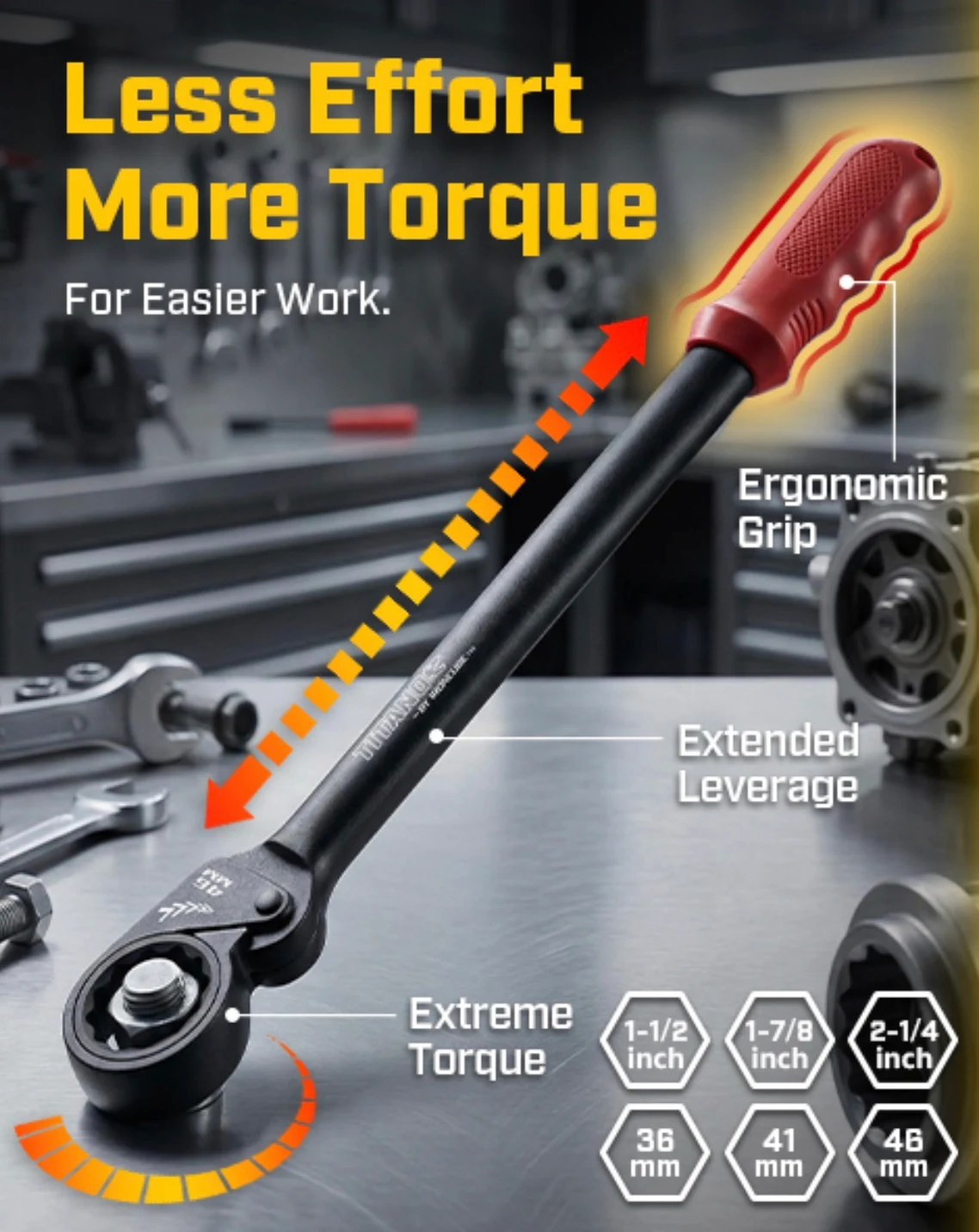
Standard-length wrenches work for most tasks, but some fasteners require more leverage. If you frequently encounter stubborn bolts on heavy equipment, an extra-large heavy-duty ratcheting wrench set provides extended handles that multiply your mechanical advantage. For a comprehensive overview of sizing options, the guide to large heavy-duty ratcheting wrenches compares lengths, weights, and torque capabilities across sizes.
Chrome Finish Quality
A high-quality chrome plating does more than make a wrench look good. It protects the underlying chrome vanadium steel from moisture, chemicals, and abrasion. A mirror-polish finish also makes the wrench easier to clean, since grease and grime wipe off smooth chrome more easily than from matte or unfinished surfaces. Inspect the plating around the pivot joint especially. Cheap sets often skimp on chrome coverage at the hinge point, which is exactly where corrosion attacks first.
Where Professionals Use a Flex-Head Wrench Set Every Day
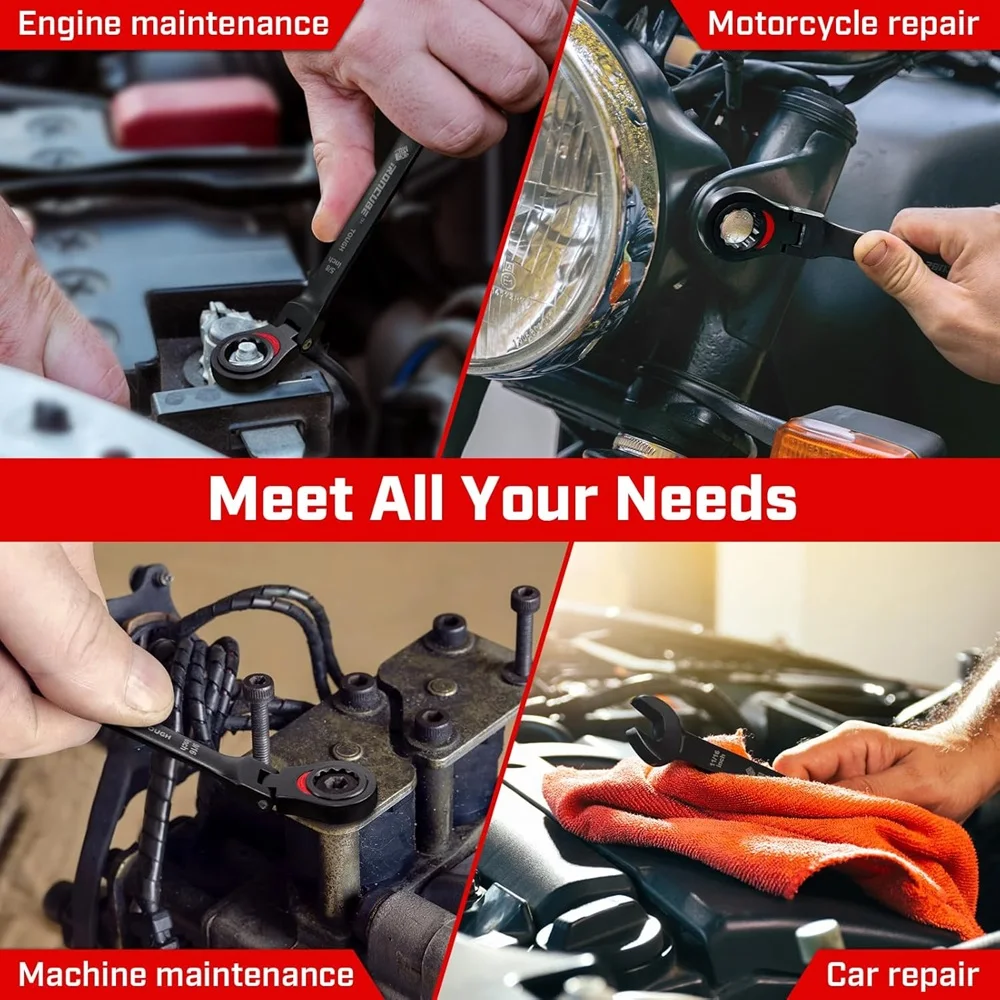
Automotive Repair Shops. Modern vehicles pack more components into tighter engine bays than ever before. Alternator brackets, exhaust manifold studs, valve cover bolts, and brake caliper fasteners all sit in locations where a straight wrench cannot generate meaningful torque. A flex-head wrench set with a 72-tooth ratchet lets mechanics work around these obstructions without disassembling half the engine just to reach one bolt. For hands-on demonstrations of these tools in action, the IRONCUBE YouTube channel features practical walkthroughs on real-world repair scenarios.
Construction and Structural Steel. Steel erectors, formwork carpenters, and structural welders all deal with bolted connections in places where socket ratchets simply cannot reach. Flanged beam connections, anchor bolt assemblies, and bracing hardware often require a wrench that can approach from an angle. The flex-head pivot handles these off-axis approaches effortlessly.
Plumbing, HVAC, and Mechanical Trades. Supply line fittings behind sinks, condenser mounting bolts on rooftop units, and boiler flange connections all share one trait: they sit in spaces too tight for a socket and too awkward for a fixed wrench. The pivoting head on a flex-head wrench set lets you swing the handle away from walls, pipes, and ductwork while keeping the box end firmly engaged on the fastener. For more detail on these confined-space advantages, read about flex-head ratcheting sets working in tight spaces.
Motorcycle and Small Engine Maintenance. Motorcycles, ATVs, outboard motors, and lawnmower engines present incredibly tight bolt patterns. Wrenching on a motorcycle fairing bolt or an ATV skid plate often means working around frame members, coolant hoses, and wiring harnesses simultaneously. The IRONCUBE reversible ratcheting wrench set on Amazon is specifically marketed toward motorcycle and small engine enthusiasts because of the narrow clearances involved.
Industrial Applications: Where Strength Matters
Not all flex-head wrenches are created equal. There is a distinct difference between a set designed for light household tasks and an industrial-grade flex-head wrench set. Industrial tools are built to handle higher torque values and resist wear over thousands of cycles.
Consider the heavy equipment industry. Mechanics working on tractors, excavators, or industrial conveyors deal with rusted, over-torqued fasters that have not moved in years. A standard wrench might twist or the ratchet mechanism might strip. IronCube Works offers an extra large heavy duty ratcheting wrenches line specifically for these demanding scenarios.
In these environments, the large heavy duty ratcheting wrench becomes an irreplaceable asset. The longer handle provides the leverage needed to break loose stubborn bolts, while the flex head allows for a safer angle of approach. Working at an awkward angle with maximum force is dangerous. If the tool slips, the stored energy in your muscles can send your hand flying into sharp metal edges. The flexibility of the head helps maintain better contact with the fastener, reducing the risk of slip-related injuries.
Selecting the Best Set for Your Needs
Choosing the right flex-head wrench set involves evaluating your specific needs. You should consider the size range, the reversing mechanism, and the finish.
Size Range: Most standard sets range from 8mm to 19mm or 5/16″ to 3/4″. However, for heavy-duty work, you may need sizes up to 24mm or larger. Reviewing a guide on the best large ratchet wrench can help you identify which extended sets offer the most value.
Reversing Mechanism: High-quality wrenches often feature a reversible lever. This allows you to flip the ratchet direction without removing the wrench from the bolt. This feature is critical when space is too tight to flip the wrench over manually. The IronCube reversible ratcheting wrenches available on Amazon feature this convenient switch, streamlining the workflow for technicians.
Finish and Grip: A mirror finish looks professional, but a matte or anti-corrosion coating often holds up better in harsh environments. Look for sets that offer a comfortable beam width. The handle should be thick enough to distribute pressure across your palm but not so thick that it feels bulky.
Comparing Fixed Head vs. Flex-Head Wrenches
To understand the true advantage of a flex-head wrench set, it helps to compare it directly against its fixed-head counterpart. While both have their place in a toolbox, the flex-head offers distinct advantages in versatility.
Why IronCube Works Stands Out
There are many tool brands on the market, ranging from unbranded budget options to expensive professional truck brands. IronCube Works occupies a sweet spot, offering industrial-grade quality without the premium markup.
Their focus on specific innovations, like the flush-mounted pivot and the extra-long beams, shows they understand the mechanic’s reality. They provide educational content, such as their YouTube channel, which demonstrates these tools in action. This transparency allows buyers to see the quality before they purchase.
When you buy an industrial-grade chrome vanadium flex-head wrench set from IronCube, you are getting a tool designed by people who understand the trade. The Wikipedia entry for wrenches outlines the history of these tools, but IronCube represents the modern evolution of that history. They have taken a classic concept and refined it for the demands of 21st-century industry.
Final Summary
The flex-head wrench set is the ultimate problem-solver in a world where machinery is getting more compact and complex. By choosing a set forged from high-grade Chrome Vanadium, you ensure that your tools can withstand the rigors of industrial use while providing the delicate precision needed for fine-tuned adjustments.
From the fine-tooth ratcheting action that minimizes arc swing to the 180-degree pivoting head that conquers tight corners, these wrenches are designed for efficiency. Don’t let a stubborn bolt in a hard-to-reach place slow down your progress. Equip your workshop with the best tools available and experience the difference that industrial-grade engineering makes.
If you have any specific questions about tool sizing or bulk orders for your shop, feel free to contact us today. Our team is ready to help you find the perfect flex-head wrench set for your specific needs.
FAQs
Q. What makes a Flex-Head Wrench Set better than standard wrenches?
A. A Flex-Head Wrench Set provides better accessibility, faster operation, and improved comfort compared to standard wrenches.
Q. Is chrome vanadium steel important in a Flex-Head Wrench Set?
A. Yes, chrome vanadium steel enhances durability, corrosion resistance, and strength in a Flex-Head Wrench Set.
Q. Can beginners use a Flex-Head Wrench Set?
A. Yes, a Flex-Head Wrench Set is beginner-friendly and easy to use with proper size selection and technique.
Q. What sizes should a Flex-Head Wrench Set include?
A. A good Flex-Head Wrench Set should include both SAE and metric sizes for maximum versatility.
Q. How long does a Flex-Head Wrench Set last?
A. With proper maintenance, a high-quality Flex-Head Wrench Set can last for many years, even under heavy use.