Choosing between chrome vanadium vs chrome molybdenum steel sounds technical at first. Yet this question matters when you buy wrenches, sockets, or mechanic tool sets.
Most buyers want a simple answer. They want to know which steel is stronger. They also want to know which wrench lasts longer, grips better, and handles real garage work without cracking, bending, or rounding fasteners.
Here is the honest answer: chrome vanadium steel is usually the better choice for standard hand wrenches, while chrome molybdenum steel is often better for impact-rated sockets and high-shock tool applications.
That does not mean one steel always beats the other. Tool quality depends on alloy grade, forging, heat treatment, wall thickness, surface finish, and design. A well-made chrome vanadium wrench can outperform a poorly made chrome molybdenum wrench. The reverse can also happen.
For anyone comparing IRONCUBE wrench products, this guide explains the real difference in plain language. It also shows where each steel makes sense, especially for DIY users, mechanics, and tool buyers.
Which Steel Is Better for Wrenches?
For normal hand wrenches, chrome vanadium vs chrome molybdenum steel usually comes down to hardness, toughness, cost, and intended use.
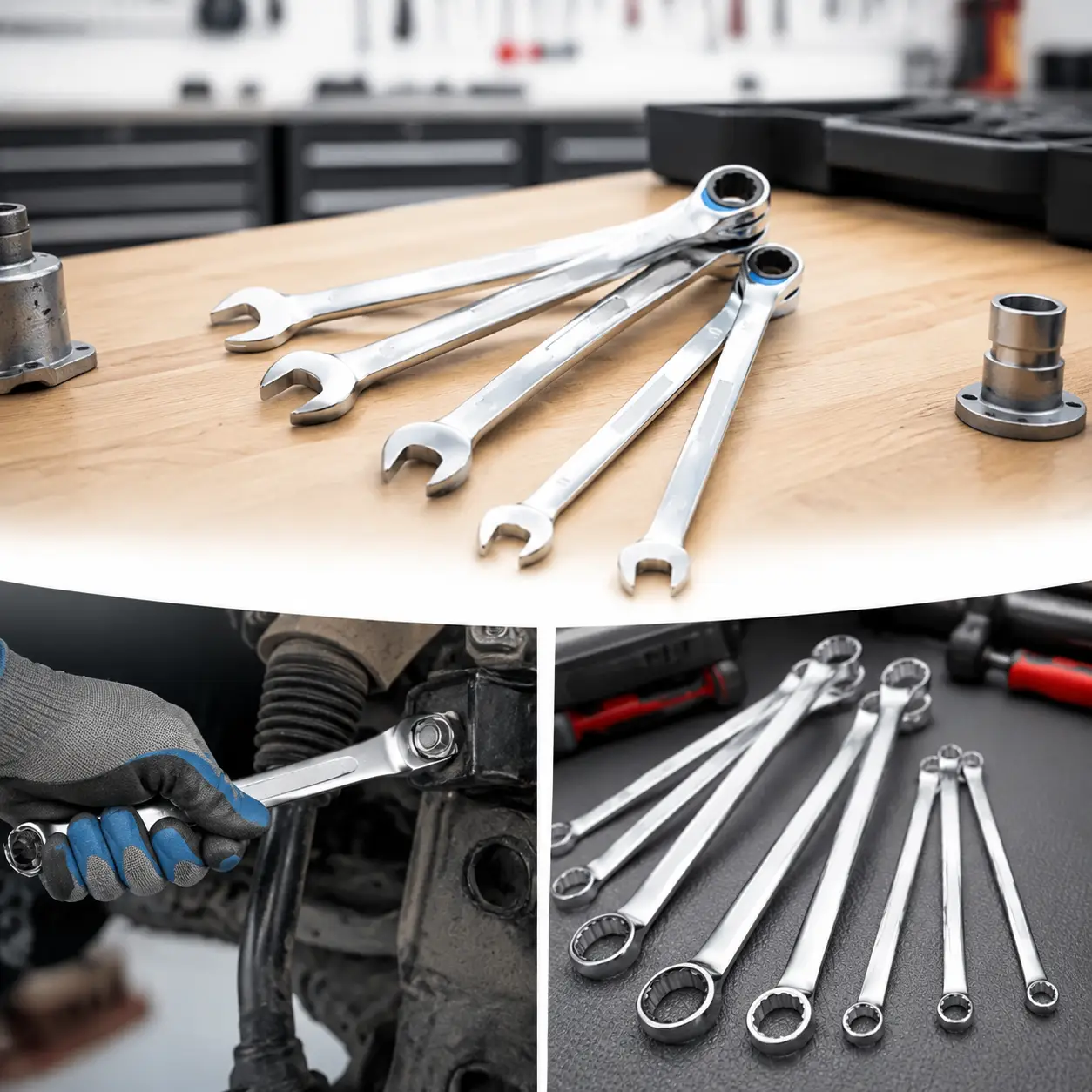
Chrome vanadium steel, often shortened to Cr-V, is popular in hand tools because it balances hardness, wear resistance, strength, and cost. It works well for combination wrenches, socket sets, ratchets, screwdrivers, and general mechanic tools.
Chrome molybdenum steel, often shortened to Cr-Mo, is known for toughness and impact resistance. Tool manufacturers often use it for impact sockets because impact tools create repeated hammering forces. Cr-Mo can absorb shock better when properly heat-treated.
So, if you want a wrench for hand use, Cr-V is usually the smarter choice. If you need a tool for impact loads, Cr-Mo may be better.
A simple rule works well:
| Tool Type | Better Material Choice | Why It Makes Sense |
|---|---|---|
| Combination wrenches | Chrome vanadium | Good hardness, wear resistance, and polished finish |
| Standard sockets | Chrome vanadium | Strong and precise for hand use |
| Ratchets | Chrome vanadium or alloy steel | Depends heavily on internal design |
| Impact sockets | Chrome molybdenum | Better shock absorption |
| Brake line wrenches | Chrome vanadium or quality alloy steel | Precision grip matters more than alloy name |
| Screwdriver bits | S2 steel, Cr-V, or specialty steel | Depends on bit type and heat treatment |
The material matters. But the engineering matters more.
What Chrome Vanadium Steel Means
Chrome vanadium steel is alloy steel with chromium and vanadium added to carbon steel. Chromium improves hardness, strength, and corrosion resistance. Vanadium helps refine grain structure and improves strength and wear resistance.
A common chrome vanadium grade used in stressed parts is SAE-AISI 6150. Its typical composition includes about 0.48–0.53% carbon, 0.80–1.10% chromium, and 0.15–0.30% vanadium, depending on the exact specification. This grade appears in spring steel, heavily stressed components, and hand tool applications.
This explains why Cr-V became so common in hand tools. It can become hard enough to resist wear while still staying tough enough for normal hand force.
In real tool use, chrome vanadium steel often appears in polished chrome wrenches and sockets. The chrome-plated finish helps resist rust and makes the tool easier to wipe clean after greasy work.
If you are building a home tool kit, Cr-V wrenches are usually a practical choice. You can explore dedicated options in the IRONCUBE wrench category.
What Chrome Molybdenum Steel Means
Chrome molybdenum steel is alloy steel with chromium and molybdenum added to carbon steel. It is often called Cr-Mo or chromoly.
A common Cr-Mo grade is AISI 4140. It usually contains about 0.38–0.43% carbon, 0.80–1.10% chromium, and 0.15–0.25% molybdenum. This steel is known for fatigue strength, toughness, torsional strength, and impact resistance.
That is why chrome molybdenum steel often appears in impact sockets, heavy-duty mechanic tools, shafts, gears, bolts, and stressed machine parts.
Molybdenum improves hardenability and can support strong, wear-resistant steel after heat treatment. Metallurgical research also shows that molybdenum can contribute to refined microstructures and improved toughness in certain steels.
In simple terms, Cr-Mo is useful when the tool must survive shock. That is why impact sockets often use Cr-Mo steel and a black oxide or phosphate finish instead of shiny chrome plating.
Chrome Vanadium vs Chrome Molybdenum Steel: Composition Comparison
The clearest way to understand chrome vanadium vs chrome molybdenum steel is to compare common grades.
| Feature | Chrome Vanadium Steel | Chrome Molybdenum Steel |
|---|---|---|
| Common example grade | SAE-AISI 6150 | AISI 4140 |
| Main alloy additions | Chromium + vanadium | Chromium + molybdenum |
| Typical carbon range | Around 0.48–0.53% in 6150 | Around 0.38–0.43% in 4140 |
| Typical chromium range | Around 0.80–1.10% in 6150 | Around 0.80–1.10% in 4140 |
| Special element | Vanadium, often 0.15–0.30% | Molybdenum, often 0.15–0.25% |
| Common tool use | Hand wrenches, sockets, ratchets | Impact sockets, high-shock tools |
| Main strength | Wear resistance and hardness balance | Toughness and impact resistance |
| Common finish | Polished chrome | Black oxide or phosphate |
The chemistry is close, but the behavior changes after forging and heat treatment. That is the part many buyers miss.
A wrench does not become strong because the packaging says “Cr-V.” It becomes strong because the manufacturer chooses the right alloy, forges it correctly, heat-treats it properly, and machines the jaw accurately.
Strength, Toughness, and Hardness Explained Simply
Many tool buyers use the word “strong” for everything. In steel, that can be misleading.
Hardness means the steel resists surface wear and deformation. A hard wrench jaw can grip fasteners better over time. But if steel becomes too hard, it can become brittle.
Toughness means the steel can absorb energy without cracking. This matters when a socket faces impact force from an impact wrench.
Strength means the steel can resist bending, twisting, or breaking under load.
This is where chrome vanadium vs chrome molybdenum steel becomes more practical.
Chrome vanadium steel often works well where the tool needs a hard, accurate gripping surface. That suits hand wrenches. Chrome molybdenum steel often works well where the tool must absorb repeated shock. That suits impact sockets.
Vanadium also forms carbides in steel, which can improve strength and wear resistance. Molybdenum can improve hardenability, strength, and toughness, especially in heat-treated alloy steels.
For a wrench buyer, the lesson is simple: do not ask only, “Which steel is harder?” Ask, “Which steel fits the job?”
Chrome Vanadium vs Chrome Molybdenum Steel for Hand Wrenches
For standard hand wrenches, chrome vanadium often wins.
A hand wrench needs accurate jaws, good surface hardness, and enough toughness to handle leverage. It also needs corrosion resistance because garages expose tools to moisture, oil, brake cleaner, coolant, and dirt.
Chrome vanadium steel fits this use well. It can hold a polished chrome finish, resist wear, and provide dependable strength for normal hand torque.
A standard wrench is not supposed to absorb impact-gun hammering. It does not need the same shock behavior as an impact socket. It needs clean geometry, comfortable handling, and predictable strength.
This is why many quality hand wrenches use Cr-V or similar alloy steels.
For buyers comparing chrome vanadium vs chrome molybdenum steel, the practical decision is clear. Choose chrome vanadium for everyday hand wrenches unless the tool specifically needs impact resistance.
For automotive work, a quality wrench set is essential. IRONCUBE’s wrench collection is a natural place to start if you need tools for garage, repair, and DIY maintenance tasks.
Chrome Vanadium vs Chrome Molybdenum Steel for Impact Tools
Impact tools change the equation.
An impact wrench does not apply smooth hand torque. It creates repeated hammer blows. That sudden shock can crack brittle sockets, especially if the socket has thin walls or a hard chrome finish.
This is why impact sockets often use chrome molybdenum steel. Cr-Mo can be heat-treated for toughness instead of maximum hardness. It can flex slightly under shock instead of cracking quickly.
Hilti explains that impact sockets use high-strength materials such as Cr-Mo or Cr-V steel and are built to absorb force and vibration from impact tools. Standard sockets may crack or shatter under increased pressure.
That point matters. A shiny chrome hand socket should not be used on an impact wrench unless the manufacturer clearly rates it for impact use.
The difference between chrome vanadium vs chrome molybdenum steel is not just about strength. It is about failure behavior. Under shock, you want a tool that resists sudden fracture.
That is why Cr-Mo is common in impact sockets, while Cr-V remains common in hand sockets and wrenches.
Why Heat Treatment Matters More Than the Alloy Name
Tool steel without correct heat treatment is only potential. Heat treatment turns that potential into performance.
Forging shapes the steel. Heat treatment controls hardness, toughness, and internal structure. Tempering then reduces brittleness and gives the tool a safer balance.
A poor heat treatment can make good steel fail. A great heat treatment can make a standard alloy perform extremely well.
This is especially important in chrome vanadium vs chrome molybdenum steel comparisons. The alloy name alone does not tell you the final Rockwell hardness, torque capacity, jaw accuracy, or fatigue resistance.
ASME’s B107 hand tool standards cover performance and safety requirements for many hand tool categories. The Hand Tools Institute notes that B107 series standards are published by ASME after ANSI approval.
In other words, serious tool quality depends on design and testing, not only marketing labels.
When choosing wrenches, look beyond “Cr-V” or “Cr-Mo.” Check the brand reputation, manufacturing quality, finish, warranty, and intended use.
Corrosion Resistance and Finish Quality
Chrome vanadium wrenches often use a polished chrome finish. This finish resists corrosion and wipes clean easily. It also makes the tool look professional.
Chrome molybdenum impact sockets often use black oxide or phosphate finishes. These finishes do not chip the same way chrome plating can under impact loads.
That difference is intentional.
A polished chrome wrench works well for hand use. It is easy to clean and easy to spot in a toolbox. A black impact socket works better around power tools because the coating suits the impact environment.
For chrome vanadium vs chrome molybdenum steel, surface finish should match the tool’s purpose.
Do not choose a tool only because it looks shiny. Also, do not assume a black tool is automatically stronger. Finish helps, but the tool’s steel, heat treatment, and design carry the load.
Best Use Cases for Chrome Vanadium Steel
Chrome vanadium steel works best in tools that need hardness, wear resistance, and clean hand-tool performance.
Common Cr-V uses include combination wrenches, hand sockets, ratchets, pliers, screwdriver shafts, and general mechanic tool sets.
If you work on cars, motorcycles, bikes, appliances, furniture, and household repairs, Cr-V tools make sense. They offer a strong balance between price and durability.
For DIY car work, pair Cr-V wrenches with a good socket set, screwdrivers, and safety equipment. You can also read IRONCUBE’s guide on the best tools for car maintenance for a broader checklist.
Chrome vanadium is not magic. But for normal hand tools, it is proven, practical, and cost-effective.
That is why Cr-V remains one of the most common answers in the chrome vanadium vs chrome molybdenum steel debate.
Best Use Cases for Chrome Molybdenum Steel
Chrome molybdenum steel makes sense when the tool faces shock, vibration, and high torque.
Common Cr-Mo uses include impact sockets, impact adapters, heavy-duty drive tools, industrial tooling, and some high-stress components.
For example, a mechanic using an impact wrench on lug nuts should choose impact-rated sockets. A standard polished socket may not handle repeated hammering safely.
Cr-Mo can also make sense in heavy workshop environments where tools see abuse every day. However, that does not automatically make it the best choice for every wrench.
A hand wrench needs jaw precision and surface hardness. An impact socket needs shock absorption. Different jobs reward different steel behavior.
So, in chrome vanadium vs chrome molybdenum steel, Cr-Mo wins in impact-heavy work. Cr-V still wins many standard hand-tool jobs.
Brake Line Wrenches: Where Tool Design Matters More
Brake line work shows why material alone is not enough.
Brake fittings are softer than many other fasteners. They also corrode, seize, and round easily. A normal open-end wrench can slip on a stubborn brake fitting.
That is why flare-nut or brake-line wrenches exist. Their shape grips more sides of the fitting while still allowing the wrench to slide over the line.
For this job, the wrench design matters as much as the steel. A good brake line wrench should have accurate sizing, strong jaws, and enough clearance for tight spaces.
The IRONCUBE 3PCS SAE Brake Line Wrench Set with Rolling Pouch fits this category. It is designed for brake line and flare-nut applications where a regular wrench may damage the fitting.
When comparing chrome vanadium vs chrome molybdenum steel, remember this: the best wrench is not always the hardest wrench. It is the wrench that grips correctly and survives the job.
Safety: Do Not Use the Wrong Tool for the Job
Tool safety is not a small detail. It affects your hands, eyes, vehicle, and work quality.
OSHA warns that wrenches should not be used when jaws are sprung enough to cause slippage. OSHA also says employers must not issue or permit unsafe hand tools.
For DIY users, the same rule applies. If a wrench jaw spreads, the tool can slip. That can round a fastener or injure your hand.
Impact tools require extra caution. Do not use a non-impact socket on an impact wrench. Also avoid using cracked sockets, damaged adapters, or extensions with unknown ratings.
The safest approach is simple. Use hand tools for hand force. Use impact-rated tools for impact force.
That one rule solves many mistakes in the chrome vanadium vs chrome molybdenum steel debate.
Where Screwdrivers Fit Into the Tool Steel Discussion
Although this article focuses on wrenches, many tool buyers compare steels across their entire toolbox.
Screwdrivers use different steel needs. A screwdriver shaft or bit needs tip hardness, torsional strength, and wear resistance. A soft bit rounds quickly. A brittle bit can snap.
For general repair and maintenance, a compact screwdriver kit can be more useful than a large single-purpose set. IRONCUBE explains the concept in its guide on what an interchangeable screwdriver is.
If you prefer magnetic tips for small screws, this guide to the best magnetic screwdriver sets can help.
For a versatile kit, the IRONCUBE 56-piece ratcheting screwdriver set is useful for automotive interiors, electronics, furniture, and home repairs.
You can also browse the full IRONCUBE screwdriver category.
Chrome Vanadium vs Chrome Molybdenum Steel: Buyer’s Checklist
When buying wrenches, do not judge only by alloy name. Use a practical checklist.
First, match the tool to the job. Choose Cr-V for standard hand wrenches. Choose impact-rated Cr-Mo tools for impact work.
Second, check fit and finish. A wrench should grip fasteners cleanly. Poor jaw geometry can ruin bolts, even if the steel looks impressive.
Third, consider comfort. Long repair jobs punish uncomfortable tools. Handle shape, thickness, reach, and balance all matter.
Fourth, choose the correct wrench type. A combination wrench, ratcheting wrench, flare-nut wrench, and adjustable wrench solve different problems.
Fifth, buy from a tool brand that supports users. You can start from the IRONCUBE homepage or contact the team through the IRONCUBE contact page for product questions.
For general tool learning, the Wikipedia overview of wrenches gives a simple background on wrench types. You can also follow the IRONCUBE YouTube channel for product and tool-related content.
Mechanic’s Verdict: Which Makes Better Wrenches?
For hand wrenches, chrome vanadium steel is usually the better all-around choice.
It gives a strong balance of hardness, wear resistance, corrosion protection, and price. It also works well with polished chrome finishes that many users expect from hand tools.
Chrome molybdenum steel is better when the tool must handle shock. That is why it often appears in impact sockets and heavy-duty impact accessories.
So the final verdict is clear:
| Question | Best Answer |
|---|---|
| Best steel for normal hand wrenches? | Chrome vanadium |
| Best steel for impact sockets? | Chrome molybdenum |
| Best steel for corrosion-resistant polished tools? | Chrome vanadium with chrome finish |
| Best steel for repeated shock loads? | Chrome molybdenum |
| Most important factor overall? | Heat treatment and tool design |
The debate over chrome vanadium vs chrome molybdenum steel should not end with a brand label. It should end with the job you plan to do.
FAQs
1. Is chrome vanadium better than chrome molybdenum steel?
For normal hand wrenches, chrome vanadium vs chrome molybdenum steel usually favors chrome vanadium because it offers good hardness, wear resistance, and value. For impact sockets, chrome molybdenum often performs better because it handles shock loads more effectively.
2. Is chrome molybdenum stronger than chrome vanadium?
The answer depends on heat treatment and tool design. In chrome vanadium vs chrome molybdenum steel, Cr-Mo often has better toughness for impact use, while Cr-V often provides excellent hardness and wear resistance for hand tools.
3. Which steel is better for automotive wrenches?
For most automotive hand wrenches, chrome vanadium vs chrome molybdenum steel usually points to chrome vanadium. It is durable, corrosion-resistant when finished properly, and suitable for normal garage torque. Use Cr-Mo for impact-rated sockets and high-shock applications.
4. Can I use chrome vanadium sockets with an impact wrench?
Do not use standard chrome vanadium hand sockets with an impact wrench unless the manufacturer clearly marks them as impact-rated. In chrome vanadium vs chrome molybdenum steel, chrome molybdenum is usually the safer choice for impact sockets because it handles repeated hammering better.
5. Why are impact sockets usually black?
Impact sockets are often black because they use black oxide or phosphate finishes instead of polished chrome. In chrome vanadium vs chrome molybdenum steel, Cr-Mo impact sockets usually use these finishes because they suit impact loads better than shiny chrome plating.
6. What should I buy first: Cr-V wrenches or Cr-Mo impact sockets?
Buy Cr-V wrenches first if you are building a general DIY or automotive hand-tool kit. In chrome vanadium vs chrome molybdenum steel, Cr-V covers more everyday wrench jobs, while Cr-Mo impact sockets become important when you start using impact tools.
Final Summary
The comparison of chrome vanadium vs chrome molybdenum steel is not about choosing one universal winner. It is about matching steel behavior to tool purpose.
Chrome vanadium steel is usually better for standard hand wrenches because it balances hardness, wear resistance, finish quality, and cost. Chrome molybdenum steel is usually better for impact sockets because it handles shock and repeated hammering more effectively.
For most DIY users and mechanics, the smartest setup is simple: choose quality Cr-V wrenches for hand work, choose impact-rated Cr-Mo sockets for impact tools, and always buy tools designed for the job.
Explore IRONCUBE’s wrenches, screwdrivers, and specialty options like the IRONCUBE brake line wrench set to build a tool kit that matches real workshop needs.