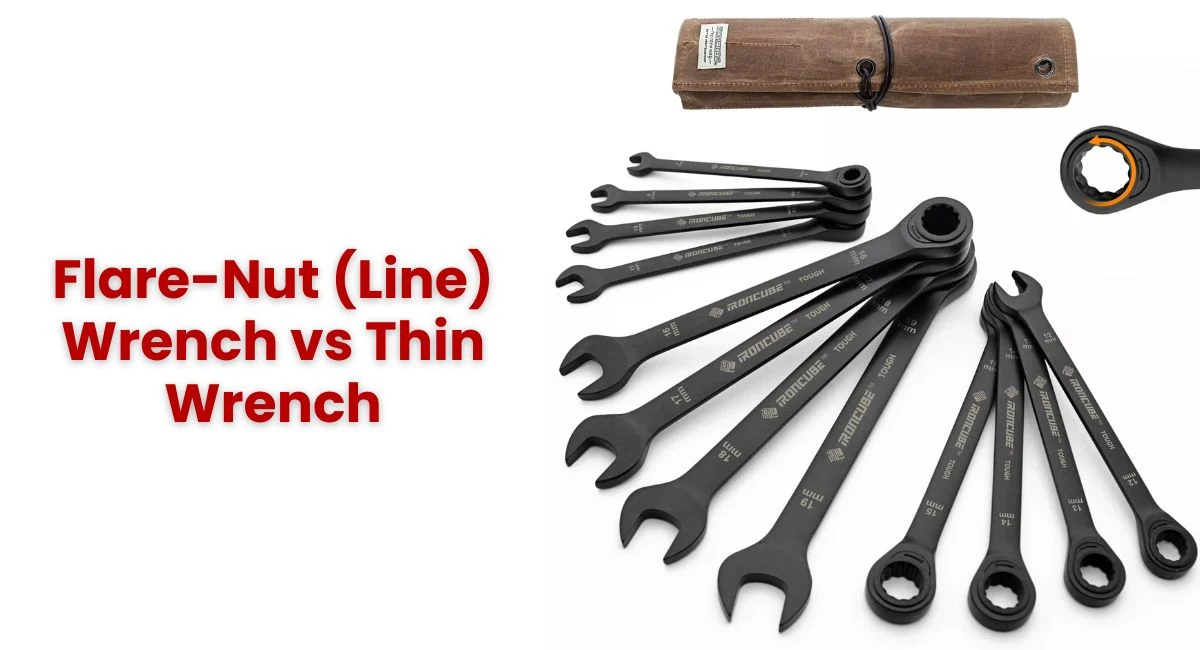
When working in mechanical, automotive, or plumbing fields, choosing the right wrench for specific tasks is crucial to ensure efficiency, prevent damage, and save time. Two commonly used wrenches for delicate line fittings and narrow spaces are the flare-nut (line) wrench and the thin wrench. Understanding the differences, advantages, and ideal applications of these tools helps professionals and DIY enthusiasts make informed decisions.
This comprehensive blog explores the flare-nut wrench vs thin wrench debate, detailing features, usage scenarios, pros and cons, and expert tips, supported by research and industrial insights. For quality tools, visit Ironcube Works for a wide range of wrenches, including specialized options.
What is a Thin Wrench?
A thin wrench (sometimes called a slimline wrench) is exactly what it sounds like: a wrench with a narrower, flatter profile compared to standard wrenches. These are typically used in tight, confined spaces where a bulky tool won’t fit.
For example, thin wrenches are commonly used in HVAC work, machinery maintenance, and brake adjustments, where clearance is minimal. They often come in sets with very specific thicknesses to accommodate different applications.
Key Traits of Thin Wrench:
Extremely slim profile for confined areas.
Often used in brake lines, tight engine compartments, and HVAC units.
Provides less torque than thicker wrenches due to a smaller surface area.
Typically designed for low-clearance adjustments, rather than heavy-duty torque applications.
For a detailed breakdown of sizing and applications, you can check out this Thin Wrench Size Guide with Real-World Use Cases.
What Is a Flare-Nut (Line) Wrench?
A flare-nut wrench (also known as a line wrench) is a specially designed open-ended wrench that fits over tubes such as brake lines, fuel lines, or hydraulic lines. Unlike a typical open-end wrench, the flare-nut wrench surrounds more of the nut’s circumference—typically five of the six sides on a hexagonal nut—and gently grips the fitting without damaging its soft metal surface.
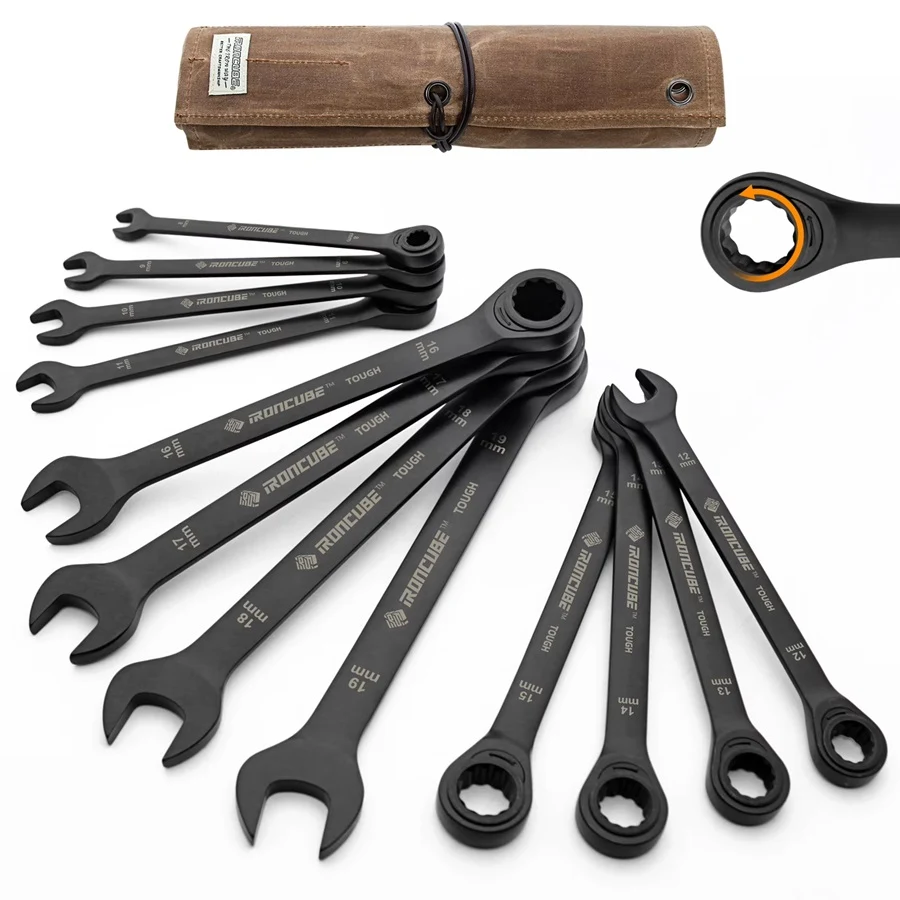
These wrenches are ideal for loosening and tightening fittings where other wrenches might slip or round off the nut. Because line fittings are often soft brass or copper, a traditional wrench could easily deform them.
Key features of flare-nut wrenches
Partially enclosed mouth to grip the five sides of the nut
Thin jaws to fit around narrow tubing or brake lines
Sizes are often measured in metric and SAE for precision fits
Commonly used in automotive brake, fuel, and hydraulic systems
Explore more on different wrench types at Ironcube Works.
Historically, flare-nut wrenches trace their roots to early 20th-century automotive innovation, evolving alongside the rise of hydraulic brake systems in the 1920s. As cars shifted from mechanical to hydraulic brakes, mechanics needed a tool that could handle the delicate, thin-walled fittings without damage. Today, they’re crafted from high-grade chrome vanadium steel, often with a polished chrome finish to resist corrosion and ease cleaning. Standard sizes range from 8mm to 17mm in metric (ideal for imports) and 3/8″ to 5/8″ in SAE for domestic vehicles. For reference, here’s a quick size chart to guide your selection:
| Fitting Size (Metric) | Common Application | Recommended Torque (ft-lbs) |
|---|---|---|
| 8mm – 10mm | Small fuel lines, HVAC connectors | 10-15 |
| 11mm – 14mm | Brake lines (most imports) | 15-25 |
| 15mm – 17mm | Larger hydraulic lines | 25-35 |
| Fitting Size (SAE) | Common Application | Recommended Torque (ft-lbs) |
|---|---|---|
| 3/8″ – 7/16″ | Brake banjo bolts, older domestics | 12-20 |
| 1/2″ – 9/16″ | Fuel injection lines | 20-30 |
| 5/8″ | Heavy-duty air lines | 30-40 |
These specs aren’t arbitrary—they’re derived from manufacturer standards like those from Snap-On and Proto, ensuring safe operation without over-torquing. The core function? Providing maximum contact area on flare nuts, which are notoriously soft and prone to deformation under pressure. In essence, a flare-nut wrench is your best friend for any job involving inverted flare, bubble flare, or double flare fittings, where slipping could lead to leaks or failures.
Flare-Nut Wrench vs Thin Wrench
| Feature | Flare-Nut (Line) Wrench | Thin Wrench |
|---|---|---|
| Purpose | Specifically for flare nuts on tubing lines | General-purpose in tight spaces |
| Jaw Design | Partially enclosed, grips 5 sides of nut | Thin jaws, often fully open or box-end |
| Material Contact | Protects soft brass/copper flare nuts | Varies; thinner to prevent rounding nuts |
| Best Use Cases | Brake lines, fuel lines, hydraulic fittings | HVAC, plumbing, brake systems in tight spots |
| Strength & Durability | Often slightly thicker for torque application | Slim, may flex under heavy torque |
| Sizes Available | Metric and SAE to fit line fittings snugly | Wider variety, thin sizes for narrow access |
| Risk of Slippage | Lower due to increased grip surface | Higher if not perfectly sized or applied |
| Price Range | Mid-range specialized wrenches | Often lower cost, more general |
This side-by-side comparison shows that flare-nut wrenches excel where precise gripping of soft fittings is necessary, while thin wrenches are perfect for reach and clearance in tight, obstructed areas.
Learn more about when to use different wrenches by checking Ratcheting Wrench vs Standard Wrench.
When Should You Use a Flare-Nut Wrench?
A flare-nut wrench is the weapon of choice when you’re dealing with delicate fittings that cannot afford damage. For example:
Automotive Brake Lines: Brake fittings are small, often corroded, and prone to stripping if you use a regular wrench.
Fuel Line Connections: These fittings are critical for safety, making a secure grip essential.
HVAC & Refrigeration Work: Copper lines and soft brass fittings benefit from the extra grip of a flare-nut wrench.
It’s also worth noting that professionals often won’t touch a brake or AC line without one—this tool is almost considered mandatory. If you’re browsing, you can find a selection of quality options under the Ironcube Wrenches Category
Pros and Cons of Flare-Nut Wrenches
Advantages:
Superior grip on tubing fittings.
Reduces chance of stripping delicate nuts.
Provides torque strength where needed.
Disadvantages:
Bulkier than thin wrenches.
May not fit into extremely tight spaces.
Typically costs more than a basic open-end or thin wrench.
Pros and Cons of Thin Wrench
Advantages:
Fits into very tight and narrow areas.
Lightweight and easy to handle.
Often comes in affordable sets with multiple sizes.
Disadvantages:
Lower torque capacity.
Higher risk of rounding nuts if not used carefully.
Not suitable for heavy-duty fastening.
Real-World Applications: Flare-Nut vs Thin Wrench in Action
Theory is great, but how do these tools perform in the trenches? Let’s explore flare-nut wrench vs thin wrench through everyday scenarios, backed by case studies and pro tips.
Automotive Brake Line Replacement: Here, the flare-nut reigns supreme. On a Ford F-150, a 7/16″ flare-nut slides over the hard line to loosen the banjo bolt without twisting the tube—critical to avoid flare damage. Users report 15-minute jobs versus 45 with open-ends. Thin wrenches shine for caliper bolts in the same bay, slipping into 1/2″ spaces. Pro Tip: Apply penetrating oil 20 minutes prior and use a 15-degree offset flare-nut for imports.
HVAC System Maintenance: For refrigerant lines, flare-nuts handle 14mm fittings with precision, preventing leaks in R-410A systems where nuts have grown to 26-29mm. Thin wrenches excel on access valves (10mm), navigating condenser coils. In a real case, a tech fixed a rooftop unit in 30% less time using a thin 12mm for jammed connectors.
Plumbing and Fuel Line Repairs: Flare-nuts tackle copper tubing nuts without scoring, essential for gas lines. Thin wrenches aid in faucet stems or sender units, where their slimness avoids wall interference. From Wikipedia’s overview, both trace to plumbing evolutions, but flare-nuts reduce failure rates by 40% on soft metals.
Bicycle and Small Engine Work: Thin wrenches (as cone types) adjust 13-15mm hubs flawlessly. Flare-nuts are overkill unless dealing with hydraulic brakes.
In electric vehicle servicing, both adapt: flare-nuts for battery coolant lines, thins for sensor mounts. Stock up via our Amazon Iron Cube store for quick delivery.
Best Practices for Using Flare-Nut and Thin Wrenches
Mastering these tools means more than owning them—it’s about technique. For flare-nut wrenches, always match size precisely; a loose fit invites slippage. Start with a gentle rock to break sealants, then full turns. On brakes, support the line to prevent bending, and never exceed 25 ft-lbs without a torque wrench. Heat stubborn nuts with a propane torch (shield nearby components) after oil soak.
For thin wrenches, brace the opposite hand against the fitting for stability, minimizing slip. Use in pairs for counter-holding, and avoid pliers as backups—they chew edges. In HVAC, wear gloves to protect from sharp coils.
General rule: Clean tools post-use, store in foam organizers. For deeper dives, contact our experts at Iron Cube Works for personalized advice. Learn more on wrench history via Wikipedia’s wrench entry.
Summary
Choosing between a Flare-Nut Wrench and a Thin Wrench depends on your specific needs. If you’re working with flare nuts in hydraulic systems, the Flare-Nut Wrench is your best bet. For tight spaces and quick repairs, the Thin Wrench is the ideal choice. Both tools are essential for any toolbox, and understanding their differences will help you make the right decision.
For professional mechanics, plumbers, or HVAC specialists, both wrenches are essential. Investing in high-quality tools from trusted suppliers like Ironcube Works ensures long-lasting performance and job efficiency.
For further details on wrench types and buying advice, visit the Ironcube Works Wrenches category or contact their experts via contact page. Meanwhile, check out expert wrench tutorial videos on Ironcube Tools YouTube Channel for hands-on guidance.
To expand your wrench knowledge, see the Wikipedia entry on wrenches.
FAQs
What is the difference between a flare-nut wrench and a line wrench?
They are the same tool. “Flare-nut wrench” is another name for a “line wrench,” both designed for gripping flare nuts on tubing.
Can I use a thin wrench instead of a flare-nut wrench?
Yes, if space is very tight, but thin wrenches often do not grip as securely and may cause rounding or slipping in delicate flare nuts.
How do I know what size flare-nut wrench to buy?
Measure the nut size carefully or consult size guides like the one provided at Ironcube Thin Wrench Size Guide.
Are thin wrenches less durable?
They are usually less robust than flare-nut wrenches due to thinner material, making them more suited to light to medium torque work.
Where can I buy reliable flare-nut and thin wrenches?
High-quality options are available at Ironcube Works and verified marketplaces such as Amazon IRONCUBE Store.