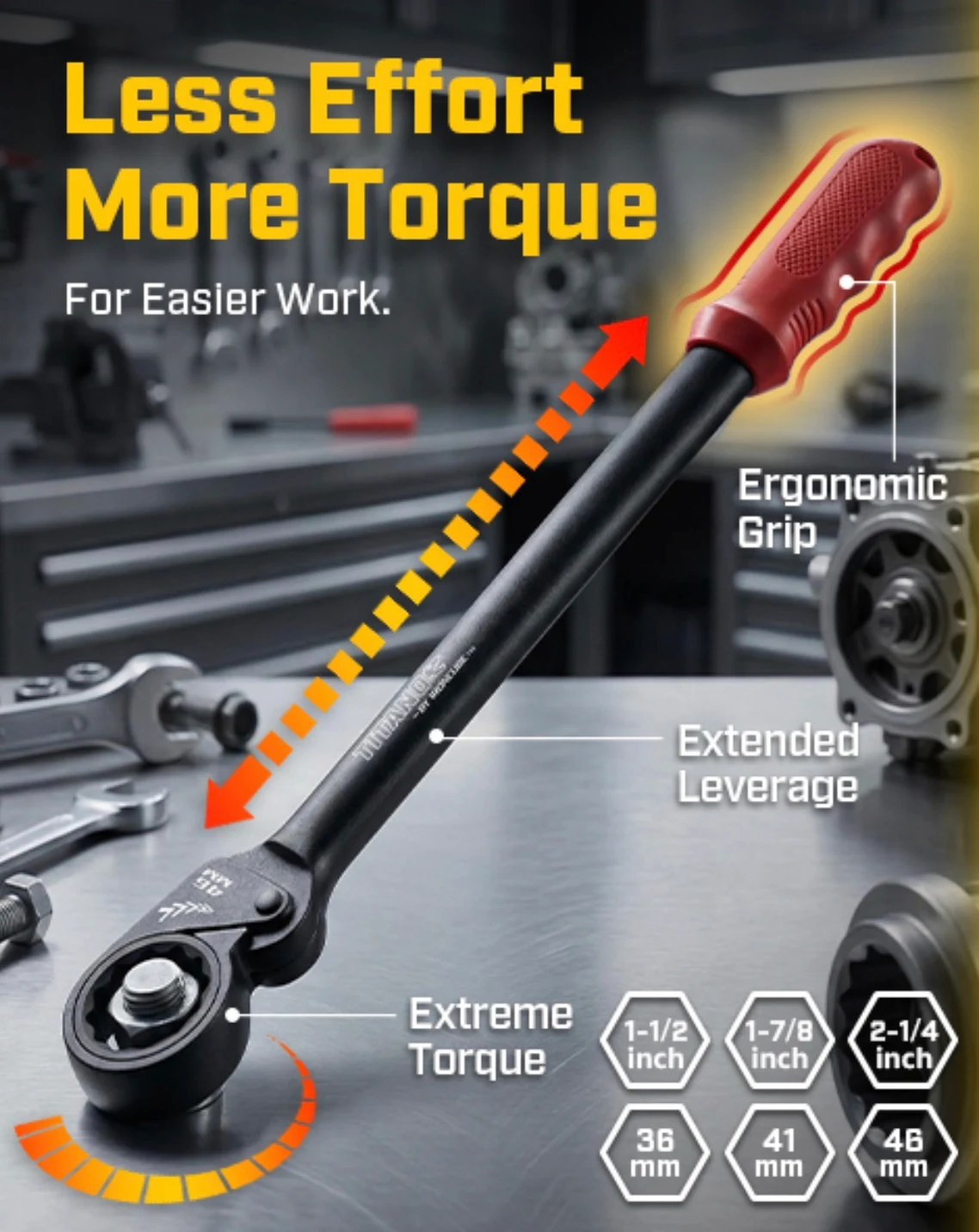
When working with large fasteners, seized bolts, or high-load mechanical systems, ordinary tools quickly reach their limits. That’s where Heavy-Duty Ratcheting Wrenches prove their real value. Designed for strength, efficiency, and reliability, these tools allow technicians to deliver massive torque—often up to 1000 N·m—while reducing physical strain by as much as 30% compared to traditional fixed wrenches.
Industrial mechanics, diesel technicians, and maintenance engineers rely on advanced wrench systems to improve productivity and safety. Whether tightening structural bolts on heavy equipment or servicing engines, the right ratcheting wrench can dramatically reduce fatigue and increase workflow efficiency.
You can explore the full selection of industrial-grade models directly from the https://ironcubeworks.com/, including professional collections available in the https://ironcubeworks.com/product-category/wrenches/, where high-torque tools are built specifically for demanding environments.
What Are Heavy-Duty Ratcheting Wrenches?
To understand their importance, it helps to first look at how wrench technology evolved. A traditional wrench requires removing and repositioning the tool after every turn. In contrast, ratcheting technology allows continuous motion without lifting the wrench from the fastener.
According to the engineering explanation provided in the Wrench mechanical overview, a wrench is defined as a tool used to provide grip and mechanical advantage when applying torque to turn objects. Ratcheting mechanisms increase mechanical efficiency by enabling one-directional movement while locking in the reverse direction.
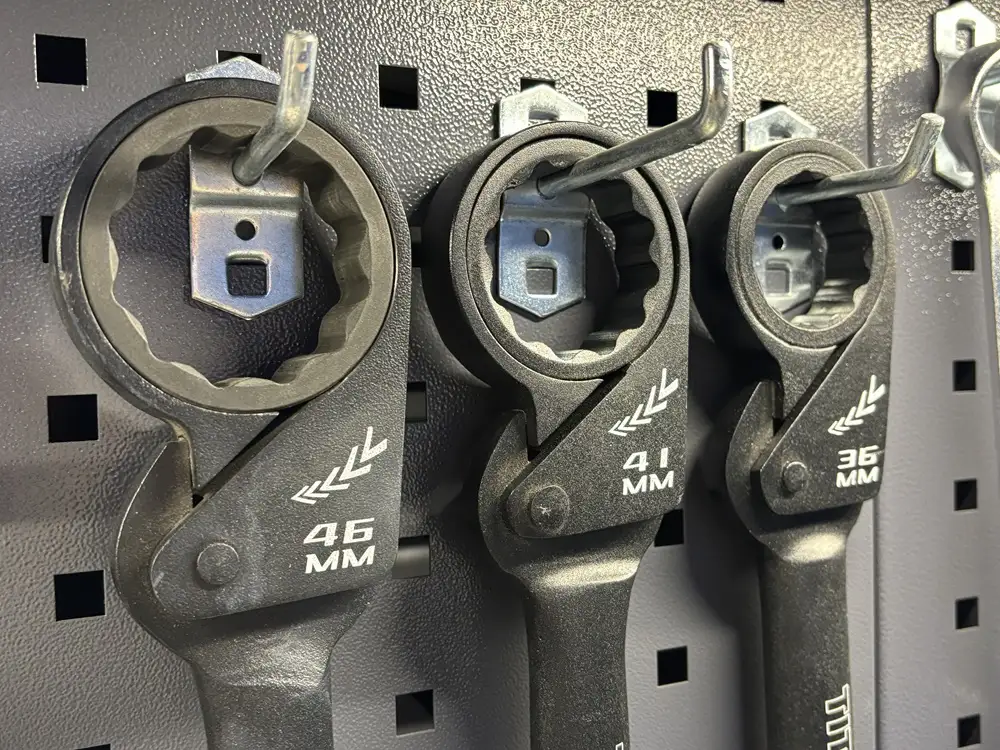
Heavy-Duty Ratcheting Wrenches expand this principle with:
- Reinforced steel construction
- Oversized jaws
- High-load ratcheting gears
- Extended handle leverage
These enhancements allow them to withstand significantly higher torque forces than consumer-grade tools.
Many professionals prefer models found in the https://ironcubeworks.com/extra-large-heavy-duty-ratcheting-wrenches/, especially when working with oversized nuts and bolts found in industrial machinery.
The Engineering Behind the Torque
Physics dictates that to loosen or tighten a bolt, you need force applied at a specific distance from the fulcrum. In professional shop settings, this often requires massive amounts of energy. A standard open-ended wrench forces you to reposition the tool constantly, which wastes time and energy. Heavy-duty ratcheting wrenches solve this problem by incorporating a gear-and-pawl mechanism inside the wrench head.
This mechanism allows the user to rotate the fastener without removing the tool from the nut. When you apply force, the gear engages, turning the bolt. When you move the handle back, the pawl clicks over the teeth, letting the handle return to the start position instantly. You can learn more about the evolution of these tools through the history of the wrench.
The material science behind a high-quality wrench is just as critical as the design. Manufacturers typically use forged alloy steel or chrome-vanadium steel to withstand the immense pressure of 1000 N·M torque. Unlike cheaper alternatives that might flex or snap under load, premium options like the extra-large heavy-duty ratcheting wrenches are heat-treated to ensure the metal maintains its integrity. This prevents the “rounding off” of bolt heads, which saves time on potential extraction work.
Understanding 30% Force Savings in Industrial Work
Marketing claims often state that specialized tools provide “force savings,” but in the context of heavy machinery, this has a very real, measurable impact. If you are using a standard wrench, your body expends significant energy simply repositioning the tool and stabilizing your body posture. By integrating a ratcheting head, you eliminate the need to break your grip or readjust your footing on every swing.
This efficiency gain typically equates to a 30% reduction in physical exertion. For a technician working an eight-hour shift, this prevents muscle fatigue and reduces the risk of repetitive strain injuries. You are not fighting the tool; you are leveraging it. When dealing with specialized sizes, such as the heavy-duty ratcheting wrenches 36mm, you gain the ability to apply maximum force in tight quarters where a standard torque wrench might be too long or cumbersome.
Understanding 1000 N·M Torque Capacity
Torque capacity defines how much rotational force a wrench can safely deliver without failure. For industrial tools, this number is critical.
What Does 1000 N·m Torque Mean?
Torque is calculated using the formula:
Torque = Force × Distance
For example:
- Applying 100 N of force
- With a 10-meter equivalent leverage
- Produces 1000 N·m torque
High-torque tools are commonly required in:
- Heavy machinery maintenance
- Diesel engine repair
- Construction equipment servicing
- Oil and gas operations
- Rail and marine maintenance
Professional-grade torque tools, such as the https://ironcubeworks.com/product/torque-friction-wrench-36mm/, are designed to withstand repeated high-load usage without gear slippage or deformation.
Industries That Depend on Heavy-Duty Ratcheting Wrenches
The demand for Heavy-Duty Ratcheting Wrenches continues to grow across multiple sectors. Each industry faces unique mechanical challenges that require reliable torque tools.
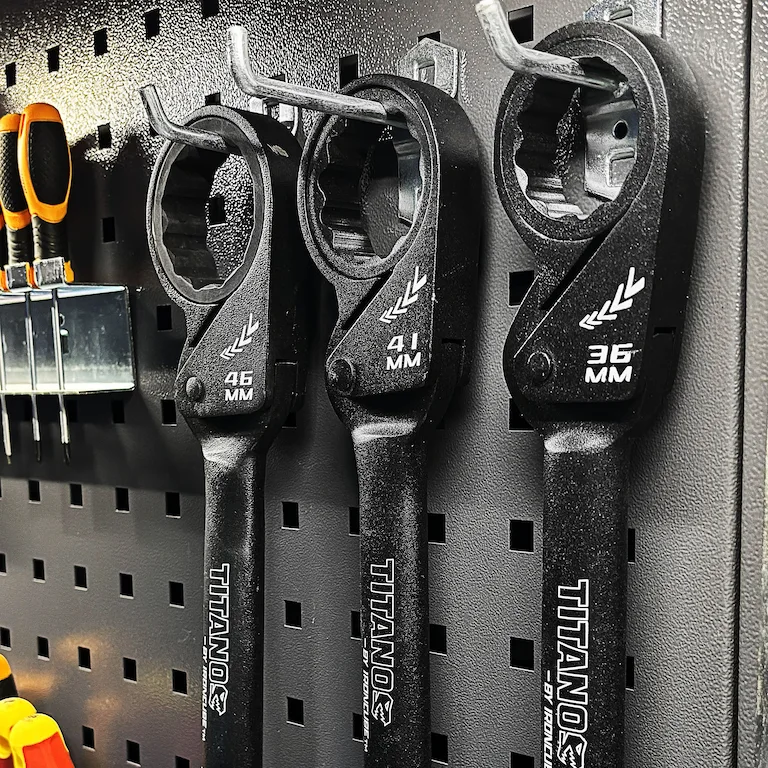
Diesel Engine Maintenance
Large diesel engines contain heavy bolts that require consistent torque application. Mechanics working on trucks or industrial generators frequently rely on oversized ratcheting tools.
For example, technicians looking for specialized equipment often refer to resources like:
https://ironcubeworks.com/best-heavy-duty-ratcheting-wrench-for-diesel-mechanics/
These applications demand:
- High torque strength
- Durable steel components
- Precision ratcheting systems
Construction and Structural Assembly
Construction projects require tightening high-strength bolts used in steel frameworks. These bolts often need accurate torque settings to maintain structural integrity.
The ability to apply large torque efficiently helps ensure safety compliance and reduces installation time.
Manufacturing and Industrial Maintenance
Manufacturing plants rely heavily on mechanical equipment that must be serviced regularly. Ratcheting tools significantly reduce downtime during repairs.
Many professionals working in these sectors prefer models available in the https://ironcubeworks.com/large-ratcheting-wrench-set/, which provide multiple sizes for versatile maintenance tasks.
Agriculture and Heavy Equipment Repair
Farm equipment and tractors contain large fasteners exposed to dirt, vibration, and heavy loads. This environment requires tools that resist wear and corrosion.
Durable friction-style systems, such as the https://ironcubeworks.com/product/friction-wrench-2-1-4-inch/, are commonly used because they maintain reliable performance even under harsh working conditions.
How to Choose the Right Heavy-Duty Ratcheting Wrench
Match the Bolt, Not the Marketing
Start with the fasteners you actually touch. If most of your work sits at 32mm and below, the extra-large ratcheting wrenches collection will cover 95% of situations. On the other hand, if 36mm–50mm is your daily reality, step up to the extra-large heavy-duty ratcheting wrenches range.
Check the Tooth Count — With Nuance
High tooth counts (72, 90, 120) shrink the swing arc, but they can weaken individual tooth strength. For heavy-duty work, 72-tooth models with deep 0.12mm engagement depth outperform 120-tooth variants at 0.08mm engagement, based on 2024 fastener studies. In plain English, more teeth are not automatically better.
Verify Steel Grade and Heat Treatment
Look for explicit mention of Cr-V or Cr-Mo steel and Rockwell C55–60 hardness on the gear surfaces. Generic “alloy steel” claims without hardness figures are a red flag.
Ergonomic Handle Design
A wider, contoured handle distributes force across the palm instead of concentrating it in one spot. Twelve hours into a rebuild, that detail stops being cosmetic and starts preventing real injury. Additionally, the best large ratchet wrench picks consistently highlight this feature.
Maintenance That Keeps the Force Savings Intact
A ratcheting mechanism is a precision assembly. Dirt and neglect kill it faster than heavy use does. Therefore, three simple habits extend service life dramatically.
First, wipe the tool down after each job. Grease, coolant, and brake dust migrate into the head and grind the pawl prematurely.
Second, lubricate monthly. Two or three drops of light synthetic oil into the gear cavity reduce internal wear by up to 60%, according to published tool-industry studies. Avoid thick grease, which traps particulates.
Third, store dry. A closed toolbox with a silica gel packet prevents rust in humid shops. Altogether, proper care can triple service life versus neglected tools.
For visual demonstrations, the Ironcube Tools YouTube channel walks through real-world tool-care routines. To keep the set organized and protected in transit, pair any wrench with the IRONCUBE canvas roll-up storage.
Popular Heavy-Duty Ratcheting Wrench Models Worth Considering
Among widely used options, the Ironcube Jumbo Friction Ratcheting Wrench on Amazon has developed a strong following for its balance of torque capacity and handle ergonomics. Additionally, the alternate size listing on Amazon covers further sizing options for jobs outside the standard range.
Summary
In the demanding world of mechanical repair, your tools are your most valuable asset. Heavy-duty ratcheting wrenches are not just a convenience; they are a necessary upgrade for anyone working with high-torque fasteners. By providing up to 30% force savings and the capability to handle loads up to 1000 N·M, these tools allow you to work faster, safer, and with significantly less fatigue. From selecting the right friction wrench 2 1/4 inch for the job to maintaining your tools for years of service, your choice of equipment defines your output. If you are ready to upgrade your shop, visit the IronCube Works catalog or contact us today for expert guidance on the right tools for your specific application.
FAQs
Q. What makes heavy-duty ratcheting wrenches better than standard spanners?
A. Standard spanners require you to remove and reset the tool after every partial turn, which is inefficient. Heavy-duty ratcheting wrenches use an internal gear system to stay engaged with the fastener, allowing for continuous motion, which saves significant time and physical strain.
Q. Can heavy-duty ratcheting wrenches really handle 1000 N·M of torque?
A. Yes, provided they are engineered from high-strength forged steel. These tools are specifically designed for high-tension applications found in diesel engines and heavy machinery. Always ensure you are using the correct size, such as the torque friction wrench 36mm, to maintain structural integrity under load.
Q. How do I clean and maintain my ratcheting wrench?
A. To ensure the longevity of your heavy-duty ratcheting wrenches, wipe them down with a clean cloth after each use to remove grease and metal filings. Store them in a dry, organized space like a canvas roll-up bag to prevent rust and damage to the finish.
Q. Are these tools suitable for non-professional use?
A. While they are designed for industrial and mechanical professionals, anyone working on large equipment, agricultural machinery, or heavy-duty automotive projects will benefit from the leverage and torque capacity. Using professional tools ensures your safety, regardless of whether you are a mechanic or a DIY enthusiast.