In the world of precision mechanics and professional assembly work, few tools are as crucial yet often misunderstood as the torque wrench. Whether you’re a professional mechanic working on critical automotive components, an aerospace technician ensuring flight safety, or a dedicated DIY enthusiast tackling home projects, understanding how to properly use a torque wrench can mean the difference between a successful, safe assembly and catastrophic failure. At IronCube Works, we’ve witnessed firsthand how proper torque application transforms ordinary fastening into precision engineering.
The fundamental principle behind torque wrenches revolves around applying exactly the right amount of rotational force to a fastener. Too little torque leaves connections loose and prone to failure, while excessive torque can strip threads, crack components, or create dangerous stress points. Modern engineering specifications demand precise torque values for everything from bicycle components to spacecraft assemblies, making the torque wrench an indispensable tool in countless applications. The evolution of torque measurement technology has transformed from simple beam-style indicators to sophisticated digital systems that provide real-time feedback and data logging capabilities.
What Is a Torque Wrench and Why Does It Matter
A torque wrench is a specialized tool designed to apply a specific amount of rotational force (torque) to a fastener, such as a nut or bolt. It ensures that the fastener is neither too loose nor too tight. Over-tightening can strip threads or damage components, while under-tightening can lead to parts coming loose — both scenarios are unsafe.
In industries like automotive, aerospace, and construction, precision is non-negotiable. Using a torque wrench guarantees accurate tensioning, uniform load distribution, and safety compliance.
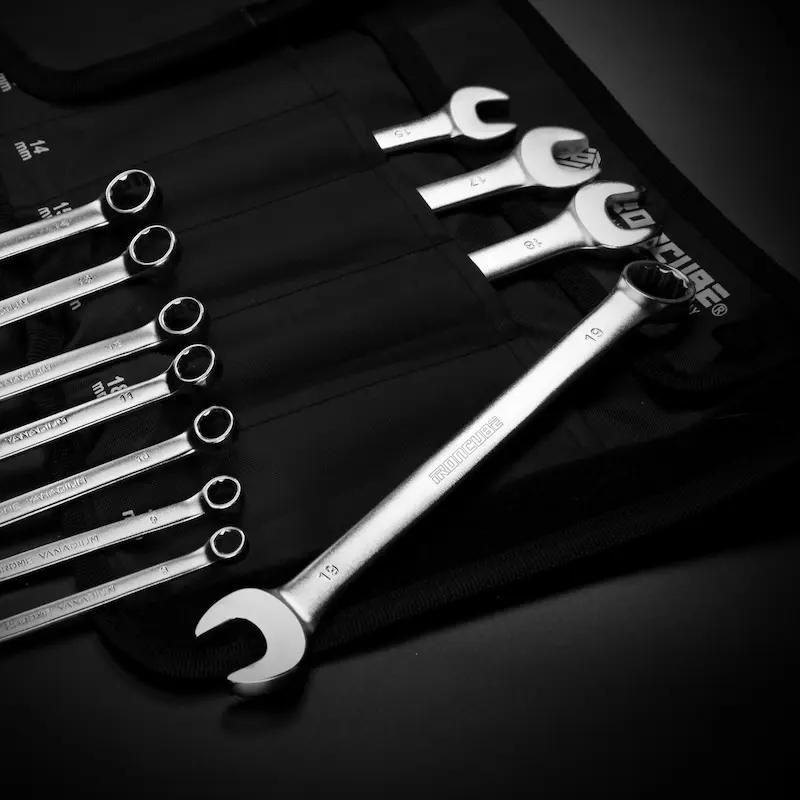
If you’re new to hand tools, start exploring IronCube’s Wrench Collection to find the perfect fit for your toolkit.
Why is Using a Torque Wrench Important?
Using a torque wrench is not just about precision; it’s about safety and reliability. Here’s why:
- Prevents Over-Tightening: Over-tightening can strip threads, damage components, or cause bolts to snap, leading to costly repairs.
- Prevents Under-Tightening: Under-tightened bolts can loosen over time, causing parts to separate or fail unexpectedly.
- Ensures Uniform Pressure: In applications like engine assembly, uneven torque can lead to warping or misalignment.
- Complies with Manufacturer Specifications: Many manufacturers provide specific torque values for their products. Using a torque wrench ensures compliance with these guidelines.
For more insights into DIY projects that require a torque wrench, visit our blog on DIY Projects That Actually Need a Torque Wrench.
Types of Torque Wrenches
Different jobs demand different torque tools. Here’s a breakdown of the most common types:
Beam Torque Wrench
The classic design features a scale and a pointer. When torque is applied, the pointer moves along the scale, showing the amount of force. It’s reliable but requires a clear line of sight to read accurately.
Click Torque Wrench
The most popular type. It clicks audibly when the desired torque level is reached. Perfect for automotive and mechanical tasks where consistency is key.
Digital Torque Wrench
A modern twist on precision — it uses an electronic sensor to display torque values digitally. Some even store data for quality control purposes.
Split Beam and Dial Wrenches
These high-end versions are built for professional use, offering enhanced accuracy and durability for heavy-duty applications.
For top-quality options, check out the WRENCHES Amazon Tools Set and the Ratcheting Combo Sets Amazon SHOP.
How to Use a Torque Wrench: Step-by-Step Guide
Using a torque wrench correctly is essential for achieving accurate results. Follow these steps:
- Select the Right Torque Wrench: Choose a wrench that matches the torque range required for your task.
- Set the Desired Torque Value: Adjust the wrench to the specified torque value using the scale or digital interface.
- Attach the Correct Socket: Ensure the socket fits the fastener snugly to avoid slippage.
- Apply Torque Gradually: Tighten the fastener slowly and steadily until the wrench signals (e.g., a click or beep) that the desired torque has been reached.
- Store Properly: After use, reset the torque wrench to its lowest setting to maintain calibration.
For tips on working in tight spaces, check out our blog on Flex Head Ratcheting Sets for Tight Spaces.
Torque Conversion Chart and Reference Tables
Comprehensive Torque Conversion Table
| Newton-meters (Nm) | Pound-feet (lb-ft) | Pound-inches (lb-in) | Kilogram-meters (kg-m) |
|---|---|---|---|
| 1 | 0.738 | 8.851 | 0.102 |
| 5 | 3.688 | 44.254 | 0.510 |
| 10 | 7.376 | 88.507 | 1.020 |
| 15 | 11.063 | 132.761 | 1.530 |
| 20 | 14.751 | 177.015 | 2.039 |
| 25 | 18.439 | 221.269 | 2.549 |
| 30 | 22.127 | 265.522 | 3.059 |
| 40 | 29.502 | 354.030 | 4.079 |
| 50 | 36.878 | 442.537 | 5.099 |
| 60 | 44.254 | 531.045 | 6.118 |
| 70 | 51.630 | 619.552 | 7.138 |
| 80 | 59.005 | 708.060 | 8.158 |
| 90 | 66.381 | 796.567 | 9.177 |
| 100 | 73.756 | 885.075 | 10.197 |
| 125 | 92.195 | 1106.343 | 12.746 |
| 150 | 110.634 | 1327.612 | 15.296 |
| 175 | 129.073 | 1548.881 | 17.845 |
| 200 | 147.512 | 1770.149 | 20.394 |
| 250 | 184.390 | 2212.687 | 25.493 |
| 300 | 221.269 | 2655.224 | 30.591 |
Common Fastener Torque Specifications
| Fastener Size | Grade 5 (Dry) | Grade 5 (Lubricated) | Grade 8 (Dry) | Grade 8 (Lubricated) |
|---|---|---|---|---|
| 1/4″-20 | 8 ft-lbs | 6 ft-lbs | 12 ft-lbs | 9 ft-lbs |
| 5/16″-18 | 17 ft-lbs | 13 ft-lbs | 25 ft-lbs | 19 ft-lbs |
| 3/8″-16 | 31 ft-lbs | 23 ft-lbs | 45 ft-lbs | 34 ft-lbs |
| 7/16″-14 | 50 ft-lbs | 38 ft-lbs | 72 ft-lbs | 54 ft-lbs |
| 1/2″-13 | 76 ft-lbs | 57 ft-lbs | 109 ft-lbs | 82 ft-lbs |
| 9/16″-12 | 114 ft-lbs | 85 ft-lbs | 162 ft-lbs | 122 ft-lbs |
| 5/8″-11 | 154 ft-lbs | 115 ft-lbs | 220 ft-lbs | 165 ft-lbs |
| 3/4″-10 | 266 ft-lbs | 200 ft-lbs | 380 ft-lbs | 285 ft-lbs |
| 7/8″-9 | 433 ft-lbs | 325 ft-lbs | 619 ft-lbs | 464 ft-lbs |
| 1″-8 | 651 ft-lbs | 488 ft-lbs | 931 ft-lbs | 698 ft-lbs |
Note: These values are general guidelines only. Always consult manufacturer specifications for critical applications. Values assume clean, undamaged threads and standard environmental conditions.
Metric Fastener Torque Reference
| Metric Size | Property Class 8.8 (Dry) | Property Class 8.8 (Lubricated) | Property Class 10.9 (Dry) | Property Class 10.9 (Lubricated) |
|---|---|---|---|---|
| M5 | 5.9 Nm | 4.4 Nm | 8.3 Nm | 6.2 Nm |
| M6 | 10 Nm | 7.5 Nm | 14 Nm | 10.5 Nm |
| M8 | 25 Nm | 19 Nm | 35 Nm | 26 Nm |
| M10 | 49 Nm | 37 Nm | 69 Nm | 52 Nm |
| M12 | 86 Nm | 64 Nm | 120 Nm | 90 Nm |
| M14 | 137 Nm | 103 Nm | 192 Nm | 144 Nm |
| M16 | 214 Nm | 160 Nm | 299 Nm | 224 Nm |
| M18 | 295 Nm | 221 Nm | 413 Nm | 310 Nm |
| M20 | 418 Nm | 313 Nm | 585 Nm | 439 Nm |
| M24 | 714 Nm | 536 Nm | 1000 Nm | 750 Nm |
Safety Tips for Using a Torque Wrench
- Always Follow Manufacturer Guidelines: Refer to the user manual for proper usage and maintenance.
- Avoid Overloading: Never exceed the maximum torque capacity of the wrench.
- Inspect Regularly: Check for wear and tear, and calibrate the wrench periodically.
- Use the Right Technique: Apply force smoothly and avoid jerking motions.
- Store Properly: Keep the wrench in a protective case to prevent damage.
For more safety tips and tool recommendations, visit our Contact Page.
Safety Best Practices When Using a Torque Wrench
Personal Protective Equipment and Work Environment
Safety when using a torque wrench begins with appropriate personal protective equipment and a properly prepared work environment. Safety glasses or goggles protect against debris that might be dislodged during torque application, while gloves provide grip and protect hands from sharp edges and pinch points.
The work environment significantly impacts both safety and accuracy when using a torque wrench. Ensure adequate lighting to clearly see torque settings and watch for visual indicators, as working in dim conditions increases the risk of incorrect settings or missed feedback signals.
Preventing Over-Torquing and Under-Torquing
Over-torquing represents one of the most common and potentially dangerous errors in torque wrench use, potentially causing immediate fastener failure or creating hidden stress that leads to future catastrophic failure. Stretched bolts, stripped threads, and cracked components result from excessive torque, with costs ranging from simple fastener replacement to complete engine rebuilds or structural failures.
Under-torquing, while often less immediately dramatic than over-torquing, creates equally serious safety hazards through loose connections that can fail under load. Insufficient torque on wheel lug nuts has caused countless wheel separations, while under-torqued head bolts lead to blown head gaskets and coolant leaks.
Summary
Using a torque wrench safely and accurately is essential for ensuring the longevity and reliability of your projects. By understanding the different types of torque wrenches, following proper usage techniques, and adhering to safety guidelines, you can achieve precise results every time. For high-quality tools and expert advice, visit IronCube Works and explore our extensive collection of wrenches and tool sets.
For more tips and tutorials, subscribe to our YouTube Channel and stay updated with the latest in tools and techniques.
FAQs
Q1: How often should I calibrate my torque wrench?
You should calibrate it every 5,000 uses or at least once per year. Heavy users may need calibration more often.
Q2: Can I use a torque wrench to loosen bolts?
No, torque wrenches are designed for tightening. Use a breaker bar for loosening tough bolts.
Q3: What’s the best torque wrench for beginners?
A click-type wrench is best for beginners due to its simplicity and reliability.
Q4: Why does my wrench not click?
It might be out of calibration or damaged. Always test on a known torque fastener first.
Q5: Should I lubricate bolts before torquing?
Only if specified by the manufacturer. Lubrication changes friction and can alter torque readings.