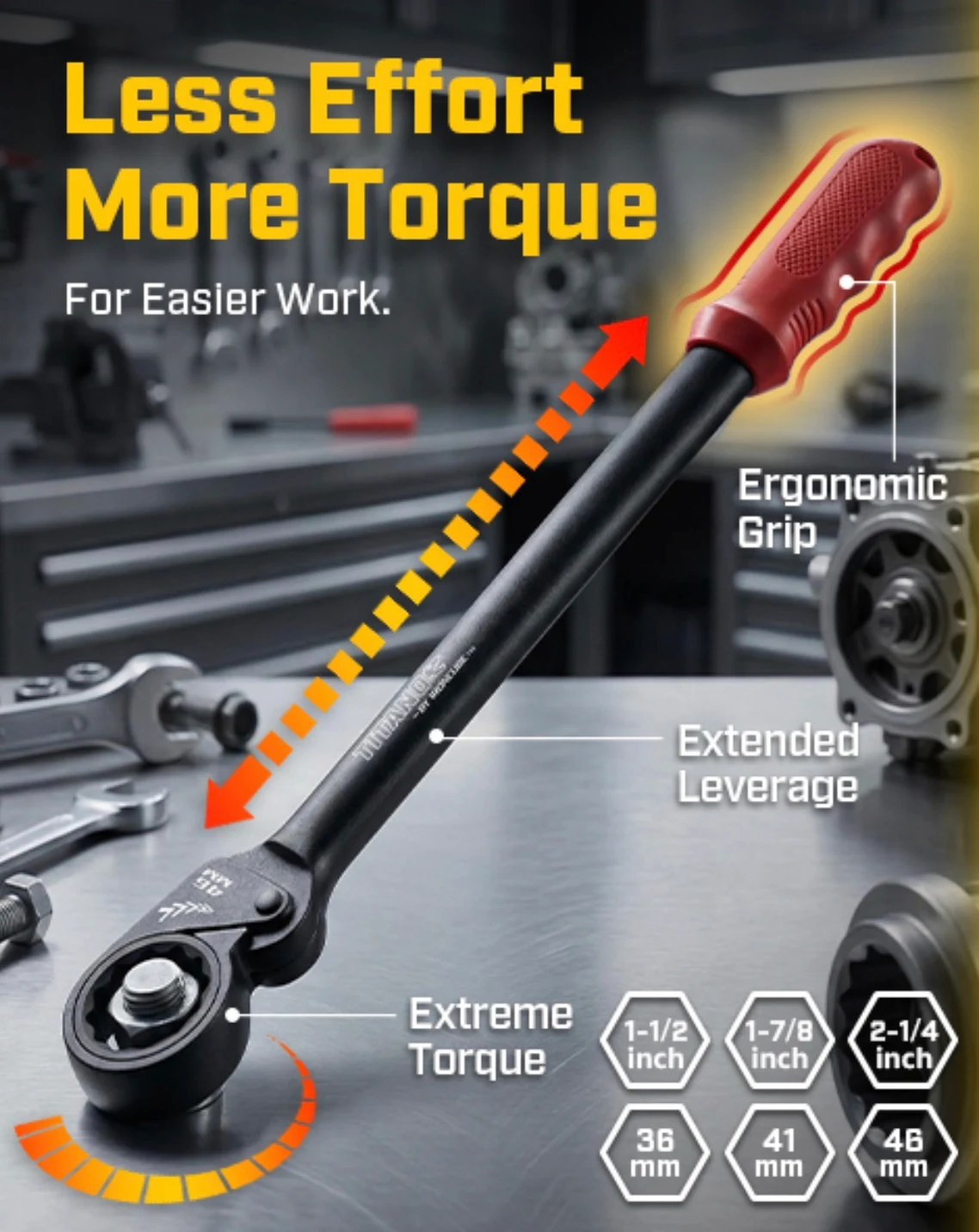
When people buy a new tool kit, screwdrivers are often treated as an afterthought. That is a mistake. Understanding screwdriver types and uses can save time, protect hardware, improve safety, and prevent stripped screws that turn simple repairs into frustrating jobs.
Whether you are wiring an outlet, repairing a vehicle, assembling furniture, or handling electronics, choosing the right screwdriver matters more than most people realize. A mismatched driver can damage fasteners, reduce torque, and even create safety risks during electrical work.
Modern toolkits now include dozens of screwdriver head styles, bit sizes, and specialty designs. From Phillips and flathead to Torx and Pozidriv, every type serves a specific purpose. According to the fastening engineering resources published by the International Organization for Standardization and industrial fastening guides, screw head designs evolved primarily to improve torque transfer, reduce slippage, and increase production efficiency.
If you are building a professional toolbox or upgrading your garage setup, this guide explains the most important screwdriver types and uses, how to identify them, and which sets are worth owning in 2026.
A great place to start is the complete screwdriver collection available at IronCube Works Screwdriver Collection, where you can compare professional-grade kits for mechanics, electricians, and home users.
Why Understanding Screwdriver Types Matters for Every Project
Choosing the correct screwdriver is not only about convenience. It directly affects tool life, screw longevity, and work quality.
Professionals in automotive repair, electrical installation, and industrial maintenance rely heavily on proper screwdriver selection because different fasteners are engineered for different torque levels and materials.
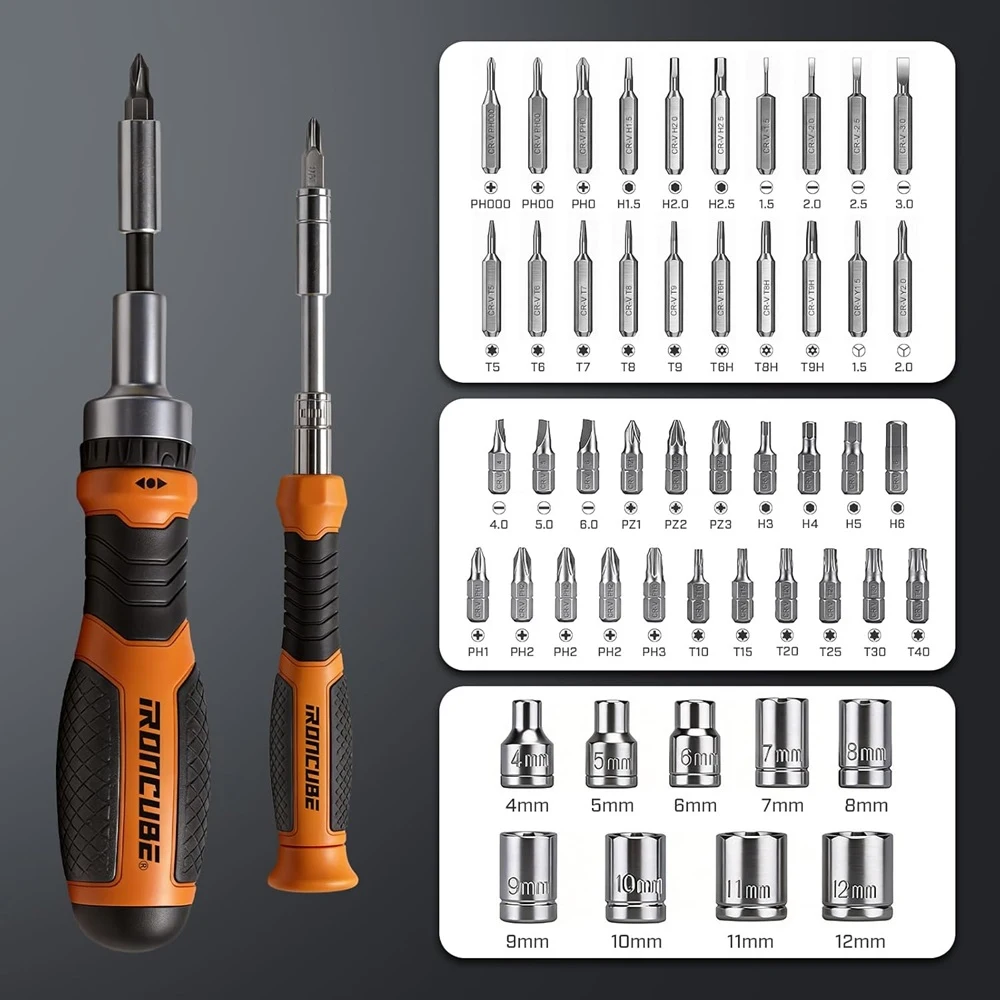
For example, automotive manufacturers increasingly use Torx screws because they handle higher torque loads with less cam-out. Electronics manufacturers often use security bits to discourage tampering. Furniture companies rely on hex fasteners because they are compact and easy to assemble.
Understanding these differences helps you work faster and avoid expensive mistakes.
Using the Wrong Screwdriver Damages Fasteners — Here Is Why
One of the biggest reasons screws get stripped is poor tip matching. When the screwdriver tip does not fully engage the screw recess, force spreads unevenly across the screw head.
This creates a slipping effect called cam-out.
The result is usually:
- Rounded screw heads
- Damaged tool tips
- Reduced grip
- Slower work
- Higher injury risk
A classic example is using a flathead screwdriver on a Phillips screw. Many DIYers do this in emergencies, but it damages the screw quickly.
According to fastening industry research published by engineering resources from Wikipedia’s Fastener Reference Guide and industrial tool manufacturers, proper bit engagement dramatically improves torque efficiency and reduces wear.
How Matching Tip to Screw Head Improves Torque and Speed
The correct screwdriver increases contact area between the bit and screw head. More contact means:
- Better torque transfer
- Less slipping
- Faster fastening
- Reduced hand fatigue
- More accurate installation
Mechanics especially notice this difference when working with rusted or over-tightened fasteners.
If you frequently work on automotive repairs, you may also benefit from pairing your screwdriver collection with a professional ratcheting wrench kit like the ones discussed in Best Ratcheting Wrench Set in 2026.
Every Major Screwdriver Type Explained
Modern screwdrivers come in dozens of variations, but a handful dominate professional and household work.
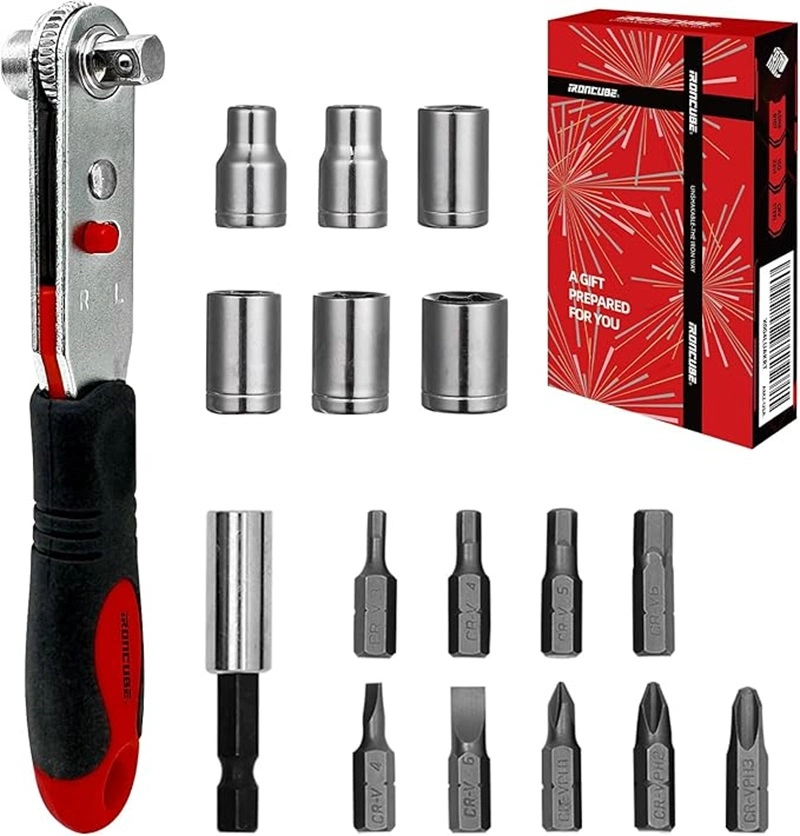
Understanding these types of screwdrivers is essential for anyone building a complete toolkit.
Flathead (Slotted) Screwdriver — Uses and Limitations
The flathead screwdriver is the oldest and simplest design. It features a single flat blade that fits into a straight slot.
Common Uses
- Vintage furniture restoration
- Electrical outlet covers
- Older machinery
- Basic household hardware
Advantages
- Simple design
- Easy to manufacture
- Works in low-torque applications
Limitations
The biggest weakness is slipping. Flathead drivers cam out easily under pressure because the blade has limited contact with the screw.
That is why many industries replaced slotted screws with Phillips and Torx systems.
Still, flathead drivers remain essential in every toolbox because many household fixtures still use them.
Phillips Screwdriver — The Most Common Cross-Head Driver
The Phillips screwdriver was invented in the 1930s to improve manufacturing efficiency.
It quickly became the global standard for mass production because it centers itself automatically.
Phillips vs Flathead Screwdriver
When comparing a Phillips vs flathead screwdriver, Phillips designs provide:
- Better grip
- Improved alignment
- Faster driving speed
- Reduced slipping
However, Phillips screws intentionally cam out at high torque levels. This protects screws from overtightening but can frustrate mechanics during heavy-duty applications.
Common Uses
- Appliances
- Electronics
- Furniture assembly
- Household repairs
- General construction
Because Phillips screws are everywhere, every homeowner should own multiple sizes.
You can explore premium sets in the Best Screwdriver Sets of 2026 Guide.
Screwdriver — Why It Is Not the Same as Phillips
Many people confuse Pozidriv and Phillips screwdrivers because they look nearly identical.
However, Pozidriv screws include additional grooves between the primary cross sections.
Key Differences
Pozidriv offers:
- More contact points
- Higher torque capability
- Less cam-out
- Better industrial performance
Using a Phillips screwdriver on a Pozidriv screw often damages both the screw and tool.
Common Uses
- European furniture
- Industrial equipment
- Woodworking applications
Pozidriv drivers are especially popular in Europe and among professional cabinet installers.
Torx (Star) Screwdriver — Automotive and Electronics Applications
The Torx drive system was developed by Camcar Textron in 1967. Its six-pointed star shape provides significantly more surface contact than Phillips or flathead, which virtually eliminates cam-out. That extra grip allows the driver to handle much higher torque loads without slipping, which is exactly why the automotive industry adopted Torx so aggressively.
Torx screwdriver uses span automotive dashboards, brake assemblies, engine components, computer cases, appliances, and security hardware. If you have ever taken apart a laptop or replaced brake pads, you have encountered Torx fasteners. Common sizes include T5, T6, T8, and T10 for electronics, and T15, T20, T25, T27, and T30 for automotive and construction.
Torx Security (sometimes called tamper-resistant Torx) adds a small center pin inside the star recess. This prevents standard Torx drivers from fitting and is used on equipment that manufacturers want to discourage end users from opening. A Torx Security set adds the matching center hole in the driver tip to clear that pin.
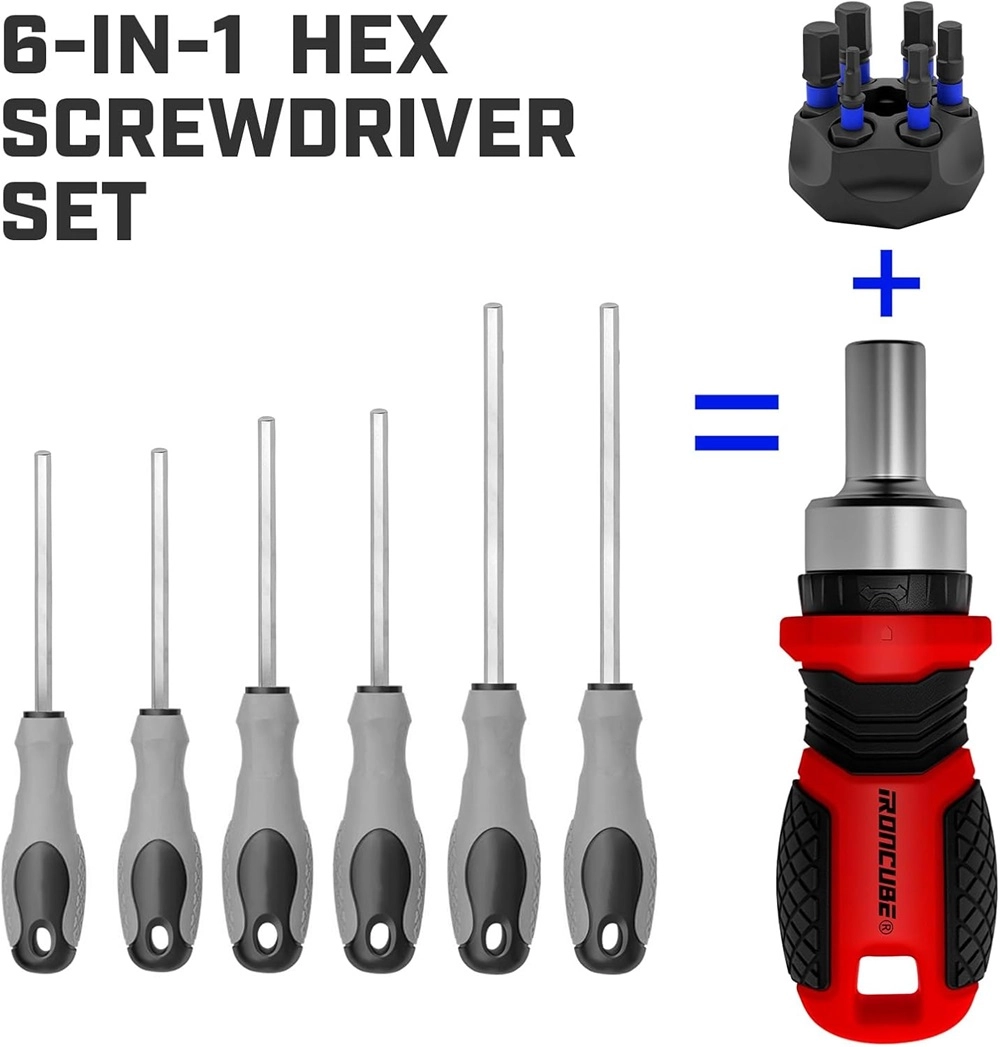
Hex (Allen) Screwdriver — Furniture Assembly and Bicycle Repair
Hex socket screws use a six-sided hexagonal recess. The matching driver is commonly called an Allen key or Allen wrench, named after the Allen Manufacturing Company that popularized the design in the early 1900s. Hex fasteners are everywhere: flat-pack furniture, bicycles, motorcycles, machine tools, and set screws inside mechanical assemblies.
Standard hex sizes range from 0.7 mm to 10 mm in metric, and 1/16 inch to 3/8 inch in SAE. IKEA and similar furniture brands include disposable Allen keys with their products, but a quality set of hex screwdrivers with T-handles offers far more torque and comfort for repeated use. If you frequently convert between metric and imperial fastener sizes, our wrench size conversion chart and printable metric-to-SAE chart are useful references. For a broader look at hand tool types, the Wikipedia entry on wrenches provides additional historical context.
Robertson (Square) Screwdriver — Popular in Canadian Construction
P.L. Robertson, a Canadian inventor, patented the square-drive screw in 1908. His design solved the main weakness of slotted screws: the driver stayed locked in the recess instead of slipping out. According to the Robertson screw Wikipedia article, Ford Motor Company used over 700 Robertson screws in each Model T because they sped up assembly significantly.
Robertson screws remain dominant in Canadian construction but are less common in the United States, where Phillips took over after Robertson refused to license his design broadly. The square recess is self-centering, resists cam-out, and works exceptionally well with power drivers. Sizes are color-coded: orange (#00), yellow (#0), green (#1), red (#2), and black (#3). If you do any decking, framing, or cabinetry in Canada, Robertson is the default.
Tri-Wing and Spanner — Security Screwdriver Types
Security screw heads are designed to make unauthorized disassembly difficult. Tri-Wing screws have three slotted wings arranged around a central hub. Spanner screws (also called snake-eye) have two small round holes. Other security types include one-way screws that can only be tightened, not removed, and pentalobe screws used by Apple on iPhones and MacBooks.
These security types are part of the broader landscape of screwdriver types and uses. You will encounter them on public bathroom partitions, elevator panels, fire hydrants, and consumer electronics from manufacturers who want to control repairs. A good security bit set covers tri-wing, spanner, pentalobe, and Torx Security tips. It is a relatively inexpensive addition to your toolbox and saves an enormous amount of frustration when you inevitably run into one of these fasteners.
Screwdriver Type Comparison Table
The table below summarizes every major screwdriver head type at a glance. Use it as a quick-reference screwdriver identification guide when you encounter an unfamiliar fastener.
| Type | Head Shape | Common Uses | Sizes | Cam-Out Risk |
| Flathead | Single slot | Cover plates, vintage hardware, prying | 2 mm–8 mm | High |
| Phillips | Cross (+) | Construction, drywall, furniture, general | PH0–PH3 | Moderate |
| Pozidriv | Cross + ticks | European cabinets, electrical panels | PZ0–PZ3 | Low |
| Torx | Six-point star | Automotive, electronics, appliances | T5–T40+ | Very low |
| Hex (Allen) | Hexagon | Furniture, bicycles, machinery | 0.7–10 mm | Low |
| Robertson | Square | Decking, framing, Canadian construction | #00–#3 | Very low |
| Tri-Wing | Three wings | Game consoles, aviation, security | TW1–TW4 | Low |
| Spanner | Two holes | Elevators, public fixtures, fire hydrants | Varies | Low |
As the table shows, newer designs like Torx and Robertson virtually eliminate cam-out. Older designs like flathead and Phillips trade some grip for simplicity and widespread availability. A well-rounded set should cover at least Phillips, Torx, hex, and flathead to handle the majority of everyday fasteners.
How to Choose the Right Screwdriver for Your Task
Knowing the types is only half the equation. You also need to match the specific size, handle style, and safety features to the job at hand.
Matching Bit Size to Screw Head — Avoid Cam-Out
The most common mistake in screwdriving is using a bit that is close but not exact. A PH1 driver in a PH2 screw will wobble and strip the recess. A T20 bit in a T25 screw will feel loose and slip on the first hard turn. Always check the size marking on both the screw and the bit before you start. If the screw has no marking, test-fit the bit first. It should drop in snugly with zero play.
This is especially important with Phillips vs flathead screwdriver situations, where people often grab whichever is closest. A flathead does not belong in a Phillips screw, period. The cross arms will direct the flat blade off-center, stripping the recess almost immediately. Five seconds of choosing the correct bit saves five minutes of dealing with a damaged fastener.
Insulated vs Standard — When Safety Requires Insulation
Electricians and anyone working near live circuits need insulated screwdrivers rated to IEC 60900 standards. This means protection up to 1,000 volts AC and 1,500 volts DC. VDE-certified screwdrivers meet this standard and are individually tested at 10,000 volts before they leave the factory.
Insulated handles feature dual-layer construction: a rigid inner core for strength and a soft outer layer for grip, with insulating material surrounding the shaft from handle to within a few millimeters of the tip. The exposed tip section is kept to a minimum. If you work in electrical, HVAC, or industrial maintenance, insulated screwdrivers are not optional. They are a safety requirement. For general workshop tasks away from electrical hazards, standard screwdrivers are perfectly adequate.
Magnetic vs Non-Magnetic Tips — Pros and Cons
Magnetic tips hold screws in place for one-handed operation. This is invaluable when you are working overhead, in tight enclosures, or on ladders where you cannot spare a hand to hold the fastener. Quality magnetic screwdriver sets use permanent rare-earth magnets embedded in the shaft for lasting retention.
The downside is limited. Modern electronics are not affected by the weak magnetic fields in screwdriver tips. The only caution is around older magnetic storage media like floppy disks, which are nearly extinct anyway. In machine shops, magnetic tips can attract metal shavings that contaminate the screw recess. For those environments, non-magnetic tips are cleaner. For everything else, magnetic wins. Our magnetic screwdriver set tips guide covers the practical trade-offs in detail.
Building Your Screwdriver Collection — Essential Set Recommendations
A high-quality screwdriver collection should cover both common and specialty applications.
Most professionals recommend starting with:
- Flathead drivers
- Phillips drivers
- Torx bits
- Hex bits
- Precision electronics drivers
Interchangeable bit systems are increasingly popular because they save storage space and improve versatility.
Best Screwdriver Set for DIYers
DIY homeowners need versatility above all else.
A compact ratcheting screwdriver system works extremely well for:
- Furniture assembly
- Appliance repair
- Wall mounting
- Basic automotive tasks
One excellent option is the 65pc Ratchet Screwdriver and Socket Bit Set.
Its interchangeable bits provide broad compatibility without overwhelming casual users.
Best Screwdriver Set for Mechanics
Mechanics require higher durability and stronger torque handling.
Look for sets featuring:
- Hardened steel bits
- Torx coverage
- Magnetic retention
- Ratcheting handles
- Oil-resistant grips
The 56 PCS Ratcheting Screwdriver Bits and Sockets Set is especially useful for automotive work because it combines multiple fastener systems in one kit.
Best Screwdriver Set for Electricians
Electricians need insulated tools designed for safety.
The ideal electrical kit should include:
- VDE insulation
- Precision tips
- Comfortable grips
- Durable shafts
- Clearly marked sizes
Many professionals also carry compact precision drivers for control panels and terminal work.
Why Ratcheting Screwdrivers Save Time
Ratcheting systems dramatically improve efficiency.
Instead of repositioning the tool after every turn, the mechanism allows continuous rotation.
Benefits Include
- Faster fastening
- Reduced wrist fatigue
- Better productivity
- Easier confined-space work
Professional technicians often use ratcheting drivers daily because they significantly improve workflow.
Building Your Screwdriver Collection — Essential Set Recommendations
Now that you understand every major screwdriver type and its uses, the question becomes: which sets should you actually buy? The answer depends on your trade or hobby, but a few principles apply universally.
First, cover the basics. Every toolbox needs at least three Phillips sizes (PH0, PH1, PH2), two or three flathead widths, and a range of Torx from T10 to T30. That combination handles the vast majority of household, automotive, and light-commercial fasteners. Second, add a ratcheting screwdriver with interchangeable bits. Ratcheting drivers let you drive and remove screws without lifting the tool, which saves enormous amounts of time on repetitive tasks.
The IRONCUBE 65-Piece Ratchet Screwdriver and Socket Bit Set is an excellent all-in-one option. It packs Phillips, flathead, Torx, hex, and socket bits into a single organized case with a smooth ratcheting handle. For a more compact alternative, the IRONCUBE 56-Piece Ratcheting Set covers the same essential tip types in a lighter package, ideal for service calls and mobile work.
Third, consider specialty sets for your specific needs. Electricians should add a VDE-certified insulated set. Electronics technicians need a precision set with bits down to T3 and PH000. Automotive mechanics should add a dedicated Torx set and possibly a set of hex ball-end drivers for angled access. Browse the full IRONCUBE screwdriver collection to compare options, or see hands-on demos on the IRONCUBE YouTube channel.
If you also work with bolts and nuts, pairing your screwdriver sets with a quality wrench collection gives you a complete hand-tool foundation. Our best ratcheting wrench set in 2026 guide covers the wrench side of that equation. For the full screwdriver buying picture, including magnetic tips and trusted brand comparisons, these companion articles round out the research: best screwdriver set overall and our earlier 2025 trusted screwdriver sets review.
For bulk orders, custom configurations, or trade-specific recommendations, the IRONCUBE contact page connects you directly with the team. You can also browse the full product range on the IRONCUBE Amazon storefront.
Final Summary
Understanding screwdriver types and uses is one of the smartest investments any homeowner, mechanic, or electrician can make. The correct screwdriver improves torque, protects screws, increases safety, and speeds up every project.
From flathead and Phillips drivers to Torx, Robertson, and security bits, each design exists for a reason. Choosing the proper tip for the job reduces cam-out, improves efficiency, and extends the life of both your tools and fasteners.
Whether you are assembling furniture, repairing electronics, servicing vehicles, or wiring electrical systems, a quality screwdriver set remains one of the most essential parts of any toolbox.
For professional-grade solutions, explore the latest collections at IronCube Works.
FAQs
What are the most common screwdriver types and uses?
The most common screwdriver types and uses include Phillips drivers for household repairs, Torx drivers for automotive work, flathead drivers for basic fixtures, and hex drivers for furniture assembly.
How do I identify different screwdriver head types?
A good screwdriver identification guide starts by examining the screw recess shape. Cross-shaped screws usually require Phillips or Pozidriv drivers, while star-shaped recesses use Torx bits and square recesses use Robertson drivers.
Why are Torx screwdrivers popular in automotive repair?
Modern mechanics prefer Torx drivers because Torx screwdriver uses involve high-torque applications with minimal slipping. They provide stronger grip and reduce fastener wear during repeated maintenance.
What is the difference between Phillips and Pozidriv screwdrivers?
Although they look similar, the Phillips vs flathead screwdriver comparison differs greatly from Pozidriv systems. Pozidriv drivers include additional grooves that improve torque transfer and reduce cam-out.
Are magnetic screwdrivers better for DIY projects?
Yes. Magnetic drivers simplify many screwdriver types and uses because they hold screws securely during installation. They are especially useful when working overhead or inside tight spaces.
Which screwdriver set should beginners buy first?
Beginners should start with a versatile multi-bit kit that includes Phillips, flathead, Torx, and hex bits. Ratcheting systems provide excellent flexibility for most home repairs.