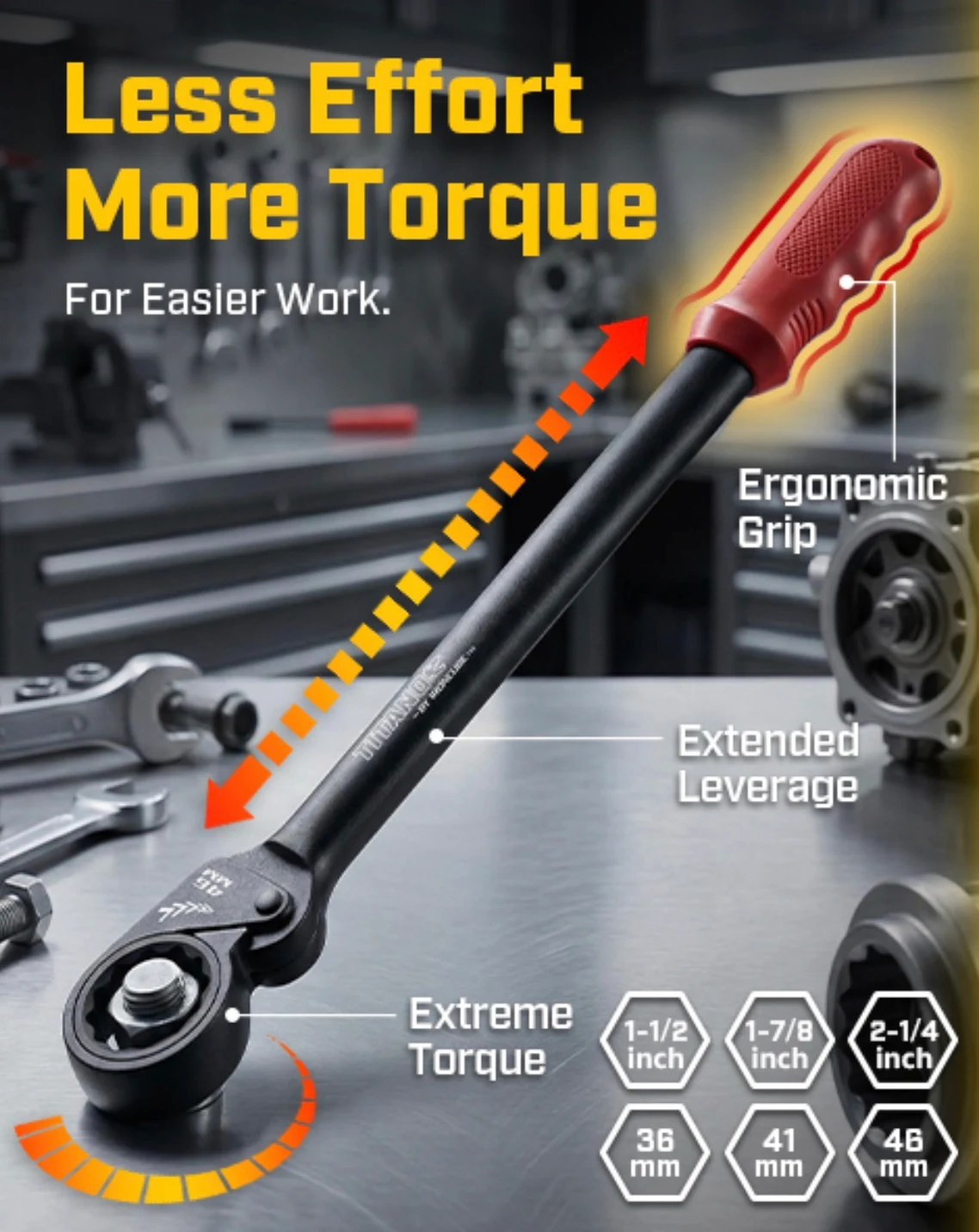
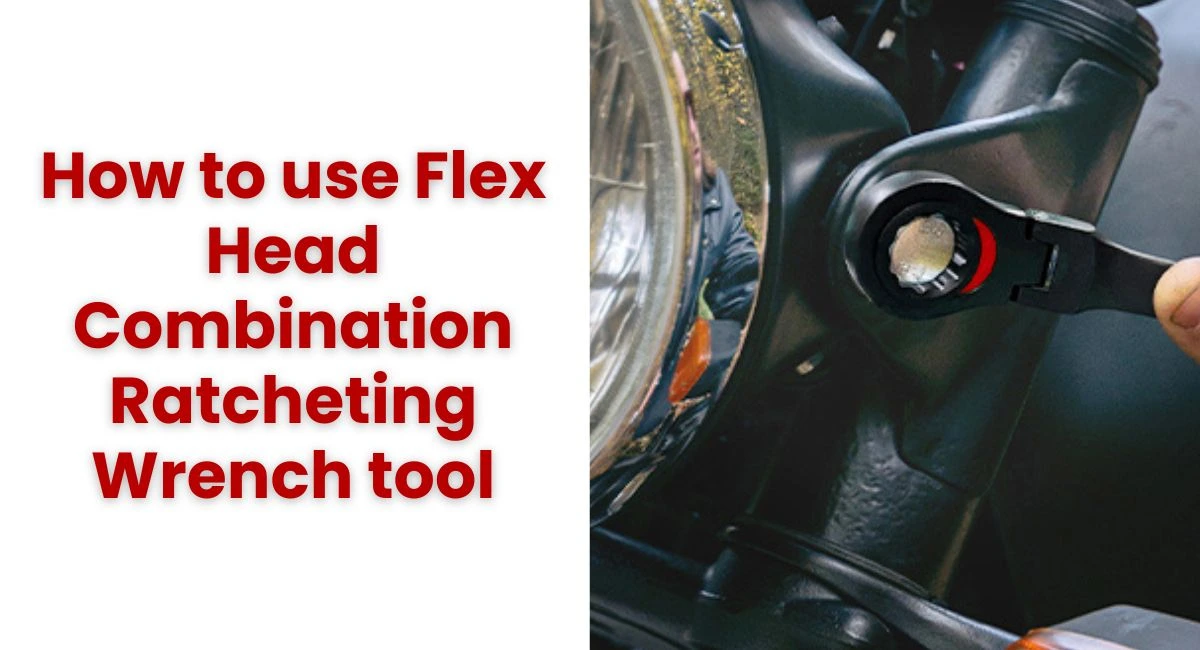
The Flex Head Combination Ratcheting Wrench is the specialized solution designed specifically for those “impossible” angles. Unlike a static wrench, this tool combines the grip of an open-end wrench with the speed of a ratcheting box end, all connected by a pivoting joint.
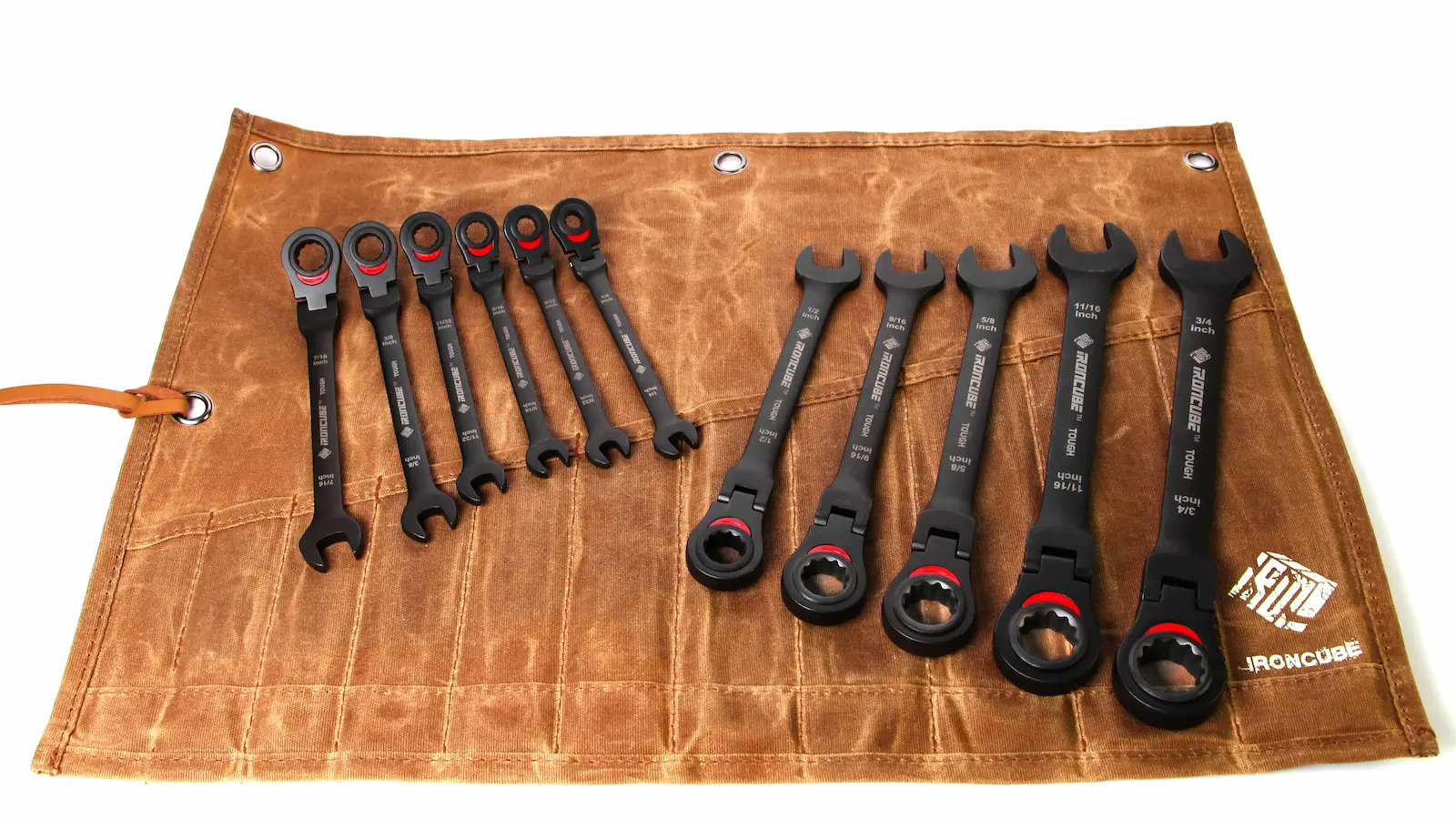
Mechanical engineering has evolved significantly since the early days of the standard wrench, leading to ergonomic breakthroughs that save both time and knuckles. At Ironcube Works, we focus on providing high-performance tools that bridge the gap between amateur DIY projects and professional-grade industrial maintenance. Whether you are browsing our complete wrench category or looking for a specific 8-piece ratcheting flex head combination set, understanding the mechanics and proper technique of this tool is essential for any toolbox.
According to Straits Research, the global hand tools market was valued at USD 24.67 billion in 2024, with wrenches dominating as the leading product category. Much of that growth is driven by professionals and DIY enthusiasts demanding tools that save time and reduce fatigue. A flex head combination ratcheting wrench does exactly that, and this guide will show you how to get the most from one.
What Makes the Flex Head Design Superior?
The core appeal of the Flex Head Combination Ratcheting Wrench lies in its 180-degree pivoting head. This feature allows the user to tilt the ratcheting end to bypass obstructions that would normally require the removal of other components. In modern automotive design, engine bays are increasingly cramped. According to industry data, engine compartment density has increased by nearly 30% over the last two decades, making flexible tools a necessity rather than a luxury.
When you use a flex head ratcheting set for working in tight spaces, you gain mechanical leverage at angles that a straight wrench simply cannot achieve. This pivot point acts as a force multiplier for your ergonomics, allowing your hand to remain in a comfortable position while the wrench head engages the fastener at a steep incline. You can learn more about the specific benefits of a flexible head ratchet to see why professionals prefer it over standard flat wrenches.
The Anatomy of Your Wrench
Before you dive into a project, you must understand how the tool functions. A Flex Head Combination Ratcheting Wrench features two distinct ends. The open end is used for initial loosening or final tightening of bolts where you have plenty of room. The ratcheting flex head is the star of the show. It contains a geared mechanism—often with 72 or 90 teeth—that allows for a very small swing arc.
A 72-tooth gear requires only a 5-degree swing to move the bolt. This is critical when you only have an inch or two of clearance. If you are curious about the physics behind this, you can read our guide on how does a ratchet wrench work to understand the internal pawl and gear system. For heavy-duty applications, you might even require an extra-large heavy-duty ratcheting wrench to handle the torque requirements of industrial bolts.
Step-by-Step: How to Use a Flex Head Combination Ratcheting Wrench
Step 1: Select the Correct Size
Match the wrench to the bolt or nut. The fit should be snug with zero wobble. If you feel any play between the wrench and the fastener, stop and try the next size down. A loose fit will strip the bolt corners and make the job much harder. IRONCUBE’s 8-piece metric flex head set covers the 8mm to 19mm range that handles the vast majority of automotive and household tasks.
Step 2: Set the Ratchet Direction
Most flex head combination ratcheting wrench models feature a small lever or switch on the back of the ratcheting head. Flip it one way to tighten, the other way to loosen. Some older or budget-friendly designs reverse by flipping the wrench over entirely. Whichever system your wrench uses, always confirm the direction before applying force. It only takes a split second to check, and it prevents the frustrating experience of turning a bolt the wrong way under load.
Step 3: Adjust the Flex Head Angle
Here is where the flex head combination ratcheting wrench truly shines. Tilt the head to the angle that gives your hand the clearest swing path. Working on a bolt recessed behind a pipe? Angle the head 30 degrees to the side. Reaching down into an engine bay from above? Tilt it forward 45 degrees so your knuckles clear the surrounding components. The benefits of a flexible head ratchet are most apparent when you experiment with different angles on each fastener rather than forcing one position to work everywhere.
Step 4: Engage the Fastener and Ratchet
Slide the box end of the wrench fully onto the bolt head or nut. Push the wrench so it seats completely. Then begin your ratcheting motion: pull in the tightening or loosening direction, and the pawl mechanism grips the gear teeth to apply torque. On the return stroke, the mechanism disengages and the handle swings back freely without disturbing the fastener position. This back-and-forth motion lets you work continuously, even when you only have 10 or 15 degrees of available swing. That narrow-arc capability is precisely why professionals rely on flex head sets for working in tight spaces.
Step 5: Switch to the Open End When Needed
The combination design means you always have an open-end jaw on the opposite side of the tool. Once you break a fastener free with the ratcheting box end, you can flip the wrench around and use the open end for rapid spinning on bolts that have cleared their threads. This two-in-one approach eliminates the need to carry a separate wrench and speeds up repetitive assembly or disassembly tasks considerably.
Comparing Flex Head Wrenches to Standard Wrenches
When building a tool collection, choosing between fixed and flexible tools is a common dilemma. The Flex Head Combination Ratcheting Wrench offers distinct advantages in specific scenarios.
Choosing the Right Set for Your Needs
Not all flexible wrenches are created equal. When shopping for a Flex Head Combination Ratcheting Wrench set, there are several factors to consider, including tooth count, material, and handle design.
Tooth Count: The tooth count inside the ratchet head determines the swing arc required to turn a fastener. A higher tooth count, such as 72 teeth or more, requires a swing arc of only 5 degrees. This is crucial for working in extremely tight spaces. Iron Cube Works offers high-quality sets like the 8-piece ratcheting flex head combination set 8-19 mm, which features a fine-tooth mechanism for maximum efficiency in small areas.
Material and Finish: Chrome vanadium steel is the industry standard for durability. Look for a mirror-polished finish, which resists corrosion and makes the tool easy to wipe clean. For heavy-duty applications, consider specialized options like the large heavy-duty ratcheting wrench, which is designed to withstand higher torque loads.
Handle Comfort: Since you will be gripping this tool for extended periods, the handle shape matters. Some wrenches feature ergonomic grips, while others stick to the traditional I-beam profile. The choice often comes down to personal preference.
For those looking to purchase, you can find competitive options by checking the flex head wrench price page. Investing in a high-quality set ensures the tools will last a lifetime.
Maintaining Your Flex Head Combination Ratcheting Wrench
Proper maintenance extends the life of your tools. The Flex Head Combination Ratcheting Wrench has moving parts—the pivot joint and the ratchet gear—which require occasional attention.
Cleaning: After use, wipe the wrench down with a clean rag. Solvents or degreasers can be used to remove heavy grease, but ensure the tool is dried thoroughly afterward. Moisture trapped in the pivot point can lead to rust.
Lubrication: Occasionally, apply a small drop of light machine oil to the pivot joint and the ratchet mechanism. This keeps the action smooth and prevents wear. If the ratchet mechanism feels gritty, it may have collected debris. A simple flush with solvent followed by lubrication usually resolves this.
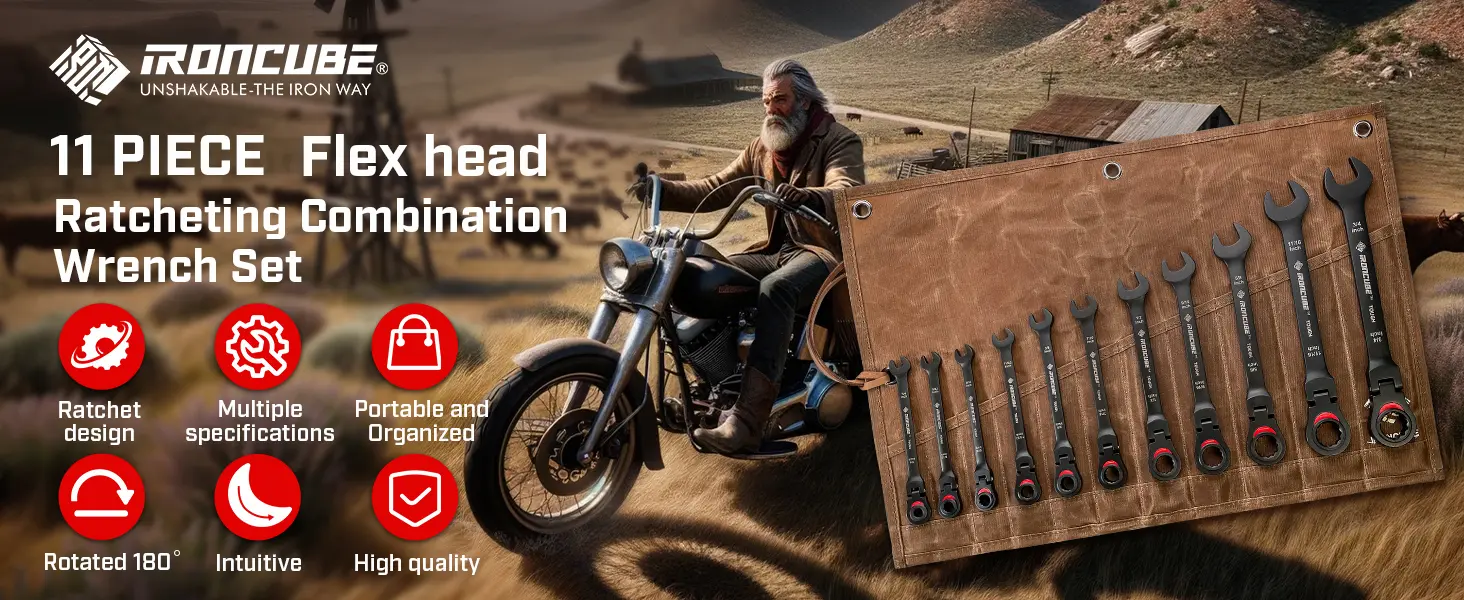
Storage: Store your wrenches in a tool chest or a roll pouch. The IronCube 8pcs metric super thin wrench set with rolling pouch is an excellent example of a set that comes with proper storage. Keeping the tools organized prevents them from banging against each other, which can damage the precision gears.
Why Iron Cube Works is the Professional Choice
Iron Cube Works has established itself as a reputable provider of high-quality hand tools. Their commitment to precision engineering is evident in every Flex Head Combination Ratcheting Wrench they produce. The company focuses on real-world functionality, ensuring that their tools address the specific pain points of mechanics and technicians.
For instance, the IronCube 8pcs new type SAE ratcheting wrench set offers a modern approach to standard sizing, providing a tighter fit on fasteners to reduce rounding. Furthermore, their tools are available through major retailers, including Amazon, making them accessible to a wide audience.
Professionals trust Iron Cube Works because the tools are built to withstand the rigors of daily use. If you have specific questions about which set is right for you, you can always contact Iron Cube Works for expert advice.
The Evolution of the Wrench
The history of the wrench dates back centuries. According to Wikipedia, the earliest wrenches were simple fixed tools. Over time, the need for versatility led to the invention of the adjustable wrench. However, adjustable wrenches often suffer from jaw slippage. The ratcheting combination wrench solved the efficiency problem, but the fixed head remained a limitation in complex assemblies. The introduction of the Flex Head Combination Ratcheting Wrench represents the latest evolution in this lineage. It combines the security of a fixed-size head with the adaptability of a flexible joint.
Today, manufacturers are pushing the boundaries even further with thinner profiles and higher tooth counts. To see these innovations in action, you can visit the IronCube Tools YouTube channel, where they demonstrate the capabilities of their latest designs.
Real-World Performance and Reviews
User feedback consistently highlights the utility of the flexible head design. In a recent analysis of mechanic tool preferences, flexible head wrenches ranked among the top five “must-have” innovations in the last decade. The ability to work faster without repositioning the tool saves valuable time on flat-rate jobs.
If you are looking for the best options on the market, check out the review on the best large ratchet wrench to see how these tools stack up against the competition. Furthermore, the IronCube 8pcs SAE ratcheting wrench set with rolling pouch is a favorite among mobile mechanics who need portability without sacrificing performance.
Summary
The flex head combination ratcheting wrench is one of those tools that changes the way you work. Its combination of angled reach, continuous ratcheting, and open-end convenience makes it indispensable for automotive mechanics, plumbers, HVAC technicians, and home DIYers alike. Learning to adjust the head angle for each fastener, choosing the correct size, and maintaining the pivot and ratchet mechanism will let you get the full value out of this versatile tool for years.
If you are ready to add one to your toolkit, explore the full range of IRONCUBE professional wrench sets. Built with chrome vanadium steel and 72-tooth ratcheting mechanisms, these wrenches deliver the performance and durability that working professionals demand. For more hands-on demonstrations, visit the IRONCUBE YouTube channel. And if you have questions about sizing, bulk orders, or custom sets, the IRONCUBE contact page is the fastest way to reach the team.
The history of the wrench stretches back centuries, but modern innovations like the flex head ratcheting design have transformed what a single hand tool can accomplish. Whether you are a seasoned mechanic or a weekend warrior tackling your first project, this guide has given you everything you need to use a flex head combination ratcheting wrench with confidence.
FAQs
Q. What is the main advantage of a Flex Head Combination Ratcheting Wrench? The primary advantage of a Flex Head Combination Ratcheting Wrench is its ability to work around obstructions. The pivoting head allows the user to turn fasteners at various angles, which is essential for working in tight or confined spaces where a straight handle would be blocked.
Q. Can I use a Flex Head Combination Ratcheting Wrench for high-torque applications?
A. You should exercise caution with high-torque applications. While a Flex Head Combination Ratcheting Wrench is durable, the pivot point introduces a slight flex under extreme load. It is best to break loose very tight bolts with a fixed wrench and then use the ratcheting wrench for speed.
3. How do I maintain the ratchet mechanism in my Flex Head Combination Ratcheting Wrench?
A. To maintain the mechanism, occasionally apply a drop of light oil to the gears and the pivot point. This ensures smooth operation. If the Flex Head Combination Ratcheting Wrench becomes stiff, flushing it with a solvent can remove debris that may be clogging the gear teeth.
Q. Is a Flex Head Combination Ratcheting Wrench better than a standard ratchet and socket set?
A. Both tools have their place. A socket set is excellent for general work, but a Flex Head Combination Ratcheting Wrench is superior for very tight spaces where a socket’s height would prevent access. The wrench has a much lower profile, allowing it to fit in narrow gaps.
Q. Why does my Flex Head Combination Ratcheting Wrench have a thin profile?
A. Manufacturers design these wrenches with a thin profile to fit into even tighter gaps. This slim design is a key feature that distinguishes high-quality ratcheting wrenches from standard tools, allowing for greater access in complex machinery.