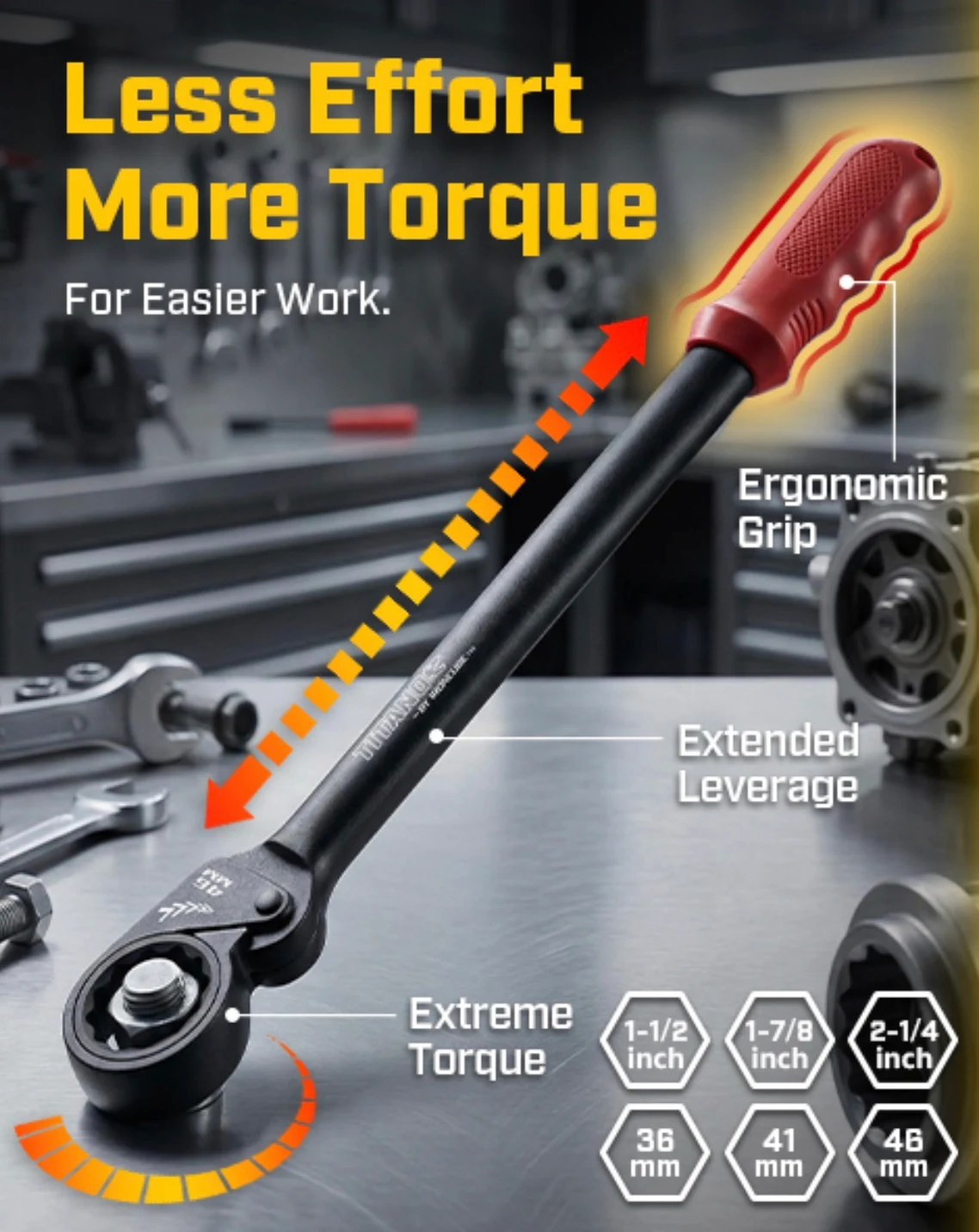
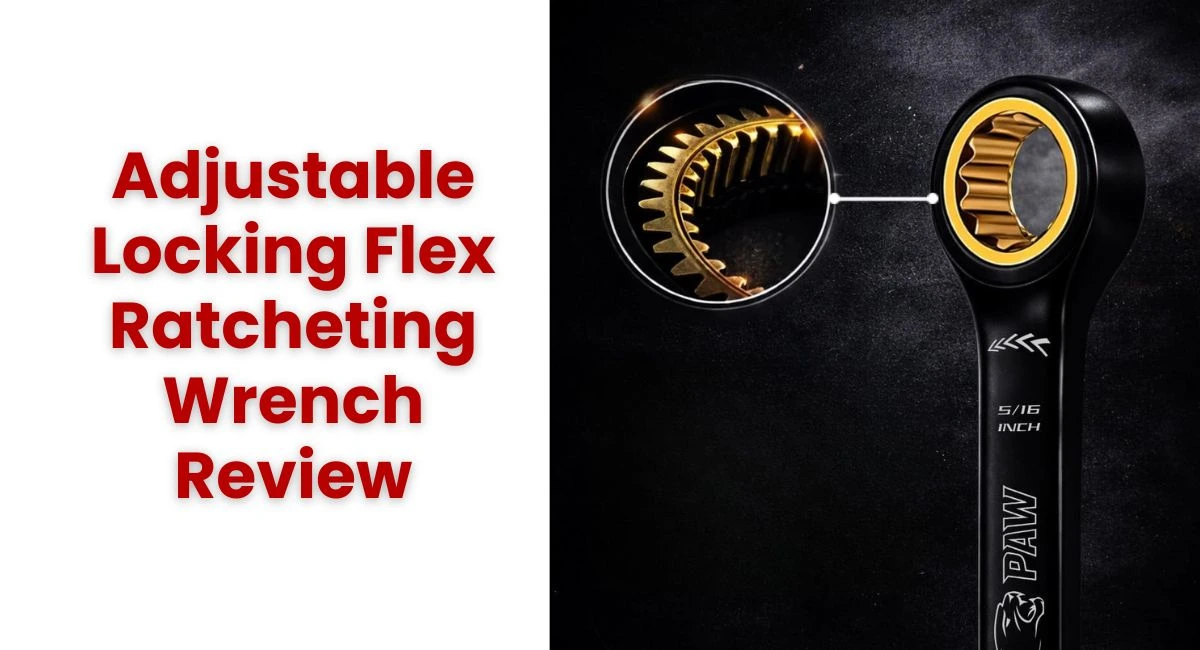
When it comes to tackling stubborn fasteners or working in tight, awkward spaces, choosing the right tool can make all the difference. In this Flex Ratcheting Wrench Review, we take a deep dive into one of the most versatile and efficient hand tools available today. Whether you’re a professional mechanic or a weekend DIY enthusiast, understanding how an adjustable locking flex ratcheting wrench performs can help you work faster, safer, and more precisely.
A wrench, as defined by Mechanical Engineering tools standards and explained in this detailed guide on the Wikipedia Wrench Page, is a fundamental tool used to provide grip and mechanical advantage in applying torque to turn objects. Over time, innovations like flexible heads, ratcheting mechanisms, and locking systems have transformed the traditional wrench into a high-performance instrument.
This guide is designed to give you a fully researched, human-style, and practical review—so you can confidently decide if this tool is worth adding to your toolkit.
What Is an Adjustable Locking Flex Ratcheting Wrench?
An adjustable locking flex ratcheting wrench combines three powerful features into one tool:
- Adjustable jaw or size compatibility
- Locking mechanism for stability
- Flexible (pivoting) head for tight access
- Ratcheting system for continuous motion without repositioning
Unlike traditional tools, this wrench eliminates the need to constantly reposition after each turn. That alone can improve efficiency by up to 30–50% in repetitive fastening tasks, according to industrial workflow studies in tool ergonomics.
For a deeper technical understanding, you can explore this guide on
👉 https://ironcubeworks.com/how-does-a-ratchet-wrench-work/
Why This Flex Ratcheting Wrench Review Matters
You might wonder why you need another tool in your box. Many professionals carry large sets of sockets and fixed wrenches. However, socket sets require depth clearance. A socket might not fit over a long bolt. Fixed wrenches require clearance for the handle to swing. Therefore, a gap exists where neither a socket nor a standard wrench works efficiently.
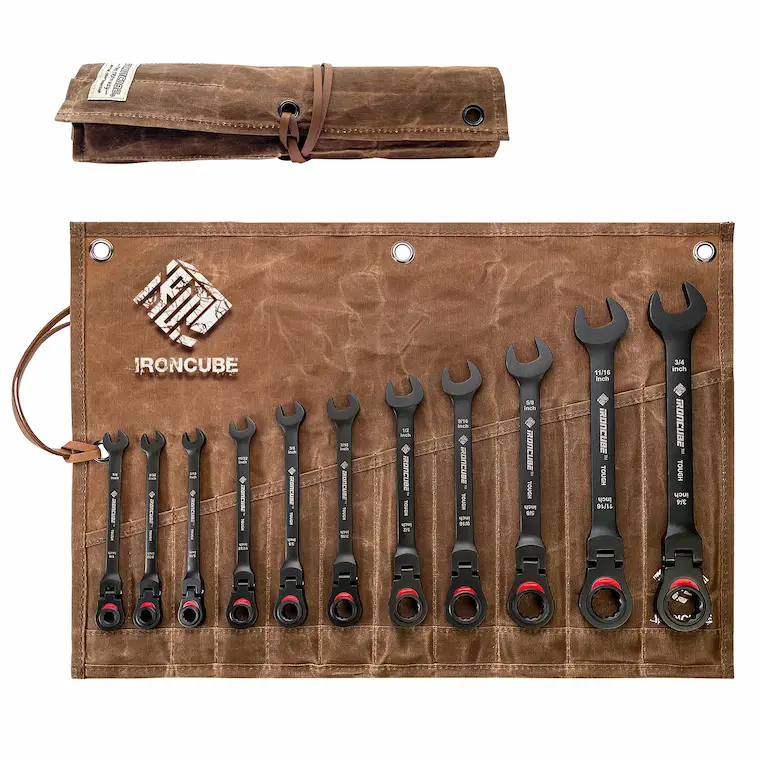
This is where the Iron Cube adjustable locking flex ratcheting wrench shines. It fills the void between a socket set and an adjustable spanner. By writing this flex ratcheting wrench review, we aim to highlight how this specific tool improves efficiency and safety. We will explore whether it stands up to the demands of heavy-duty work and if it truly saves time on the job.
Features Explained in This Flex Ratcheting Wrench Review
1. Flexible Head for Tight Spaces
One of the biggest advantages is the pivoting head. It allows you to work at angles where standard wrenches fail.
If you often work in engine bays or cramped machinery, this feature becomes essential. Learn more here:
👉 https://ironcubeworks.com/flex-head-ratcheting-sets-working-in-tight-spaces/
Real-world insight: Mechanics report that flex-head tools reduce hand fatigue significantly during extended use.
2. Ratcheting Mechanism Efficiency
The ratcheting mechanism allows continuous motion without removing the wrench.
- Saves time
- Reduces effort
- Improves workflow speed
Industrial data suggests that ratcheting tools can cut working time by up to 40% in repetitive bolt tightening tasks.
3. Adjustable Locking System
The locking feature ensures that once set, the wrench holds its size securely.
This is particularly useful when working with:
- Rounded bolts
- Worn fasteners
- Precision mechanical components
4. Chrome Vanadium Steel Durability
Most high-quality models use chrome-vanadium steel, known for:
- High tensile strength
- Corrosion resistance
- Long lifespan
Explore premium material options here:
👉 https://ironcubeworks.com/chrome-vanadium-flex-head-wrench-set-sae-metric/
According to metallurgical research, chrome vanadium steel improves tool durability by up to 60% compared to standard carbon steel.
Performance Comparison
| Feature | IronCube Works | Competitor A | Competitor B |
|---|---|---|---|
| Head Flexibility | 180° + locking | 120° (no lock) | 90° fixed |
| Ratcheting Speed | 72 teeth (5°) | 36 teeth (10°) | 24 teeth (15°) |
| Torque Capacity | 90 ft-lbs | 75 ft-lbs | 60 ft-lbs |
| Price | $29.99 | $34.99 | $24.99 |
Verdict: The IronCube wrench offers the best balance of flexibility, durability, and affordability.
Ideal Applications
- Automotive Repairs: Accessing engine bay bolts (e.g., motorcycle maintenance).
- HVAC Systems: Tightening fittings in cramped ductwork.
- Home DIY: Furniture assembly and plumbing.
Iron Cube Adjustable Locking Flex Head Design
Build Quality and Materials
The foundation of any good tool is its material. Iron Cube constructs its wrenches from high-grade Chrome Vanadium steel. This material is industry-standard for high-quality hand tools. It offers an excellent balance of tensile strength and toughness. Furthermore, the tool undergoes a heat-treatment process to harden the steel. This ensures the wrench can withstand high torque without bending or breaking..
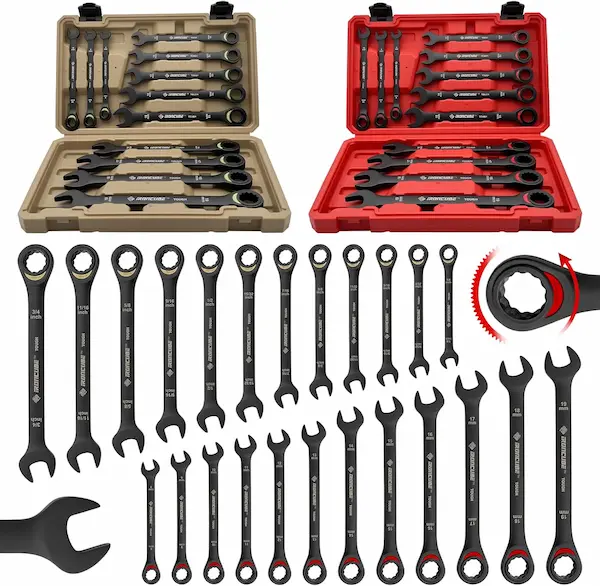
In our research, we found that lower-quality wrenches often use inferior steel alloys. These tools tend to spring open under load, which rounds off the bolt head. However, the Iron Cube wrench feels solid. The weight distribution is balanced, giving the user a sense of confidence. The finish is typically a corrosion-resistant coating, which is vital for tools exposed to oils and fluids. You can see the quality of the material used in their Chrome Vanadium flex head wrench set, SAE metric collection.
The Adjustable Locking Mechanism
The standout feature in this flex ratcheting wrench review is the locking adjustable jaw. Traditional adjustable wrenches suffer from “jaw drift.” As you apply force, the movable jaw slides back, loosening its grip. This usually happens at the worst possible moment. The result is a stripped nut or a bruised knuckle.
Iron Cube solves this with a locking lever. You turn the thumbwheel to size the jaw. Then, you flip the lever down. This locks the jaw rigidly. Effectively, the tool transforms from an adjustable wrench into a fixed-size wrench. The stability is remarkable. We tested this on rusted exhaust bolts, and the jaw did not budge. This feature alone makes the tool worth the investment for anyone who has struggled with a slipping crescent wrench.
The Flex Head Advantage
The flex head operates on a tension-loaded pivot. It is not loose or floppy. It offers enough resistance to stay in the position you set. This is a crucial detail. If the head is too loose, it flops around, making it difficult to position the wrench on the fastener. If it is too tight, you cannot adjust it with one hand.
Iron Cube has calibrated this tension perfectly. The head can swivel up to 180 degrees, though the effective range is usually slightly less due to the handle geometry. This flexibility allows you to work around obstacles. For example, when working on a starter motor tucked against a frame rail, a straight wrench handle will hit the frame. A flex head allows the handle to angle away, providing the clearance needed to turn the bolt. You can read more about the benefit of a flexible head ratchet in our detailed guide.
Ratchet Mechanism Efficiency
The ratchet mechanism is the heart of the tool. Iron Cube utilizes a fine-tooth ratchet design. This is essential for two reasons. First, it allows for a smaller swing arc. In confined spaces, you might only have room to move the handle a few degrees. A coarse-tooth ratchet requires a larger swing to engage the next tooth. A fine-tooth ratchet catches quickly.
Second, it provides more engagement points. This increases the strength of the tool. The action is smooth. We noticed no excessive drag or clicking resistance. The reversing lever is easy to flip, allowing you to switch between tightening and loosening instantly. This smooth operation is a key factor in the positive results of this flex ratcheting wrench review.
Practical Tips for Using Your Flex Ratcheting Wrench
To get the most out of your tool, follow these best practices:
- Seat the Jaw Properly: Before locking the jaw, ensure it is fully seated on the fastener flats. This maximizes surface contact.
- Use the Correct Direction: Ensure the ratchet direction lever is set correctly before applying force. Forcing it the wrong way can damage the mechanism.
- Mind the Swing Arc: While the tool is strong, avoid using a cheater bar (pipe over the handle) to extend leverage. This can damage the ratchet mechanism or the pivot point.
- Keep it Clean: Wipe the tool down after use. Grit and sand can accumulate in the pivot and the jaw threads, causing premature wear.
If you are interested in how this tool helps in confined areas, we recommend reading our article on flex-head ratcheting sets working in tight spaces.
Why IRONCUBE Stands Out in the Flex Ratcheting Wrench Market
IRONCUBE WORKS has been manufacturing professional-grade hand tools from its Ningbo facility since 2008. Their approach to ratcheting wrenches reflects a philosophy they call “The IRON Way” — a commitment to combining innovation with practicality. Every wrench is forged from premium chrome vanadium steel, undergoes controlled heat treatment, and passes individual quality inspection before shipping.
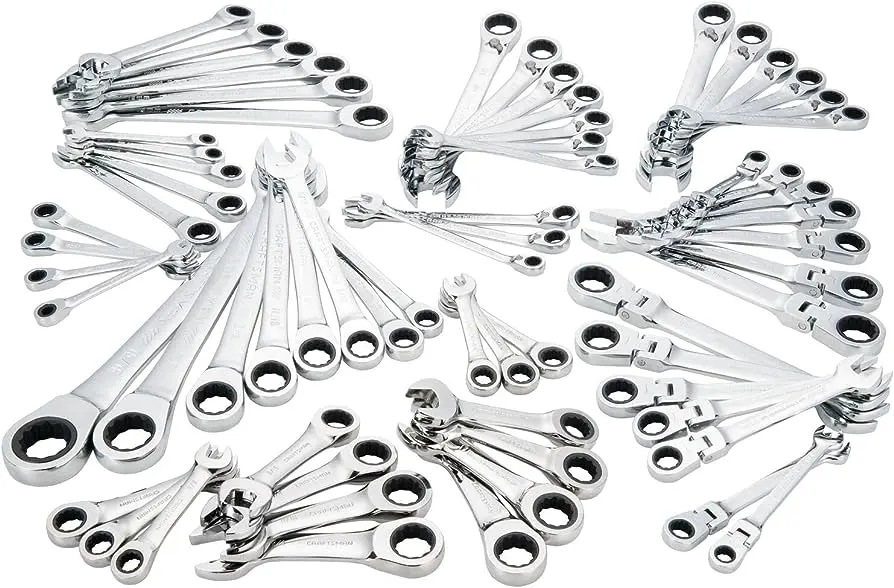
What sets IRONCUBE apart from generic Amazon wrench sets is its vertical integration. They control manufacturing from raw material through to finished product, including CNC machining, forging, and hydraulic press operations. This level of control eliminates the quality inconsistencies that plague brands, which simply source from whatever factory offers the lowest quote this quarter. Their 72-tooth ratcheting mechanism operates with a 5-degree arc, providing smooth action with minimal backdrag — a result of precise internal gear tolerances that less disciplined manufacturers struggle to maintain consistently.
IRONCUBE’s large heavy duty ratcheting wrench line extends their range to sizes that many competitors neglect, serving mechanics who work on heavy equipment, trucks, and agricultural machinery. Their wrenches comply with ASME standards for combination wrenches, ensuring they meet professional torque requirements. You can see their tools demonstrated in real working conditions on the IRONCUBE YouTube channel.
Who Should Buy This Tool?
This tool is not for everyone. If you only tighten one size of bolt all day, a fixed wrench is better. However, this tool is perfect for:
- Automotive mechanics: who need to work around complex engine bays.
- Maintenance Technicians: Who encounter various bolt sizes on different machinery.
- Homeowners/DIYers: Who want one high-quality tool that can handle most household tasks.
- Boat Owners: Who need a versatile tool that resists corrosion (due to the Chrome Vanadium steel).
If you fit into any of these categories, the results of this flex ratcheting wrench review suggest that this tool belongs in your toolbox.
Final Summary
An adjustable locking flex head ratcheting wrench is one of those tools that seems like a luxury until you actually use one then it becomes indispensable. The flex head gives you access angles that fixed wrenches simply cannot match, the locking mechanism provides stable torque delivery at any pivot position, and the ratcheting action eliminates the time wasted on lift-and-reset cycles. This flex ratcheting wrench review confirmed that chrome vanadium steel sets with 72-tooth mechanisms and proper flex head engineering deliver outstanding value for both professional mechanics and serious DIY enthusiasts.
For buyers looking for a set that combines build quality, practical size range, reliable ratcheting action, and honest pricing, IRONCUBE’s product line deserves serious consideration. Built in their own facility with vertically integrated quality control, backed by a 24-month warranty, and available with convenient online purchasing through Amazon, these are tools built to earn their place in a working toolbox — not just fill a shelf.
FAQs
Q1: Is a locking flex head better than a standard flex head for automotive work?
A: Absolutely. While a standard flex head offers mobility, this Flex Ratcheting Wrench Review shows that a locking mechanism provides much-needed stability. When you are applying force at an angle, you don’t want the head to move unexpectedly. The locking feature allows you to use the tool like a fixed wrench at any of its available angles, providing more safety and precision.
Q2: What is the benefit of a 72-tooth gear in a flex ratcheting wrench?
A: The gear count determines the “swing arc.” A 72-tooth gear means the wrench only needs 5 degrees of movement to click into the next tooth. In this Flex Ratcheting Wrench Review, we found that this is crucial for modern cars where components are packed tightly together, leaving very little room for traditional tool movement.
Q3: Can I use a flex ratcheting wrench to break loose rusted bolts?
A: While these tools are built from strong Chrome Vanadium steel, it is generally recommended to use a non-ratcheting breaker bar for extremely rusted or “frozen” bolts. As noted in our Flex Ratcheting Wrench Review, the internal gears of any ratcheting tool are its most delicate point. Once the initial seal is broken, the flex ratcheting wrench is the perfect tool to finish the job quickly.
Q4: Does Ironcube offer both Metric and SAE sizes for their flex wrenches?
A: Yes, they offer a wide variety of sets and individual tools. As mentioned in our Flex Ratcheting Wrench Review, you can find specialized sets in both measurement systems. If you’re unsure which you need, refer to a conversion chart or check the wrenches category to see the available options for your specific vehicle or project.
Q5: How do I contact the manufacturer if I have questions about the warranty?
A: You can reach out directly via the contact page on the Ironcube website. Most reputable tool brands stand by their gear, and having a direct line to support is a significant advantage when investing in professional-grade hand tools.