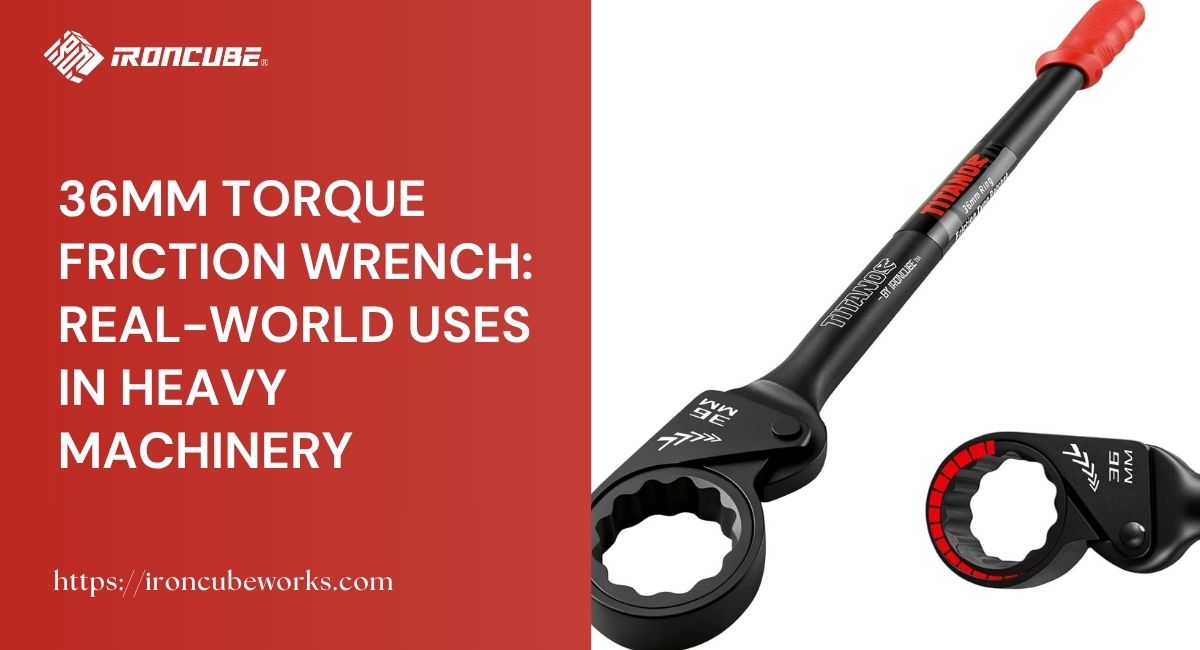
A 36 torque friction wrench looks simple at first. It is a long-handled wrench built for large fasteners. But in real field work, that simple tool can decide whether a mechanic finishes a job cleanly or wastes hours fighting a seized nut.
In heavy machinery, fasteners are not small details. They hold boom joints, rail hardware, structural frames, bucket assemblies, and large machine guards together. A loose bolt can create vibration. A rounded nut can stop production. An over-tightened bolt can stretch past its safe limit.
That is why the 36 torque friction wrench matters.
Before going deeper, one point needs to be corrected. A 36mm friction wrench usually refers to the wrench opening size, not the bolt diameter. In many metric applications, a 36mm wrench fits a 36mm hex head or nut. For example, M24 DIN hex cap screws commonly use a 36mm wrench size, as shown in Fastenal’s M24 product data.
A true M36 bolt is much larger and usually needs a much larger wrench. So when a technician says “36mm bolt,” always confirm whether they mean the head size or the thread diameter.
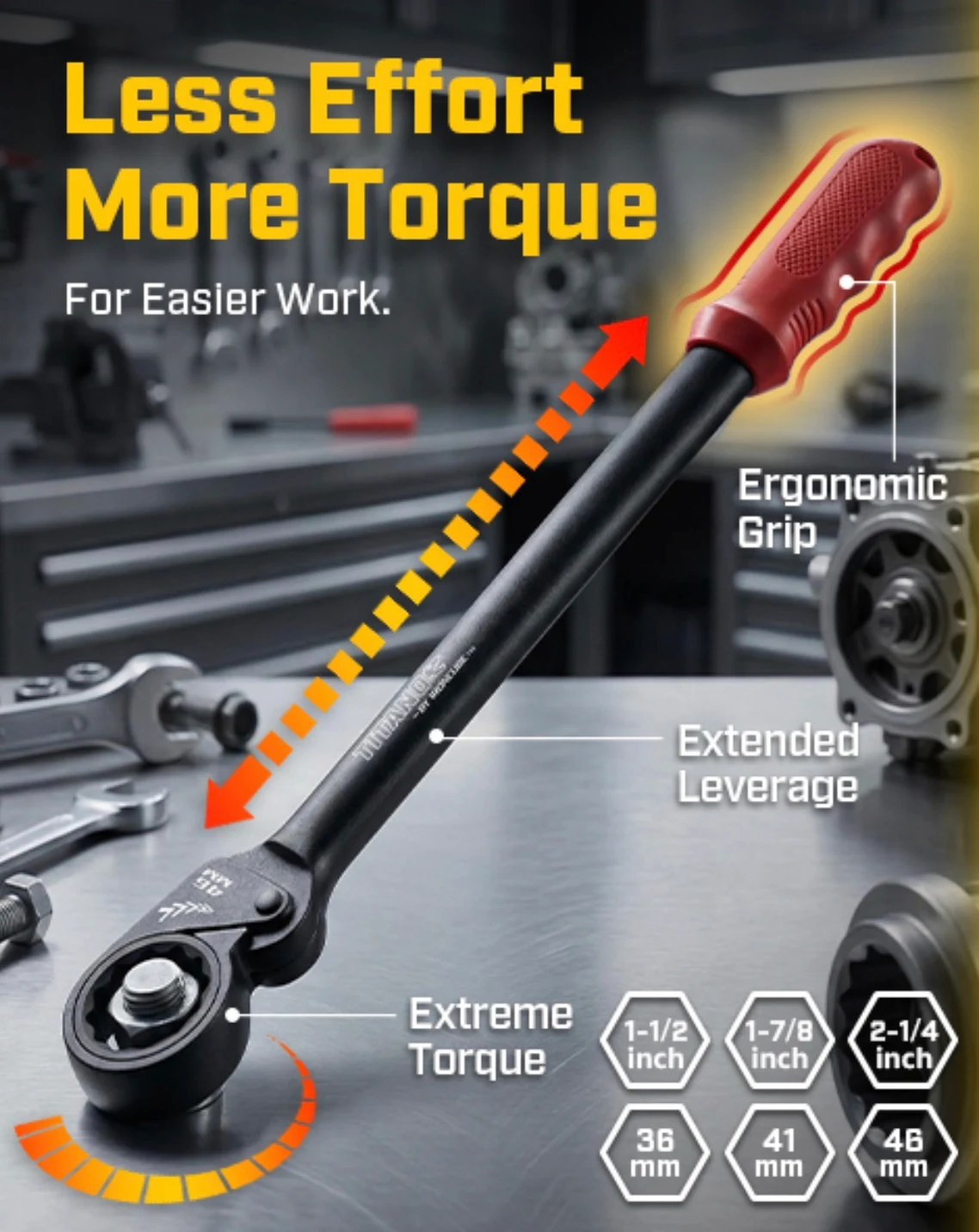
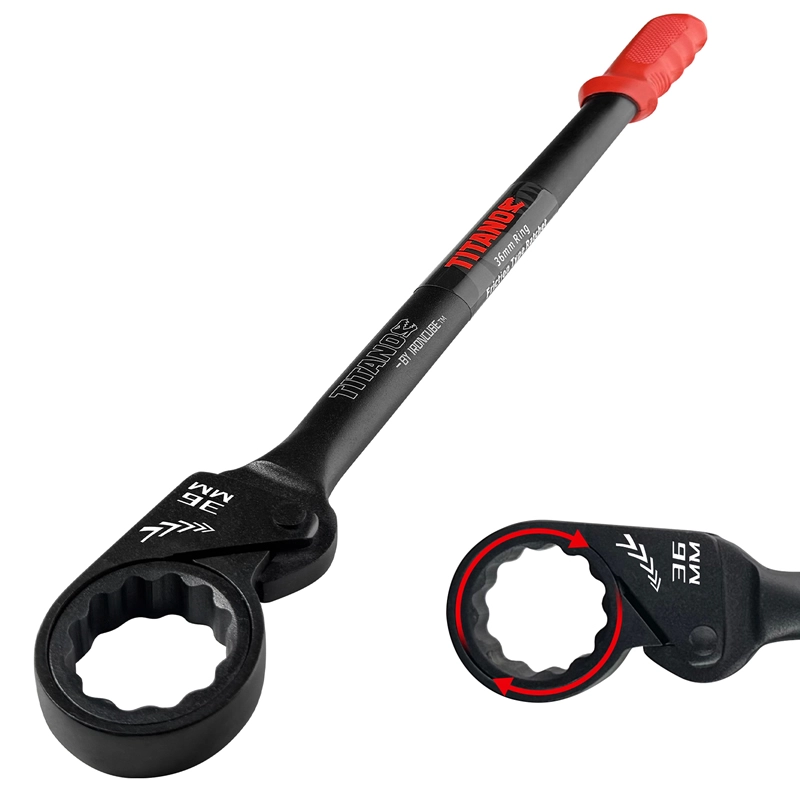
For a professional-grade option, IronCube’s 36mm high torque friction wrench is built for 36mm large nuts, metric industrial machinery, European equipment, import vehicles, and stubborn fasteners. The product page lists chrome vanadium steel construction, black oxide finish, 36mm size, 20.5-inch length, and 2.7 lb item weight.
Why 36mm Is a Common Heavy Machinery Size
A 36mm wrench size sits in a useful middle ground. It is larger than normal automotive service sizes but still common enough to appear across construction equipment, heavy trucks, agricultural machines, industrial frames, and imported machinery.
A wrench or spanner provides grip and mechanical advantage for applying torque to nuts and bolts. That basic definition matters because the wrench does not match the threaded shank. It matches the across-flats dimension of the bolt head or nut. Wikipedia’s wrench overview explains that wrenches apply torque to rotary fasteners such as nuts and bolts.
This is why a 36 torque friction wrench should be selected by the measured nut or bolt head, not by guesswork.
Fasteners in Construction, Mining, Wind, and Rail
Heavy machinery usually faces four forces at the same time: load, shock, vibration, and corrosion.
Construction equipment sees repetitive impact. Mining machines deal with dust, moisture, and high load cycles. Rail hardware faces vibration and outdoor exposure. Wind tower maintenance involves large bolted joints where preload control matters.
In all these jobs, technicians often need a tool that can reset quickly without removing the wrench from the fastener. That is where a 36mm ratcheting wrench or friction-style wrench becomes practical.
A normal open-end wrench may work in clean shop conditions. It struggles when the nut is recessed, dirty, painted, or partly corroded. A jumbo 36mm spanner gives more reach. A friction mechanism gives faster movement in tight swing space.
For broader heavy-duty wrench options, see IronCube’s wrenches category and the guide on jumbo ratchet wrenches for heavy-duty work.
Bolt Grades That Use 36mm Heads
The common field connection is this: a 36mm wrench often fits an M24 hex head or nut in many DIN/ISO-style fastener systems.
M24 bolts appear in machinery frames, brackets, bases, and structural equipment. These bolts may come in property classes such as 8.8, 10.9, and 12.9.
The grade is not decoration. It tells you the strength range.
ISO 898-1 style property classes define class 8.8 at around 800 MPa nominal tensile strength and 640 MPa nominal yield strength. Class 10.9 rises to about 1000 MPa tensile and 900 MPa yield. Class 12.9 reaches about 1200 MPa tensile and 1080 MPa yield.
That means a 36 torque friction wrench may touch bolts with very different safe torque limits. Same wrench size. Different bolt strength. Very different risk.
36mm Torque Friction Wrench Design Basics
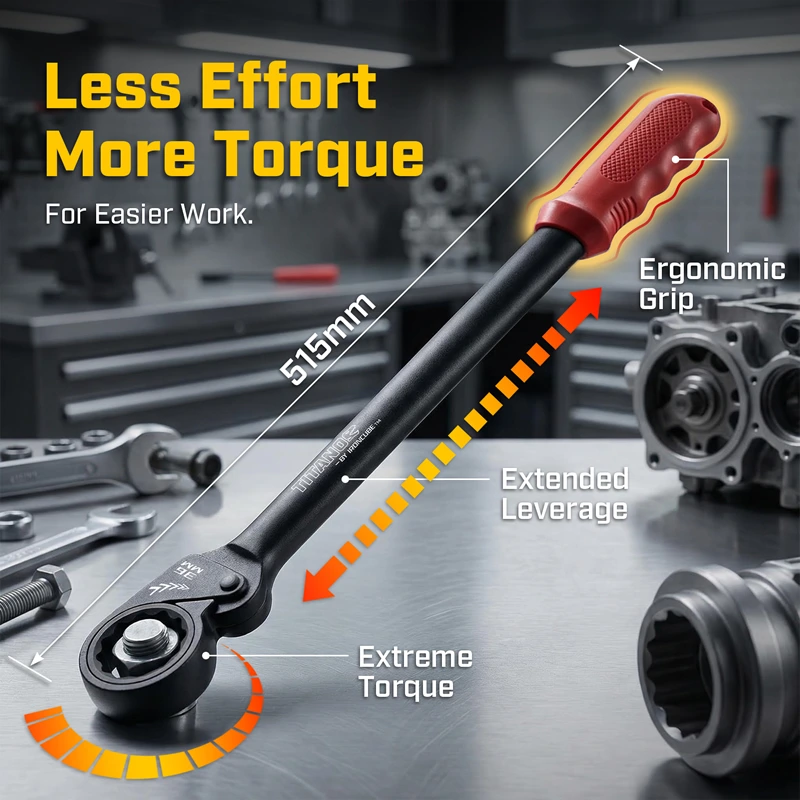
A friction wrench is different from a traditional geared ratchet.
A gear ratchet depends on internal teeth. Under high load, worn teeth can skip, crack, or strip. A friction wrench uses friction surfaces that grip in the working direction and release during the reset stroke.
IronCube describes its friction mechanism as a system that grips when force is applied and releases when the handle reverses, allowing repeat movement without lifting the wrench from the nut.
This is why a 36 torque friction wrench works well on stubborn fasteners where normal ratchets feel weak.
Ratchet Head and Handle Proportions
The head matters because it controls fit.
The handle matters because it controls leverage.
IronCube’s 36mm model uses a 12-point box end and an extra-long 20.5-inch handle. A 12-point head improves access because it can engage the nut at more angles. The long handle increases torque potential without using unsafe pipe extensions.
That last point is important. A cheater pipe may feel like a shortcut, but it can overload the tool, damage the fastener, or injure the operator.
A properly designed 36 torque friction wrench should give enough leverage without requiring uncontrolled extension.
Torque Rating vs Bolt Strength
This is where many users make a costly mistake.
A high-torque wrench does not automatically make every torque safe. The tool may survive the force, but the bolt may not.
Torque is only the turning force. The real goal is preload, which is the tension created inside the bolt. NASA defines preload as the tensile force in a bolt and the equivalent compressive force in the joint members when there is no applied load.
Nord-Lock explains the deeper problem: only a small part of applied torque becomes useful preload. Around 50% may be lost under the bolt head or nut, around 40% in thread friction, and only about 10% becomes useful bolt stretch.
So a 36mm torque wrench or friction wrench does not guarantee accurate preload by itself. Surface condition, lubrication, thread damage, washer type, and operator technique all matter.
For a deeper comparison, read IronCube’s guide on friction wrench vs torque wrench.
How Much Torque Does a 36mm Bolt Need?
Here is the strategic answer: do not ask, “How much torque does a 36mm bolt need?” Ask, “What bolt thread size, property class, thread pitch, lubrication condition, and OEM specification apply?”
A 36mm wrench size often points to M24 hardware. But torque must follow the machine manual first.
If the OEM gives a value, use it.
If no OEM data exists, torque charts can provide a reference. Fractory’s metric bolt torque chart states that its values apply to coarse-thread metric bolts with lightly oiled threads and tension at 85% of proof load. It also warns that manufacturer values should be used when available.
Grade 8.8, 10.9, 12.9 Torque Spec Chart
The table below uses M24 coarse-thread values because 36mm wrench size commonly matches M24 DIN hex hardware. These are reference values only.
| Common 36mm Wrench Application | Bolt Property Class | Reference Torque | Approx. ft-lb | Notes |
|---|---|---|---|---|
| M24 coarse thread | 8.8 | 865 N·m | 638 ft-lb | Lightly oiled chart value |
| M24 coarse thread | 10.9 | 1195 N·m | 881 ft-lb | Higher strength bolt |
| M24 coarse thread | 12.9 | 1395 N·m | 1029 ft-lb | High strength, lower forgiveness |
| M24 steel washer combined method example | — | 880 N·m | 649 ft-lb | Nord-Lock steel construction washer reference |
Fractory lists M24 torque values of 865 N·m for grade 8.8, 1195 N·m for grade 10.9, and 1395 N·m for grade 12.9. Nord-Lock’s steel construction washer guideline lists M24 combined-method pre-tightening torque at 880 N·m with 247 kN preload force.
A 36 torque friction wrench can help apply leverage, but it should not replace a calibrated torque tool when a precise torque value is required.
Metric to N·m and ft-lb Quick Reference
Many technicians work between metric and imperial values. That creates confusion.
| Torque in N·m | Approx. ft-lb | Typical Meaning |
|---|---|---|
| 500 N·m | 369 ft-lb | Heavy automotive or light machinery range |
| 865 N·m | 638 ft-lb | M24 grade 8.8 reference torque |
| 1195 N·m | 881 ft-lb | M24 grade 10.9 reference torque |
| 1395 N·m | 1029 ft-lb | M24 grade 12.9 reference torque |
| 2700 N·m | 1991 ft-lb | M36 structural washer reference example |
A 36mm ratcheting wrench is often used for loosening, positioning, and field service. For final tightening on critical joints, use a calibrated torque wrench, hydraulic torque tool, or OEM-approved method.
Applications by Industry
The value of a 36 torque friction wrench becomes clear when the job is not clean, straight, or easy.
Heavy machinery service rarely happens on a perfect bench. It happens beside equipment, under frames, near hydraulic lines, or inside tight service access points.
Excavator Boom Bolts
Excavators use large pins, brackets, covers, cylinder mounts, and structural fasteners. Dirt and vibration are normal. Access is often poor.
A 36mm wrench may be useful around boom-area brackets, guard bolts, attachment hardware, and imported metric assemblies. The friction action helps when there is not enough swing room for a full wrench rotation.
Here is the practical use case.
A mechanic breaks the fastener loose with controlled force. Then the friction reset allows repeated movement without removing the wrench. This saves time and reduces knuckle damage.
For larger wrench sizes, IronCube’s extra-large heavy-duty ratcheting wrenches guide is a useful internal reference.
Wind Turbine Tower Flanges
Wind turbine maintenance uses large bolted joints. Many tower and flange bolts require controlled preload because joint separation can become dangerous.
A 36 torque friction wrench may support service work around smaller auxiliary fasteners, guards, platforms, or access hardware. But flange-critical bolts usually need approved calibrated tools.
That distinction matters.
A friction wrench is useful for speed, grip, and leverage. A calibrated torque system is useful for documented final preload.
If your team works around structural steel or bridge-type fasteners, read IronCube’s best friction wrench set for structural steel and bridge construction.
Rail Track Fasteners
Rail work involves vibration, outdoor corrosion, and repetitive fastening. Many rail jobs require speed because track access time is limited.
A jumbo 36mm spanner can help on larger nuts where normal shop tools are too short. The friction mechanism also helps when technicians need quick reset strokes.
However, rail maintenance should follow approved railway torque procedures. A field wrench can support removal and installation. It should not override track authority specifications.
Heavy Trucks, Farm Equipment, and Imported Machinery
Many European and Asian machines use metric-standard fasteners. That is where a 36mm friction wrench becomes more valuable than an SAE-only tool kit.
It may appear in service work for heavy trucks, tractors, loaders, industrial skids, trailers, pumps, and machine bases.
For users who also need related hand tools, IronCube’s screwdrivers category and best magnetic screwdriver sets can support a broader workshop kit.
Common Mistakes With 36mm Torque Friction Wrenches
A strong wrench can solve problems. It can also create them.
The biggest risk is confidence without measurement.
Over-Torquing Without a Click Limiter
A friction wrench does not usually “click” at a preset torque. It is not the same as a calibrated click-type torque wrench.
That means the operator can keep applying force beyond the bolt’s safe range.
Nord-Lock notes that friction variation creates major scatter in tightening results. Even accurate tools may not prevent preload variation because friction, lubrication, body position, and handling all influence the final joint.
Use the 36 torque friction wrench for controlled leverage and efficient movement. Use a torque-controlled method when the assembly requires a specific torque.
Using Worn Heads on New Fasteners
A worn wrench head can round a new nut.
That sounds obvious, but it happens often. A technician feels resistance and pushes harder. The tool slips. The fastener corners deform. The job becomes slower and more expensive.
Inspect the 12-point head before using the wrench on high-value machinery. If the corners show distortion, remove the tool from critical service.
Confusing 36mm With 1-7/16 Inch
36mm is close to 1-7/16 inch, but it is not identical.
MISUMI’s wrench conversion chart lists 36mm as closest to 1-7/16 inch, with a decimal difference shown in the chart. It also advises using the exact size where possible for critical applications.
This is a practical field point. A 1-7/16 inch wrench may fit loosely enough to turn some 36mm hardware. But on rusted, high-torque, or precision fasteners, use the exact metric size.
For IronCube’s imperial-related options, see the 1-7/8 inch friction wrench and the 2-1/4 inch friction wrench.
5 Buying Tips That Save Money Long-Term
A cheap wrench can be expensive if it rounds one critical nut.
A good 36 torque friction wrench should save labor, protect fasteners, and survive repeated field use.
Chrome Molybdenum or Quality Alloy Body
Look for strong alloy construction. Chrome vanadium and chrome molybdenum are common in professional hand tools.
IronCube’s 36mm model lists chrome vanadium steel and black oxide finish. That is a suitable combination for a professional 36mm friction wrench used in dirty industrial environments.
The tool should feel rigid under load. Flex may seem harmless, but it wastes input force and reduces control.
Rated Load in N·m
Ask for torque capacity or recommended working range where available.
This is especially important for procurement teams buying in quantity. A wrench that looks large may not handle repeated high-load work.
If your work involves a range of large fasteners, compare the 36mm model with IronCube’s 41mm jumbo ratchet spanner, the 46mm friction wrench set guide, and the 46mm heavy machinery nut guide.
Warranty Terms
A warranty is not just a marketing claim. It shows how the supplier views tool durability.
For workshops, contractors, and distributors, warranty clarity reduces risk. It also helps with fleet maintenance planning.
If you need business pricing or support, use IronCube’s contact page.
Storage Case Included
Large wrenches often get damaged during transport.
A storage case protects the head and keeps the tool easy to find. It also helps teams keep complete sets together.
For set-level planning, read IronCube’s friction wrench set buying guide for 2026 and how to find quality wholesale jumbo wrench sets.
OEM Support and Spare Parts
Professional buyers should check whether the supplier supports bulk orders, replacement options, and direct communication.
For smaller orders, IronCube links to Amazon product listings from its site. For larger procurement, the product page mentions factory contact for wholesale pricing.
You can also view IronCube’s Amazon jumbo friction ratcheting wrench listing and another Amazon product listing.
Comparison: 36mm Friction Wrench vs Standard 36mm Wrench
| Feature | 36mm Friction Wrench | Standard 36mm Wrench |
|---|---|---|
| Reset speed | Faster in tight spaces | Slower, requires repositioning |
| High-load grip | Strong when well-designed | Strong but slower |
| Best use | Stubborn fasteners, field service | General tightening and loosening |
| Torque control | Not usually calibrated | Not calibrated |
| Final critical tightening | Use with torque-controlled method | Use with torque-controlled method |
| Operator fatigue | Lower on repetitive work | Higher on repetitive work |
The best tool choice depends on the job. For dirty, tight, repetitive work, the 36 torque friction wrench is efficient. For documented torque control, use a calibrated torque tool.
Maintenance Tips for Longer Tool Life
A 36mm wrench works in harsh places. Treat it like a precision tool, not scrap metal.
Clean the head after use. Remove grit from the friction mechanism. Wipe away moisture before storage. Do not hammer the handle unless the tool is designed for striking. Avoid pipe extensions. Check the head for wear before using it on expensive fasteners.
For a full care routine, see IronCube’s guide on friction wrench maintenance.
FAQ
What is 36mm in inches?
36mm equals about 1.417 inches by direct conversion, and many wrench charts list the closest common SAE size as 1-7/16 inch. The 36 torque friction wrench should still be used on true 36mm metric fasteners whenever possible because loose fit can round corners under heavy load.
Can I substitute a 36mm wrench for 1-7/16 inch?
Sometimes it may fit, but it is not best practice on critical or high-torque work. A 36 torque friction wrench is designed for 36mm hex heads and nuts. Use the exact size when the fastener is rusted, expensive, safety-critical, or already worn.
What torque is safe for a 36mm bolt?
First confirm what “36mm bolt” means. If you mean a 36mm wrench size, the fastener may be M24. Reference M24 torque values include 865 N·m for grade 8.8, 1195 N·m for grade 10.9, and 1395 N·m for grade 12.9 under lightly oiled chart conditions. A 36 torque friction wrench should not replace OEM torque data.
Is a 36mm friction wrench the same as a 36mm torque wrench?
No. A 36 torque friction wrench is mainly a high-leverage ratcheting-style wrench that uses friction engagement. A 36mm torque wrench is a calibrated tool designed to apply or measure a specific torque value. Use the friction wrench for efficiency and a torque wrench for controlled final tightening.
What machines commonly need a 36mm ratcheting wrench?
A 36mm ratcheting wrench is useful on heavy machinery, imported metric equipment, construction machines, large brackets, guards, truck hardware, and industrial maintenance jobs. A 36 torque friction wrench is especially helpful when access is tight and the fastener requires repeated reset strokes.
Final Summary
The 36 torque friction wrench is a practical heavy-machinery tool for 36mm hex fasteners, especially where access is tight and the nut is stubborn. It is useful in construction, mining, rail, agriculture, trucks, and imported metric machinery.
The key is using it correctly.
not confuse wrench size with bolt diameter. Don’t guess torque values. Do not replace calibrated torque control with arm strength. Use the 36 torque friction wrench for leverage, grip, and speed. Use OEM torque specifications for final critical tightening.
For a professional 36mm option, start with IronCube’s 36mm torque friction wrench product page or browse the full IronCube wrench collection.