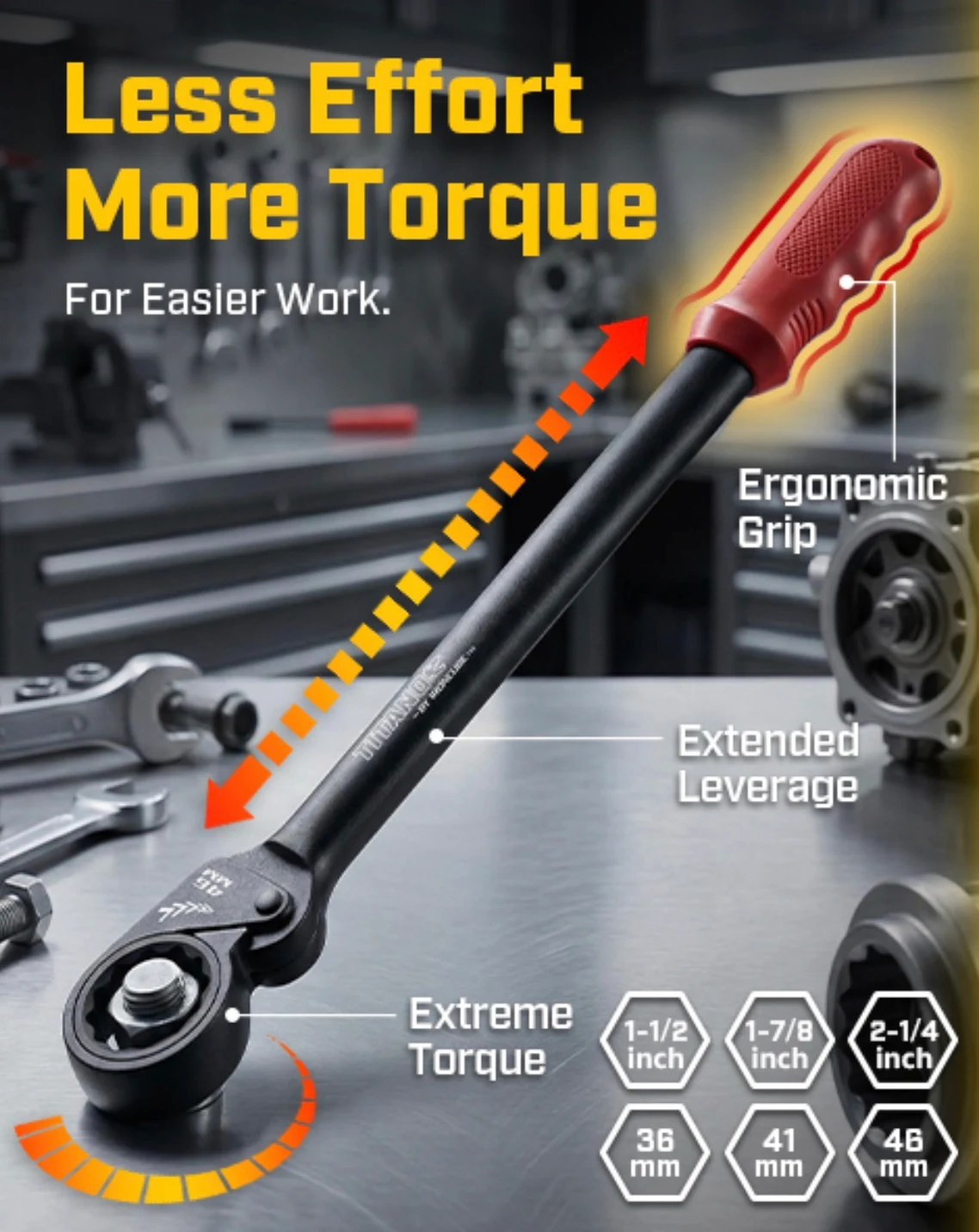
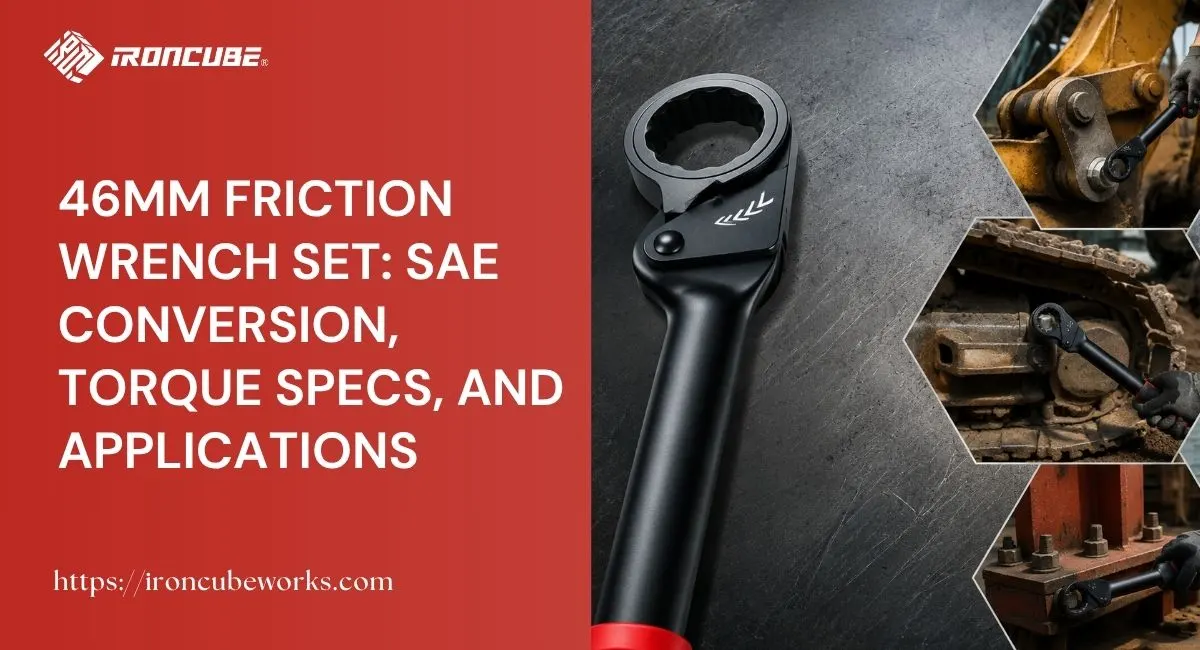
When working with heavy machinery, oversized fasteners are not unusual. Construction equipment, mining machines, cranes, marine systems, and industrial assemblies often require tools much larger than standard automotive sizes. One tool that frequently appears in these environments is the 46mm friction wrench.
A 46mm friction wrench is designed for large nuts and bolts where high torque, durability, and controlled fastening are essential. Unlike ordinary combination wrenches or standard ratchets, friction-based wrench designs provide better engagement and improved performance when mechanics handle extremely tight fasteners.
For technicians working with metric hardware, understanding 46mm to inches wrench conversion, torque requirements, and real-world applications helps select the correct tool. A wrong size choice can damage fasteners, reduce equipment reliability, or create safety risks during maintenance.
This guide explains everything you need to know about a 46mm friction wrench, including metric conversion, SAE equivalents, bolt torque specifications, industrial applications, and why friction wrench technology is becoming popular for heavy-duty work.
For a complete range of industrial hand tools, explore the IronCube Works wrench collection.
What Is a 46mm Friction Wrench?
A 46mm friction wrench is a heavy-duty industrial wrench designed specifically for tightening and loosening 46mm metric fasteners. The term “friction wrench” refers to the internal mechanism that improves grip and torque transfer through controlled friction rather than relying only on traditional ratchet teeth.
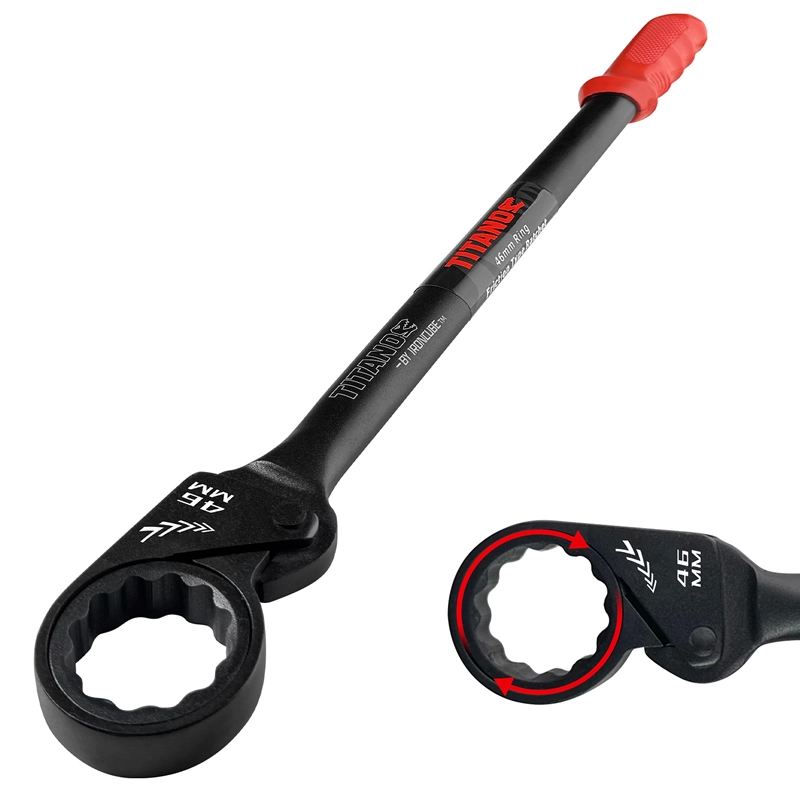
Large fasteners create unique challenges. As bolt sizes increase, the required torque rises significantly. A small mistake in tool selection can lead to:
- Rounded bolt heads
- Damaged equipment components
- Excessive operator fatigue
- Unsafe maintenance conditions
A friction wrench helps solve these problems by maintaining stronger contact with the fastener during high-load applications.
According to general engineering principles, torque increases with bolt diameter because larger bolts typically clamp heavier structural components. Industrial fasteners often require hundreds or even thousands of Newton-meters of torque.
For reference, the basic definition and history of wrenches can be explored through this overview from Wikipedia’s wrench article.
Why Professionals Choose a 46mm Friction Wrench
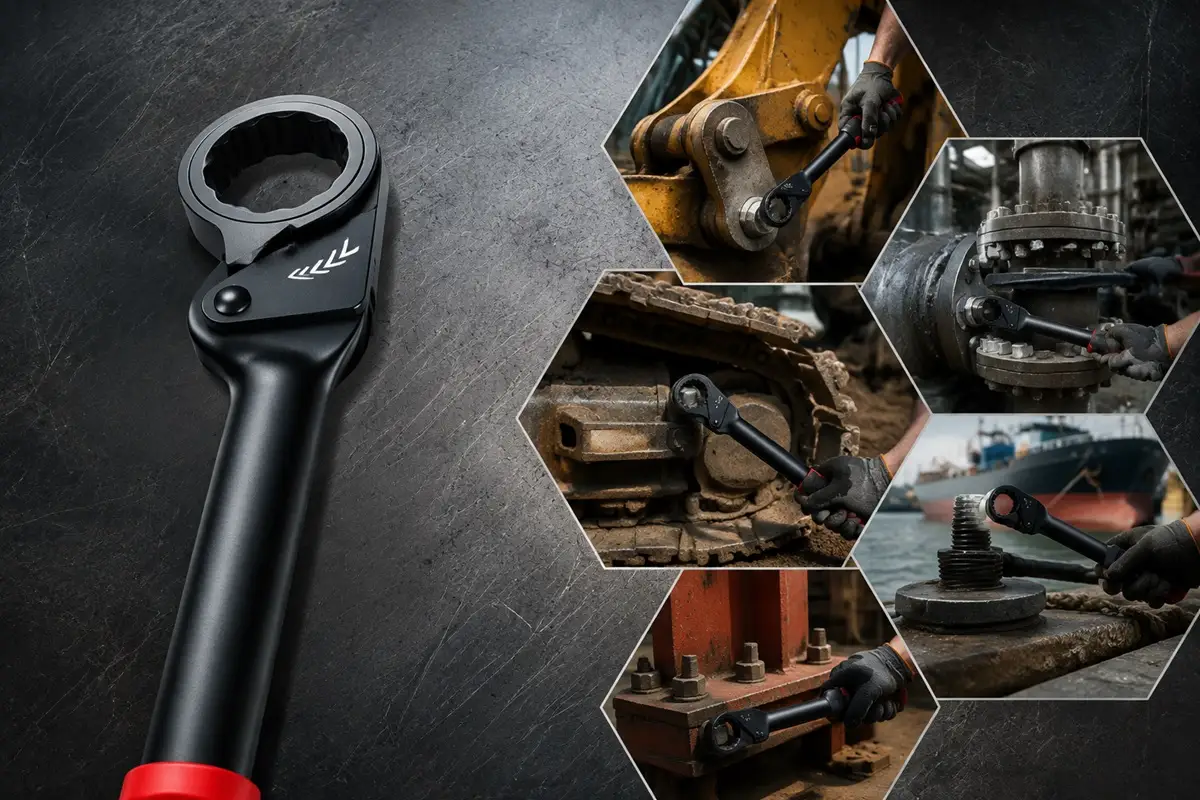
Large-scale industries rarely use standard hand tools for oversized fasteners because the working conditions are demanding.
A 46mm friction wrench offers several advantages:
Higher Torque Capability
Large machinery bolts often require significant torque values. A quality friction wrench provides better force distribution compared with ordinary open-end tools.
Improved Fastener Protection
Cheap or incorrectly sized tools can damage expensive machinery components. Precision manufacturing helps maintain proper contact between the wrench and nut.
Better Performance in Difficult Environments
Industrial maintenance often happens in:
- Dusty construction sites
- Oil-contaminated areas
- Outdoor environments
- Marine locations
A robust wrench design performs more consistently under these conditions.
IronCube Works also provides specialized options such as the 46mm friction wrench set for heavy machinery nuts, designed for industrial applications.
46mm Friction Wrench Quick Reference
Before purchasing or using a 46mm friction wrench, technicians usually need three important details:
- Metric-to-SAE conversion
- Compatible fastener grades
- Expected torque range
The following reference table provides a quick overview.
| Specification | Measurement |
|---|---|
| Metric size | 46mm |
| Approximate SAE equivalent | 1-13/16 inch |
| Wrench type | Heavy-duty friction wrench |
| Common industries | Construction, mining, marine, heavy equipment |
| Typical use | Large bolts, nuts, industrial fittings |
46mm to Inches Wrench Conversion: Metric to SAE Comparison
One of the most common questions among mechanics is whether a 46mm wrench has an SAE equivalent.
The answer requires careful conversion.
The formula is:
1 inch = 25.4 millimeters
Therefore:
46mm ÷ 25.4 = 1.81 inches
This means a 46mm wrench is approximately:
46mm = 1.81 inches
The closest SAE size is:
1-13/16 inch
However, a 1-13/16 inch SAE wrench is not exactly identical. The difference is very small, but professional mechanics usually prefer the exact metric size because industrial fasteners are manufactured with precise tolerances.
Metric to SAE Conversion Chart
| Metric Size | SAE Approximation |
|---|---|
| 41mm | 1-5/8 inch |
| 42mm | 1-21/32 inch |
| 44mm | 1-3/4 inch |
| 46mm | 1-13/16 inch |
| 48mm | 1-7/8 inch |
| 50mm | 1-31/32 inch |
This type of jumbo wrench conversion is useful when working with mixed metric and imperial equipment.
For example, older industrial machines manufactured in North America may use SAE fasteners, while newer European and Asian machinery commonly uses metric bolts.
Is 46mm the Same as 1-3/4 Inch?
This is one of the most searched questions related to large wrench sizes.
The short answer is:
No, 46mm is not the same as 1-3/4 inch.
The calculation shows:
- 1-3/4 inch = 44.45mm
- 46mm = 1.81 inch
The difference is:
46mm – 44.45mm = 1.55mm
Although this difference appears small, it matters when applying high torque.
Using a 1-3/4 inch wrench on a 46mm fastener may cause:
- Poor grip
- Increased wear
- Possible rounding of the fastener corners
For professional heavy equipment maintenance, always select the exact 46mm tool whenever possible.
Fastener Grades That Use 46mm
A 46mm wrench does not define the bolt grade. Instead, it refers to the size of the nut or bolt head. The required torque depends on several factors:
- Bolt diameter
- Material strength
- Thread pitch
- Lubrication condition
- Fastener grade
Common industrial metric bolt grades include:
Grade 8.8 Bolts
Grade 8.8 is one of the most widely used structural bolt grades.
Typical characteristics:
- Medium-strength alloy steel
- Common in machinery assemblies
- Suitable for general industrial applications
Grade 10.9 Bolts
Grade 10.9 bolts provide higher tensile strength.
They are frequently used in:
- Heavy machinery
- Automotive systems
- Structural equipment
Grade 12.9 Bolts
Grade 12.9 represents one of the strongest commonly available metric fastener grades.
Applications include:
- High-performance mechanical assemblies
- Precision machinery
- High-load connections
A 46mm nut size can appear with different bolt grades, so technicians must identify the marking on the fastener before selecting torque values.
How Fastener Size Relates to Torque
Torque is calculated using:
Torque = Force × Distance
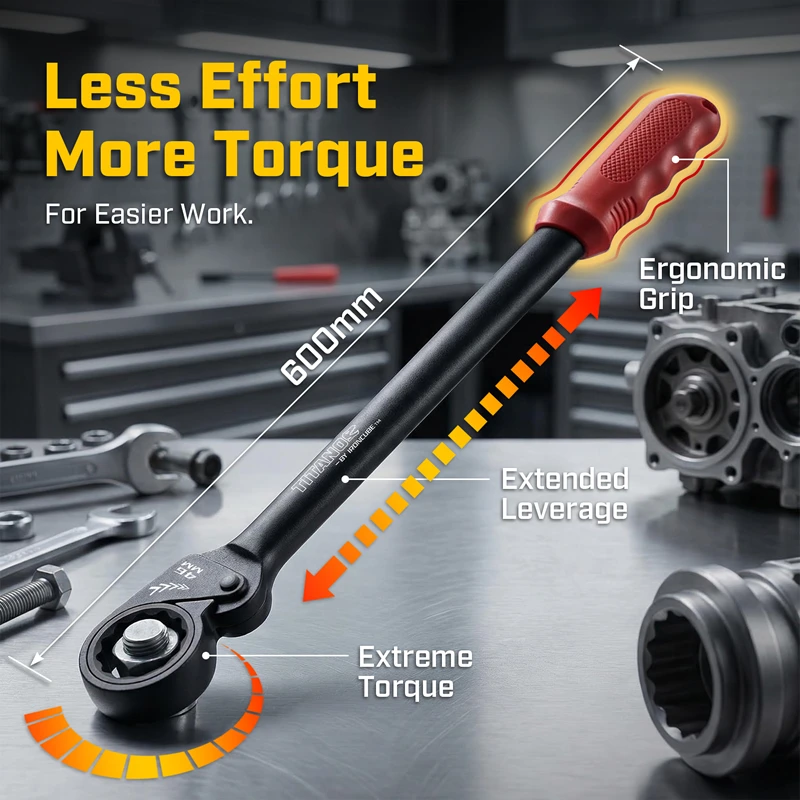
The formula means a longer wrench handle creates more turning force with the same operator effort.
For example:
A 1-meter handle producing 500 Newtons of force generates:
500 N × 1 m = 500 N·m torque
This relationship explains why industrial tools are designed with longer handles, stronger materials, and specialized mechanisms.
For applications requiring reduced effort, IronCube Works also explains the engineering behind torque friction wrenches with 30% less effort.
Torque Specs for 46mm Fasteners
Understanding torque specifications is one of the most important parts of using a 46mm friction wrench correctly. A wrench size only tells you the dimension of the fastener head. It does not automatically tell you the correct tightening force.
The required torque depends on the bolt diameter, material grade, thread condition, lubrication, and manufacturer recommendations.
For heavy equipment, incorrect torque can create serious problems. Under-tightening may allow joints to loosen under vibration, while over-tightening can stretch bolts beyond their designed limits.
Industrial manufacturers usually provide torque charts based on fastener standards. Organizations such as the International Organization for Standardization (ISO) and ASTM International publish specifications for fastener materials and mechanical properties.
46mm Torque Spec for Grade 8.8, 10.9, and 12.9 Bolts
A 46mm wrench is commonly used on large metric nuts. In many applications, the nut size corresponds to bolts around M30 or larger, depending on the bolt head design and standard used.
The following table provides approximate torque values for common metric bolt grades.
| Bolt Grade | Approximate Tensile Strength | Typical Torque Range |
|---|---|---|
| Grade 8.8 | 800 MPa | 1,000–1,200 N·m |
| Grade 10.9 | 1,000 MPa | 1,400–1,700 N·m |
| Grade 12.9 | 1,200 MPa | 1,700–2,000+ N·m |
Important: These values are general reference ranges. Always follow the equipment manufacturer’s service manual for final torque specifications.
Factors that change torque requirements include:
- Dry vs lubricated threads
- Bolt coating
- Thread pitch
- Washer design
- Temperature conditions
- Joint material
For example, lubricated threads may require significantly less torque than dry threads because reduced friction allows more tightening force to reach the bolt preload.
N·m to ft-lb Quick Conversion Chart
Many technicians work with both metric and imperial torque measurements. Understanding the conversion between Newton-meters and foot-pounds helps avoid mistakes.
The formula is:
1 N·m = 0.73756 ft-lb
| Newton Meter (N·m) | Foot Pound (ft-lb) |
|---|---|
| 500 N·m | 369 ft-lb |
| 750 N·m | 553 ft-lb |
| 1,000 N·m | 738 ft-lb |
| 1,250 N·m | 922 ft-lb |
| 1,500 N·m | 1,106 ft-lb |
| 2,000 N·m | 1,475 ft-lb |
A heavy-duty 46mm friction wrench is designed for situations where these torque levels are common.
How Much Torque Can a 46mm Friction Wrench Handle?
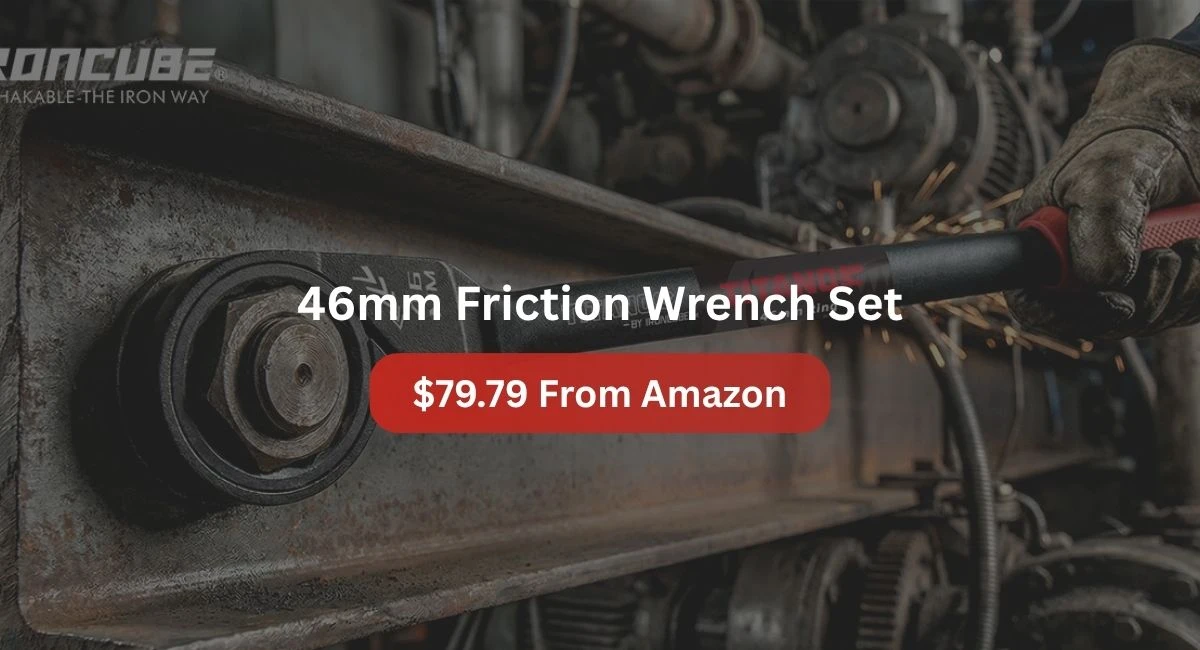
The maximum torque capacity depends on the wrench construction, material quality, mechanism design, and manufacturer rating.
Industrial friction wrenches are built differently from standard hand tools. High-quality models may handle extremely high torque loads because they use:
- Hardened alloy steel components
- Reinforced ratcheting mechanisms
- Precision-machined teeth
- Strong internal friction systems
For comparison:
| Tool Type | Typical Application | Torque Capability |
|---|---|---|
| Standard combination wrench | Automotive repair | Low to medium torque |
| Heavy-duty ratchet wrench | Industrial maintenance | Medium to high torque |
| Hydraulic torque wrench | Extreme industrial applications | Several thousand N·m |
| Industrial friction wrench | Heavy machinery fastening | High torque mechanical work |
A 46mm friction wrench fills an important gap between traditional hand tools and powered torque equipment.
It provides portability while maintaining the strength needed for large industrial fasteners.
Where the 46mm Friction Wrench Actually Gets Used
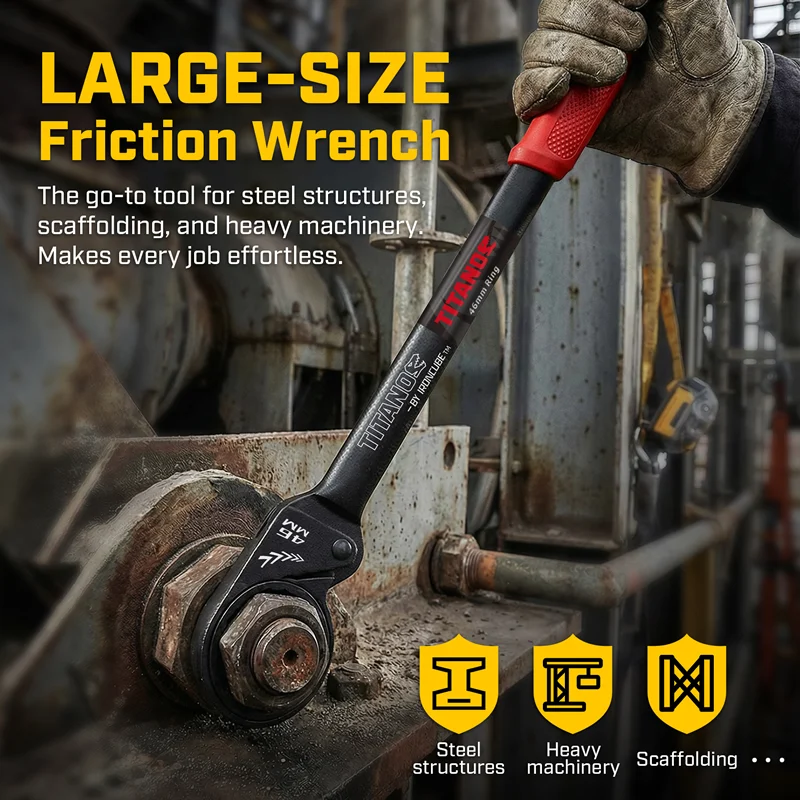
A common mistake is assuming large wrenches are only useful in factories. In reality, many industries depend on oversized hand tools every day.
A 46mm friction wrench is commonly found in construction, mining, transportation, energy, and marine industries.
Excavator Arm and Boom Bolts
Excavators experience enormous mechanical stress during operation.
The boom, arm, and bucket connections transfer thousands of kilograms of force during digging cycles. Large pins, retaining bolts, and structural fasteners require accurate tightening.
Maintenance teams use large wrenches for:
- Boom cylinder mounting points
- Hydraulic component brackets
- Structural connection bolts
- Heavy equipment repairs
A loose fastener in an excavator structure can cause:
- Excessive vibration
- Component wear
- Unexpected downtime
- Safety hazards
For professionals working with construction machinery, choosing the correct tool is critical. IronCube Works provides specialized industrial solutions, including the friction wrench set 46mm for heavy machinery nuts.
Crane Counterweight Fasteners
Cranes require extremely reliable fastening systems because they operate under high loads and changing forces.
Counterweight systems use large fasteners to secure heavy sections that balance the crane structure.
During maintenance, technicians may need large tools for:
- Counterweight assembly bolts
- Base connection fasteners
- Structural joints
- Rotating platform components
A properly tightened connection ensures stability and reduces mechanical stress.
Because crane maintenance often happens in demanding environments, a durable 46mm friction wrench provides a practical solution when powered equipment is unavailable.
Marine Deck Hardware
Marine environments create unique challenges.
Saltwater exposure, vibration, and temperature changes can affect mechanical connections. Ships, offshore platforms, and marine equipment often use oversized fasteners for critical structures.
A 46mm tool may be used for:
- Deck machinery
- Anchor equipment
- Hydraulic systems
- Heavy mounting brackets
Marine technicians prefer strong tools because corroded fasteners require additional force during removal.
Regular maintenance is also important. Proper cleaning and lubrication extend tool life. IronCube Works provides maintenance guidance through its article on friction wrench maintenance.
Why Friction Design Matters at 46mm and Larger
As wrench sizes increase, mechanical stress increases dramatically.
A small wrench might handle normal automotive repairs. However, a large industrial wrench must transfer hundreds or thousands of Newton-meters without failure.
This is where friction-based designs become valuable.
Why Standard Ratchets Fail at This Size
Standard ratchets are excellent for everyday repairs, but they have limitations.
Traditional ratchet systems depend on small internal teeth and pawls. Under extreme torque, these components experience high stress.
Possible problems include:
- Broken internal teeth
- Slipping mechanisms
- Reduced lifespan
- Sudden failure under load
Large industrial fasteners require stronger solutions.
A properly designed friction mechanism distributes force more evenly and reduces concentrated stress points.
How Friction Pawls Handle 800+ N·m Safely
High-quality industrial friction systems are designed to manage significant torque loads.
At torque levels above 800 N·m, tool design becomes increasingly important.
A friction wrench achieves better performance through:
Strong Internal Engagement
The mechanism maintains contact during high loads, reducing sudden movement.
Controlled Mechanical Resistance
The friction system helps prevent uncontrolled slipping.
Better Operator Control
Technicians can apply force gradually instead of relying on sudden impact.
This makes friction technology useful for applications where precision matters.
For comparison between traditional torque tools and friction-based systems, see friction wrench vs torque wrench.
46mm Friction Wrench vs Standard Jumbo Wrench
Many professionals compare a friction wrench with traditional jumbo wrenches.
| Feature | 46mm Friction Wrench | Standard Jumbo Wrench |
|---|---|---|
| Torque handling | High | Medium to high |
| Mechanism | Friction/ratching system | Fixed opening |
| Speed | Faster repetitive work | Slower |
| Operator fatigue | Lower | Higher |
| Industrial suitability | Excellent | Good |
A fixed wrench can still be useful for simple applications. However, technicians working on large machinery often prefer ratcheting friction designs because they improve productivity.
IronCube Works also offers options such as extra-large heavy-duty ratcheting wrenches for industrial users.
Choosing the Right 46mm Friction Wrench Set
Before purchasing a tool, consider the working environment.
A professional-grade set should include:
- Correct metric sizes
- Strong alloy steel construction
- Corrosion resistance
- Comfortable grip design
- Reliable manufacturer support
For users who work with multiple large fasteners, purchasing a complete set is often more economical than buying individual tools.
IronCube Works provides a dedicated 46mm friction wrench set designed for industrial applications.
46mm Friction Wrench Products for Industrial Work
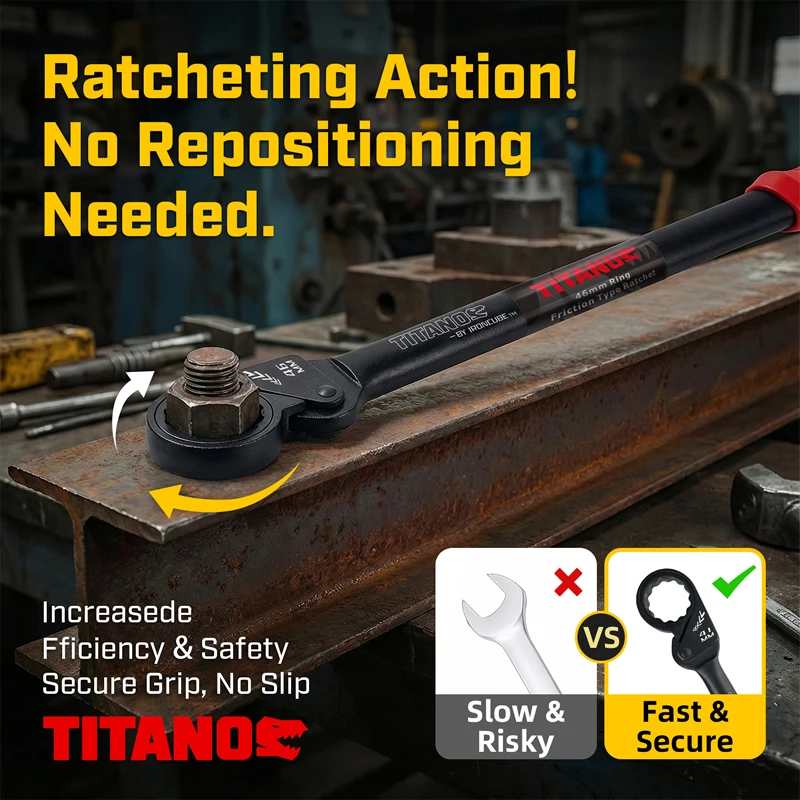
Selecting the correct tool depends on the application, working environment, and required torque range. A professional technician should not only look at the wrench size but also evaluate durability, mechanism quality, and long-term reliability.
For industrial maintenance teams, construction companies, and heavy equipment operators, a 46mm friction wrench is often purchased as part of a larger jumbo wrench collection.
Below are some examples of heavy-duty wrench solutions suitable for different applications.
46mm Friction Wrench Set for Large Industrial Fasteners
A complete wrench set is useful when machines contain different bolt sizes across multiple components.
The IronCube Works 46mm friction wrench set with ratcheting spanner design is designed for professionals who need reliable performance on large industrial fittings and fasteners.
Typical applications include:
- Heavy equipment repair
- Manufacturing maintenance
- Structural assembly
- Mechanical installation work
A complete set reduces downtime because technicians do not need to search for individual tools during maintenance operations.
36mm Torque Friction Wrench for Medium Applications
Not every machine requires a 46mm tool. Some assemblies use smaller but still demanding fasteners.
The Torque Friction Wrench 36mm provides a solution for medium-sized industrial bolts where controlled torque application is required.
It is commonly useful for:
- Machinery frames
- Hydraulic components
- Equipment maintenance
Larger Jumbo Friction Wrenches
Some industries require even larger sizes.
Examples include:
These tools support applications where standard workshop equipment cannot provide enough strength.
Maintenance Tips for a 46mm Friction Wrench
Even the strongest industrial tool requires proper maintenance.
A neglected wrench can lose performance over time because dust, moisture, and contaminants affect moving parts.
Follow these maintenance practices:
Clean After Heavy Use
After working in construction or marine environments, remove dirt, grease, and metal particles.
A clean tool provides better movement and longer service life.
Inspect the Mechanism Regularly
Check:
- Ratchet movement
- Internal friction components
- Handle condition
- Surface corrosion
If unusual resistance or slipping appears, inspect the tool before further use.
Store Properly
Avoid leaving large tools exposed to:
- Rain
- Chemical environments
- Excessive humidity
Proper storage prevents corrosion and maintains accuracy.
For more detailed guidance, IronCube Works provides a complete friction wrench maintenance guide.
FAQs
What is a 46mm wrench for?
A 46mm friction wrench is mainly used for large metric nuts and bolts found in heavy machinery, construction equipment, cranes, industrial systems, and marine applications. It provides better control when technicians need to tighten or remove oversized fasteners.
A 46mm wrench is commonly used where normal automotive tools are too small. Industries such as mining, transportation, and manufacturing often require these larger tools because equipment components experience high mechanical loads.
How much torque does a 46mm bolt need?
The required torque for a 46mm fastener depends on the bolt grade, diameter, thread condition, and manufacturer specification. A 46mm friction wrench may be used on fasteners requiring hundreds or thousands of Newton-meters of torque.
For example:
- Grade 8.8 bolts may require approximately 1,000–1,200 N·m
- Grade 10.9 bolts may require approximately 1,400–1,700 N·m
- Grade 12.9 bolts may exceed 1,700 N·m
Always confirm the exact torque value from the equipment service manual before tightening critical connections.
Is 1-3/4 inch the same as 46mm?
No. A 46mm friction wrench is not the same size as a 1-3/4 inch wrench.
The conversion is:
- 1-3/4 inch = 44.45mm
- 46mm = 1.81 inches
The difference is approximately 1.55mm.
Although the sizes look close, professional mechanics should use the exact 46mm size whenever possible. Using an incorrect wrench can damage fastener edges, especially when applying high torque.
What is the SAE equivalent of a 46mm wrench?
The closest SAE equivalent of a 46mm wrench is approximately 1-13/16 inch.
The conversion:
46 ÷ 25.4 = 1.81 inches
However, SAE and metric sizes are not always interchangeable. For precision industrial work, a true 46mm tool provides better engagement and reduces the chance of fastener damage.
This is why technicians performing heavy machinery maintenance usually prefer a dedicated 46mm friction wrench instead of relying on approximate SAE conversions.
Why use a friction wrench instead of a normal wrench?
A friction wrench provides advantages when working with large fasteners under high loads.
Compared with traditional tools, a 46mm friction wrench can provide:
- Better torque transfer
- Reduced operator fatigue
- Improved fastener engagement
- Faster repetitive maintenance work
Standard wrenches may work for occasional tasks, but industrial environments require tools designed specifically for repeated high-force applications.
Final Summary
A 46mm friction wrench is an essential tool for professionals working with large industrial fasteners. From excavator maintenance to crane assembly and marine equipment repair, these tools provide the strength and control required for demanding environments.
Understanding 46mm to inches wrench conversion, torque specifications, and bolt grades helps technicians select the correct equipment and avoid costly mistakes.
Although the closest SAE equivalent is approximately 1-13/16 inch, the exact 46mm size remains the best choice for metric fasteners. Large machinery requires precision, and even small sizing differences can affect safety and performance.
For professionals who need dependable industrial hand tools, investing in a quality friction wrench set improves efficiency, reduces maintenance problems, and supports safer operations.
Explore IronCube Works industrial solutions, including:
- Friction wrench sets
- Jumbo ratchet wrenches for heavy-duty work
- Best friction wrench sets for structural steel applications
A properly selected 46mm friction wrench is more than a simple hand tool. It is a critical piece of equipment that helps keep heavy machinery operating safely and efficiently.