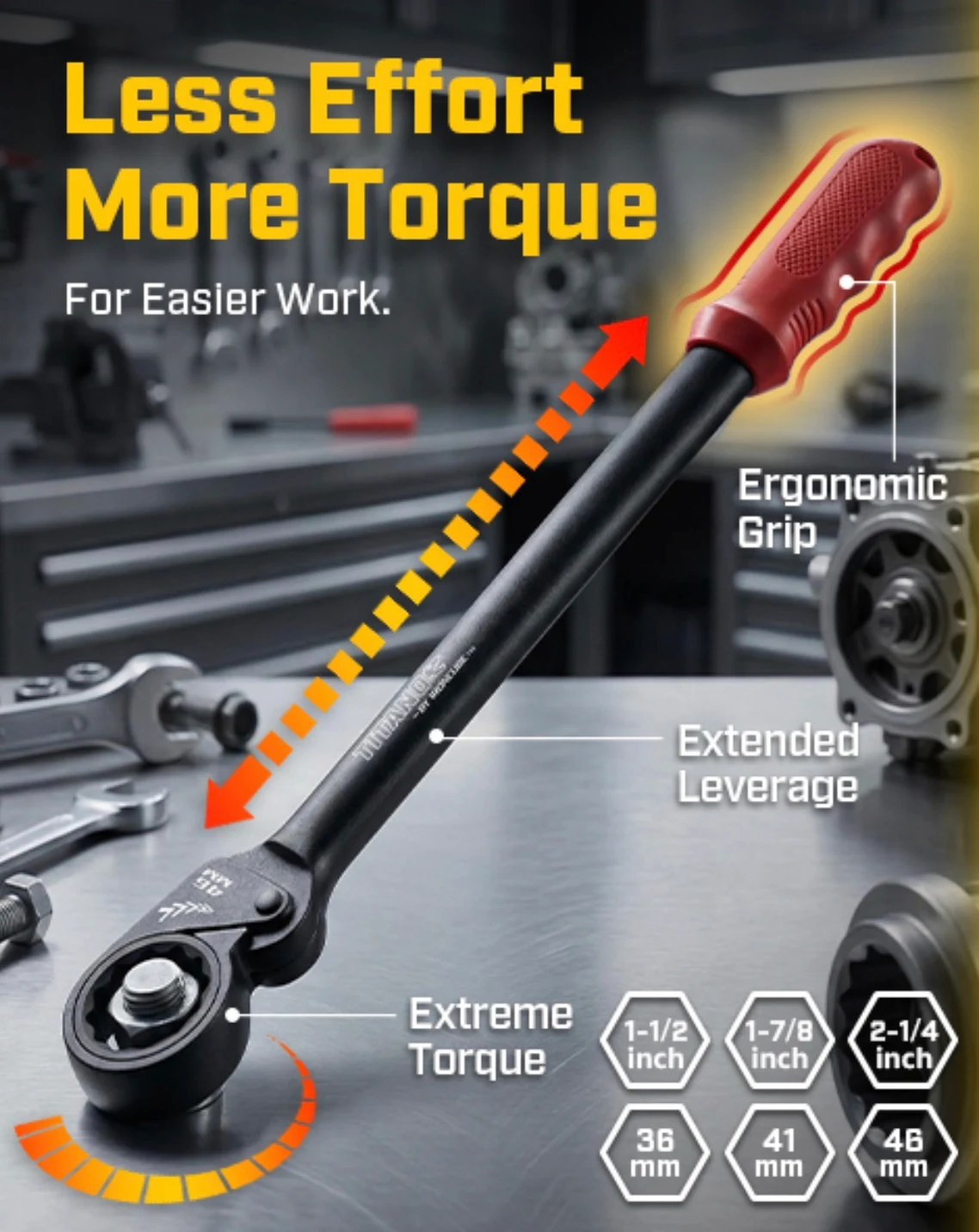
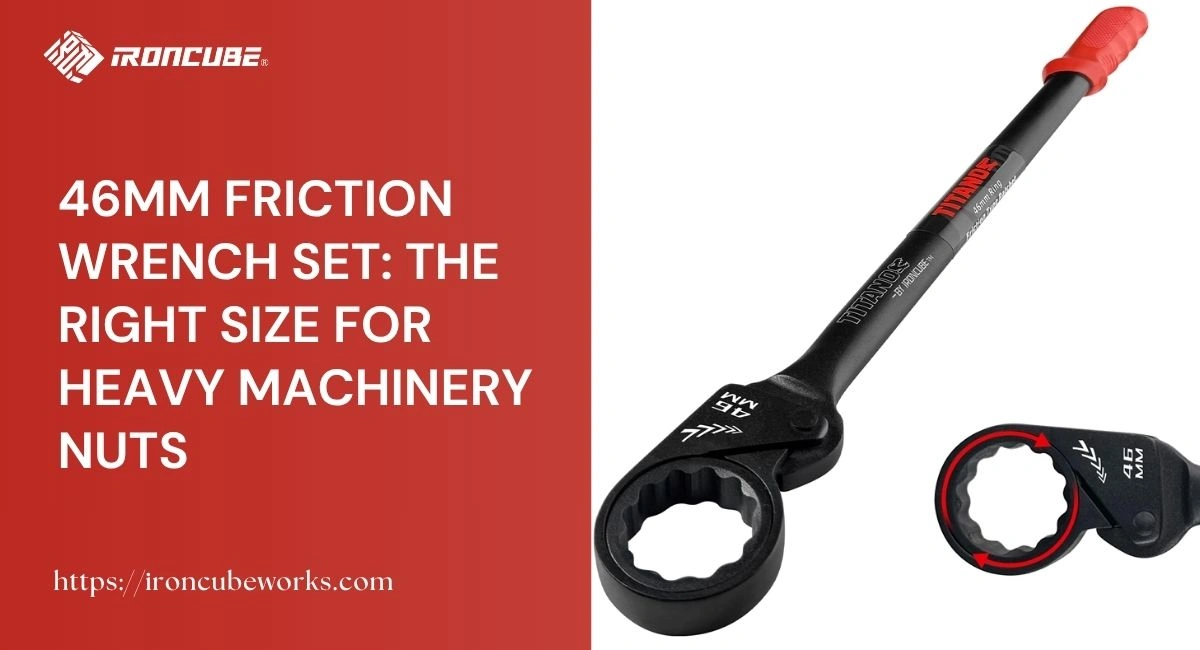
A friction wrench set 46mm is not a tool most people buy for light garage work. It belongs in the world of heavy machinery, steel structures, large equipment repair, agricultural machines, mining systems, and industrial maintenance. When a nut measures 46 mm across the flats, ordinary hand tools usually feel undersized. The job needs more reach, more grip, and a head design that can handle large fasteners without wasting time in tight spaces.
That is where a friction wrench set 46mm becomes useful.
A wrench, in simple terms, gives grip and mechanical advantage for turning rotary fasteners such as nuts and bolts. That basic definition sounds simple, but the size of the fastener changes everything. A 10 mm wrench and a 46mm wrench do the same basic job, yet the force, leverage, clearance, and risk are completely different. Wikipedia’s general explanation of a wrench as a tool for applying torque gives the foundation, but large fasteners need more careful selection.
The 46mm size is especially important because it commonly matches M30 hex nuts. Several metric nut charts list M30 hex nuts with a 46 mm across-flats size, and Accu lists an M30 DIN 934 nut with a 46 mm socket size and 3.5 mm coarse thread pitch.
For buyers, mechanics, and procurement teams, the key point is simple: do not buy a large wrench only because it looks strong. Buy it because the size, material, mechanism, and supplier data match the work.
This guide explains when to choose a friction wrench set 46mm, what to check before purchase, how it compares with SAE sizes, and why it matters for heavy machinery nuts.
Why the Friction Wrench Set 46mm Matters
A friction wrench set 46mm matters because large nuts create three problems at once: high force, poor access, and slower work. You may be working around machine frames, hydraulic brackets, crane mounts, truck suspension parts, or structural steel connections. In many of these places, a standard open-end spanner can slip. A regular ratchet may not have enough clearance. A short handle may demand too much physical force.
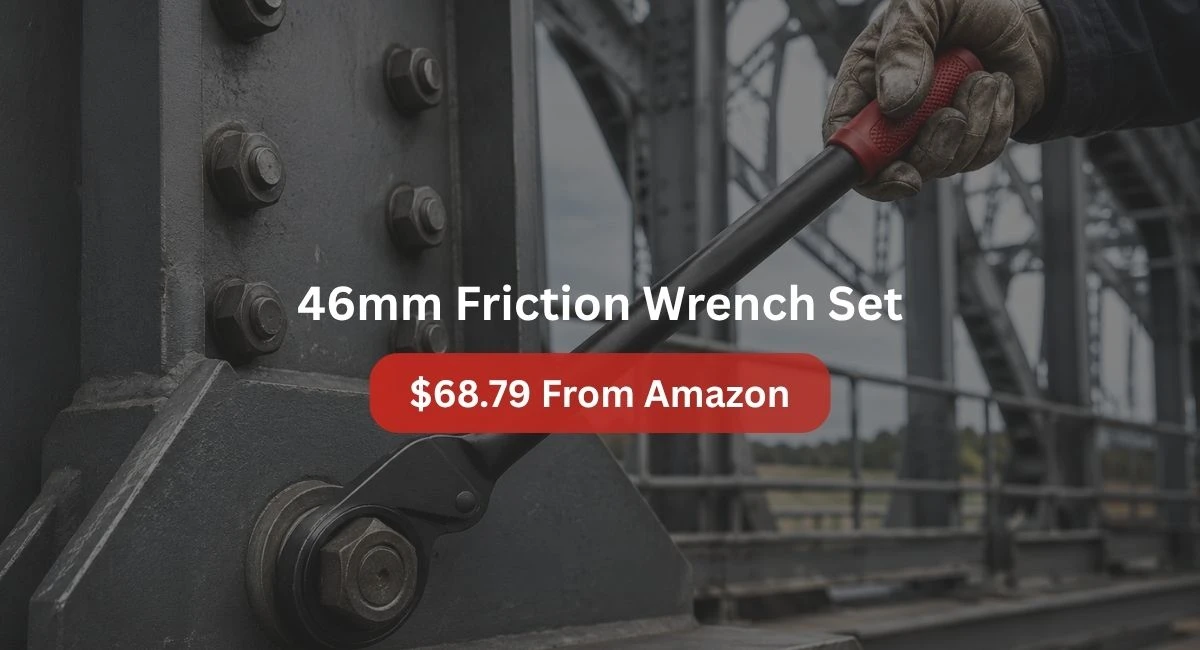
The 46mm size is not random. It often appears where the threaded diameter is much larger than common automotive fasteners. For example, M30 fasteners are used in heavy-duty assemblies where load, vibration, and joint security matter. The nut may be part of a machine base, a gearbox mount, a large flange, or an equipment frame.
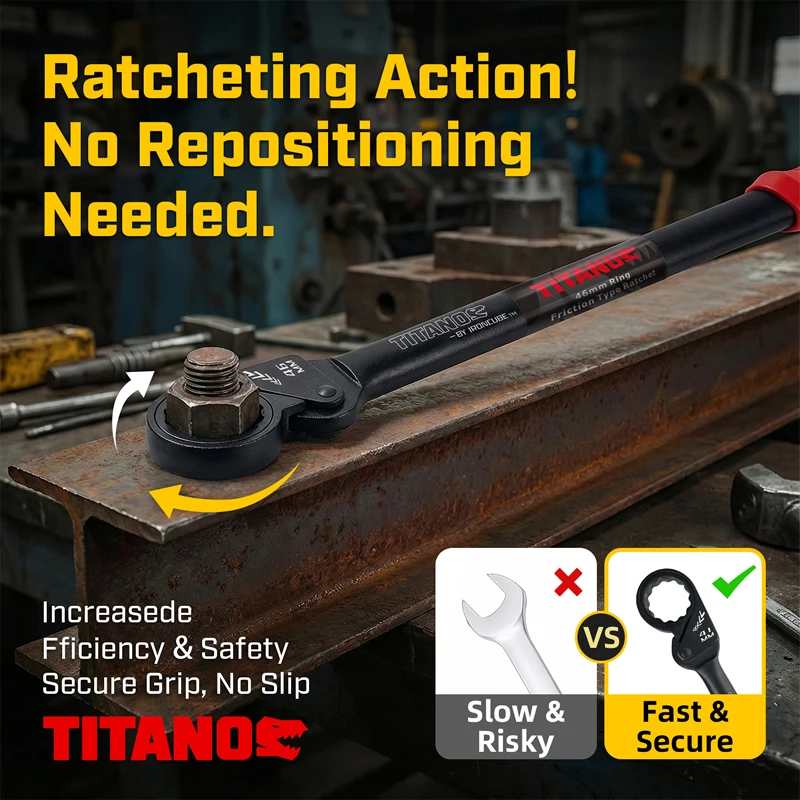
A large friction wrench 46mm helps because the head can stay on the fastener while the handle resets. That saves time when swing space is limited. It also reduces repeated lifting and repositioning, which matters during long maintenance jobs.
For buyers comparing tool categories, the IRONCUBE wrench category is a natural place to review large hand tools. If you need broader workshop support, the screwdriver category can also support maintenance teams that handle covers, panels, and smaller machine hardware.
Common machinery using 46mm fasteners
A friction wrench set 46mm is most useful around equipment that uses large metric hex nuts. Common examples include heavy construction equipment, agricultural machines, steel fabrication equipment, mining machinery, industrial conveyors, pumps, compressor frames, large gearboxes, and vehicle service equipment.
On the fastener side, the important measurement is not the thread diameter alone. It is the across-flats dimension of the nut or bolt head. For many M30 hex nuts, that across-flats size is 46 mm. Fastenal also lists an M30-3.5 DIN 934 class 8 steel hex nut with a 46 mm wrench size and a head width range of 45.00 mm to 46.00 mm.
That means a 46mm wrench is not chosen because the bolt thread is 46 mm. It is chosen because the nut or head measures about 46 mm across the flats.
This distinction matters. A technician who confuses thread diameter with wrench size may bring the wrong tool to the job. That costs time. It may also damage the fastener if a near-fit tool is forced onto the nut.
Torque range for 46mm bolts and nuts
A friction wrench set 46mm gives leverage, but it does not replace a calibrated torque wrench when final torque accuracy matters.
This point is critical. AISC explains that torque is not a reliable direct measure for pretensioned high-strength bolting unless the wrench method is calibrated. The reason is that thread condition can create large variation in installed tension.
For M30 fasteners, torque values vary widely by property class, lubrication, coating, thread condition, and joint design. Fractory’s metric bolt torque chart states that its values are for lightly oiled threads and 85% of proof load, with property classes based on ISO 898. TR Fastenings also shows that torque changes with coefficient of friction, which proves why one “universal” number is risky.
Here is a practical comparison for context only:
| Fastener reference | Common wrench/socket size | Typical use case | Torque note |
|---|---|---|---|
| M24 hex nut | 36 mm | Structural parts, machinery frames | Final torque must follow job spec |
| M27 hex nut | 41 mm | Heavy machinery and steelwork | Often needs large ratcheting spanner |
| M30 hex nut | 46 mm | Heavy equipment, industrial assemblies | Often matches a friction wrench set 46mm |
| M36 hex nut | 55 mm | Very large machinery and foundations | Usually needs longer leverage or powered tools |
Use this table for sizing guidance, not as a torque specification. If the connection is safety-critical, use the engineer’s tightening procedure.
What’s Inside a Complete Friction Wrench Set 46mm
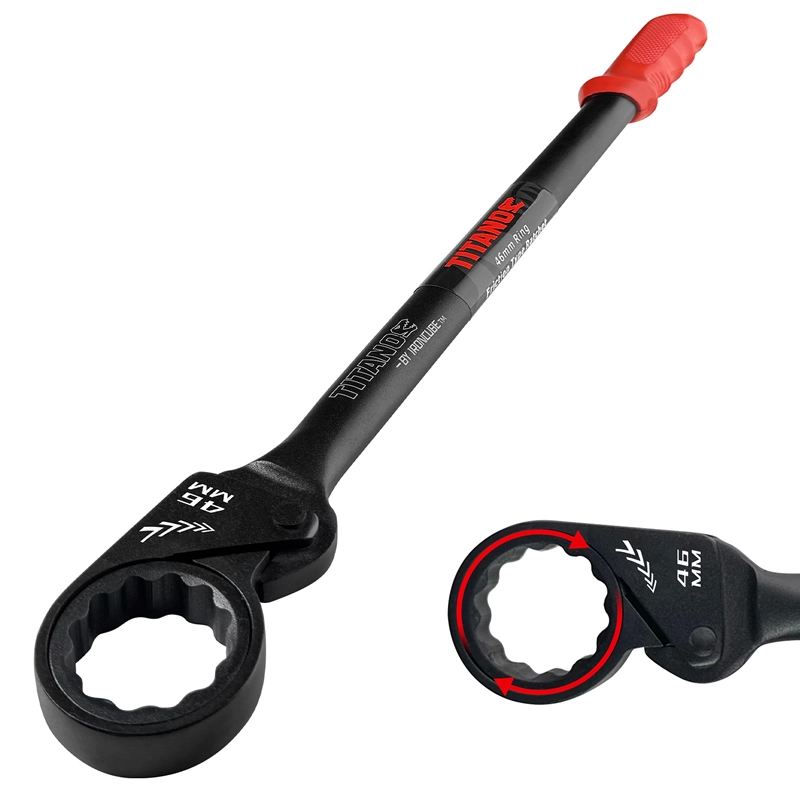
A complete friction wrench set 46mm should include more than a single oversized spanner. At minimum, the buyer should check head size, ratcheting style, handle length, grip design, steel grade, finish, packaging, and supplier documentation.
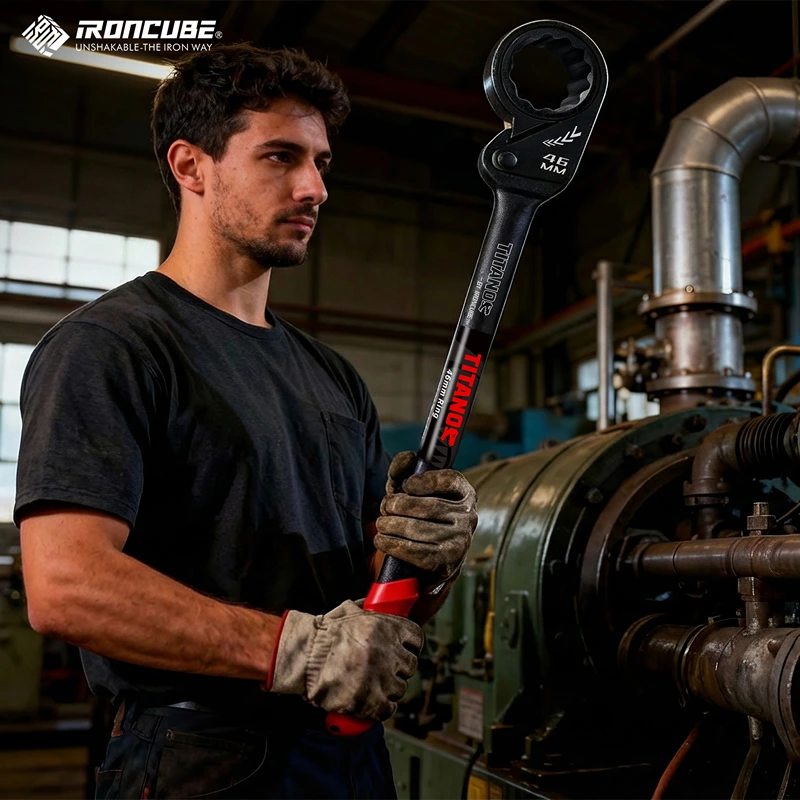
For maintenance teams, the best setup is often a size-focused kit. A 46mm wrench can sit beside nearby sizes such as 41 mm or larger SAE equivalents. IRONCUBE already lists a 41mm jumbo ratchet spanner and larger SAE friction wrenches, including a 1-1/2 inch heavy-duty ratcheting spanner and a 2-1/4 inch friction wrench. The 1-1/2 inch model is listed with chrome vanadium steel, black oxide finish, box-end head, and friction-type ratcheting mechanism.
That kind of product range matters because field crews often meet mixed fastener systems. One machine may use metric fasteners. Another may use SAE. A well-planned tool set reduces wrong-tool improvisation.
Head design and ratchet mechanism
The head is the working part of a friction wrench set 46mm. A weak head can round a nut, slip under load, or fail before the handle ever reaches its useful leverage.
A box-end head gives more contact around the fastener than an open-end design. This is valuable on large nuts because the contact area helps spread load. A ratcheting or friction-style mechanism then helps the user work faster in tight spaces.
A 46mm ratcheting wrench is especially helpful when the handle cannot rotate a full circle. Instead of removing the wrench after each short pull, the operator can reset the handle and continue turning. That saves effort and reduces frustration.
The difference between a gear ratchet and friction-style ratcheting is also worth noting. A gear ratchet relies on teeth. A friction mechanism uses gripping surfaces that engage in one direction and release in the other. IRONCUBE describes its friction wrench mechanism as a design that allows continuous tightening or loosening without frequent repositioning.
For a jumbo 46mm spanner, this can be an advantage in dirty field environments. Large machinery repair often involves dust, grease, paint, corrosion, and metal chips. A simpler friction-style action can feel smoother than a fine-tooth mechanism in rough conditions.
Handle length and leverage ratio
The handle on a friction wrench set 46mm does more than make the tool look heavy-duty. It controls leverage.
Torque equals force multiplied by distance from the turning center. In practical terms, a longer handle lets the user apply more turning effect with the same hand force. That matters when a large nut is seized, painted, or lightly corroded.
But longer is not always better. A very long handle can overload the fastener, the tool, or the user’s wrist. It may also fail to fit inside machine frames. The best handle length balances leverage with access.
A good large friction wrench 46mm should also have a grip that stays controlled with gloves. Maintenance work rarely happens in perfect conditions. Hands may be oily. The equipment may be wet. The operator may be working overhead or from an awkward angle.
For professional buyers, the handle question is simple: does the handle give enough leverage without encouraging unsafe cheater-bar use? If the answer is no, the job may need a different tool class, such as a calibrated torque wrench, hydraulic torque tool, or impact-rated system.
46mm Fastener Applications by Industry
The friction wrench set 46mm has value because 46mm fasteners appear across several industries. It is not only a construction tool. It is also a maintenance tool, a fleet tool, and a procurement item for industrial service teams.
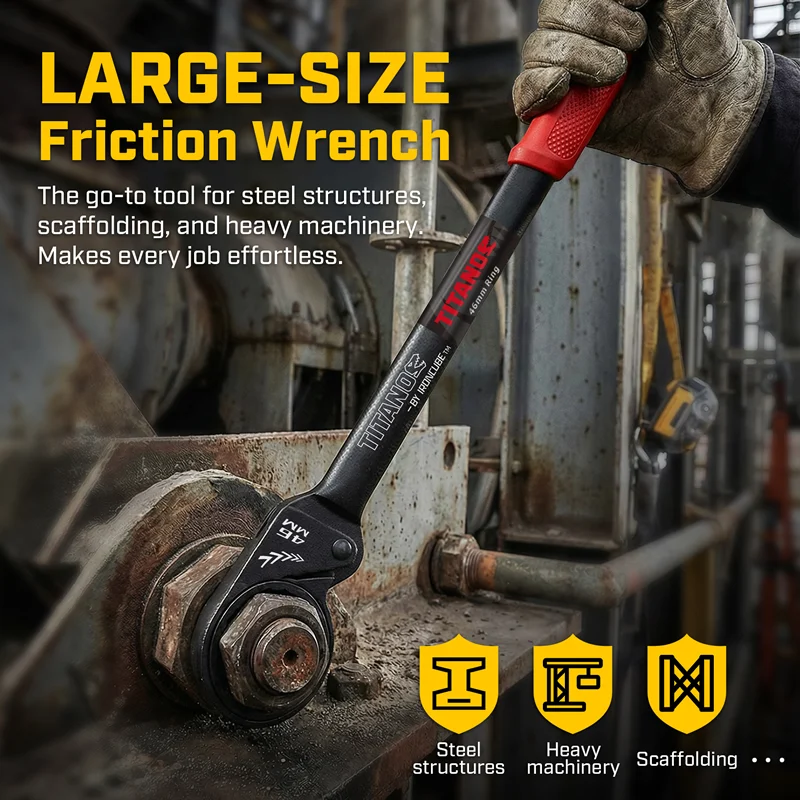
Construction machinery
Construction machinery uses large fasteners because the equipment handles shock loads, vibration, soil impact, and repeated movement. Excavators, loaders, cranes, bulldozers, rollers, and piling equipment all rely on heavy joints.
A friction wrench set 46mm can help with brackets, mounting plates, guards, frames, counterweight hardware, and large service points. It is not the only tool required, but it can become the exact hand tool that saves time when access is limited.
IRONCUBE’s guide to extra-large heavy-duty ratcheting wrenches is a useful supporting internal page for readers comparing larger wrench options.
For related garage and fleet work, the article on best tools for car maintenance can also support readers who maintain both light vehicles and heavy equipment.
Wind and solar equipment
Wind and solar projects use many bolted assemblies. The exact fastener size depends on the manufacturer and engineering design, but the lesson is consistent: renewable energy structures need reliable bolting procedures.
Wind turbine bolted joints are especially sensitive because vibration, cyclic loading, weather, and access height all increase maintenance risk. Research on wind turbine blade-housing bolts notes that bolts are tightened to specified torque using torque wrenches in controlled procedures.
A friction wrench set 46mm may be useful for positioning, snugging, service access, or non-final operations where the nut size matches. Final tightening should still follow the project’s approved procedure.
Solar equipment can also involve structural fasteners in tracker systems, foundations, and racking assemblies. Large solar tracker projects often use engineered foundations and structural hardware rather than simple rooftop brackets. Nextracker describes tracker foundation systems designed for challenging soil and installation conditions.
When a crew works across renewable equipment, the 46mm size can be part of a broader heavy wrench set.
Mining and rigging
Mining and rigging environments punish tools. Dust, impact, vibration, moisture, and heavy loads are normal. A friction wrench set 46mm may appear around conveyor assemblies, crusher housings, processing equipment, pump bases, lifting frames, and rigging hardware.
Mining also creates a simple operational problem: downtime is expensive. A missing wrench can stop a repair. A poor-fit wrench can round a nut and turn a 15-minute job into a cutting, heating, or extraction job.
That is why procurement teams should treat a 46mm wrench as a planned maintenance item, not an emergency purchase. The cost of the tool is small compared with the cost of delayed equipment restart.
46mm Friction Wrench Materials Compared
Material choice matters for any friction wrench set 46mm because the tool must resist bending, wear, and surface damage. Most professional hand wrenches use alloy steels, often chrome vanadium or chrome molybdenum.
The material is only part of the answer. Tool geometry, heat treatment, hardness, finish, and manufacturing control also matter. TEKTON explains that both chrome vanadium and chrome molybdenum can be excellent for normal wrench and socket uses, while geometry, hardness, heat treatment, and manufacturing process control often decide real tool quality.
Chrome vanadium vs chrome molybdenum
Chrome vanadium steel, often called Cr-V, is common in professional hand tools. It offers a strong balance of toughness, durability, and cost. Chrome helps with corrosion resistance, while vanadium improves strength and toughness.
Chrome molybdenum, often called Cr-Mo, is also used in demanding tools. It is common in impact-rated sockets and heavy-duty applications because it can offer toughness under shock loading. That does not automatically make it better for every hand wrench.
For a friction wrench set 46mm, the better question is not “Cr-V or Cr-Mo?” The better question is: what is the tool designed and tested to withstand?
A well-forged, properly heat-treated Cr-V wrench can outperform a poorly made Cr-Mo wrench. A polished claim on the packaging does not prove quality. Test data does.
Heat treatment standards
Heat treatment controls hardness and toughness. If a wrench is too soft, the head may spread or wear. If it is too hard, it may crack under shock. The right balance is essential for a jumbo 46mm spanner.
ISO 1711-1 covers technical specifications for hand-operated wrenches and sockets, including minimum Rockwell hardness and torsional strength values. That makes it a useful reference point when discussing professional tool performance.
For OEM or wholesale orders, ask suppliers whether the friction wrench set 46mm has been tested for hardness, torsional strength, and dimensional accuracy. Also ask whether the factory can provide batch inspection records.
A serious supplier should be able to discuss these points clearly.
How to Store and Handle a Friction Wrench Set 46mm
A friction wrench set 46mm is built for hard work, but poor storage can shorten its life. Rust, impact damage, and dirt inside the ratcheting mechanism can reduce performance.
A large wrench is also heavy enough to damage other tools if thrown into a mixed toolbox. Storage should protect the head, handle, and working surfaces.
For longer life, follow IRONCUBE’s dedicated guide on friction wrench maintenance. It gives a better maintenance pathway for teams that want to standardize care across multiple tools.
Rust prevention tips
Rust prevention starts with cleaning. Wipe the wrench after use, especially after exposure to water, mud, concrete dust, fertilizer, salt, or chemicals. A dry cloth removes surface grime. A light protective oil can help protect bare metal areas.
For a black oxide tool, remember that the finish improves corrosion resistance, but it does not make the wrench immune to rust. Storage conditions still matter.
Keep the friction wrench set 46mm in a dry cabinet or tool chest. Avoid leaving it on concrete floors, outdoor benches, or truck beds where water can collect. If the wrench is used near coastal sites, chemical plants, mines, or winter road equipment, clean it more often.
Correct hanging and stacking
A large wrench should not be buried under smaller tools. The weight can damage other items, and the working head can pick up grit.
The best storage method is a wall rack, pegboard hook, shadow board, or dedicated drawer slot. Hanging works well because it makes the tool easy to inspect. It also helps crews notice if the 46mm size is missing before they leave for a job.
If stacking is necessary, place the friction wrench set 46mm flat and avoid metal-on-metal scraping around the head. Use drawer liners or molded trays where possible.
A tool that is easy to find is a tool that gets used correctly.
Buying Guide: What to Ask Suppliers
Buying a friction wrench set 46mm is different from buying a small household wrench. The tool may be used in industrial environments where failure can cause downtime, damage, or injury. Procurement should be more disciplined.
Start with the basics: size accuracy, material, head style, finish, grip, weight, packaging, and warranty. Then move into supplier-level questions: test data, OEM options, lead time, minimum order quantity, and replacement policy.
For retail buyers, the IRONCUBE Amazon store can support ready-to-ship purchases. For product browsing, see the wrenches category and the Amazon listings for the IRONCUBE jumbo friction ratcheting wrench and another IRONCUBE friction wrench listing.
If you are planning a custom or wholesale order, use the IRONCUBE contact page to ask about sizing, private label, packaging, and lead time.
Torque rating verification
A friction wrench set 46mm should not be marketed with vague phrases only. “Heavy duty” is useful for sales copy, but buyers need more.
Ask for the following:
| Supplier question | Why it matters |
| What is the verified torsional strength? | Confirms the head and handle can handle load |
| What hardness range is used? | Shows whether the tool balances wear resistance and toughness |
| Is the 46mm opening inspected? | Prevents loose fit and fastener rounding |
| What finish is applied? | Helps estimate corrosion resistance |
| Can you provide sample testing? | Reduces risk before a bulk order |
Do not ask a friction wrench set 46mm to perform the role of a torque instrument. If final torque matters, use a calibrated torque wrench or the specified bolting method. AISC’s warning about torque variability is especially important for structural and high-strength bolting.
For readers comparing tool types, IRONCUBE’s guide on friction wrench vs torque wrench is a natural next read.
MOQ and lead time for OEM orders
For OEM buyers, MOQ and lead time decide whether a supplier is practical. A tool may be excellent, but if it cannot arrive on time, it may not solve the procurement problem.
Ask about sample lead time first. Then ask about mass production lead time. Also ask whether branding, packaging, barcode labels, instruction inserts, and carton marks are included.
For a friction wrench set 46mm, OEM buyers should also confirm whether the supplier can support nearby sizes. A single-size order may not be enough if your customers need 41 mm, 46 mm, 48 mm, and large SAE sizes.
The broader IRONCUBE blog on the friction wrench set buying guide 2026 can support buyers who want a more general procurement framework. If your readers work in structural steel and bridge construction, the guide on the best friction wrench set for structural steel and bridge work is also relevant.
46mm vs SAE: What Size Is Close?
A common question is whether a friction wrench set 46mm can be replaced by an SAE wrench.
The closest common SAE size is 1-13/16 inch. NIST states that one inch equals exactly 25.4 mm. So:
1-13/16 inch = 1.8125 inch
1.8125 × 25.4 = 46.0375 mm
That is extremely close to 46 mm. But “close” does not always mean “correct.”
For light work, a close equivalent may work. For high-force machinery nuts, use the exact wrench size when possible. A small mismatch can increase fastener rounding, especially if the nut is worn, painted, plated, or corroded.
This is why a true friction wrench set 46mm is the safer choice for metric 46mm fasteners.
Related Tools and Internal Resources
A friction wrench set 46mm is one part of a complete maintenance system. Large hand tools handle big nuts, but most equipment work also includes covers, access plates, electrical panels, guards, and small assemblies.
For smaller tool needs, see IRONCUBE’s guide to the best magnetic screwdriver sets. For brand videos, product demonstrations, and tool-related content, visit the IRONCUBE YouTube channel.
You can also bookmark the dedicated page for friction wrench set 46mm as the target product or SEO landing page.
FAQ
What is 46mm in SAE inches?
A 46mm size equals about 1.811 inches. The closest common SAE wrench size is 1-13/16 inch, which equals 46.0375 mm because one inch is exactly 25.4 mm. A friction wrench set 46mm is still the better option when the fastener is truly metric.
Is 46mm the same as 1-13/16″?
No, 46mm is not exactly the same as 1-13/16 inch. The SAE size is slightly larger at 46.0375 mm. That difference is small, but it can matter on large, high-force fasteners. Use a friction wrench set 46mm when the nut is specified as 46 mm.
Can I use a 46mm friction wrench on smaller nuts?
No, you should not use a 46mm wrench on smaller nuts. A loose fit can round the fastener and create unsafe slipping. A friction wrench set 46mm should be used only on fasteners that correctly match the 46 mm head or nut size.
What nut size usually needs a 46mm wrench?
Many M30 hex nuts use a 46 mm across-flats size, especially DIN 934 or ISO-style hex nuts. Always confirm the actual nut standard and across-flats dimension before work. A friction wrench set 46mm is commonly chosen for these M30 heavy-duty applications.
Is a 46mm friction wrench enough for final torque tightening?
A 46mm friction wrench is useful for turning, loosening, and snugging large fasteners, but it is not a calibrated torque tool. For final torque on critical joints, follow the project specification. A friction wrench set 46mm should support the job, not replace torque-controlled tightening.
Final Summary
A friction wrench set 46mm is the right choice when heavy machinery nuts need a true 46 mm grip, strong leverage, and efficient ratcheting action in tight spaces. It is especially relevant for many M30 hex nuts, where 46 mm is a common across-flats size.
The best tool is not only large. It must be correctly sized, properly heat-treated, made from reliable alloy steel, and supported by supplier data. For general turning and access work, a friction wrench set 46mm can save time and reduce effort. For final torque, use the correct calibrated tightening method.